



Sodalite Crystal Guide: meaning, origin & properties
For clear thinking.
Learn what Sodalite is, where ours comes from, traditional associations across cultures, and how to identify a real specimen, in our complete Sodalite Crystal Guide.
Only 5 left in stock
Sourced through a regional cooperative or community-based workshop. Processing and economic benefit stay local, which means more of the value reaches the people doing the work.
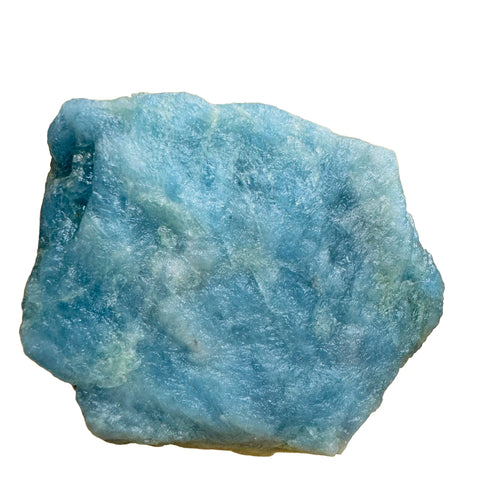
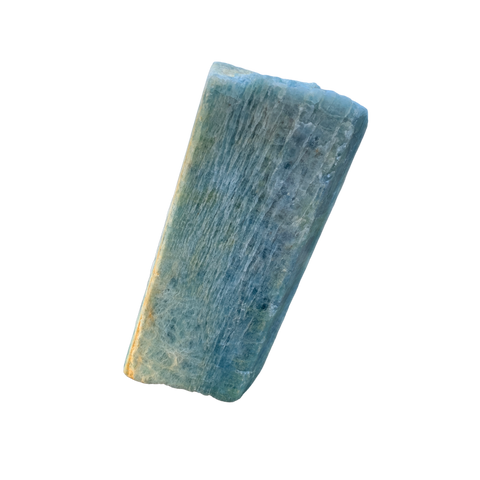
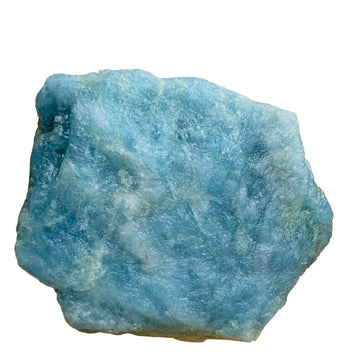
Read our Sourcing Standards →These are A-grade sodalite crystal vases from Minas Gerais, Brazil. Sodalite is a blue tectosilicate that forms in silica-poor igneous rock, veined with white calcite. Each vase runs 4-6 inches at Mohs 6, fully natural and untreated, with a removable tube insert holding the water. A favorite focus stone for desks.
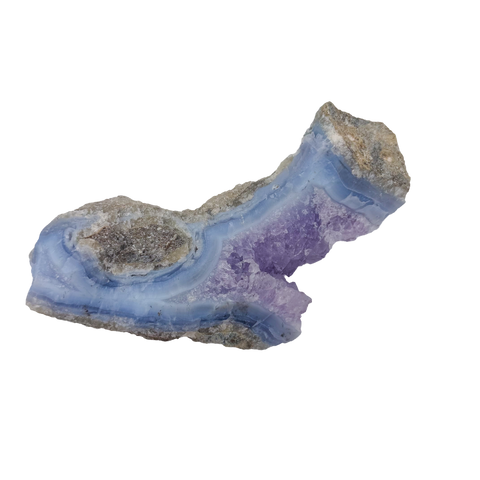
Sodalite is a deep blue tectosilicate, shot through with white calcite veining. It gets its colour from chloride ions locked into the crystal structure, and it forms in igneous rock that ran short on silica.
It is regularly mistaken for lapis lazuli. The tell is pyrite: lapis usually has gold flecks, sodalite does not.
These vases are cut and hollowed from solid blocks sourced in Minas Gerais, Brazil.
Sodalite is traditionally worked with for clear thinking, focus, and saying what you actually mean. It is linked to the throat and third eye chakras, and it has a long association with study, writing, and work that asks for a quiet head.
If that resonates, this is a stone that earns its keep on a desk rather than a shelf. Put a stem in it and let it sit where you work.
These are traditional associations drawn from historical practice. This stone is not a substitute for medical or mental health care.
A starting place for your own quiet practice.