








Citrine Crystal Guide: meaning, origin & properties
For steady forward motion.
Learn what Citrine is, where ours comes from, traditional associations across cultures, and how to identify a real specimen, in our complete Citrine Crystal Guide.
In stock
Sourced through a regional cooperative or community-based workshop. Processing and economic benefit stay local, which means more of the value reaches the people doing the work.
Read our Sourcing Standards →I was glad to come across high quality, natural citrine at such a reasonable price. Beautiful additions to my collection!
Connor C. · Verified buyer · April 2026
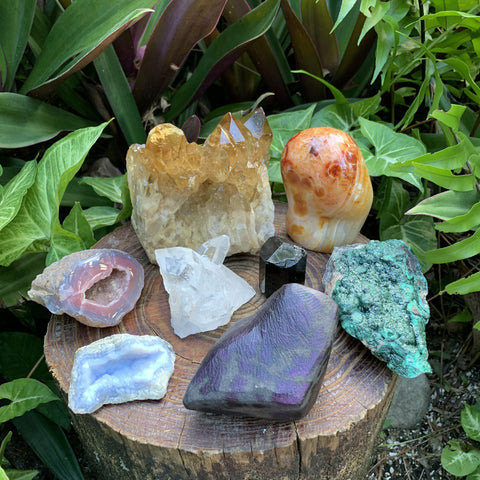
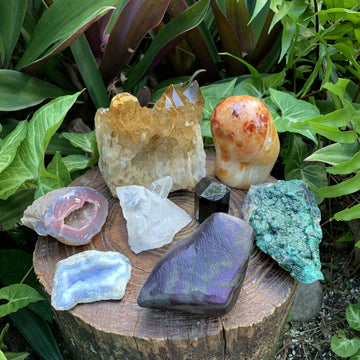
These are A-grade Natural Citrine raw crystal clusters from Haut-Lomami, Democratic Republic of the Congo, sold by the piece or by the pound. Natural citrine is quartz colored yellow to amber by iron during growth, with no heat treatment involved. Each cluster runs 2-4 inches, unheated with fully natural color. A favorite abundance stone for desks.
Citrine (Natural) is most commonly classified as Quartz / Silicate (Tectosilicate). It's typically seen in yellow tones. Crystal system: Trigonal (hexagonal family). On the Mohs scale it generally falls around 7. Chemical formula commonly cited: SiO₂.
It typically forms in Granitic pegmatites; pocket crystals and vein zones. Common commercial sources include Brazil, Madagascar, Zambia, Democratic Republic of the Congo. Material is most often obtained through Mined from quartz veins/pockets and pegmatites; hand sorting.
Label is often misused; most market "citrine" is heat‑treated amethyst. Named for its citron‑yellow color; "citrine" historically refers to naturally yellow quartz (not just iron-stained quartz). Common confusions on the market include Common mix-up with heat-treated amethyst ("baked amethyst") sold as citrine.
Citrine (Natural) is often worked with for themes of abundance, manifestation, confidence, career. Optimistic mindset, goal clarity, steady confidence, productive drive.
Workspace: keep on desk for steady focus. Growth mindset support, follow-through support, upright presence.
These are traditional associations drawn from historical practice. This stone is not a substitute for medical or mental health care.
A starting place for your own quiet practice.