









Natural Citrine vs Heat-Treated Amethyst: How to Tell the Difference
The citrine you see in most shops isn't what you think it is. More than 80% of commercial citrine is heat-treated amethyst, not naturally formed yellow quartz. Understanding the difference between natural citrine (genuinely rare) and treated citrine (inexpensive and accessible) is crucial for making informed purchases and getting what you actually want.
| Property | Natural Citrine | Heat-Treated Citrine (from Amethyst) |
|---|---|---|
| Origin | Formed in nature with yellow color | Amethyst heated 400-500°C in kiln |
| Color | Pale golden to light yellow; subtle | Bright orange-yellow to golden orange; vivid |
| Color Distribution | Even throughout crystal | Often concentrated at top; white base visible |
| Transparency | Generally transparent with smoky undertones | Transparent with pure yellow color |
| Dichroism | Weak to none; color consistent from angles | Very weak; shows as citrine not amethyst |
| Price per Carat | $50-200+ (rare and premium) | $3-20 (affordable) |
| Treatment Disclosure | No treatment | Should be disclosed; often isn't |
| Durability | Identical to all quartz (Mohs 7) | Identical to all quartz (Mohs 7) |
The Market Reality: Why Most Citrine Is Heated Amethyst
Natural citrine requires very specific geochemical conditions: iron impurities (Fe³⁺) that haven't been converted to Fe⁴⁺ by natural radiation. This is genuinely rare. Most environments that produce quartz have enough background radiation to convert iron to Fe⁴⁺, producing purple amethyst instead.
Heat treating amethyst is simple: put purple quartz in a kiln at 400-500°C for several hours, and the Fe⁴⁺ ions lose an electron, becoming Fe³⁺. The color transforms permanently from purple to yellow or golden orange.
The Economic Reality
A natural amethyst mine produces far more usable material than a natural citrine mine. Instead of letting that amethyst sit unsold or sell cheaply, miners heat-treat it into the more desirable (and currently more popular) yellow citrine. A kilogram of amethyst that costs $100-200 to mine and process can be heat-treated into citrine that retails for 10-50 times the cost. This makes economic sense for suppliers but not for buyers seeking natural stones.
The Color Test: The Most Reliable Visual Indicator
Natural Citrine Colors
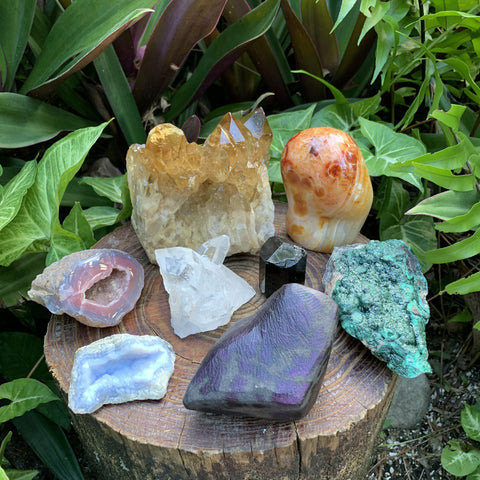
- Pale golden yellow: The most common natural citrine color. Subtle, not vivid. Similar to pale champagne or light honey.
- Light yellow: Slightly more saturated but still subdued. Never bright orange or vivid.
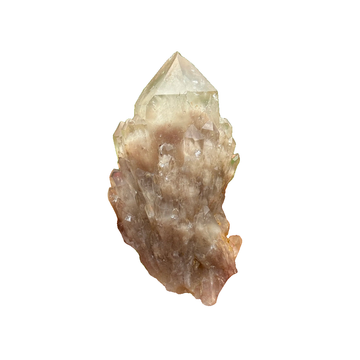
- Smoky yellow undertones: Natural citrine often shows hints of gray or brown, a remnant of the smoky quartz it formed alongside.
Heat-Treated Citrine Colors
- Bright golden yellow: Vivid, saturated yellow that immediately draws the eye. More intense than natural.
- Orange-yellow to deep orange: The heated version often reaches orange tones that natural citrine rarely achieves naturally.
- Uniform color: The color is consistent and looks intentional, lacking the subtle variations of natural stones.
Quick test: Compare two crystals side by side. The vivid orange-yellow one is almost certainly heated; the pale golden one is more likely natural. This isn't foolproof, but it's a reliable starting point.
The White Base Test
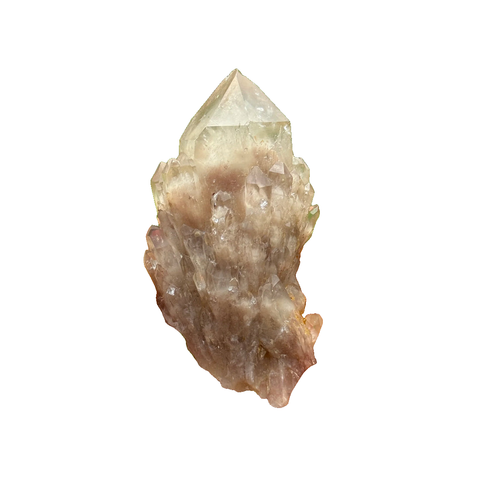
Heat-treated citrine often displays a colorless or white base zone where the purple color has been converted to yellow but the process began at the crystal's tip and worked its way down. Hold the crystal up to light and examine the interior. You may see:
- A clear gradient from white/colorless at the bottom to vivid yellow at the top
- A sharp line where the heat treatment "stopped"
- White areas that weren't reached by the heat treatment process
Natural citrine: Color distributes evenly throughout with no obvious colorless base zones or gradient from white to yellow.
Note on Ametrine
Some heat-treated amethyst creates "ametrine-like" stones where part of the crystal remains purple while another part turned yellow. This is different from true ametrine (which is naturally purple and yellow in the same crystal). The artificial version typically shows a more obvious line between colors and was created during heating, not during formation.
The Dichroism Test
Dichroism is the property of showing different colors when viewed from different angles. This test requires some practice but is highly reliable.
How to Test
- Hold the crystal up to natural light
- View it from one direction (let's call this angle A)
- Rotate the crystal 90 degrees (angle B)
- Look for color changes between the two angles
What You're Looking For
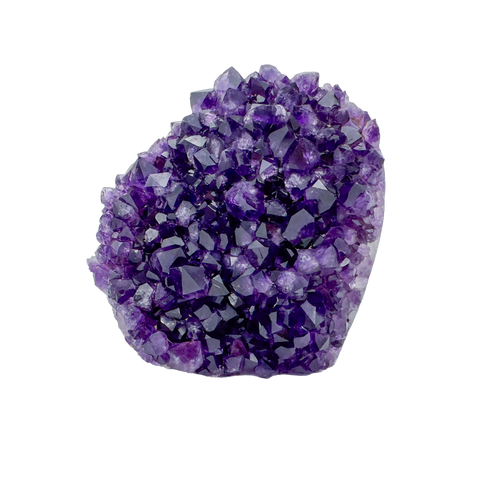
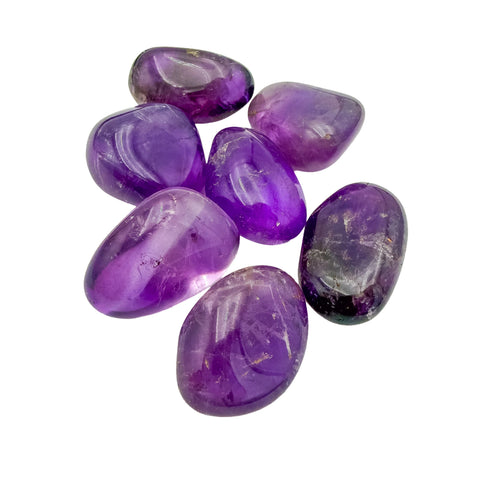
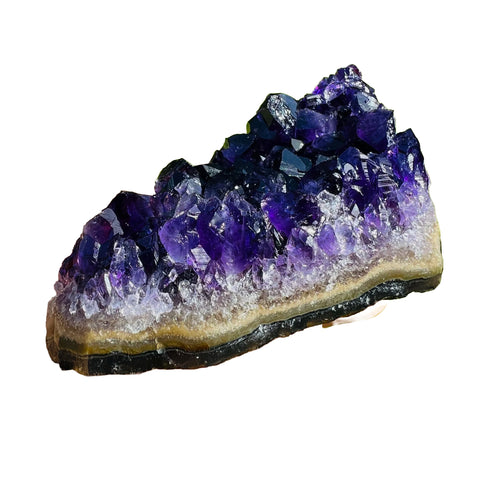
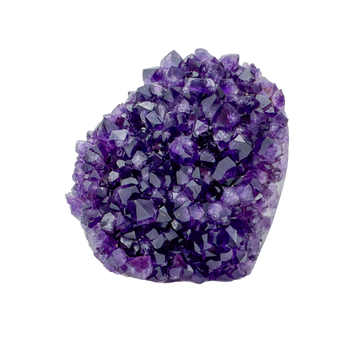
Amethyst (before heating): Shows noticeable dichroism. From different angles, the purple appears lighter in some directions and darker in others. This is characteristic of amethyst's crystal structure.
Natural citrine: Shows weak to no dichroism. The color appears consistent from all angles.
Heat-treated citrine (heated amethyst): Shows very weak dichroism or none. The yellow color remains consistent from different angles because the Fe⁴⁺ ions have been converted completely to Fe³⁺ throughout.
Important caveat: This test works best with faceted stones. With polished specimens or rough stones, the effect may be too subtle to notice without experience.
The Irradiated Smoky Quartz Factor
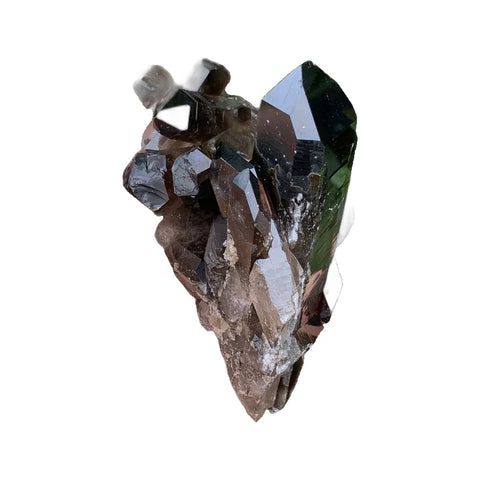
There's a third type of "citrine" you should know about: artificially irradiated smoky quartz. This is created by exposing smoky quartz to gamma radiation in a lab, which can produce a pale golden or yellowish color. This is different from both natural citrine and heat-treated citrine, and it's even rarer in the market. However, it's important to understand that some yellowish quartz may have received radiation treatment rather than heat treatment.
Radiation-Treated Quartz
Smoky quartz can be irradiated with cobalt-60 gamma rays to produce pale yellow or citrine-like colors. This is a rare treatment (much less common than heat treatment) but does occur. Unlike natural citrine or heat-treated citrine, this created color can fade over time with exposure to sunlight. Ethical sellers should disclose radiation treatment, though it's rarely done and even more rarely labeled.
Formation and Temperature Differences
How Natural Citrine Forms
Natural citrine forms in pegmatites and certain quartz veins where iron impurities remain in the Fe³⁺ oxidation state without being converted to Fe⁴⁺ by radiation. This requires:
- Low to moderate levels of natural gamma radiation from surrounding rocks
- Moderate to elevated temperatures during formation (but not so high as to create a different mineral)
- Iron-rich environment with the right pH and oxidation conditions
These conditions are uncommon, making natural citrine genuinely rare.
Heat-Treatment Process
Heat treatment is controlled and consistent. Amethyst placed in a kiln at 400-500°C for several hours undergoes thermochromic change. The Fe⁴⁺ ions lose electrons (reduction) and become Fe³⁺. This happens uniformly if the stone is small and thin, but larger or thicker stones may show gradients (the white base effect). The process is irreversible. Heating again won't change the color back.
Price Comparison and What It Tells You
Natural citrine: $50-200+ per carat for quality specimens. High-end natural citrine can exceed $200 per carat.
Heat-treated citrine: $3-20 per carat for most commercial-quality stones.
The gap is real: If you're seeing "citrine" for $5-10 per carat from a seller claiming it's natural, something is wrong. Either the stone is heat-treated (and mislabeled), or the seller doesn't understand what they're selling.
Red Flag Prices
Legitimate natural citrine will be priced comparably to quality amethyst, usually in the $50+ per carat range. If a seller offers natural citrine at budget prices, they're either lying about the origin or don't understand the difference themselves. Ask for proof of natural origin; legitimate sellers will have documentation or be transparent about treatment.
Why Heat Treatment Isn't Evil, But Deception Is
Heat treating quartz is a stable, permanent, and ethical process when disclosed properly. The problem isn't the treatment itself. It's the deception. A heat-treated citrine that's labeled honestly and priced accordingly ($3-20) is a legitimate, beautiful, affordable stone. The problem is when it's sold as "natural citrine" at inflated prices.
Ethical seller approach: "This is heat-treated amethyst, creating citrine-colored quartz. It's beautiful, affordable, and durable, and we're transparent about what it is."
Unethical approach: "This is natural citrine" without disclosing heat treatment, while charging premium prices.
Should You Buy Heat-Treated Citrine?
Yes, if:
- You love the vivid orange-yellow color and want affordability
- The seller is transparent about the treatment
- You understand what you're purchasing
- The price reflects the treatment ($3-20 range)
No, if:
- You specifically want natural, untreated stones
- The seller claims it's natural without documentation
- The price is suspiciously high for the claimed origin
- You're uncomfortable with any treatment
What to Ask Your Seller
- "Is this natural citrine or heat-treated?"
- "If heat-treated, can you document the source and treatment method?"
- "What is the price per carat?"
- "Can you show me the color base? Is there a white zone at the bottom?"
- "Can you compare this with a piece of natural citrine so I understand the difference?"
- "Do you have any natural citrine available, and what would that cost?"
- "Why is this priced at [X] when natural citrine typically costs [Y]?"
Related Crystal Guides
Ready to Choose Your Citrine?
We offer both natural citrine (when available) and transparent heat-treated citrine with full disclosure of treatment and origin.
Browse Our Citrine Collection