
























































Emerald Crystal Guide: meaning, origin & properties
Learn what Emerald is, where ours comes from, traditional associations across cultures, and how to identify a real specimen, in our complete Emerald Crystal Guide.
Only 1 left in stock
Purchased through a known network of individual artisans or family mining teams. Each piece traces back to a named producer or workshop.
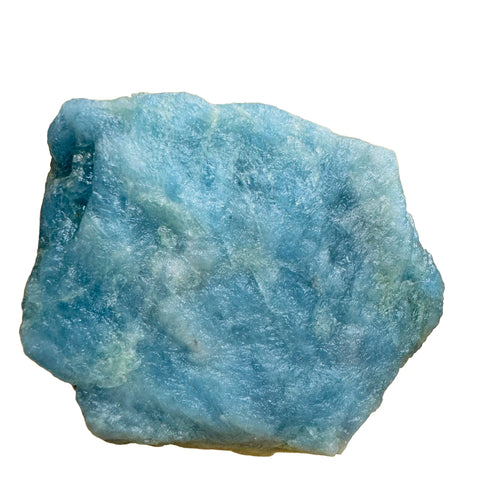
Read our Sourcing Standards →This is an AA-grade raw Emerald specimen from the Midlands Province of Zimbabwe. Emerald is green beryl, and this piece shows natural green crystal set in its silvery mica-schist matrix, not a cut gem. It measures 2.92 x 2.47 x 2.62 inches, hand-finished with natural jojoba oil and sourced through our artisan network. A striking natural specimen.
Emerald is green beryl, colored by traces of chromium and vanadium. This is a raw specimen: emerald crystal set in its natural mica-schist matrix, the way the mineral actually forms underground.
Rough emerald does not look like the faceted gem in a ring. The color runs in pockets and seams of green through a silvery, flecked host rock, and that contrast is the appeal of a specimen like this.
These come from the Midlands Province of Zimbabwe, a region long associated with fine emerald. Each piece is hand-finished with a light coat of natural jojoba oil, which deepens the green and brings out the texture of the matrix. Nothing is dyed or fracture-filled.
Emerald is traditionally a stone of the heart, associated with love, patience, and opening to connection. Many people work with it for emotional healing, compassion, and a sense of renewal.
If that resonates, a raw specimen like this tends to sit on a desk, shelf, or altar as a natural focal point rather than being carried.
These are traditional associations drawn from historical practice. This stone is not a substitute for medical or mental health care.
A starting place for your own quiet practice.