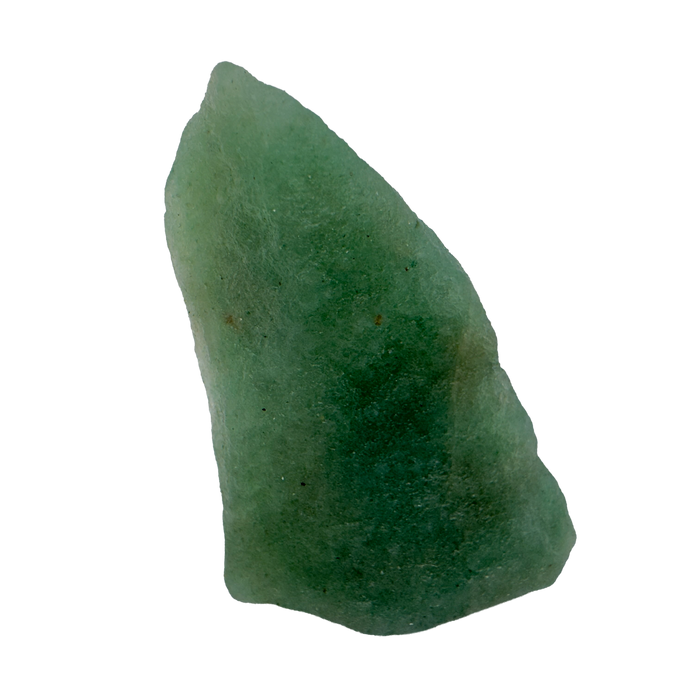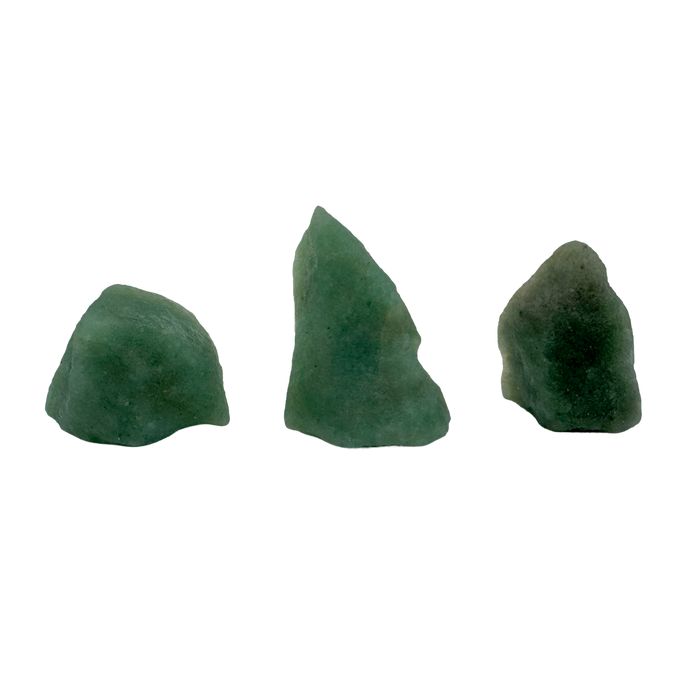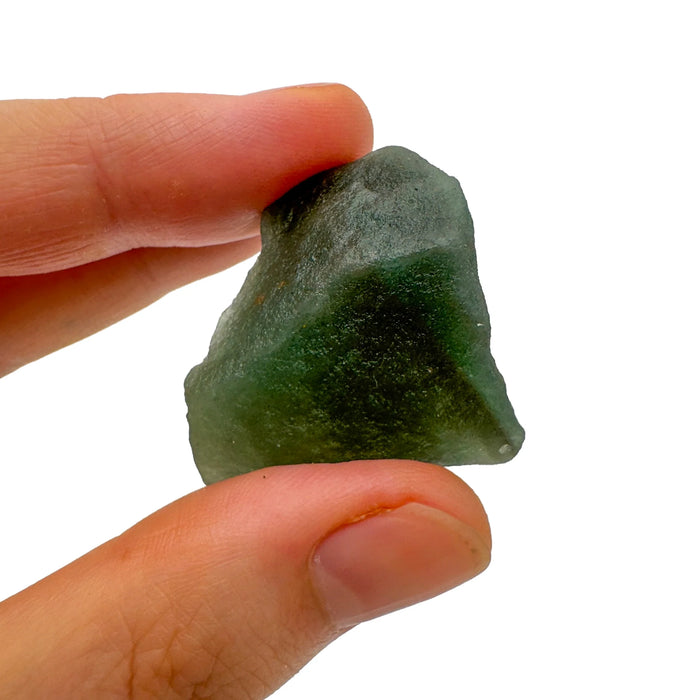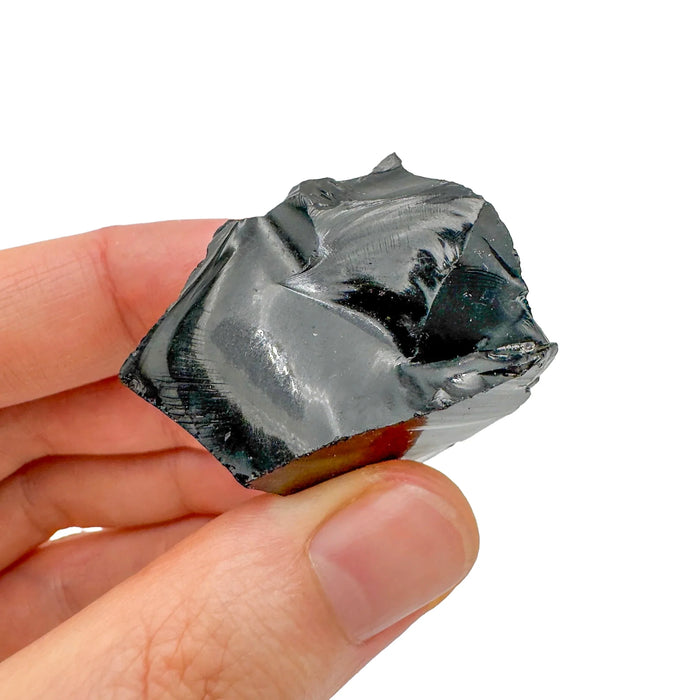






Larimar comes from a single mountainside in the Dominican Republic, which is why it is scarce, rising in price, and widely imitated. Here is how to recognize the real thing before you buy.
Larimar's Big Year: How to Buy the Real Thing

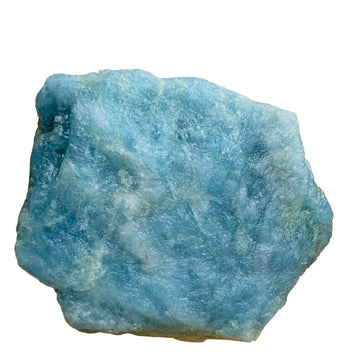
If you have spent any time around crystals this year, you have probably seen more Larimar than usual. This soft blue stone, marbled with white like a calm sea, is turning up in jewelry, on shelves, and across social feeds. The interest is real, and so is the reason behind it.
Larimar comes from one place on Earth. That single fact shapes everything about it: the price, the climbing demand, and the growing number of fakes. Here is what the stone actually is, why it is having a moment, and how to make sure the piece you bring home is the real thing.
What Larimar actually is
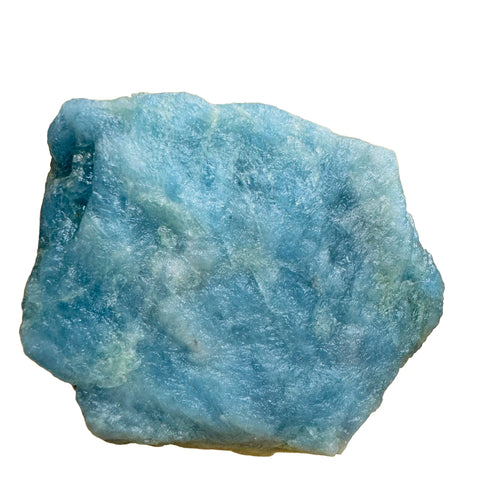
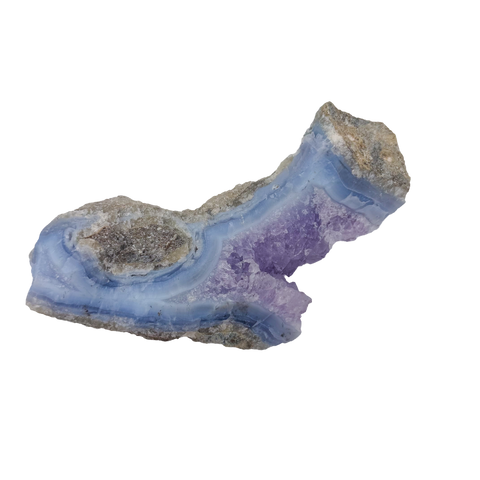
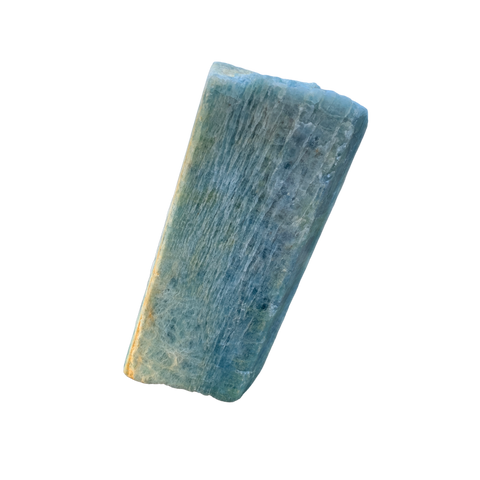
Larimar is a blue variety of pectolite, a calcium sodium silicate. Pectolite on its own is found in many countries, usually in dull white or gray. What sets Larimar apart is its color. Trace copper takes the place of some of the calcium in the structure, and that swap turns the stone the soft blue-to-teal it is known for. No other pectolite in the world does this the same way.
It forms in the cavities of volcanic rock, where mineral-rich fluids cooled and crystallized long ago. On the Mohs hardness scale it sits around 4.5 to 5, softer than quartz and worth keeping in mind when you handle it. Genuine Larimar is opaque, with cloud-like or wave-like patterns and small natural flecks. No two pieces look the same.
The one-mountain origin
Every piece of true Larimar traces back to a small area in the Barahona Province of the Dominican Republic, near a place called Los Chupaderos. Miners reach it through hand-dug shafts and tunnels in the hillside, and the rough stone is sorted and washed before it ever leaves the country. This is the only commercial Larimar deposit known anywhere. When supply is that concentrated, it is naturally limited, and that is the root of the story playing out right now.
We carry Larimar raw from this region, and we trace each piece as far up the supply chain as we can. You can read how we approach that on our Beyond Ethical sourcing page.
Why Larimar is having a moment
Two things are happening at once. Demand is rising as more people discover the stone, and its calm, oceanic look fits the way wellness spaces are styled today. At the same time, supply stays fixed to that one Dominican deposit, where the easiest material has already been worked for decades.
The result shows up in price. Larimar has risen roughly 20 percent since 2022, and the climb has held steady for years as awareness grows and mining gets harder. Collectors have started seeking out rarer tones, including green Larimar, as the classic volcanic blue becomes harder to find in larger sizes. None of this means the stone is about to vanish. It means good Larimar is harder to source, and that gap is exactly where imitations slip in.
How to tell real Larimar from a fake
Because Larimar is scarce and increasingly valuable, the market is full of stand-ins: dyed howlite, reconstituted stone, resin, and glass. Some sellers also confuse blue calcite for Larimar. The good news is that a few simple checks catch most fakes.
| What to check | Real Larimar | Common fakes |
|---|---|---|
| Pattern | Organic, cloudy, wave-like. Every piece is different. | Perfect, repeating, almost printed-looking patterns. |
| Clarity | Opaque. Light does not pass through it. | Often slightly see-through, the giveaway of resin or glass. |
| Flecks | Small natural brown or black marks are normal. | Flawless and uniform, with no natural inclusions. |
| Temperature | Feels cool to the touch and stays cool. | Resin and plastic warm up quickly in the hand. |
| Hardness | Mohs 4.5 to 5. Firm stone, not plastic. | Plastic dents or marks far too easily. |
| Price and origin | Sold as Dominican Republic material by a seller who can speak to it. | Vague origin, or a price that seems too good to be true. |
One practical note ties these together. If a piece is large, deeply saturated, glassy-clear, and cheap all at once, treat that combination as a warning sign. Real Larimar of that size and color would not be inexpensive, precisely because of where it has to come from.
What to look for when you buy
The single best protection is a seller who can tell you where the stone came from. Larimar’s value rests entirely on its Dominican origin, so a shop that is upfront about sourcing is a shop you can trust with it. Ask the question. A good seller will have an answer, or will tell you honestly what they do and do not know.
Beyond that, let the stone show you what it is. Look for the cloudy, uneven blue, the white marbling, and the small natural flecks. Hold it if you can, and notice that cool, solid weight. If you are choosing your first piece, our crystal guide covers the basics, and you can see our current Larimar raw stones here. We also wrote about what “rare” really means in the crystal world, worth a read before any scarcity-driven purchase: is that crystal actually rare?
Caring for your Larimar
Because it is on the softer side, Larimar appreciates a little care. Keep it away from harsh chemicals and long soaks, and skip salt water entirely. A quick rinse and a soft, dry cloth are enough. Store it where it will not knock against harder stones, and avoid long stretches in bright direct sun so the color stays true.
A calm blue worth choosing well
Larimar has long been linked with calm, clear communication, and a sense of ease, which is part of why people are drawn to it now. We share those traditional meanings as an invitation, not a promise. What we can say plainly is this: a stone that comes from a single mountainside, shaped by hand and limited by nature, deserves to be chosen with care. Know what you are looking at, ask where it came from, and you will end up with the real thing.
You can explore our ethically sourced Larimar collection, or see how we vet every origin on our ethical sourcing criteria page.