






















Do Frequency Generators Work? What the Science Says

We'll start with something you might not expect from a crystal shop. We've been pitched these devices more than once. Suppliers have offered to sell us frequency generators to put on our shelves, and customers ask us about them all the time. We said no, and this is the honest reason why.
If you've searched "do frequency generators work," you already have good instincts. A small plastic box that promises to clear mental fog, quiet self-doubt, and sharpen your decisions, all for the price of a nice dinner, is worth a second look before you buy.
The real question isn't whether a single frequency can fix your focus. It's whether the people selling these devices can show you proof, and what you're left holding once the shine wears off. On both counts, there's more to the story than the product page tells you.
What a frequency generator actually is
Strip away the marketing and a frequency generator is a small electronic device. A circuit board, a tone or pulse emitter, an acrylic case, and usually a battery or a USB cable. It produces a set frequency, often 7.83 Hz, 963 Hz, or 1111 Hz, that you sit near or listen to.
That's the tangible object. Knowing what it is matters, because the claims attached to it are doing far more lifting than the hardware can support.
The main frequencies, decoded
Not all of these numbers are equal. One points to real physics. The others were borrowed from numerology and spiritual trends, then sold as science. Here's what each one really is.
| Frequency | What it actually is | What sellers claim | What the evidence shows |
|---|---|---|---|
| 7.83 Hz | A real electromagnetic resonance of the planet, the Schumann resonance, between the Earth's surface and the ionosphere | Grounding, EMF protection, calm | The signal is real. That a small device delivers health benefits is not established. The few studies are small and early. |
| 963 Hz | A "solfeggio" number popularized in the 1970s through numerology, not ancient tradition | Pineal activation, intuition, the "God frequency" | No scientific support for the physiological claims. The ancient-origin story isn't accurate. |
| 1111 Hz | An "angel number" from manifestation culture, recently repackaged as a healing frequency | Manifestation, synchronicity, nervous-system regulation | No clinical evidence. Sellers' own pages often note the device isn't FDA-evaluated. |
Do frequency generators work? What the evidence says
Here's where the threads meet. Even for the frequency rooted in real physics, there's a wide gap between "this signal exists" and "this box improves your sleep, focus, and mood." The studies that do exist are small and early. None of them justify the sweeping promises on a typical product page.
What sound can do is help you relax, and relaxation is genuinely good for you. Hospitals use music and sound therapy to ease stress during treatment. But that benefit comes from rest, attention, and expectation, not from one specific frequency. When people feel calmer using one of these devices, the calm is real. The cause is usually the placebo effect and the simple act of slowing down.
That's also why reviews are so mixed. A tool that depends on expectation works beautifully for some people and does nothing for others. Consistent results are the signature of a real effect. Inconsistent ones are the signature of a placebo.
If they worked, you'd see them in a variety of conventional and alternative health care settings
There's a simple test for any health tool. If it reliably did what's promised, the people whose job is results would already use it. Doctors, hospitals, functional medicine, holistic practitioners. You'd see these devices cleared as medical equipment and built into real treatment.
You don't. Frequency generators are sold as "wellness" products, a category that sidesteps the testing a medical claim requires. Read the fine print and many sellers say it plainly: not evaluated by the FDA, not intended to diagnose or treat anything. That disclaimer and the marketing promise point in opposite directions. When a product swears it sharpens your focus on the front and takes it all back on the back, believe the back.
The cost the product page leaves out
Here's the part that fits the eco-conscious shopper, and it's the most common complaint we hear about these devices. They're cheap electronics. People report they stop working before long. A button fails, the sound cuts out, the battery won't hold a charge. Once the novelty and the placebo wear off, there's little reason to repair it. It goes in a drawer, then the trash.
The numbers are sobering. The UN's 2024 Global E-waste Monitor found the world produced 62 million tonnes of electronic waste in 2022, and only about 22% of it was formally collected and recycled. For small devices like these, the recycling rate drops to roughly 12%. Global e-waste is on track to reach 82 million tonnes by 2030.
A wellness purchase that ends its life in the waste stream is worth thinking about before it ships.
Green light, red light: how to read any wellness tool
You don't need a science degree to shop well here. You need a few signals. This is how we'd read any wellness tool, including our own.
An honest wellness tool
What good looks like
A deceptive one
What to watch for
How to buy smart, in under five minutes
- Read the verb. "Supports" or "complements" a practice is fair. "Treats," "clears," "fixes," or "activates" is a health claim that needs real proof.
- Look past the testimonials. Reviews tell you how a product feels, not whether it works. Ask what evidence exists beyond personal stories.
- Separate calm from cure. If something helps you relax, that's reason enough to enjoy it. Just don't pay treatment prices for a relaxation aid.
- Follow the object's afterlife. Will it last for years, or break and need replacing? Anything with a battery and a board has a short shelf life and a real disposal cost.
- Price the promise. Ask what you're actually paying for. The object and the work behind it, or the size of the claim.
Where we stand
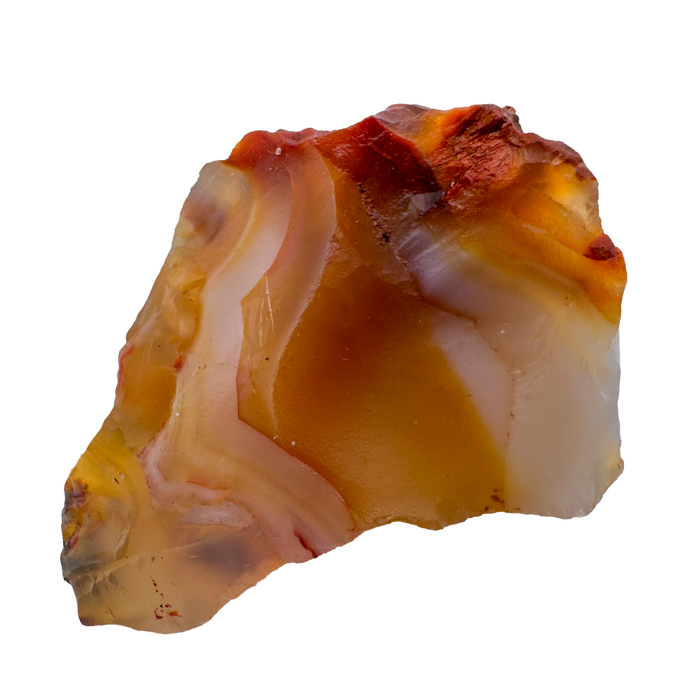
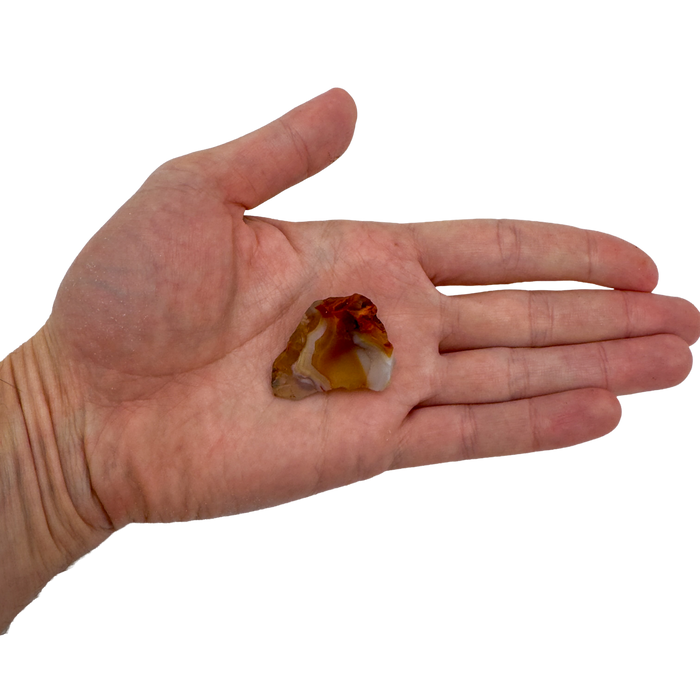
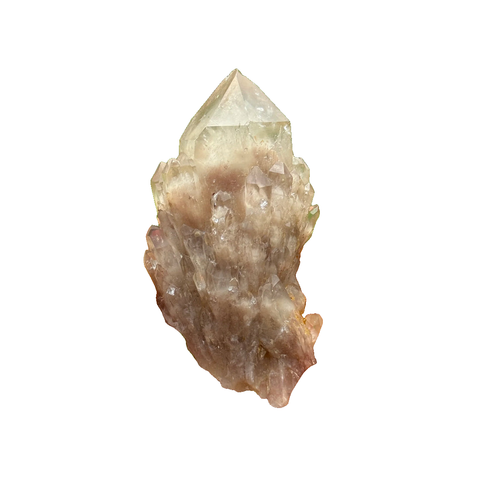
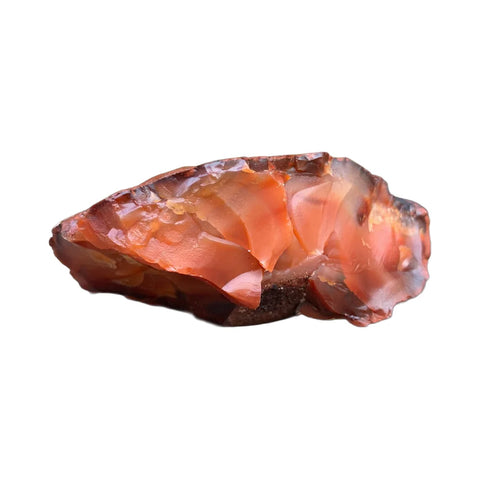
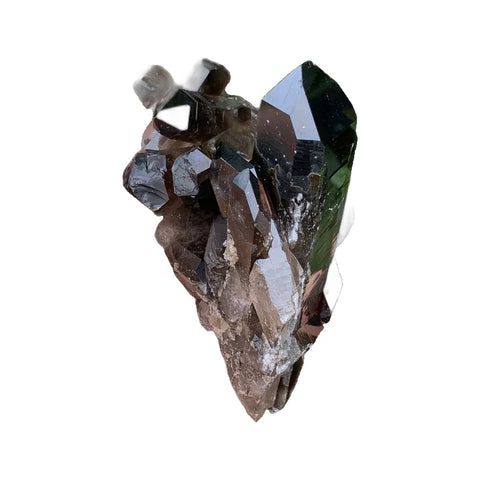
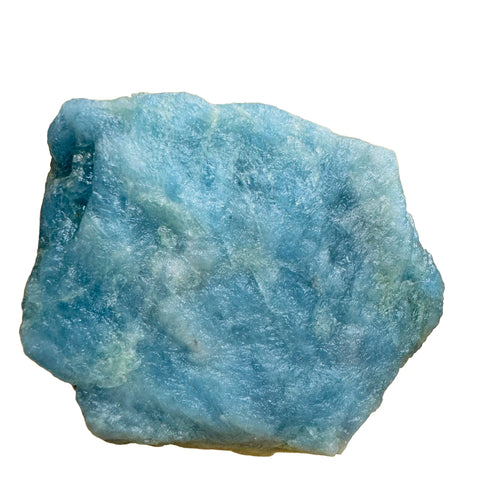
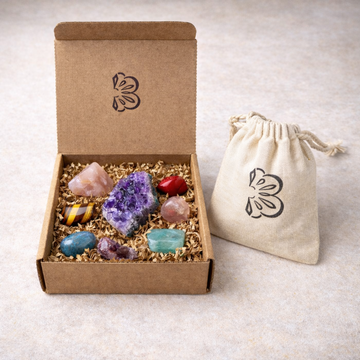
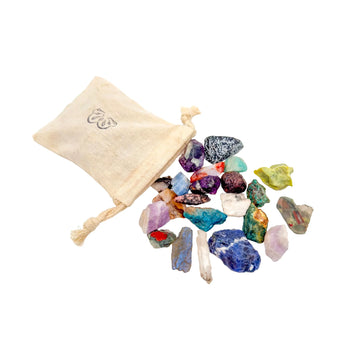
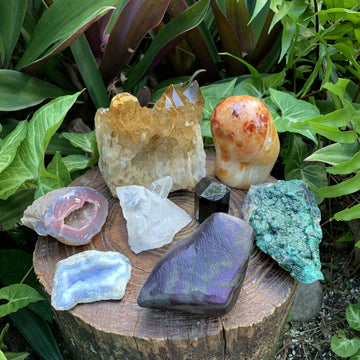
We sell crystals, so we'll be straight with you. A stone isn't medicine either. We treat our pieces as complementary objects, things that support a practice, never as a cure for anything. The difference we care about is twofold. We tell you what a stone is and where it's from before we ever mention intention, and a natural stone has no battery to die and no board to throw away. It lasts, and you can pass it on.
If you're drawn to calm, focus, or a daily ritual, you have real options that don't end up in the waste stream. Start with our crystal guide if you want to understand what you're buying, or browse the stones when you're ready. Either way, buy the thing that earns your trust, not the thing that makes the biggest promise.
Keep reading
If you want to go deeper, read how to spot greenwashing in the wellness space, the case for buying less and wasting less, or a five-question filter for any mindful purchase.