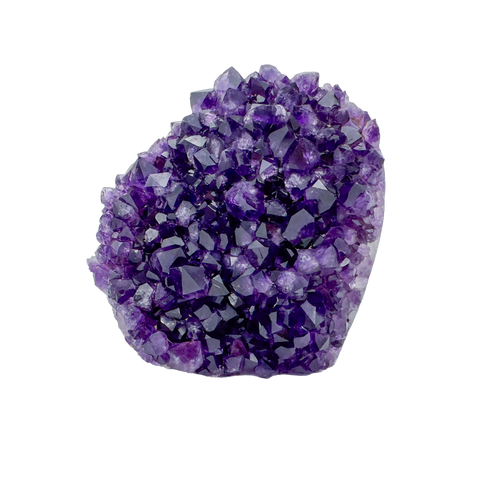


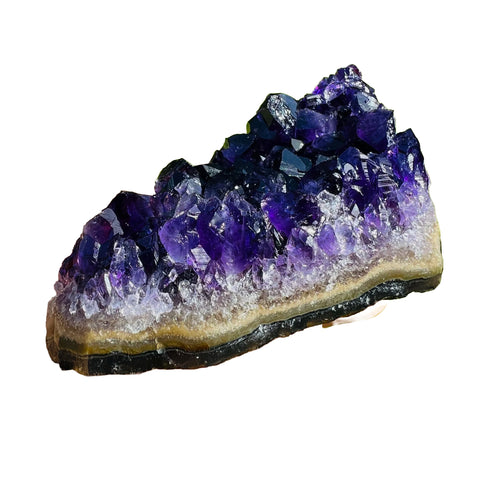


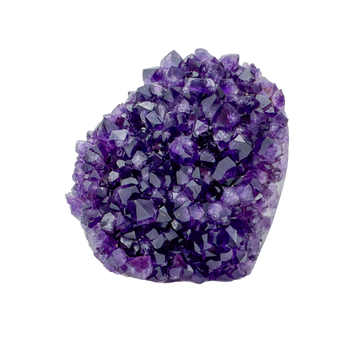


Amethyst is purple because of trace iron and millions of years of natural radiation inside quartz. Here’s the geology behind the color, why some pieces are deeper than others, and how to choose a good one.
Why Is Amethyst Purple? The Geology Behind the Color

Hold a piece of amethyst up to the light and it’s easy to forget you’re looking at quartz, the same mineral that makes up plain, colorless rock crystal and most of the sand on a beach. So where does the purple come from? The short answer is a little iron and a lot of time. The longer answer is one of the quietest, strangest stories in mineralogy, and it’s worth knowing before you buy.
Once you understand what colors an amethyst, you can read any piece with clearer eyes: why one is pale and another is deep violet, why color sometimes pools in bands, and why a stone left in a sunny window slowly loses its glow.
What amethyst actually is
Amethyst is the violet variety of quartz. Quartz itself is silicon dioxide, just silicon and oxygen locked into a repeating lattice, and in its pure form it’s completely colorless. That clear quartz is the starting point. Everything that makes amethyst purple happens because of what sneaks into that lattice while the crystal is growing, and what happens to it afterward.
Think of a crystal as a record of its own making. The color it ends up with is a kind of receipt for the chemistry and conditions it grew in. Amethyst’s receipt has two line items: iron, and radiation.
Why amethyst is purple
Here’s the part most listings skip. The purple isn’t a pigment mixed in like paint. It comes from the way light moves through the crystal after iron and natural radiation have done their slow work.
First, a little iron
As quartz grows, a tiny fraction of the silicon atoms get swapped out for iron atoms. We’re talking trace amounts, often just a few iron atoms per million, sitting in the exact spots where silicon would normally be. On their own, those iron impurities don’t make purple. Iron-bearing quartz can grow up perfectly clear. So iron is necessary, but it isn’t the whole story.
Then, millions of years of natural radiation
This is the ingredient that surprises people. The rock surrounding a growing crystal usually contains trace radioactive elements, things like uranium, thorium, and potassium, that occur naturally in the earth. Over thousands to millions of years, the faint radiation from those elements passes through the quartz and nudges an electron loose from the iron. That changes the iron into what mineralogists call a color center.
That color center is the thing that actually does the coloring. It absorbs light in the green and yellow part of the spectrum, and lets the rest through. What’s left, the blues and reds that pass through together, is the violet you see. No iron, and there’s nothing to convert. No radiation, and the iron just sits there clear. You need both, plus time, which is why amethyst is essentially a slow collaboration between chemistry and the rock around it.
Where amethyst forms
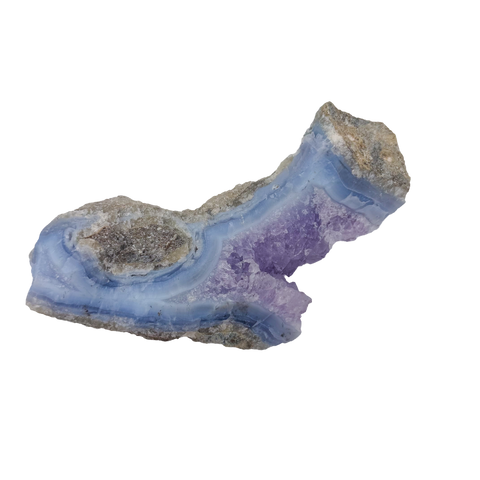
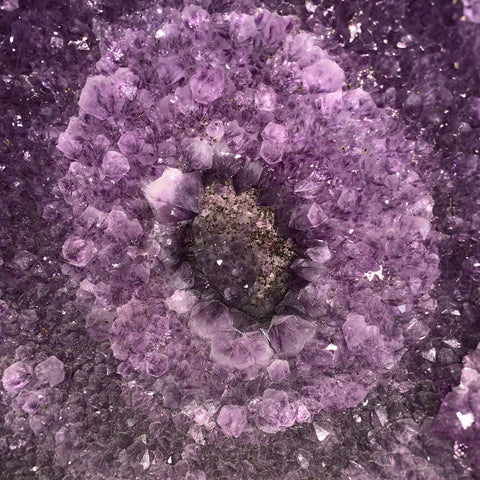
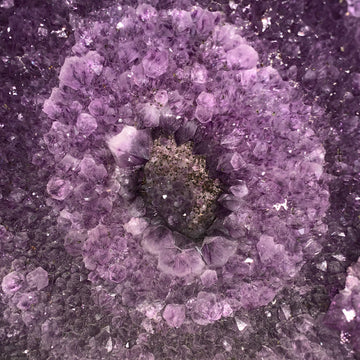
Most of the world’s amethyst, including much of ours, grows inside cavities in volcanic rock. When ancient lava flows cooled, gas bubbles and gaps were left behind. Mineral-rich water seeped in over long stretches of time, and quartz crystals grew inward from the walls of those pockets, point by point. Crack one of the larger pockets open and you get the classic amethyst geode, a stone shell lined with a glittering crust of purple points.
Where a stone is from shapes how it looks. Here are the origins you’ll meet most often, and what each tends to bring.
| Origin | What the amethyst tends to look like | Good to know |
|---|---|---|
| Brazil | Lighter to mid purple, often in large points, clusters, and cathedral geodes | The volume source. Great size and value, with gentler color. |
| Uruguay | Deep, saturated violet, often on a dark geode rind | Prized for rich color in smaller, denser pockets. |
| Zambia | Intense reddish-purple, very saturated | Sought for top color in smaller pieces and jewelry. |
| Bolivia & Madagascar | Varies widely. Bolivia is the home of ametrine, a natural amethyst-citrine blend. | Bolivia’s Anahí mine is the classic source of natural ametrine. |
Wherever it’s from, we keep the origin on the label rather than leaving it blank. If you’d like the longer version of how we decide what to carry and what to turn down, our Beyond Ethical sourcing standard lays it out.
Why some pieces are deeper than others
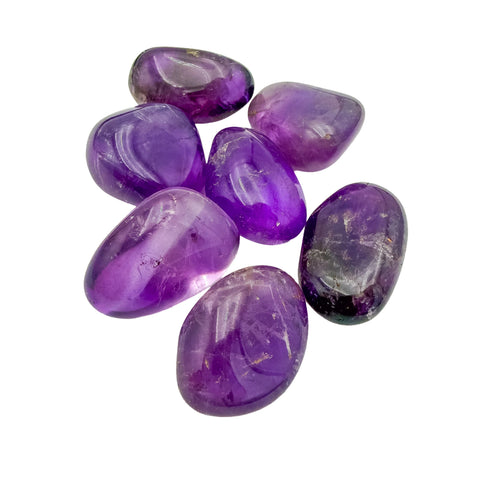
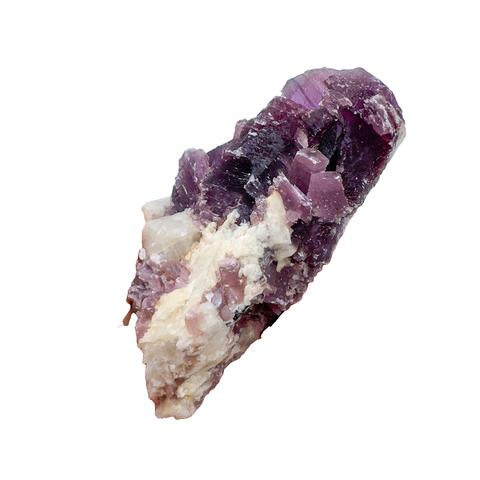
Color in amethyst is rarely perfectly even, and that’s normal, not a flaw. As a crystal grows, the supply of iron and the dose of radiation both vary, so the purple often concentrates near the tips and fades toward the base. You’ll see this banding, called color zoning, clearly in many natural points. The most saturated material, sometimes called “deep Siberian” color in the trade, shows rich purple with flashes of red and blue. Lighter, lilac-toned stone is the same mineral with a gentler dose of the same story.
That same color center is what sunlight slowly breaks down, which is why amethyst sits on the short list of stones to keep out of a bright window. We cover the rest in which crystals fade in sunlight.
There’s one more twist worth knowing. Heat amethyst to a few hundred degrees and the color center breaks down, shifting the stone toward yellow, orange, or reddish-brown. That’s how a large share of the citrine on the market is actually made: it’s heat-treated amethyst. It’s a real, long-used process, not a trick, but it’s the kind of thing an honest seller should tell you. The same sensitivity is why strong, prolonged sunlight can slowly fade a natural amethyst over the years.
How to choose a good amethyst
You don’t need a lab to shop well. A few habits go a long way.
- Look at the color in daylight. Indoor lighting flatters purple. Take the stone to a window and you’ll see its true tone, including any zoning. Even color is prized, but natural zoning has its own honest beauty.
- Decide what depth you actually want. Deep, saturated violet costs more and reads dramatic. Soft lilac is gentler and often more affordable. Neither is “better,” they’re different moods of the same stone.
- Mind the form. Tumbled stones and small points show the color at an everyday price. Clusters and geodes use far more material and cost more. Towers and spheres are cut from solid rough. Match the form to how you’ll actually use the piece.
- Ask about origin and treatment. A seller who knows their material can usually name a country, and will tell you plainly whether a stone has been heated. Vague answers on a piece priced as something special are worth a pause.
- Keep it out of harsh sun. Since the same chemistry that built the color can also undo it, display amethyst away from a long-term sunny windowsill if you want the violet to stay rich.
What people reach for it for
Tangibles first, but the meaning matters to a lot of people, so here’s the honest version. Amethyst has been linked for centuries to calm, clarity, and rest. The name itself comes from an ancient Greek word tied to sobriety and a clear head, and many people today keep a piece by the bed or on a desk for a sense of steadiness during busy stretches. As with any crystal, it supports a practice rather than replacing one.
Start with one piece
Amethyst is a good reminder that a stone’s beauty isn’t skin deep. That violet is the visible end of a process that ran for thousands to millions of years underground, written into the crystal atom by atom. Once you can see the geology in it, choosing a piece gets easier and more interesting. Take a look at our amethyst collection, where origin and grade are called out on every listing, or open the wider crystal guide when you want the story behind another stone.