






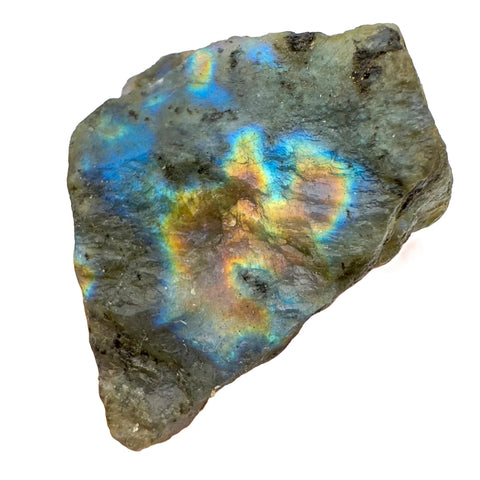



 Agatefor stress relief
 Amazonitefor stress relief
 Aquamarinefor serenity
 Aventurinefor luck
 Bloodstonefor energy
 Blue Kyanitefor confidence
 Blue Lace Agatefor stress relief
 Chrysocollafor emotional healing
 Fluoritefor focus
 Garnetfor energy
 Lepidolitefor stress relief
 Malachitefor emotional healing
 Moonstonefor grounding
 Obsidianfor protection
 Ocean Jasperfor emotional healing
 Red Jasperfor grounding
 Rhodonitefor emotional healing
 Selenitefor cleansing
 Sodalitefor focus
 Tiger Eyefor confidence








































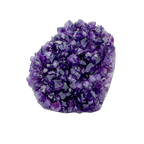 Amethyst
 Clear Quartz
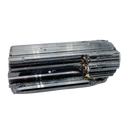 Black Tourmaline
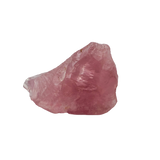 Rose Quartz
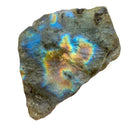 Labradorite
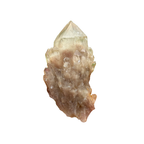 Natural Citrine
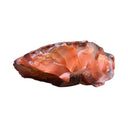 Carnelian
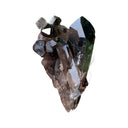 Smoky Quartz
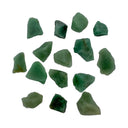 Aventurine
 Sodalite
 Ametrine
 Golden Healer
 Raw Stones
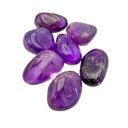 Tumbled Stones
 Palm Stones
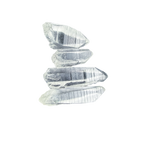 Crystal Points
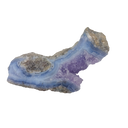 Clusters & Geodes
 Polished & Decor
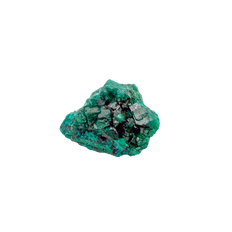 Mineral Specimens
 Crystal Chips







 Raw Stones
179 to choose from
Raw Stones
179 to choose from
 Tumbled Stones
162 to choose from
Tumbled Stones
162 to choose from
 Palm Stones
25 to choose from
Palm Stones
25 to choose from
 Crystal Points
23 to choose from
Crystal Points
23 to choose from
 Clusters & Geodes
103 to choose from
Clusters & Geodes
103 to choose from
 Polished & Decor
148 to choose from
Polished & Decor
148 to choose from
 Mineral Specimens
257 to choose from
Mineral Specimens
257 to choose from
 Crystal Chips
21 to choose from
Crystal Chips
21 to choose from


 AngolaAquamarine
›
AngolaAquamarine
›
 BotswanaCarnelian, Tree Agate
›
BotswanaCarnelian, Tree Agate
›
 DR CongoMalachite, Natural Citrine
›
DR CongoMalachite, Natural Citrine
›
 EswatiniBloodstone
›
EswatiniBloodstone
›
 MadagascarLabradorite, Clear Quartz
›
MadagascarLabradorite, Clear Quartz
›
 MalawiBlue Lace Agate, Garnet
›
MalawiBlue Lace Agate, Garnet
›
 MozambiqueAmazonite
›
MozambiqueAmazonite
›
 NamibiaSodalite, Blue Lace Agate
›
NamibiaSodalite, Blue Lace Agate
›
 Republic of the CongoDioptase
›
Republic of the CongoDioptase
›
 South AfricaTiger Eye, Unakite
›
South AfricaTiger Eye, Unakite
›
 ZambiaChevron Amethyst
›
ZambiaChevron Amethyst
›
 ZimbabweEmerald, Rhodonite
›
ZimbabweEmerald, Rhodonite
›
 ArgentinaBlack Obsidian, Rhodochrosite
›
ArgentinaBlack Obsidian, Rhodochrosite
›
 BoliviaAmetrine
›
BoliviaAmetrine
›
 BrazilAmethyst, Clear Quartz
›
BrazilAmethyst, Clear Quartz
›
 PeruSerpentine, Jade
›
PeruSerpentine, Jade
›
 UruguayAmethyst
›
UruguayAmethyst
›
 Dominican RepublicLarimar
›
Dominican RepublicLarimar
›
 MexicoRainbow Obsidian, Crazy Lace Agate
›
MexicoRainbow Obsidian, Crazy Lace Agate
›
 United StatesSelenite, Peridot
›
United StatesSelenite, Peridot
›
 ChinaFluorite
›
ChinaFluorite
›
 RussiaShungite
›
RussiaShungite
›
 AustraliaMookaite
›
AustraliaMookaite
›
 Where our crystals come from
See where we source →
Where our crystals come from
See where we source →


 Aries
Mar 21 to Apr 19
Carnelian
›
Aries
Mar 21 to Apr 19
Carnelian
›
 Taurus
Apr 20 to May 20
Rose Quartz
›
Taurus
Apr 20 to May 20
Rose Quartz
›
 Gemini
May 21 to Jun 20
Agate
›
Gemini
May 21 to Jun 20
Agate
›
 Cancer
Jun 21 to Jul 22
Moonstone
›
Cancer
Jun 21 to Jul 22
Moonstone
›
 Leo
Jul 23 to Aug 22
Citrine
›
Leo
Jul 23 to Aug 22
Citrine
›
 Virgo
Aug 23 to Sep 22
Amazonite
›
Virgo
Aug 23 to Sep 22
Amazonite
›
 Libra
Sep 23 to Oct 22
Blue Lace Agate
›
Libra
Sep 23 to Oct 22
Blue Lace Agate
›
 Scorpio
Oct 23 to Nov 21
Obsidian
›
Scorpio
Oct 23 to Nov 21
Obsidian
›
 Sagittarius
Nov 22 to Dec 21
Sodalite
›
Sagittarius
Nov 22 to Dec 21
Sodalite
›
 Capricorn
Dec 22 to Jan 19
Black Tourmaline
›
Capricorn
Dec 22 to Jan 19
Black Tourmaline
›
 Aquarius
Jan 20 to Feb 18
Amethyst
›
Aquarius
Jan 20 to Feb 18
Amethyst
›
 Pisces
Feb 19 to Mar 20
Aquamarine
›
Gifting?
A birthday stone is the safe bet.
Read the zodiac guide →
Pisces
Feb 19 to Mar 20
Aquamarine
›
Gifting?
A birthday stone is the safe bet.
Read the zodiac guide →


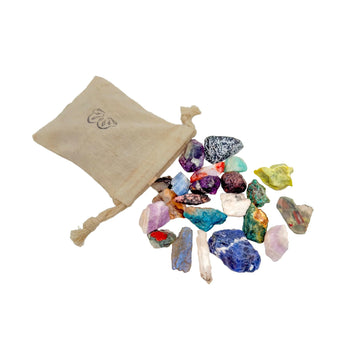










Dragon Bloodstone
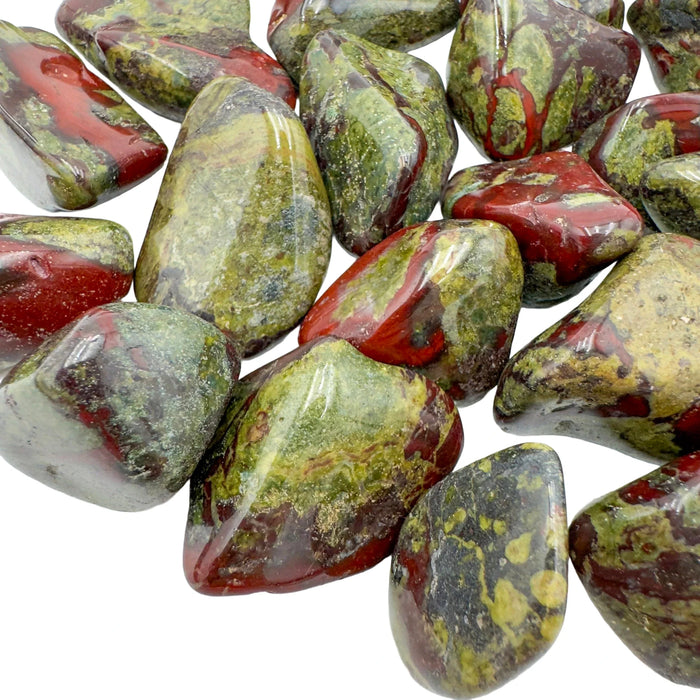
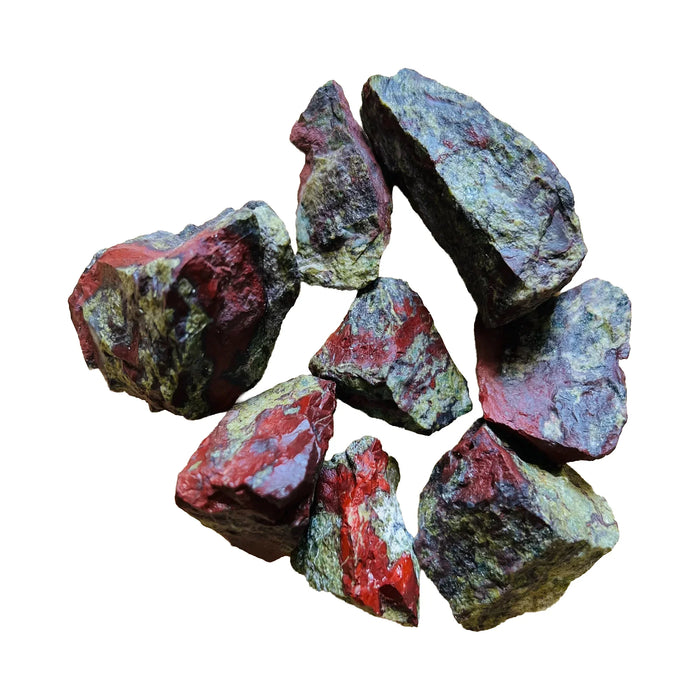
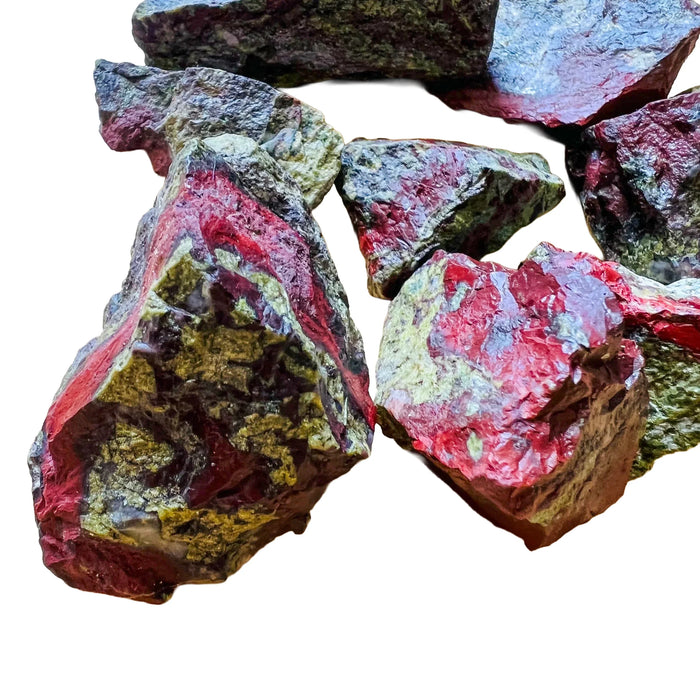
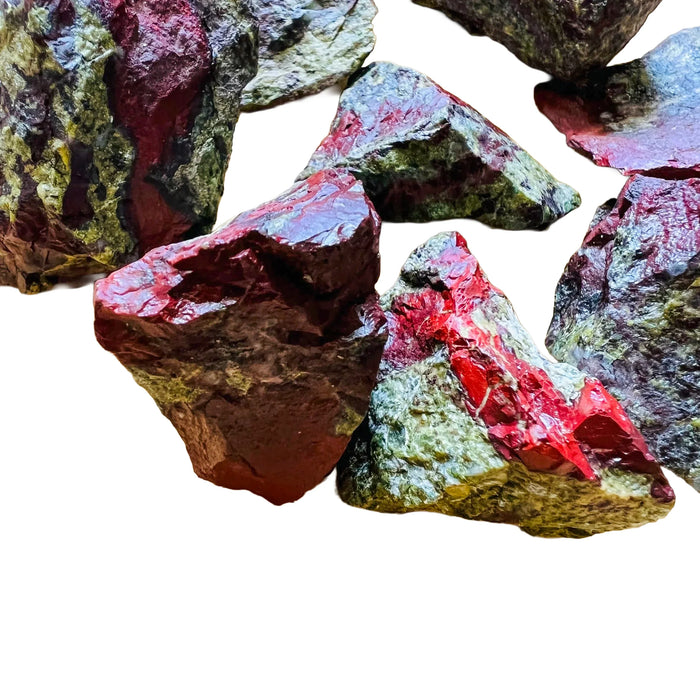
Dragon Bloodstone is a striking metamorphic composite of green epidote and fuchsite matrix with bold red jasper veining, sourced from South Africa. It is not traditional Bloodstone (Heliotrope, which is green chalcedony). Dragon Bloodstone carries associations with grounded strength, confident action, and the heart-centered protection of someone drawing on their deepest reserves.
Shop dragon bloodstoneDragon Bloodstone, in stock now.
Our most-loved Dragon Bloodstone pieces, ready to ship.


- from 1,000+ reviews
- Ships within 72 hoursMonday to Friday, tracked
- 90 days to return itif you do not love it
- Free US shipping over $99$8.99 flat rate under
The geology.
Dragon Bloodstone is a modern trade name (since the 2010s) for a striking green-and-red metamorphic composite found in South Africa. The green portion is primarily epidote (calcium aluminum iron silicate) and fuchsite (chromium-rich muscovite mica). The red veining is jasper or iron oxide in silica. The stone is not the traditional Bloodstone (Heliotrope), which is a green chalcedony with small red iron oxide spots. Dragon Bloodstone shows much larger red veins through a mixed-mineral green matrix, and the geological origins are completely different.
The two colors formed in separate geological events: the green metamorphic minerals first, the red jasper later through iron-rich fluid infiltration along fractures. Mohs hardness varies by composition. The green fuchsite-heavy portions are softer (Mohs 2 to 3), while jasper-heavy red veining runs Mohs 6.5 to 7. Overall specimens range 6 to 7 depending on the balance. Specific gravity runs roughly 2.7 to 3.0. The composite nature means you are handling multiple mineral phases with different care requirements; the softer green fuchsite needs gentler handling than the harder red jasper.
The origins.
Dragon Bloodstone is sourced primarily from the Limpopo province in South Africa, from formal mining operations that extract the composite material, then hand-sort and polish it. The material we carry is documented from our Limpopo supply chain. South Africa is nearly exclusive as a source for dragon bloodstone; material from other listed origins is often mislabeled or misidentified. We commit to Limpopo as our primary source because the color profile is consistent, we have documented access to the supply chain, and we can trace each batch's origin with confidence.
Dragon Bloodstone is available in both raw and hand-tumbled forms through our Limpopo partners. The hand-sorting and finishing work reflects the care needed to honor both the soft green fuchsite and the harder jasper veining. If our South Africa supply ever changes or we source from additional regions, we will disclose that openly. We do not represent dragon bloodstone as coming from other origins when it does not.
Traditional associations.
Dragon Bloodstone is a modern market stone with modern associations, emerging in the 2010s as South African mining brought the material to wider crystal markets. The name draws from the contrast of green and red, with "dragon" evoking the power and mythic protection of the dragon archetype and "bloodstone" referencing the red coloring. The associations people work with are contemporary rather than rooted in deep historical tradition, though some people layer modern dragon bloodstone associations on older bloodstone traditions.
Many people work with dragon bloodstone for grounded strength, confident action, physical vitality, and heart-centered protection. It is often chosen when someone is drawing on their own reserves during challenging times. The Root and Heart chakras, the elements Earth and Fire, and intentions around courage, confidence, energy, grounding, and protection are common in modern crystal work with this stone. Invitational language is always appropriate here: many people work with it for these qualities rather than claiming the stone will deliver them.
Spotting the real thing.
Genuine dragon bloodstone shows a green matrix with distinct red veins or spots that are irregularly distributed, not perfectly patterned. The variation in Mohs hardness is visible and tactile: softer green areas scratch more easily under light fingernail pressure than harder red jasper veining. The material should feel like a composite, with some portions yielding to gentle pressure and others resisting it. Hold the stone to light and you will see the opacity of the composite, not the clarity or translucence you might find in other stones.
Dyed red areas show color pooling in cracks or uneven saturation across the surface. True dragon bloodstone from Limpopo carries documentation and verifiable sourcing; unverified origin claims warrant caution. Distinguish dragon bloodstone from traditional Bloodstone (Heliotrope) by looking at scale and distribution of color: heliotrope is all-green chalcedony with small red dots scattered throughout, while dragon bloodstone shows much larger red veins running through a visibly mixed-mineral green matrix with softer portions you can feel.
Care & handling.
Mohs varies across the composite (2 to 3 for soft fuchsite portions, 6.5 to 7 for jasper veining). Treat the stone as softer material to be safe, and protect it accordingly. Clean with soft cloth and mild soap. Avoid soaking, as water may seep into fractures and soften the fuchsite portions. Avoid ultrasonic cleaners and chemical cleaners entirely. Store separately from harder stones to prevent the softer green fuchsite from being scratched by adjacent minerals.
For energetic cleansing, smoke, sound, moonlight, and breath are all appropriate. Water is acceptable but dry the stone thoroughly afterward to avoid prolonged moisture contact with the softer portions. The composite nature of dragon bloodstone means you are caring for multiple mineral phases at once; gentleness with the green portions ensures the entire stone stays intact. Many people find this composite nature metaphorically meaningful: the softer green and harder red working together as a single stone.
Pairs well with.
Proof, not promises.
We measure our own sourcing across five dimensions. Supply chain, environmental footprint, artisan support, market integrity, and pricing. The number is honest, not perfect. Where we can do better, we say so.
A deeper look.
Extended geology, sourcing, authentication, history, composite structure, and pricing, for when the quick guide isn't quite enough.
Extended geology
Dragon Bloodstone is a metamorphic composite of three primary components: epidote (calcium aluminum iron silicate), fuchsite (chromium-rich muscovite mica), and jasper (microcrystalline quartz with iron oxides). These minerals did not form together in a single event. The green metamorphic minerals (epidote and fuchsite) formed first during metamorphic alteration of parent rock. Later, during a separate geological event, iron-rich silica solutions infiltrated fractures and crystallized as red jasper veins, creating the striking color contrast.
Epidote is orthorhombic, with hardness 6 to 7. Fuchsite is monoclinic (muscovite family), with hardness 2.5 to 3. Jasper is trigonal (quartz family), with hardness 6.5 to 7. The composite's Mohs value is therefore dependent on which phase dominates. Pieces heavy in fuchsite will be softer overall; pieces heavy in jasper will be harder. This variation is not a defect; it is the defining characteristic of the material. Specific gravity is roughly 2.7 to 3.0, lighter than pure jasper but within the range for silicate-rich composites.
The color contrast is stable. The green comes from trace chromium in the fuchsite and iron in the epidote. The red comes from hematite and iron oxide in the jasper. Neither color fades under normal light or heat exposure. The material has no cleavage and fractures unevenly along natural weakness planes, which is why hand-finishing is necessary to create even surfaces.
Extended sourcing
Dragon Bloodstone is nearly exclusive to South Africa, mined from metamorphic rock formations in Limpopo province. The Limpopo Belt is a major metamorphic terrain with extensive mineral deposits. Mining operations are formal, with permitting and regulatory oversight. The material is extracted alongside other minerals and sorted by hand for quality and color profile. We work directly with mining operations and hand-finishing facilities in the region, allowing us to document origin per batch and maintain supply chain visibility.
The exclusivity of South African supply means that dragon bloodstone from other claimed origins is almost always mislabeled material (often cheap green-and-red composite stones from different regions being rebranded). We commit to Limpopo documentation because it is the only way to guarantee authenticity. If we ever source from additional regions, we will disclose that openly and provide documentation for each source.
Naming and market clarity
Dragon Bloodstone emerged as a trade name in the 2010s as South African mining brought this composite to the crystal market. The name draws from the visual appearance and the modern crystal market's association with dragon symbolism and protective energy. The critical distinction is that this is NOT traditional Bloodstone (Heliotrope), which is green chalcedony with small red iron oxide spots. The two materials are geologically unrelated, have different care requirements, and carry different market histories.
Many sellers conflate the two, labeling dragon bloodstone as bloodstone or heliotrope. We treat this as a market integrity issue worth addressing directly. Our dragon bloodstone pages explicitly state the composite nature and distinguish the material from traditional bloodstone.
Authentication and imitations
True dragon bloodstone from South Africa shows an irregular distribution of red veins through a visibly mixed-mineral green matrix. The red veining is never perfectly even or printed-looking. Under gentle fingernail pressure, softer green fuchsite areas will scratch, while red jasper areas resist. Unverified origin claims, extremely low pricing, or marketing material as traditional bloodstone are warning signs. Request sourcing documentation; Limpopo material should be traceable to the supplier.
The defining characteristic is the composite structure itself: you are holding multiple mineral phases with different properties. Dyed imitations will show uneven color saturation and may bleed onto cloth when wet. Genuine dragon bloodstone maintains color integrity.
Related minerals and distinctions
African Bloodstone (Heliotrope) is green chalcedony with small red iron oxide spots. It is harder and more uniform than dragon bloodstone, with no visible soft phases. Red Jasper is pure jasper, entirely red and much harder throughout. Fuchsite is the soft green mica component found within dragon bloodstone, but pure fuchsite pieces are much softer and more fragile. Garnet and Carnelian are paired in crystal work alongside dragon bloodstone but are distinct minerals with their own geological origins.
Pricing reality
Grade A tumbled dragon bloodstone: $6 to $14 per piece at retail for small to medium sizes. Palm stones: $14 to $35. Raw specimens and special forms: $20 to $80 depending on size, color saturation, and vein pattern. Commodity-priced material under $3 is almost certainly mislabeled composite from other regions. Authentic dragon bloodstone does not move at those price points because the hand-finishing labor and verified sourcing add cost. Value drivers include color saturation, vein distribution, finish quality, and documented South African origin.
Good sourcing is a practice, not a claim.
Nothing we sell is dyed, stabilized, reconstituted, or color-enhanced without full disclosure. We name our origins where we can. We say so when we cannot. We walk away from material that does not meet our standard, even when it costs us sales.
Bring dragon bloodstone home.
Tumbled, palm stone, and raw dragon bloodstone from South Africa. Natural, untreated, documented from Limpopo. Each piece hand-selected for the balance of soft green and bold red, and finished with care to honor both the delicate fuchsite and the harder jasper that make this composite what it is.
Shop the dragon bloodstone collectionGrounded Connections
New stones go to the list first.
No forwarding, no selling. Unsubscribe in one click. Privacy