


 Agatefor stress relief
 Amazonitefor stress relief
 Aquamarinefor serenity
 Aventurinefor luck
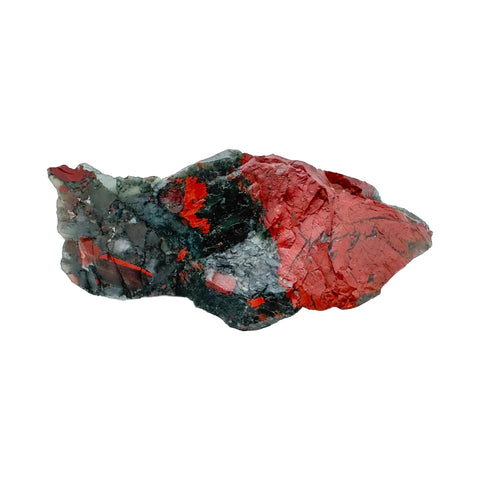
 Bloodstonefor energy
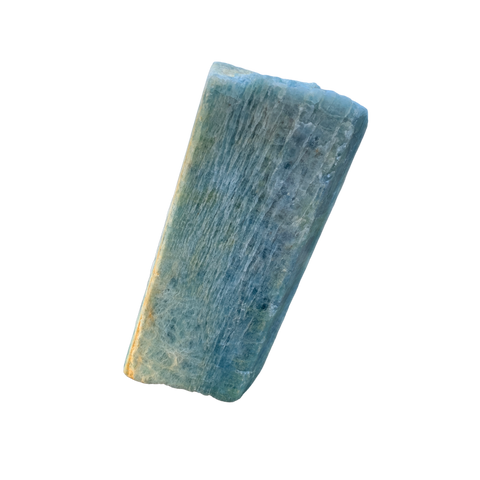
 Blue Kyanitefor confidence
 Blue Lace Agatefor stress relief
 Chrysocollafor emotional healing
 Fluoritefor focus
 Garnetfor energy
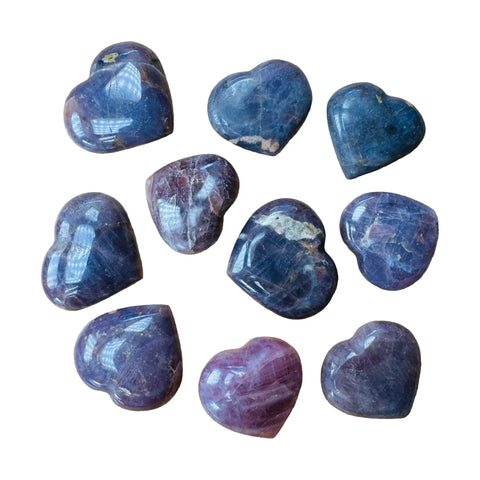
 Lepidolitefor stress relief
 Malachitefor emotional healing
 Moonstonefor grounding
 Obsidianfor protection
 Ocean Jasperfor emotional healing
 Red Jasperfor grounding
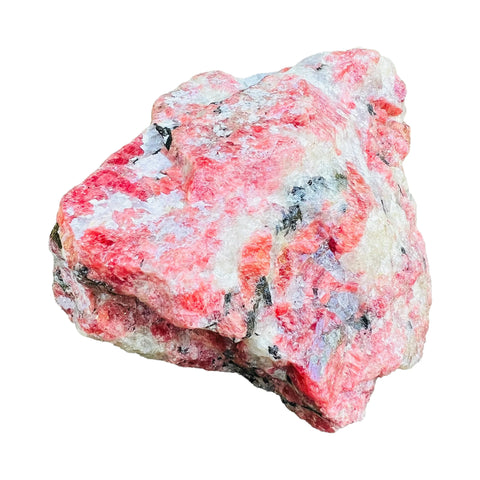
 Rhodonitefor emotional healing
 Selenitefor cleansing
 Sodalitefor focus
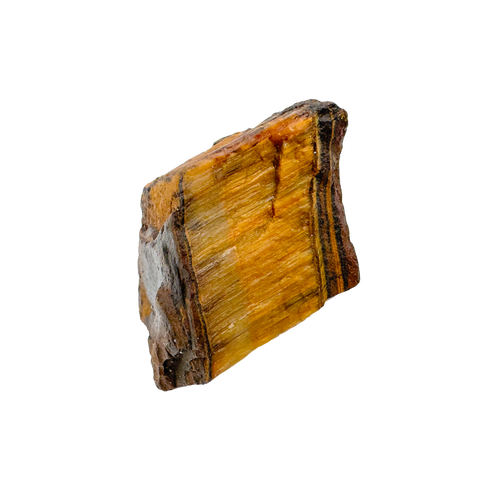
 Tiger Eyefor confidence
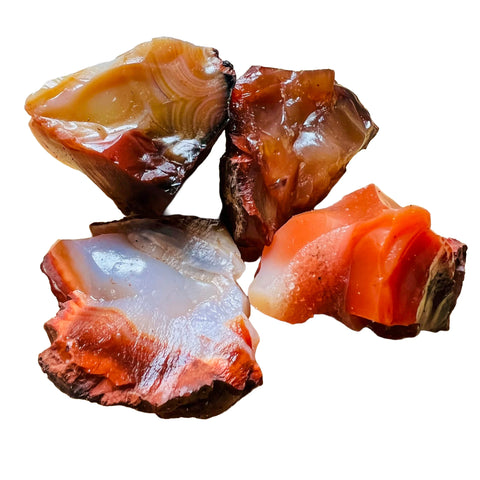
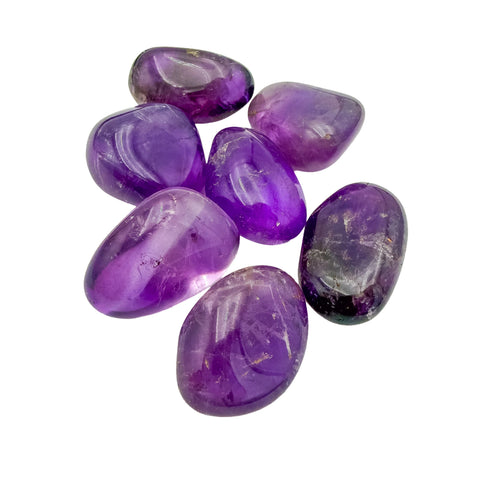


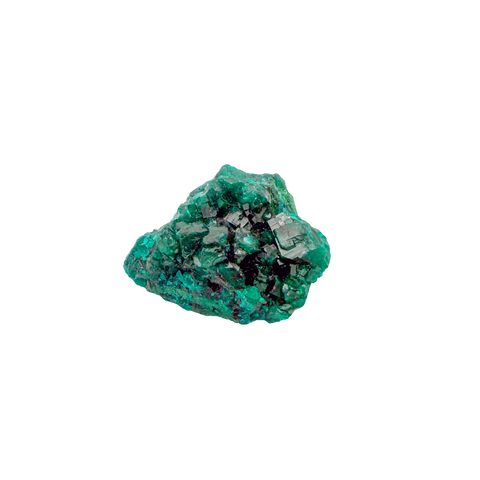
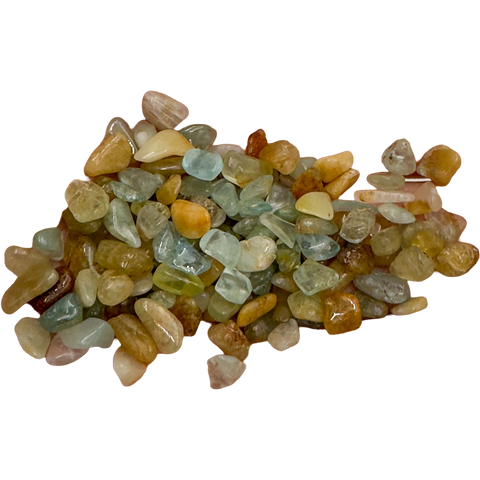
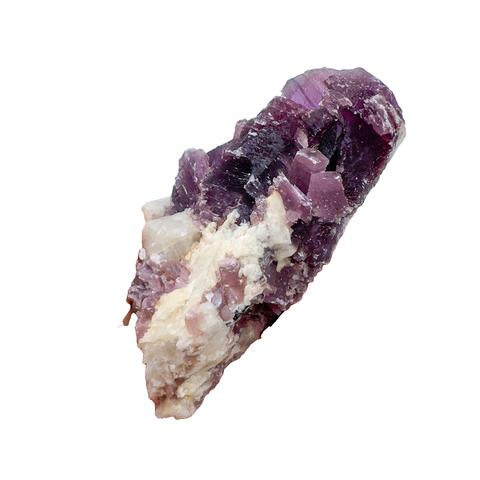
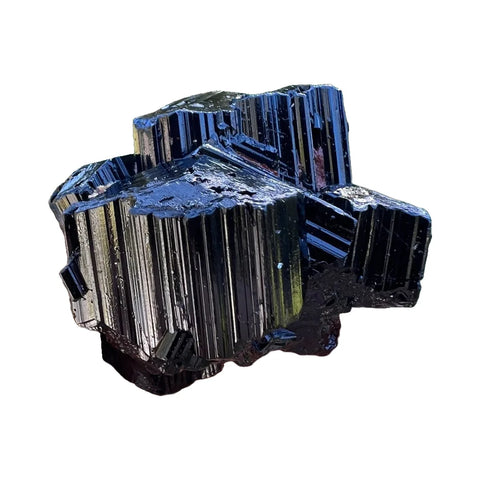


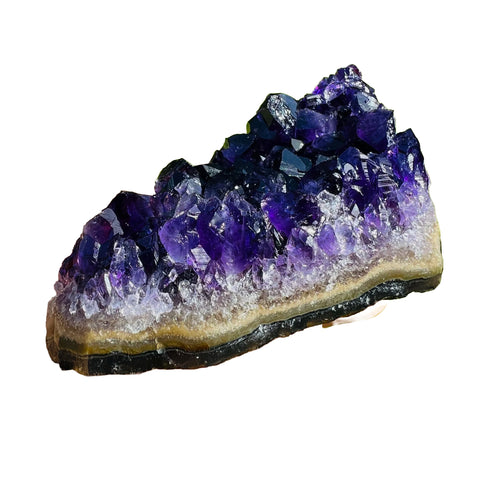










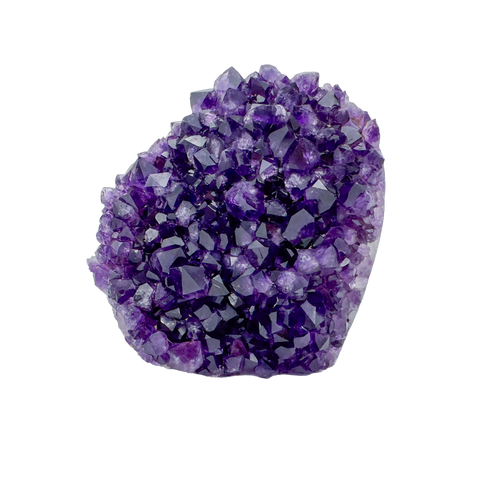
 Amethyst
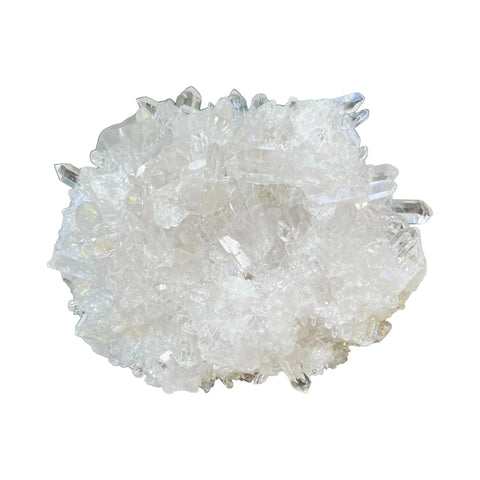
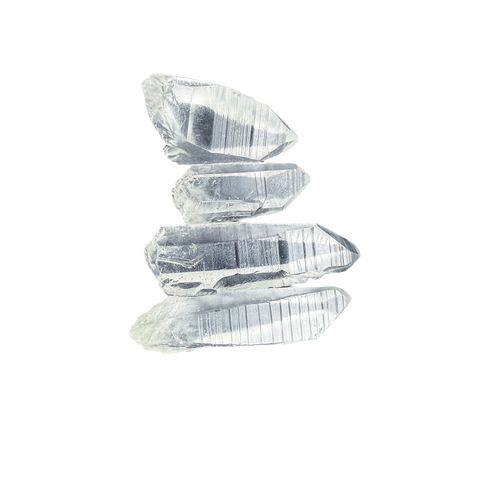
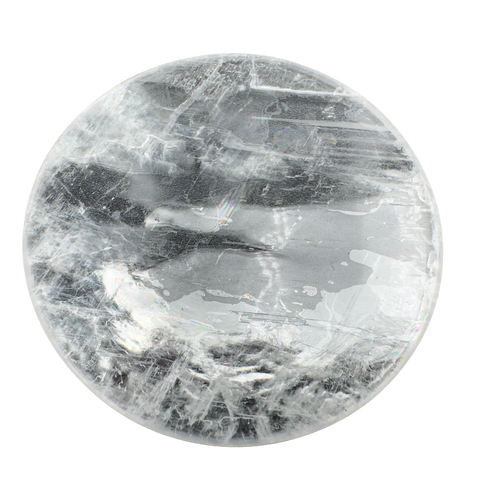
 Clear Quartz
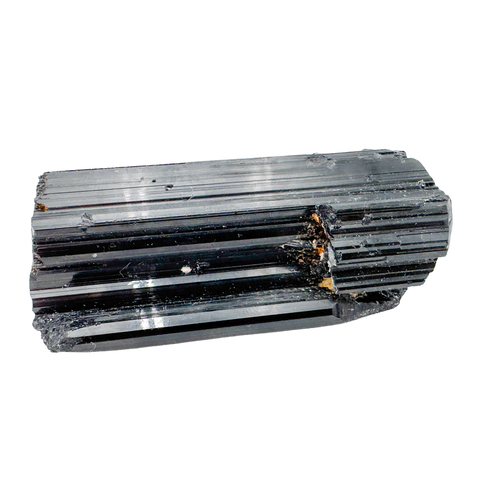
 Black Tourmaline
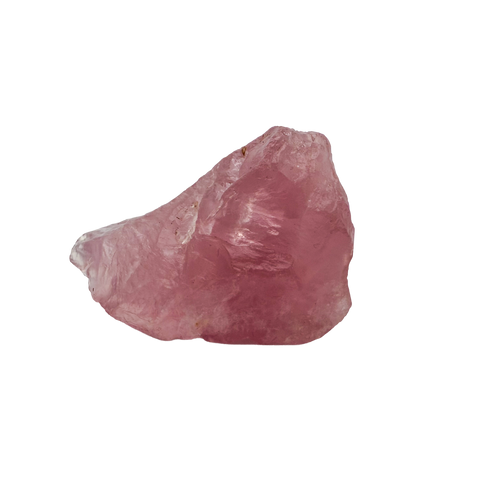
 Rose Quartz
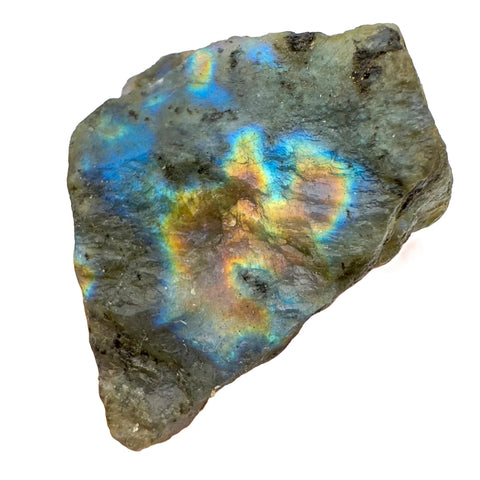
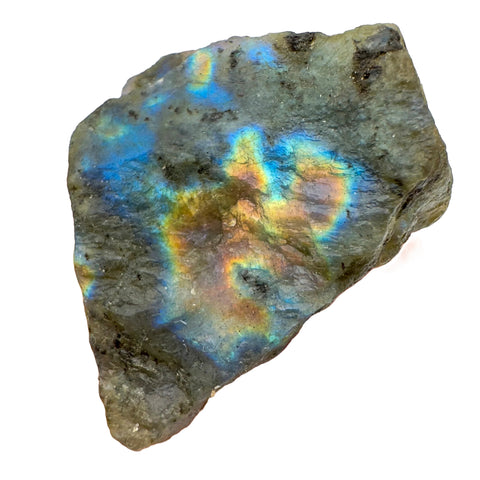
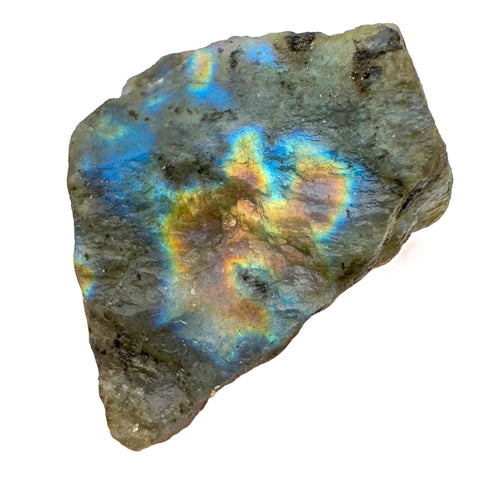
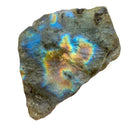 Labradorite
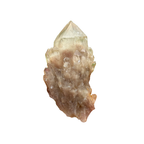 Natural Citrine
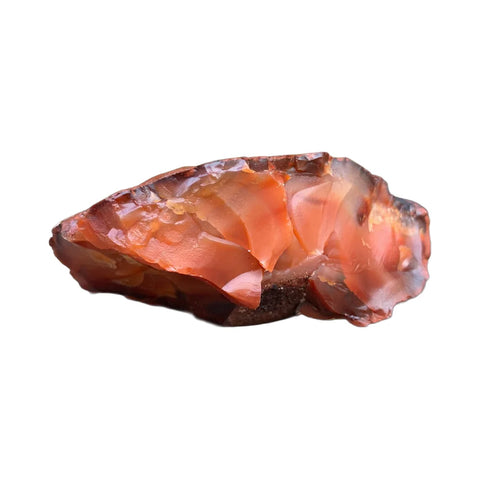
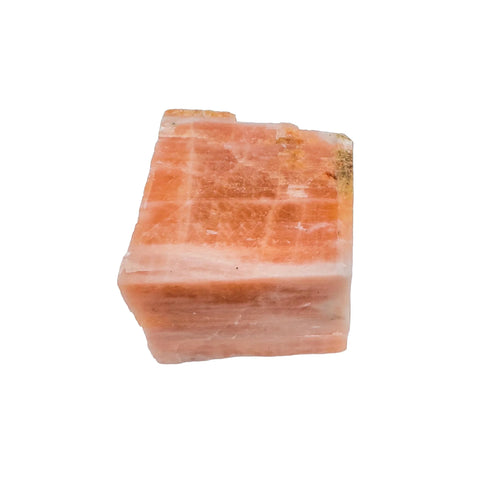
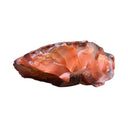 Carnelian
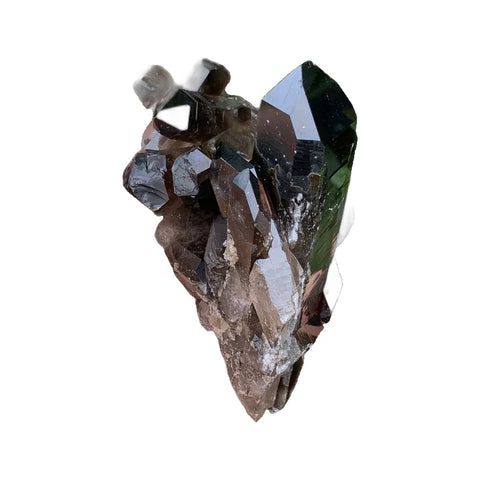
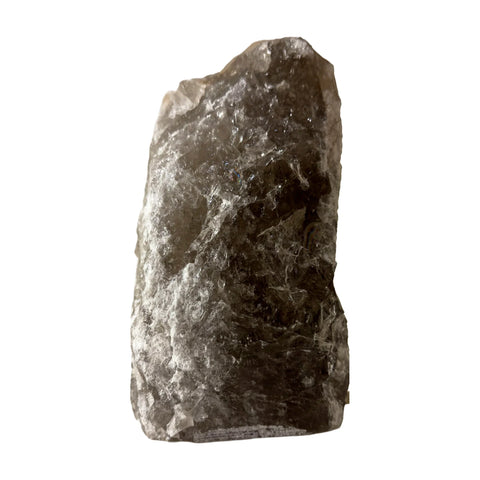
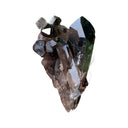 Smoky Quartz
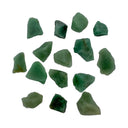 Aventurine
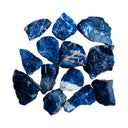 Sodalite
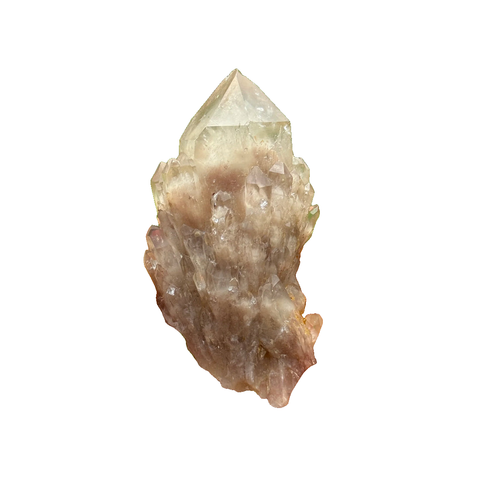
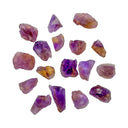 Ametrine
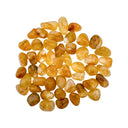 Golden Healer
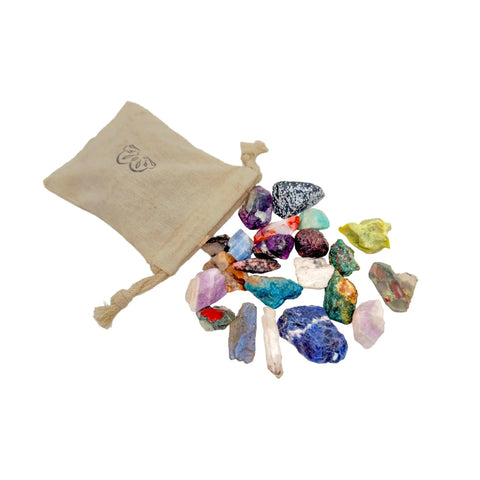
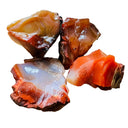 Raw Stones
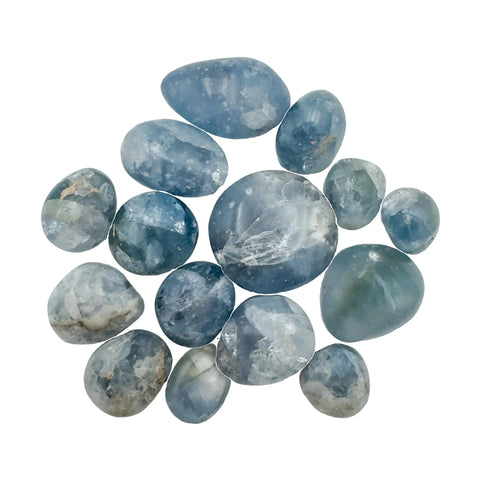
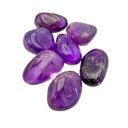 Tumbled Stones
 Palm Stones
 Crystal Points
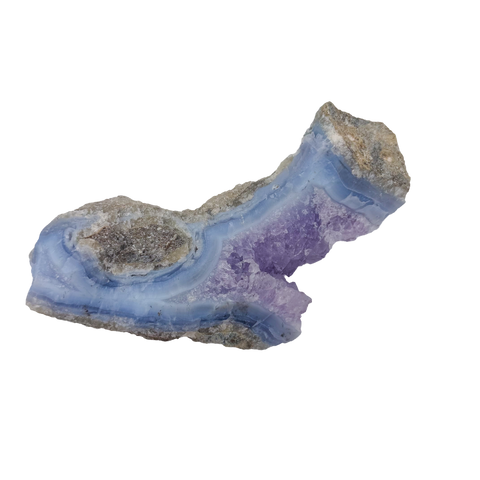
 Clusters & Geodes
 Polished & Decor
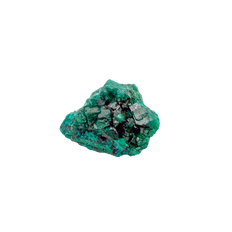 Mineral Specimens
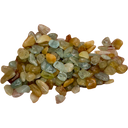 Crystal Chips
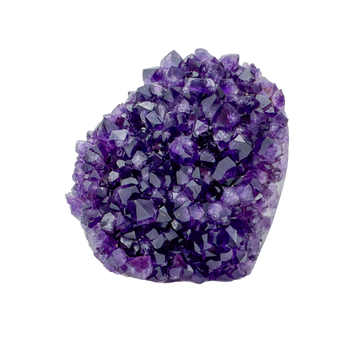
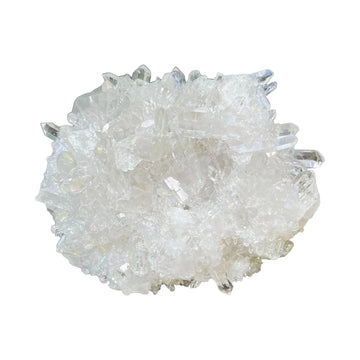
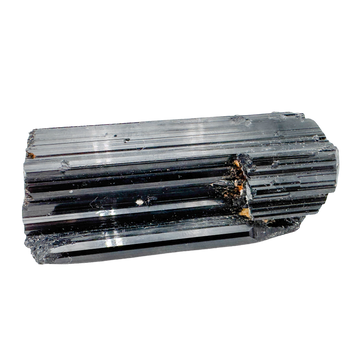
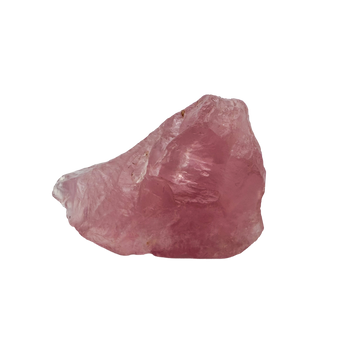
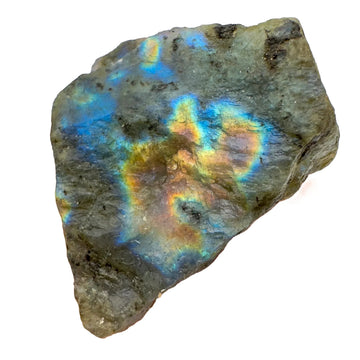
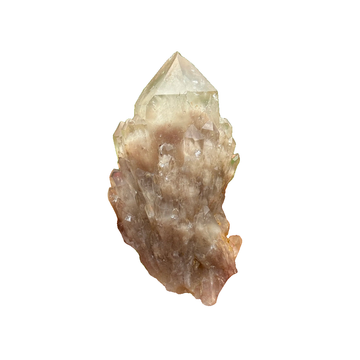
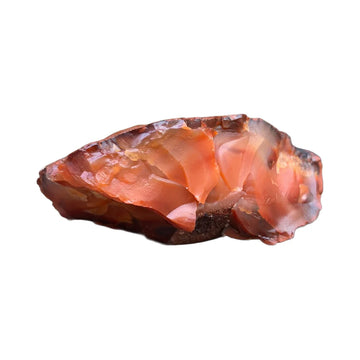
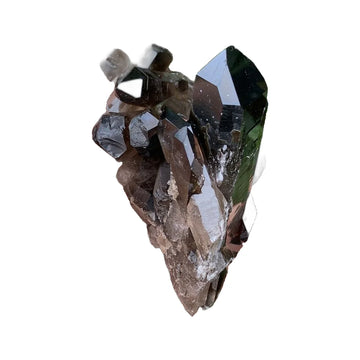
 Raw Stones
179 to choose from
Raw Stones
179 to choose from
 Tumbled Stones
162 to choose from
Tumbled Stones
162 to choose from
 Palm Stones
25 to choose from
Palm Stones
25 to choose from
 Crystal Points
23 to choose from
Crystal Points
23 to choose from
 Clusters & Geodes
98 to choose from
Clusters & Geodes
98 to choose from
 Polished & Decor
147 to choose from
Polished & Decor
147 to choose from
 Mineral Specimens
248 to choose from
Mineral Specimens
248 to choose from
 Crystal Chips
21 to choose from
Crystal Chips
21 to choose from


 AngolaAquamarine
›
AngolaAquamarine
›
 BotswanaCarnelian, Tree Agate
›
BotswanaCarnelian, Tree Agate
›
 DR CongoMalachite, Natural Citrine
›
DR CongoMalachite, Natural Citrine
›
 EswatiniBloodstone
›
EswatiniBloodstone
›
 MadagascarLabradorite, Clear Quartz
›
MadagascarLabradorite, Clear Quartz
›
 MalawiBlue Lace Agate, Garnet
›
MalawiBlue Lace Agate, Garnet
›
 MozambiqueAmazonite
›
MozambiqueAmazonite
›
 NamibiaSodalite, Blue Lace Agate
›
NamibiaSodalite, Blue Lace Agate
›
 Republic of the CongoDioptase
›
Republic of the CongoDioptase
›
 South AfricaTiger Eye, Unakite
›
South AfricaTiger Eye, Unakite
›
 ZambiaChevron Amethyst
›
ZambiaChevron Amethyst
›
 ZimbabweEmerald, Rhodonite
›
ZimbabweEmerald, Rhodonite
›
 ArgentinaBlack Obsidian, Rhodochrosite
›
ArgentinaBlack Obsidian, Rhodochrosite
›
 BoliviaAmetrine
›
BoliviaAmetrine
›
 BrazilAmethyst, Clear Quartz
›
BrazilAmethyst, Clear Quartz
›
 PeruSerpentine, Jade
›
PeruSerpentine, Jade
›
 UruguayAmethyst
›
UruguayAmethyst
›
 Dominican RepublicLarimar
›
Dominican RepublicLarimar
›
 MexicoRainbow Obsidian, Crazy Lace Agate
›
MexicoRainbow Obsidian, Crazy Lace Agate
›
 United StatesSelenite, Peridot
›
United StatesSelenite, Peridot
›
 ChinaFluorite
›
ChinaFluorite
›
 RussiaShungite
›
RussiaShungite
›
 AustraliaMookaite
›
AustraliaMookaite
›
 Where our crystals come from
See where we source →
Where our crystals come from
See where we source →


 Aries
Mar 21 to Apr 19
Carnelian
›
Aries
Mar 21 to Apr 19
Carnelian
›
 Taurus
Apr 20 to May 20
Rose Quartz
›
Taurus
Apr 20 to May 20
Rose Quartz
›
 Gemini
May 21 to Jun 20
Agate
›
Gemini
May 21 to Jun 20
Agate
›
 Cancer
Jun 21 to Jul 22
Moonstone
›
Cancer
Jun 21 to Jul 22
Moonstone
›
 Leo
Jul 23 to Aug 22
Citrine
›
Leo
Jul 23 to Aug 22
Citrine
›
 Virgo
Aug 23 to Sep 22
Amazonite
›
Virgo
Aug 23 to Sep 22
Amazonite
›
 Libra
Sep 23 to Oct 22
Blue Lace Agate
›
Libra
Sep 23 to Oct 22
Blue Lace Agate
›
 Scorpio
Oct 23 to Nov 21
Obsidian
›
Scorpio
Oct 23 to Nov 21
Obsidian
›
 Sagittarius
Nov 22 to Dec 21
Sodalite
›
Sagittarius
Nov 22 to Dec 21
Sodalite
›
 Capricorn
Dec 22 to Jan 19
Black Tourmaline
›
Capricorn
Dec 22 to Jan 19
Black Tourmaline
›
 Aquarius
Jan 20 to Feb 18
Amethyst
›
Aquarius
Jan 20 to Feb 18
Amethyst
›
 Pisces
Feb 19 to Mar 20
Aquamarine
›
Gifting?
A birthday stone is the safe bet.
Read the zodiac guide →
Pisces
Feb 19 to Mar 20
Aquamarine
›
Gifting?
A birthday stone is the safe bet.
Read the zodiac guide →








Ruby
Ruby is the red gem variety of corundum, the same mineral that gives us sapphire in every other color. Its red comes from chromium, and at a hardness of 9 it is one of the toughest gemstones you can wear. It has been treasured for thousands of years, and almost all rubies today are treated in some way, which is worth understanding before you buy.
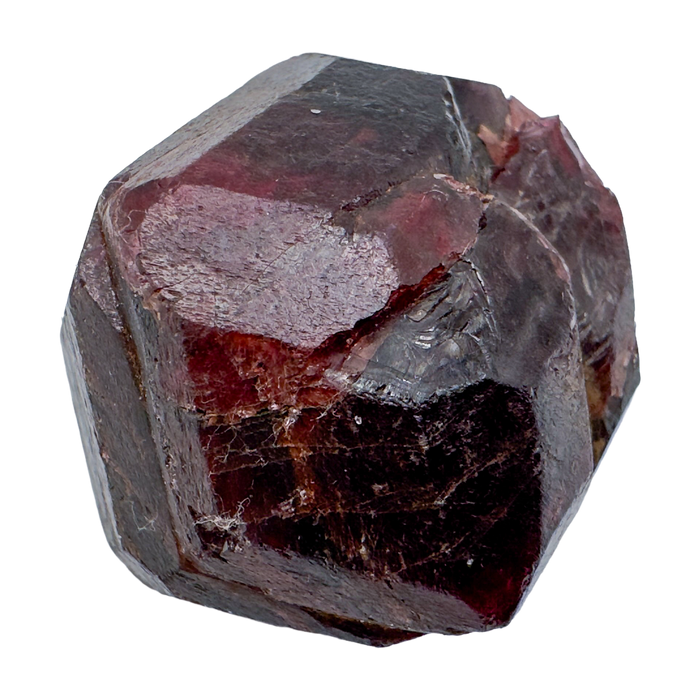
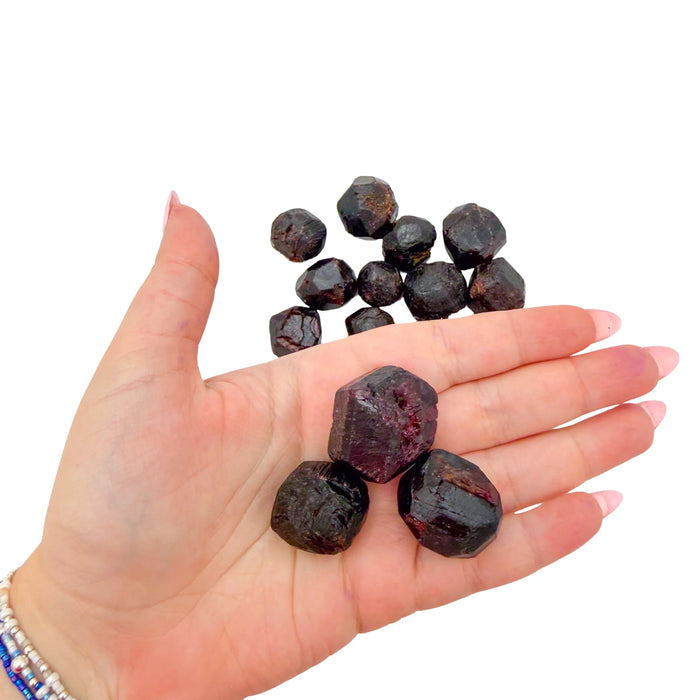
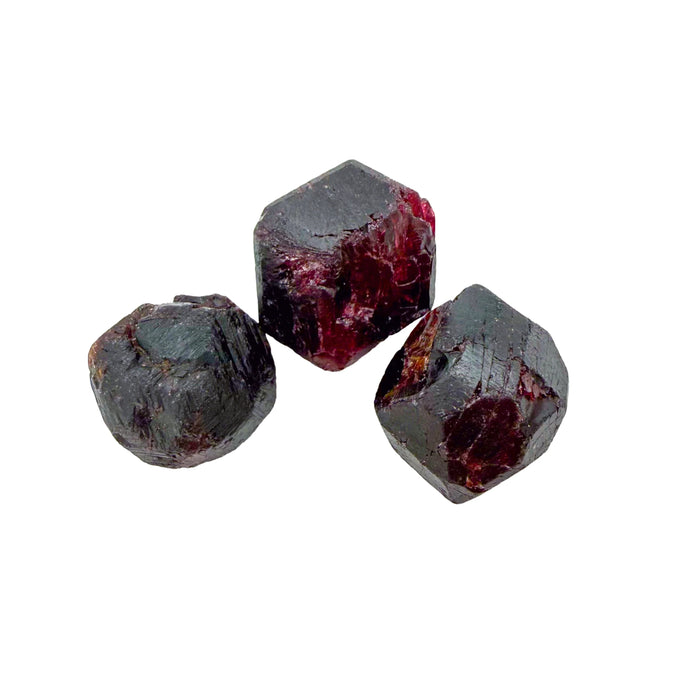
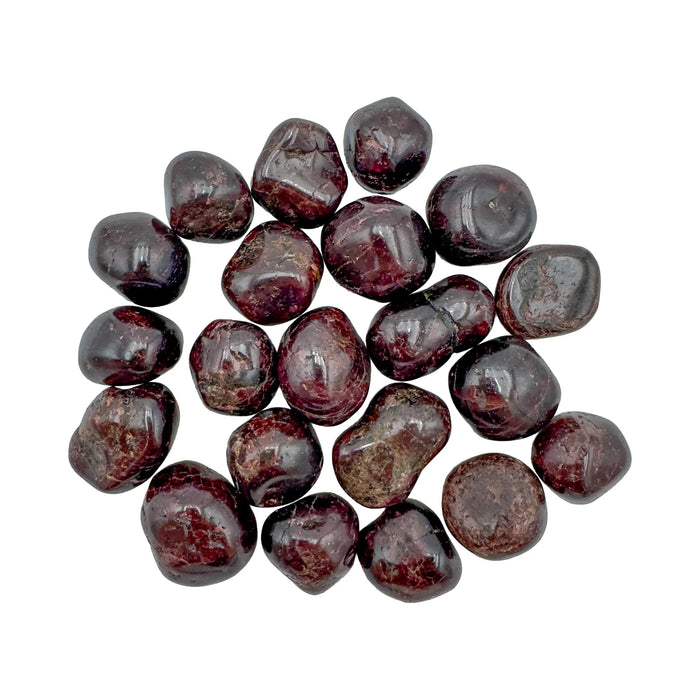
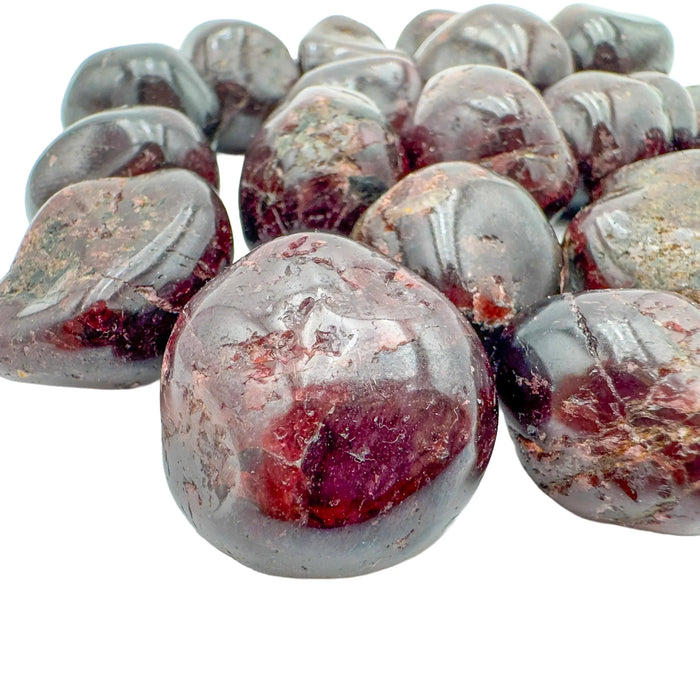
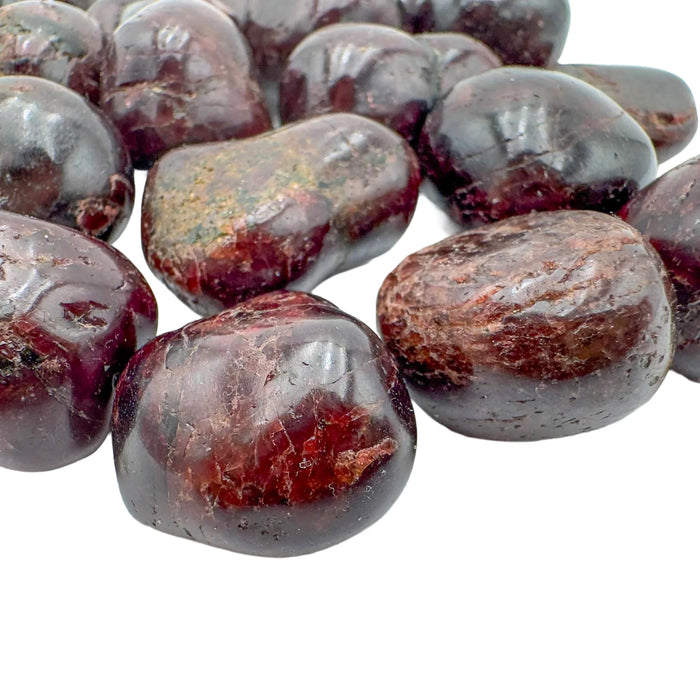
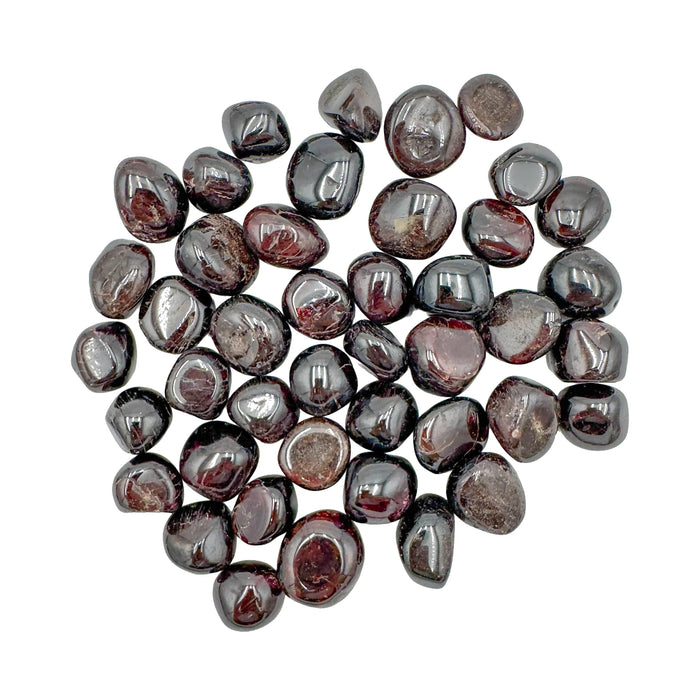
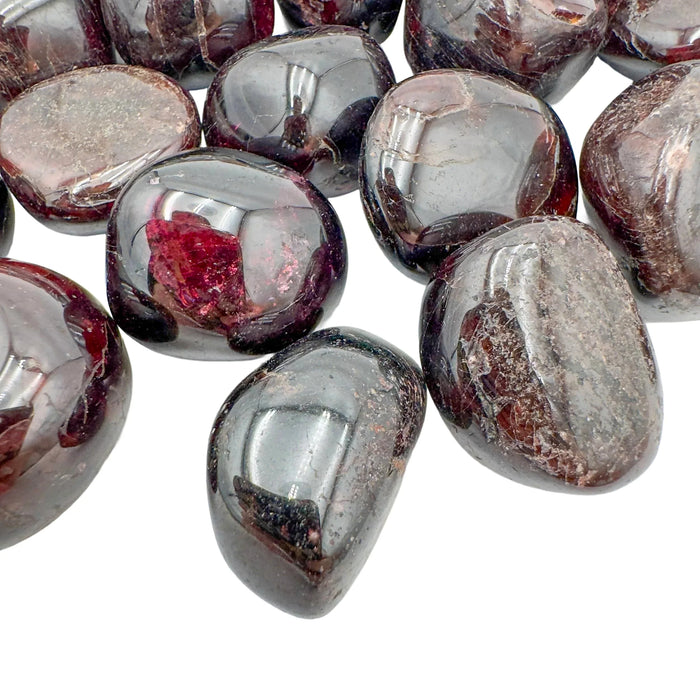
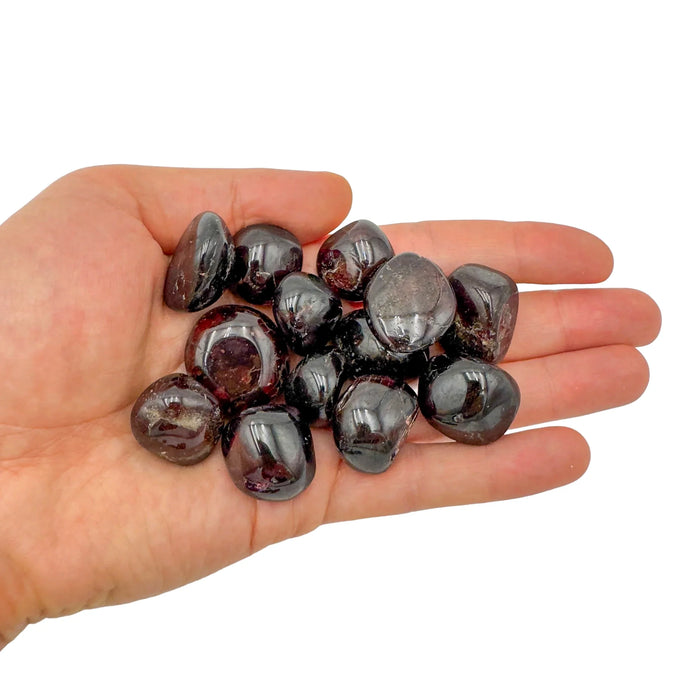
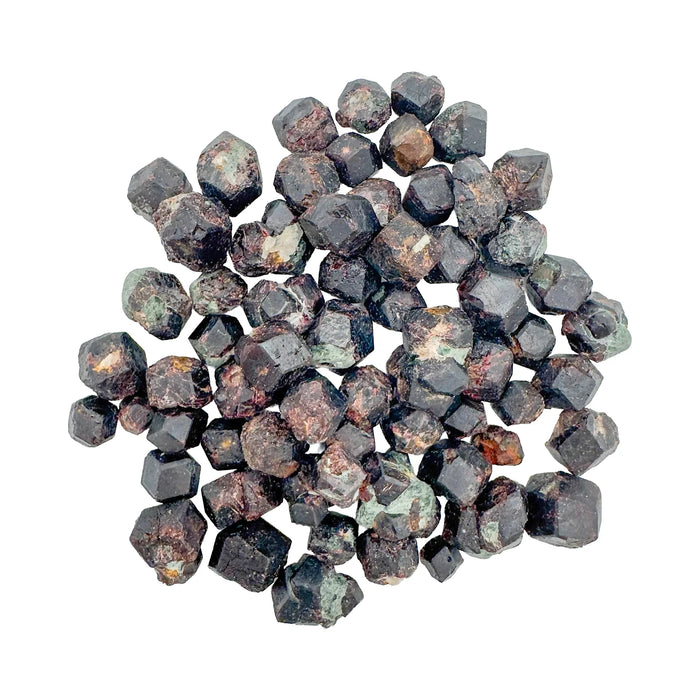
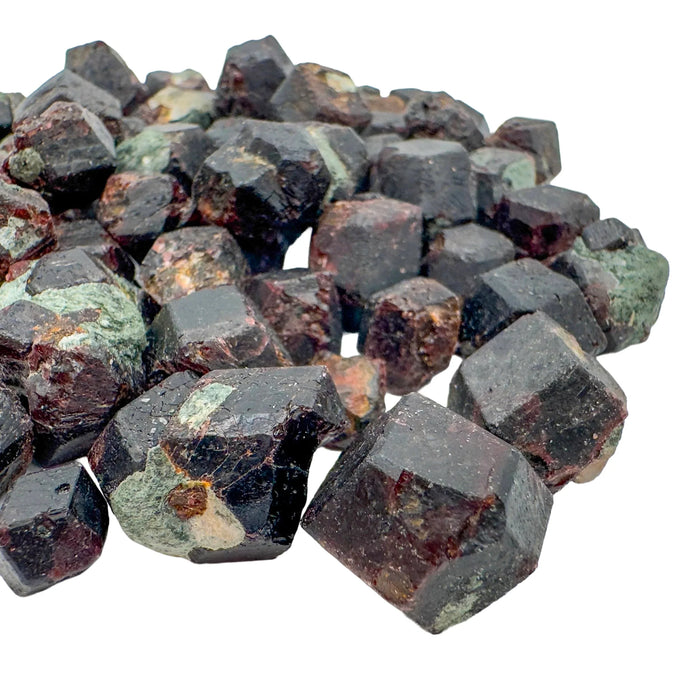
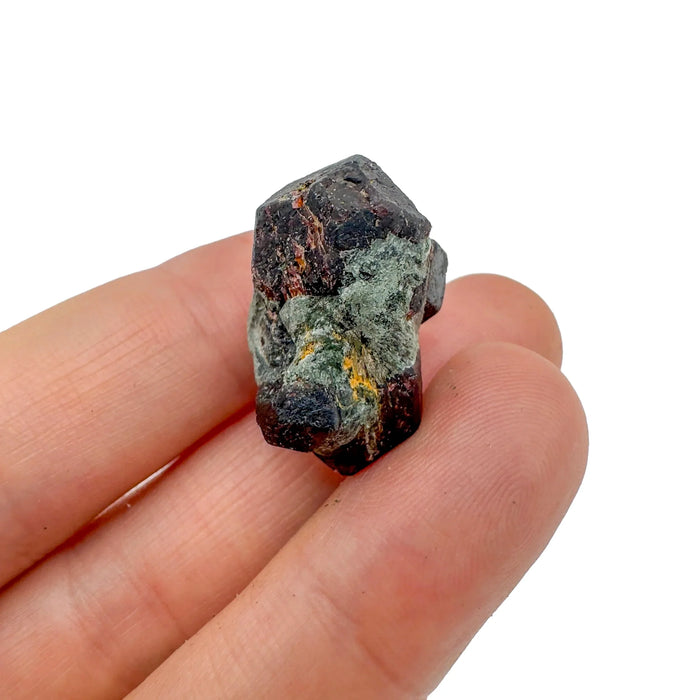
The closest match we carry: Garnet.
Ruby is not something we carry. Garnet is the closest match in our collection, and every product page names its origin and grade.
- from 1,000+ reviews
- Ships within 72 hoursMonday to Friday, tracked
- 90 days to return itif you do not love it
- Free US shipping over $99$8.99 flat rate under
The geology.
Ruby is corundum, crystalline aluminum oxide, in its red gem form. The red comes from trace chromium substituting for aluminum in the crystal, and the more chromium present, the deeper the red, up to a point. That same chromium also makes fine rubies fluoresce, adding an inner glow to the best stones. Any corundum that is not red is called sapphire, so ruby and sapphire are simply colors of one mineral.
At a hardness of 9 on the Mohs scale, corundum is second only to diamond, which is why ruby wears so well. It crystallizes in the trigonal system and forms in several settings, classically in marble, where slow metamorphism of limestone with the right trace elements grows gem crystals. Natural rubies often contain fine needle inclusions called silk, which can also produce a six-rayed star when the stone is cut as a cabochon.
The origins.
Myanmar, historically Burma, is the legendary source. The Mogok valley has produced the finest rubies for centuries, including the intense red known as pigeon's blood, while the Mong Hsu deposit yields large quantities that usually require heat treatment. Mozambique, and specifically the Montepuez deposit, has become the world's leading commercial and gem source since around 2009.
Thailand, long a cutting and treatment center, along with Madagascar, Sri Lanka, Afghanistan, and Tanzania, rounds out global supply, each with its own typical color and character. One honest note on Myanmar: Burmese stones can carry real ethical and sanctions concerns tied to their origin, which is worth weighing for anyone who cares where a gem comes from.
Traditional associations.
Ruby has been called the king of gemstones, a title that goes back to its Sanskrit name meaning king of precious stones. Across India, Burma, and medieval Europe it was tied to passion, vitality, courage, and protection, and worn by rulers and warriors as a stone of life force.
Many people work with ruby for vitality, confidence, passion, and a grounded sense of courage, and associate it with the Root and Heart, the element of Fire, and the sign Leo. It is also the July birthstone. A common practice is to wear it daily, which its toughness makes easy.
Spotting the real thing.
A genuine ruby is very hard, shows a true chromium red, and often glows slightly because of fluorescence. Natural stones usually carry natural inclusions such as fine rutile silk or small mineral crystals. The most common thing sold cheaply as ruby is glass-filled, or composite, ruby, which gives itself away with gas bubbles and a blue or orange flash inside the fractures, plus a visible difference in luster where glass meets corundum.
Other look-alikes include red glass, which is warmer to the touch, softer, and bubble-filled, and red garnet, which is softer and lacks ruby's fluorescence. Synthetic ruby is real corundum grown in a lab and is perfectly legitimate when disclosed, often showing curved growth lines rather than the angular features of natural stones. For any significant ruby, ask for the treatment status and, ideally, an independent lab report.
Care & handling.
A natural or simply heat-treated ruby is wonderfully durable at a hardness of 9 and handles daily wear and a clean in warm soapy water with a soft brush. Because it is harder than almost everything else, store it separately so it does not scratch your other stones, and so nothing scratches it.
Glass-filled rubies are the exception and need real caution. The glass is fragile and can be etched or ruined by heat, acids (even lemon juice), ultrasonic and steam cleaners, and a jeweler's torch during repairs. If a ruby is composite, clean it only with a damp cloth and tell any jeweler before they work on it.
Pairs well with.
A deeper look.
Extended geology, sourcing, authentication, history, and varieties, for when the quick guide isn't quite enough.
Extended geology
Corundum is aluminum oxide, trigonal, with a hardness of 9 and a specific gravity around 4.0, notably dense for its size. The chromophore in ruby is chromium, which produces the red and the characteristic red fluorescence; iron, when present, tends to mute both. The boundary between ruby and pink sapphire, where chromium content is low, is a genuine point of debate among gem laboratories.
Rubies form in a few geological environments. Marble-hosted deposits, as in Myanmar and Vietnam, often yield stones with strong fluorescence and little iron. Basalt and amphibolite-related sources, as in parts of Mozambique and Thailand, can carry more iron and a slightly different look. Rutile silk inclusions are common, and when dense and aligned they create asterism, the star of a star ruby.
Extended sourcing
Mogok in Myanmar set the historic standard for top color, including unheated pigeon's blood rubies that command extraordinary prices, while Mong Hsu supplies large volumes that typically need heat. Mozambique's Montepuez deposit, developed at scale since around 2009, is now the leading modern source and produces both fine unheated stones and abundant commercial material.
Thailand remains central to cutting and treatment and historically produced darker, iron-rich rubies, while Madagascar, Sri Lanka, and Afghanistan each contribute distinctive material. Provenance matters for value and for ethics: Burmese origin in particular has been subject to sanctions and conflict concerns, so a documented, responsibly sourced stone is worth seeking out.
Authentication and warning signs
The key categories are unheated, heated, and glass-filled. Unheated stones with fine natural color are the rarest and most valuable and are normally certified. Heated rubies are the stable industry norm. Glass-filled or composite rubies are a low-cost, fragile product and should never be priced or treated as fine ruby. Tells for composites include flash effects and bubbles within the filled fractures.
Synthetic rubies are chemically identical to natural corundum but grown in a laboratory by flame fusion, flux, or other methods, and are honest only when disclosed as synthetic. Curved striae and gas bubbles point to flame-fusion synthetics, while natural stones show angular zoning and mineral inclusions. For meaningful purchases, an independent gemological report removes the guesswork.
History and folklore
Ruby's standing as the king of gemstones runs through many cultures, from its Sanskrit name to the reverence shown Burmese stones to the European courts that prized it. In the medieval imagination it was believed to protect the wearer and signal vitality, a historical belief rather than a claim about health, and it has long been the July birthstone.
One of the great honesty lessons in gem history is that many famous historical rubies are not ruby at all. The Black Prince's Ruby in the British Imperial State Crown, for example, is actually a red spinel, a different mineral entirely. For centuries red spinel and ruby were sold interchangeably, a reminder that names and appearances can mislead even at the level of crown jewels.
Varieties and trade names
Color and origin define ruby's varieties more than anything. Pigeon's blood describes the most prized pure, slightly fluorescent red. Burmese stones lean toward that intense, glowing red, Mozambique rubies span fine reds to commercial qualities, and Thai material tends darker and more garnet-toned. Star rubies, cut as cabochons, show a six-rayed star from aligned silk.
It is also worth knowing ruby's relatives and look-alikes. As a variety of corundum it shares everything but color with sapphire. Red spinel and red garnet have stood in for it historically, and ruby also appears intergrown in other rocks, as in ruby in zoisite and ruby in fuchsite, which are sold as their own decorative materials.
What it costs in the market
Ruby is among the most valuable colored gemstones, and at the top end fine unheated Burmese pigeon's blood stones can rival or exceed almost any colored gem per carat. Heated rubies of good color are far more attainable and make up most of the fine jewelry market, while clarity, cut, and especially size all push price upward steeply for clean material.
At the other end, lead-glass-filled composite rubies are inexpensive and should be understood as a treated, fragile product rather than fine ruby. The honest variables that set value are color first, then clarity, cut, and size, with origin and treatment status, unheated over heated over glass-filled, often making the largest difference of all.
An education-first guide.
We don't currently carry ruby, so there's nothing to sell you here. This guide exists because the more you understand a stone, the better every decision you make about it becomes, wherever you buy it. Explore the rest of our crystal guides for stones we do source, each with full origin and treatment notes.
Explore the Crystal GuideGrounded Connections
New stones go to the list first.
No forwarding, no selling. Unsubscribe in one click. Privacy