




















































 Raw Stones
179 pieces
Raw Stones
179 pieces
 Tumbled Stones
162 pieces
Tumbled Stones
162 pieces
 Palm Stones
25 pieces
Palm Stones
25 pieces
 Crystal Points
23 pieces
Crystal Points
23 pieces
 Clusters & Geodes
104 pieces
Clusters & Geodes
104 pieces
 Polished & Decor
148 pieces
Polished & Decor
148 pieces
 Mineral Specimens
259 collector pieces
Mineral Specimens
259 collector pieces
 Crystal Chips
21 pieces
Browse everything
Every collection, one page.
View All Collections →
Crystal Chips
21 pieces
Browse everything
Every collection, one page.
View All Collections →


 Aries
Mar 21 – Apr 19
Carnelian
›
Aries
Mar 21 – Apr 19
Carnelian
›
 Taurus
Apr 20 – May 20
Rose Quartz
›
Taurus
Apr 20 – May 20
Rose Quartz
›
 Gemini
May 21 – Jun 20
Agate
›
Gemini
May 21 – Jun 20
Agate
›
 Cancer
Jun 21 – Jul 22
Moonstone
›
Cancer
Jun 21 – Jul 22
Moonstone
›
 Leo
Jul 23 – Aug 22
Citrine
›
Leo
Jul 23 – Aug 22
Citrine
›
 Virgo
Aug 23 – Sep 22
Amazonite
›
Virgo
Aug 23 – Sep 22
Amazonite
›
 Libra
Sep 23 – Oct 22
Blue Lace Agate
›
Libra
Sep 23 – Oct 22
Blue Lace Agate
›
 Scorpio
Oct 23 – Nov 21
Obsidian
›
Scorpio
Oct 23 – Nov 21
Obsidian
›
 Sagittarius
Nov 22 – Dec 21
Sodalite
›
Sagittarius
Nov 22 – Dec 21
Sodalite
›
 Capricorn
Dec 22 – Jan 19
Black Tourmaline
›
Capricorn
Dec 22 – Jan 19
Black Tourmaline
›
 Aquarius
Jan 20 – Feb 18
Amethyst
›
Aquarius
Jan 20 – Feb 18
Amethyst
›
 Pisces
Feb 19 – Mar 20
Aquamarine
›
Gifting?
A birthday stone is the safe bet.
Read the zodiac guide →
Pisces
Feb 19 – Mar 20
Aquamarine
›
Gifting?
A birthday stone is the safe bet.
Read the zodiac guide →











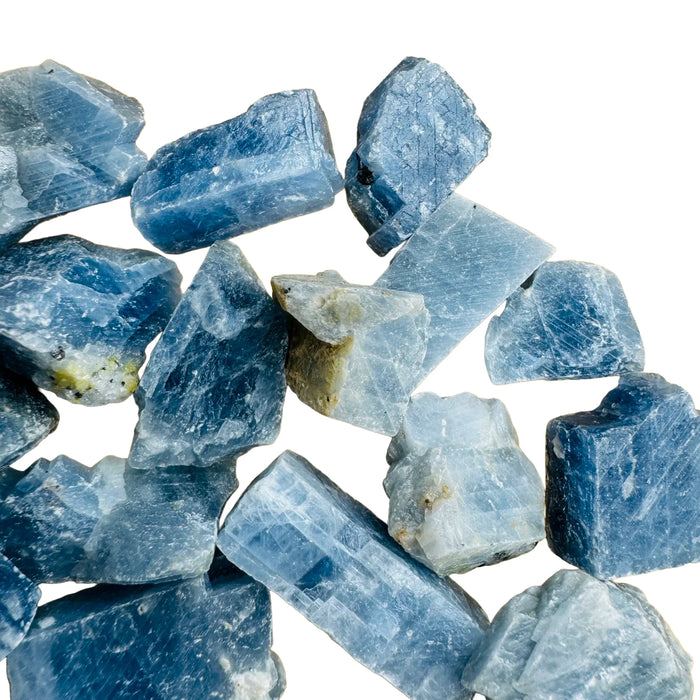
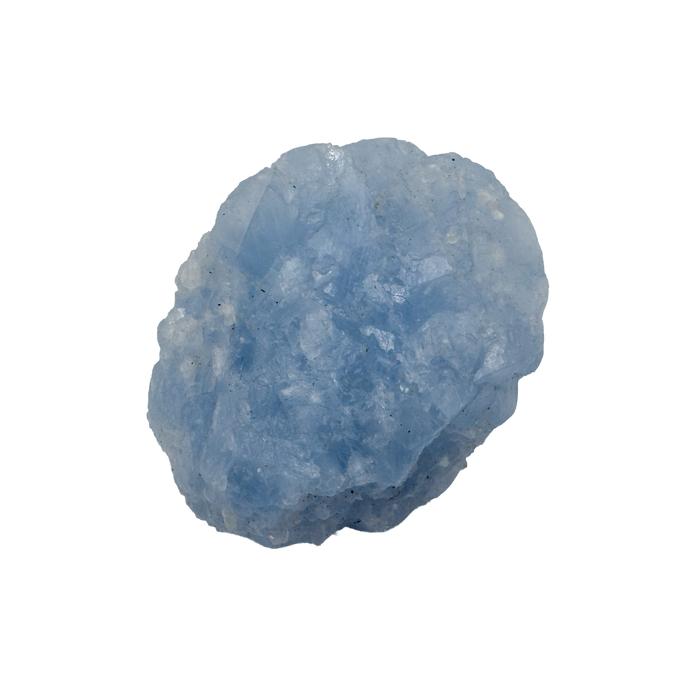
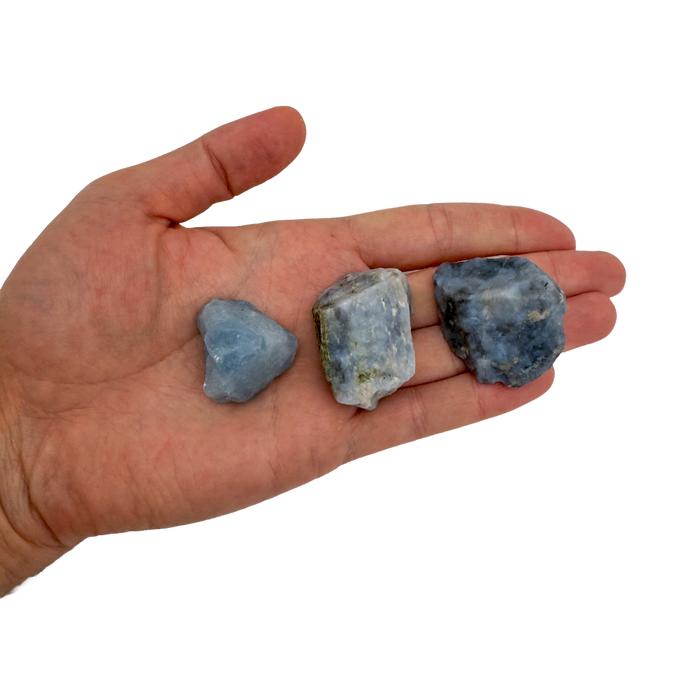
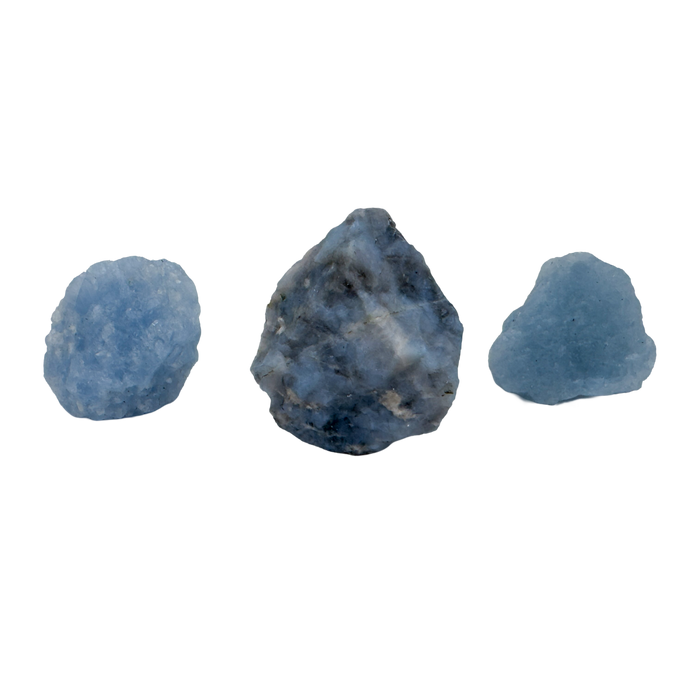
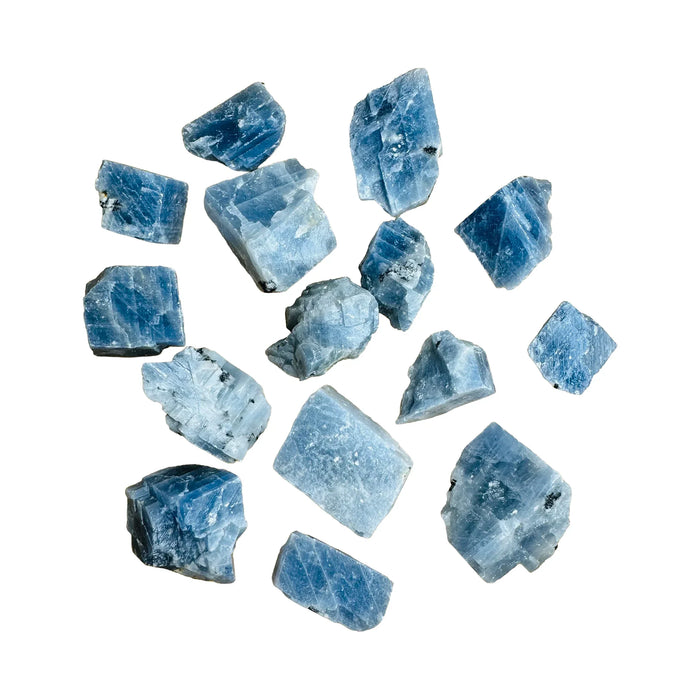
Blue Calcite
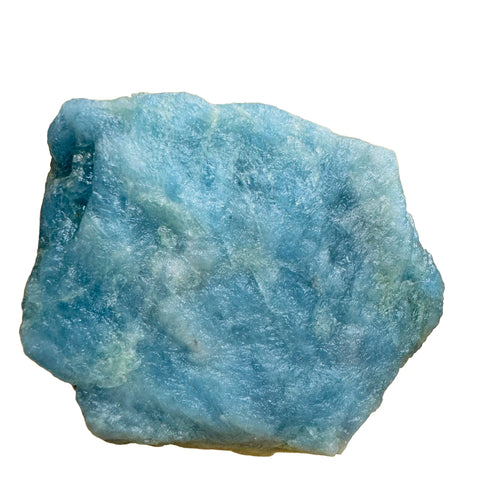
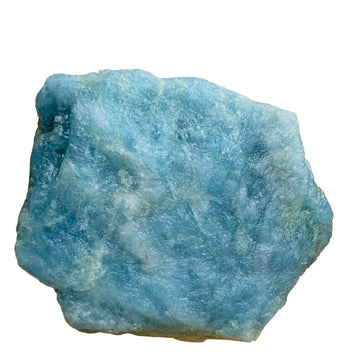
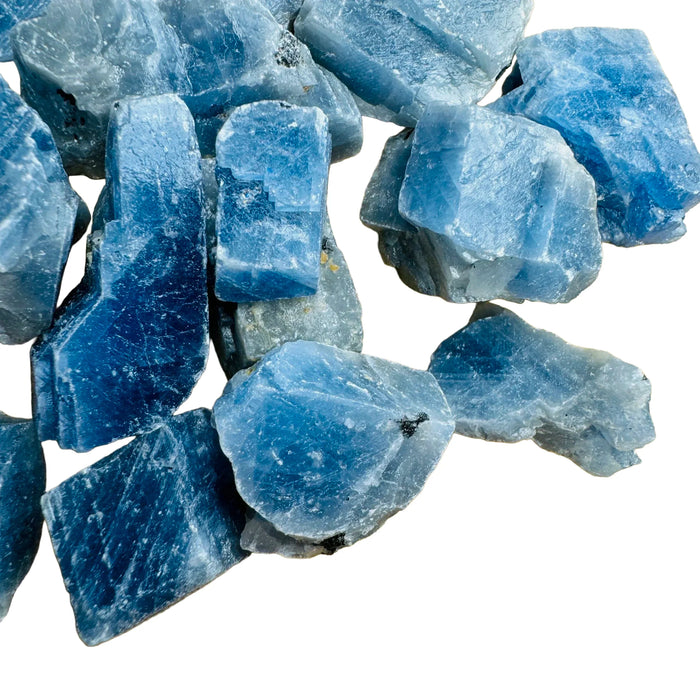
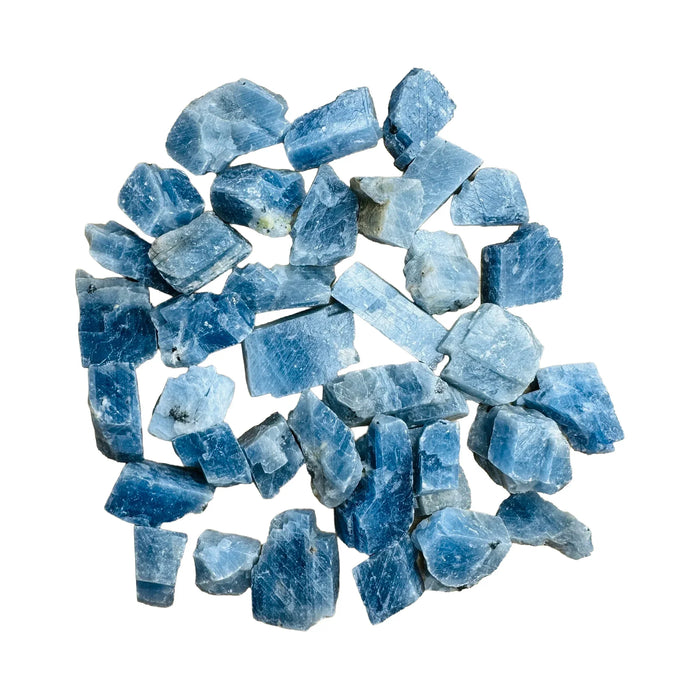
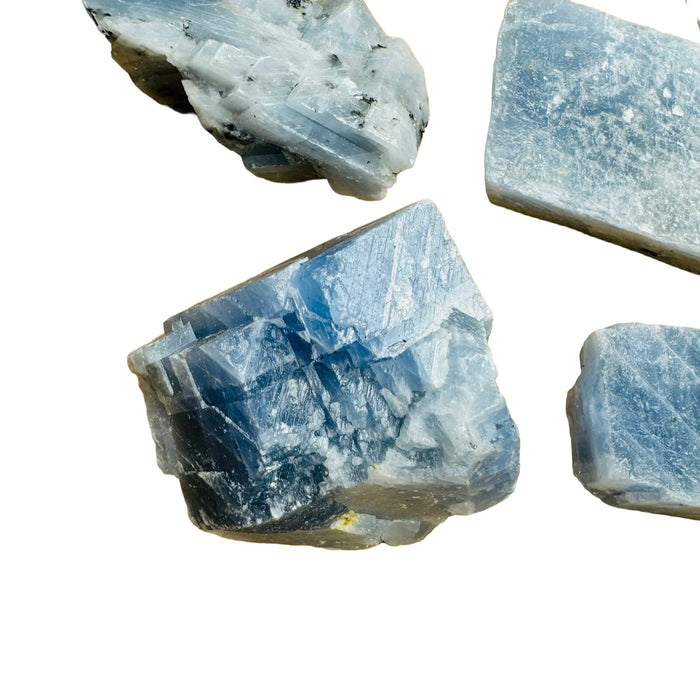
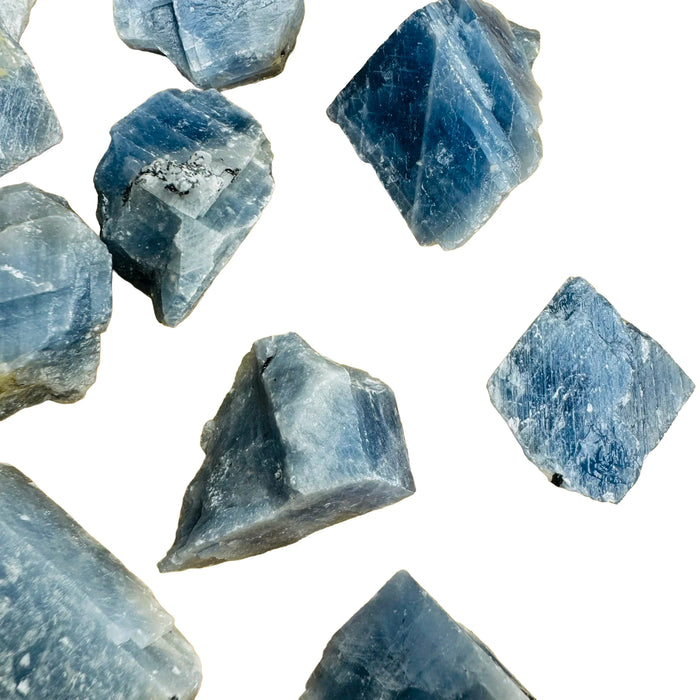
Blue calcite is a pale blue calcium carbonate mineral, soft and waxy to the touch, found in the mineral-rich deposits of Madagascar and Namibia. Its color can fade in sunlight over time, which is part of its nature rather than a flaw. Many people work with it for quieting anxious thoughts, easing communication tension, and the kind of mental stillness that feels like breathing out after holding tension too long.
Shop blue calciteThe geology.
Blue calcite is a calcium carbonate mineral, chemical formula CaCO3, from the calcite family. Its pale blue to blue-gray color comes from trace metals that replace or sit alongside calcium atoms in the crystal lattice. The stone typically forms as massive material rather than as distinct crystals; the fine mineral grains create a dense, waxy texture. It sits at 3 on the Mohs hardness scale, which makes it softer than quartz but harder than some other carbonates. Specific gravity runs around 2.7 to 2.8, consistent with calcite generally.
Blue calcite has a trigonal (rhombohedral) crystal system, though the crystal faces are rarely visible to the naked eye in the massive material we carry. The stone shows a matte to waxy luster when polished, and fractures unevenly rather than along cleavage planes. Its most distinguishing trait is the softness and the color, which can shift from pale powder-blue toward gray depending on light and trace mineral content. One key characteristic worth noting: the blue color in blue calcite can fade gradually with prolonged exposure to direct sunlight. This is a natural property of the mineral, not a sign of poor quality or mistreatment. The color shift happens slowly, over months or years, and the stone itself is unharmed by the process.
The origins.
The blue calcite we carry comes from two primary sources: Madagascar and Namibia. Madagascar produces a softer, more powder-blue waxy material that is relatively common in the market. The calcite comes from mineral-rich pegmatite and hydrothermal zones, often worked through small-scale mining operations. The color is consistent and pale, with a buttery, almost talcum-powder finish that feels distinctive in the hand. We select for well-formed pieces and avoid heavily fractured material.
Namibia produces a deeper, more saturated blue calcite, often with subtle mottling and banding that runs through the stone. The material has a slightly more uniform density than the Malagasy varieties, though it is no harder. Namibian blue calcite is less commonly seen in the North American market, which makes it a less familiar find, though both origins are entirely genuine and equally natural. The deeper blue can shift to slight gray or green undertones depending on trace minerals, adding visual variation that many people find more interesting than uniform pale blue.
Blue calcite occurs in other deposits around the world. This stone is found in parts of Mexico, Peru, and elsewhere, but the Madagascar and Namibia origins offer the most reliable color profile and consistent supply. The mining methods vary by region and operator, but most commercial blue calcite involves hand-sorting and careful selection to preserve the color; harsh mechanical processing can damage the soft material or cause discoloration.
Traditional associations.
Blue calcite is a modern addition to crystal practice, becoming popular in the 1980s and 1990s as wider mineral exploration made previously lesser-known stones available to the commercial market. Unlike older traditions centered on minerals like clear quartz or amethyst, blue calcite does not have deep historical roots in metaphysical practice. Its current associations were built by contemporary crystal workers who recognized its softness, pale color, and throat-chakra affinity, and saw in it a stone for gentle clarity and quiet communication.
In modern crystal work, blue calcite is most commonly associated with the Throat chakra, the elements Air and Water together (reflecting both clarity and flow), and the intention of calm, centered communication. Many people work with it for meditation when anxiety or mental chatter is high, for easing tension before difficult conversations, and for practices around throat-chakra opening without the intensity that some other throat stones carry. It is often chosen alongside softer, gentler stones like selenite or angelite when someone wants subtle support rather than bold energy. The traditional associations emphasize its role in quieting the mind and in speaking with gentleness and honesty.
Spotting the real thing.
Genuine blue calcite feels soft and waxy to the touch, with a matte finish on unpolished pieces and a smooth, slightly oily feel when polished. The color is pale to medium blue-gray, and will vary in intensity across a single piece. Look for pieces where you can see subtle banding or slight color shifts rather than absolute uniform color, which is a sign of the natural variation in the material. True blue calcite can be scratched easily with a copper coin or fingernail and shows white powder or streaks when scratched.
Dyed blue calcite or blue-dyed agate substitutes feel harder and do not scratch easily under gentle pressure. These imitations often show artificially vivid, uniform color and lack the subtle natural banding of genuine blue calcite. Some dyed pieces are noticeably shiny or glossy in a way that natural blue calcite is not. A practical test: genuine blue calcite reacts to weak acid (a small amount of vinegar on a hidden edge will produce a slight fizz and discoloration), while most substitutes will not. If a piece feels hard, shows no variation in color, and scratches glass rather than the reverse, it is not calcite. The softness is a defining feature, not a variable.
Care & handling.
Blue calcite is soft and needs gentle handling. The stone should never be soaked or submerged in water for extended periods, as it will slowly dissolve or soften over time. Brief rinsing under cool running water is acceptable, but avoid salt water, warm water, and water-based cleaners. Dry care is best. If dust accumulates, use a soft dry brush or cloth rather than water. Store the stone separately from harder minerals that could scratch it, and avoid carrying it loose in a pocket with keys or other hard objects.
Handle with care to avoid drops or pressure on edges. Do not use ultrasonic or steam cleaners. The color can fade gradually with prolonged direct sunlight exposure, which is a natural property of the mineral and not a defect. If you want to preserve the color as it is now, store the stone in soft indirect light when not in use. For energetic cleansing, use smoke, sound, moonlight, or breath rather than water or salt. The softness and the gentle color of blue calcite are core to its character and to how many people relate to the stone. Treat that softness as a feature rather than a liability.
Pairs well with.
Proof, not promises.
We measure our own sourcing across five dimensions. Supply chain, environmental footprint, artisan support, market integrity, and pricing. The number is honest, not perfect. Where we can do better, we say so.
A deeper look.
Extended geology, sourcing, authentication, color fading, varieties, and pricing for when the quick guide isn't quite enough.
Extended geology
Blue calcite is a calcium carbonate mineral with the chemical formula CaCO3, crystallizing in the trigonal (rhombohedral) system. Trace metals, typically iron and copper, sit within or substitute for calcium atoms in the crystal lattice, producing the blue to blue-gray color. The metal concentrations vary with each deposit and even within single stones, creating the natural color variation visible in well-cut pieces.
The stone forms as massive material in mineral veins and pegmatite deposits rather than as distinct crystals. This is why commercial blue calcite is always worked from larger pieces and finished into tumbled stones, carvings, or palm forms rather than existing as natural crystal points. The massive form does not limit its beauty or utility; it simply defines how the material presents.
Hardness sits at 3 on the Mohs scale. Specific gravity runs 2.7 to 2.8. The stone shows a matte to waxy luster when polished and fractures unevenly rather than along defined cleavage planes. Under a loupe, you can see the fine mineral grain and sometimes subtle layering or banding created by slight variations in metal content during formation.
Color fading with sunlight
A key characteristic that distinguishes genuine blue calcite from many imitations is that the color can fade gradually with prolonged exposure to direct sunlight. This happens slowly, over months or years, and is entirely reversible in the sense that the stone remains chemically unchanged and functionally the same. The fading is a natural property of the trace metals in the crystal structure and their response to ultraviolet light; it is not a sign of poor quality or mistreatment.
If you want to preserve the color intensity, store your blue calcite in soft indirect light when not wearing or carrying it. Brief periods of sunlight are fine; prolonged daily direct sun exposure over months will cause noticeable dulling. Some people appreciate this fading as part of the stone's journey and character; others prefer to keep the color as vivid as possible. Both approaches are valid. Dyed blue calcite or dyed imitations do not typically fade in this way, which is one way to test authenticity.
Sourcing in Madagascar and Namibia
Madagascar's mineral deposits include extensive pegmatite and hydrothermal zones that produce calcite, tourmaline, quartz, and other gem minerals. The blue calcite from Madagascar tends toward soft powder-blue tones and a buttery, waxy texture that feels distinctive. Production is usually small-scale, with hand-mining and on-site sorting, but the scale varies by operation and year.
Namibia's blue calcite deposits produce deeper, more saturated blue material with occasional banding or mottling. The material is less common in the North American market than Malagasy calcite, which makes it less familiar to many people, though both are equally genuine. Namibian material sometimes shows subtle undertones of green or gray from copper or other trace metals.
Other deposits worldwide produce blue calcite, including Mexico and Peru, but the Madagascar and Namibia origins offer the most reliable color and consistent supply to the North American market. The mining methods and labor conditions vary by region and operator; where we work, we prioritize documented supplier relationships and above-market compensation.
Authentication and testing
Genuine blue calcite is soft, scratching easily under fingernail or copper coin. Dyed substitutes are typically harder and show no such scratching. The color in natural blue calcite will vary across a single piece, with subtle banding or shifts in tone that reflect the natural mineral variation during formation. Artificially dyed material tends toward uniform, vivid color.
The waxy, slightly oily feel of genuine blue calcite is distinctive and difficult to mimic. Dyed agate or glass imitations feel harder and glossier. A piece that feels hard, shows no color variation, and scratches glass is not calcite. Under a loupe, genuine blue calcite shows fine granular structure and sometimes visible banding; dyed agate shows concentric banding typical of agate formation.
The acid test (vinegar on a hidden edge produces slight fizz) confirms calcite chemically, though this is a destructive test best saved for pieces you do not intend to keep. More practical: if a stone is very hard, uniform in color, shiny, and scratches glass rather than the reverse, it is not blue calcite.
Pricing and market notes
Grade A tumbled blue calcite runs $3 to $8 per piece at retail depending on size. Hand-polished pieces typically $6 to $14. Palm stones and larger carvings scale upward from $14 to $35 depending on weight and finish. Exceptionally large display pieces or high-polish carvings can reach $40 to $80.
Commodity-priced blue calcite (under $2 per tumble, under $8 for palm stones) should prompt questions about origin and treatment. Genuine blue calcite at those price points usually reflects low polish quality or smaller sizes rather than legitimate bargains. Conversely, blue calcite priced far above these ranges often reflects artistry or carving work rather than the mineral itself.
Warning signs: blue calcite sold without origin disclosure, material claimed to be "museum grade" or "rare" when blue calcite is commercially available, and pieces that show no color variation or fading potential despite claims of natural status.
Good sourcing is a practice, not a claim.
Nothing we sell is dyed, stabilized, reconstituted, or color-enhanced without full disclosure. We name our origins where we can. We say so when we cannot. We walk away from material that does not meet our standard, even when it costs us sales.
Bring blue calcite home.
Raw and hand-polished blue calcite from Madagascar and Namibia. Natural color, undyed, hand-selected for tone and finish. Each piece comes with origin documentation confirming either Madagascar or Namibia source.
Shop the blue calcite collectionBlue Calcite, in stock now.
Our most-loved Blue Calcite pieces, ready to ship.
- from 1,000+ reviews
- Ships within 72 hoursMonday to Friday, tracked
- 90 days to return itif you do not love it
- Free US shipping over $99$8.99 flat rate under
The Slow Note
New stones go to the list first.
No forwarding, no selling. Unsubscribe in one click. Privacy