









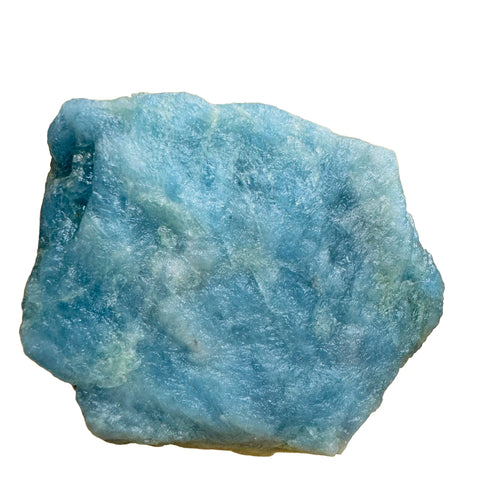











































 Raw Stones
179 pieces
Raw Stones
179 pieces
 Tumbled Stones
162 pieces
Tumbled Stones
162 pieces
 Palm Stones
25 pieces
Palm Stones
25 pieces
 Crystal Points
23 pieces
Crystal Points
23 pieces
 Clusters & Geodes
104 pieces
Clusters & Geodes
104 pieces
 Polished & Decor
148 pieces
Polished & Decor
148 pieces
 Mineral Specimens
259 collector pieces
Mineral Specimens
259 collector pieces
 Crystal Chips
21 pieces
Browse everything
Every collection, one page.
View All Collections →
Crystal Chips
21 pieces
Browse everything
Every collection, one page.
View All Collections →


 Aries
Mar 21 – Apr 19
Carnelian
›
Aries
Mar 21 – Apr 19
Carnelian
›
 Taurus
Apr 20 – May 20
Rose Quartz
›
Taurus
Apr 20 – May 20
Rose Quartz
›
 Gemini
May 21 – Jun 20
Agate
›
Gemini
May 21 – Jun 20
Agate
›
 Cancer
Jun 21 – Jul 22
Moonstone
›
Cancer
Jun 21 – Jul 22
Moonstone
›
 Leo
Jul 23 – Aug 22
Citrine
›
Leo
Jul 23 – Aug 22
Citrine
›
 Virgo
Aug 23 – Sep 22
Amazonite
›
Virgo
Aug 23 – Sep 22
Amazonite
›
 Libra
Sep 23 – Oct 22
Blue Lace Agate
›
Libra
Sep 23 – Oct 22
Blue Lace Agate
›
 Scorpio
Oct 23 – Nov 21
Obsidian
›
Scorpio
Oct 23 – Nov 21
Obsidian
›
 Sagittarius
Nov 22 – Dec 21
Sodalite
›
Sagittarius
Nov 22 – Dec 21
Sodalite
›
 Capricorn
Dec 22 – Jan 19
Black Tourmaline
›
Capricorn
Dec 22 – Jan 19
Black Tourmaline
›
 Aquarius
Jan 20 – Feb 18
Amethyst
›
Aquarius
Jan 20 – Feb 18
Amethyst
›
 Pisces
Feb 19 – Mar 20
Aquamarine
›
Gifting?
A birthday stone is the safe bet.
Read the zodiac guide →
Pisces
Feb 19 – Mar 20
Aquamarine
›
Gifting?
A birthday stone is the safe bet.
Read the zodiac guide →











Eudialyte
Eudialyte is a raspberry-red mineral that forms in rare alkaline igneous rocks, usually flecked through gray nepheline syenite with black aegirine. Its name is Greek for easily dissolved, because it breaks down in acid. Russia's Kola Peninsula and Greenland are its classic homes.
The geology.
Eudialyte is a complex sodium, calcium, iron, and zirconium silicate with a raspberry to cherry-red color. It rarely appears as a clean single crystal in the trade. Instead you usually see it as red patches and grains scattered through a rock, alongside black needles of aegirine and gray feldspathoid minerals.
It sits at 5 to 6 on the Mohs scale and belongs to a whole group of related minerals that share its structure. Its most quoted quirk is chemical rather than physical: eudialyte dissolves readily in acids, which is exactly what its name describes.
The origins.
The Kola Peninsula in northwestern Russia, home to the Khibiny and Lovozero massifs, is the world's great source of eudialyte and supplies most of the material cut into cabochons and towers. These are among the few places on Earth where the right alkaline rocks occur in quantity.
Eudialyte was first found in Greenland, at the Ilimaussaq complex, which remains a classic locality. Mont Saint-Hilaire in Canada, parts of Norway, and a handful of other alkaline intrusions round out the sources. It is a mineral of unusual geology, so its map is short.
Traditional associations.
Eudialyte is a modern metaphysical stone, and its red color drives most of its associations. Many people work with it around the heart and the lower chakras at once, connecting it with vitality, following what you love, and a grounded kind of self-worth.
It is often linked with the Root and Heart chakras and the element of earth. Because good material is not cheap, people tend to keep a polished piece as a special stone rather than an everyday carry.
Spotting the real thing.
Genuine eudialyte reads as a natural rock: irregular raspberry-red areas set in a grayish body, very often with glossy black needles of aegirine running through it. The red is uneven and grainy rather than a solid, even block of color, which is the signature of the real material.
Be cautious of suspiciously uniform, saturated red stones sold as eudialyte, since deep even color can point to a dyed substitute. Other related group minerals are sometimes sold under the eudialyte name, which is more imprecise than dishonest. Ask for the locality, since Kola and Greenland material is well documented.
Care & handling.
Eudialyte is reasonably durable at 5 to 6 on the Mohs scale, tough enough for careful jewelry such as pendants, though it is better kept away from hard daily knocks. Store it apart from harder stones like quartz and topaz to protect the polish.
The real care point is chemical. Because eudialyte dissolves in acid, keep it away from vinegar, acidic cleaners, and long water soaks, and clean it only with a brief wipe using a damp soft cloth. For an energetic reset, many people use sound, moonlight, or a rest on selenite.
Pairs well with.
A deeper look.
Extended geology, sourcing, authentication, history, and varieties, for when the quick guide isn't quite enough.
Extended geology
Eudialyte crystallizes in alkaline igneous rocks that are unusually rich in sodium and poor in silica, especially nepheline syenites. It is a zirconium-bearing silicate and can take in rare earth elements such as cerium and yttrium, which is why it is sometimes studied as a potential ore. It gives its name to a whole group of closely related minerals, so precise identification often needs lab work.
Extended sourcing
The Kola Peninsula massifs of Khibiny and Lovozero in Russia are the main commercial source. Greenland's Ilimaussaq complex is the historic type area, first described in 1819, and Mont Saint-Hilaire in Quebec is famous for the variety of species it produces, eudialyte among them. Norway and a few other alkaline intrusions contribute smaller amounts.
Authentication and warning signs
Expect a natural rock look: uneven raspberry-red grains in a gray matrix, usually with black aegirine. Solid, evenly saturated red should raise the question of dye. Related eudialyte-group minerals are sometimes sold under the same name, so treat the label as approximate and ask for the source. Acid sensitivity is a useful natural trait to keep in mind, not a test to perform on a nice specimen.
History and folklore
Eudialyte was described in 1819 from Greenland by the chemist Friedrich Stromeyer, who named it from the Greek for well decomposed, a nod to how easily it dissolves in acid. It has no deep folklore and is valued today as a collector mineral and a modern stone of the heart.
Varieties and trade names
Most material is simply called eudialyte and sold as cabochons, towers, and tumbles cut from the red-and-black rock. The name Greenlandite has been used for Greenland material. Because the eudialyte group has many members, some pieces are group minerals rather than eudialyte in the strict sense.
What it costs in the market
Small tumbles and cabochons are moderate, while pieces with strong, well-distributed red and clean cutting cost more. Value follows the intensity and coverage of the red against the gray and black, along with size and finish.
An education-first guide.
We wrote this guide to teach, not to pitch. Once you know how eudialyte forms, why it dissolves in acid, and what a natural piece looks like, you can shop with confidence wherever you are. Explore the rest of our crystal guides for the full library.
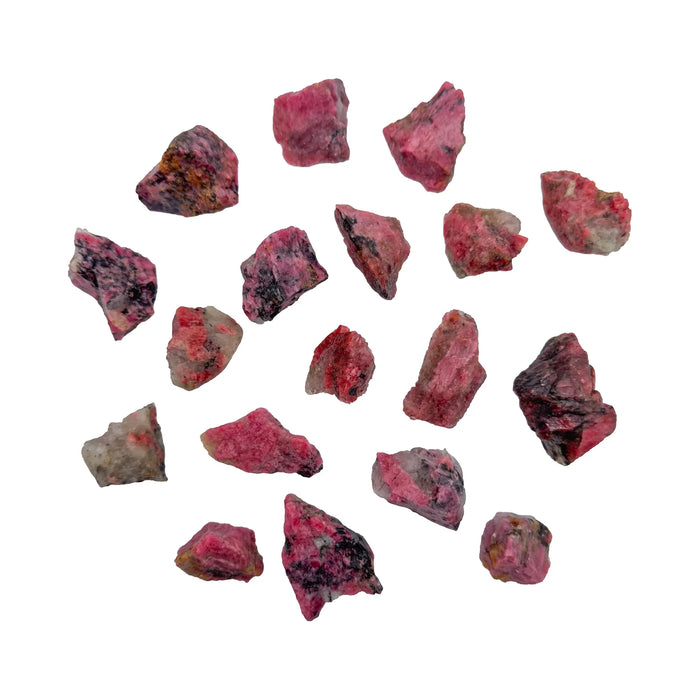
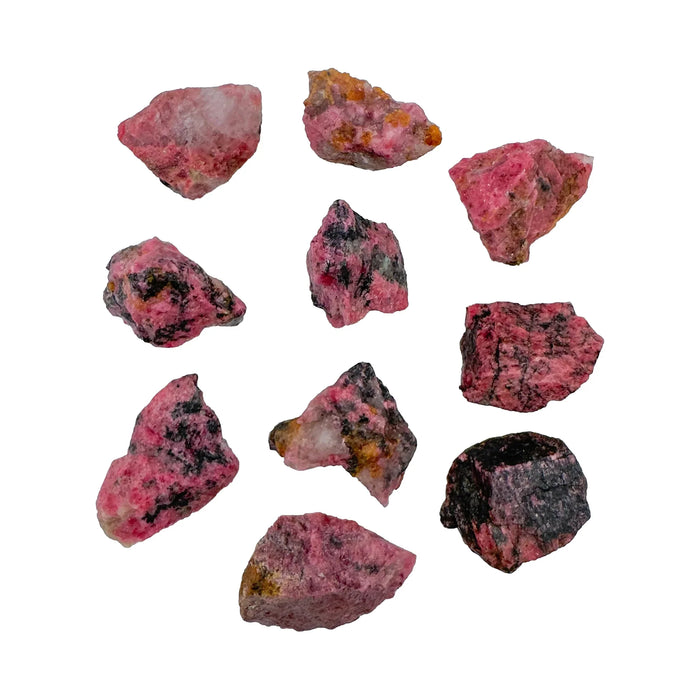
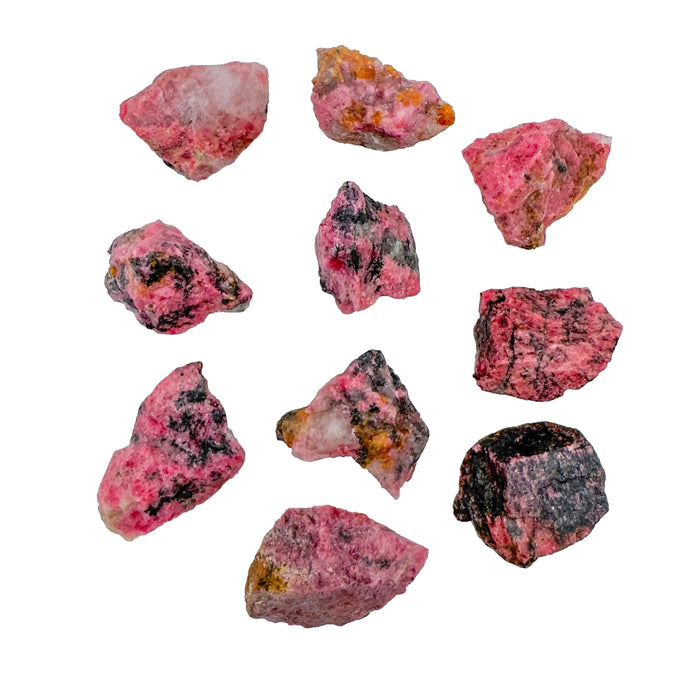
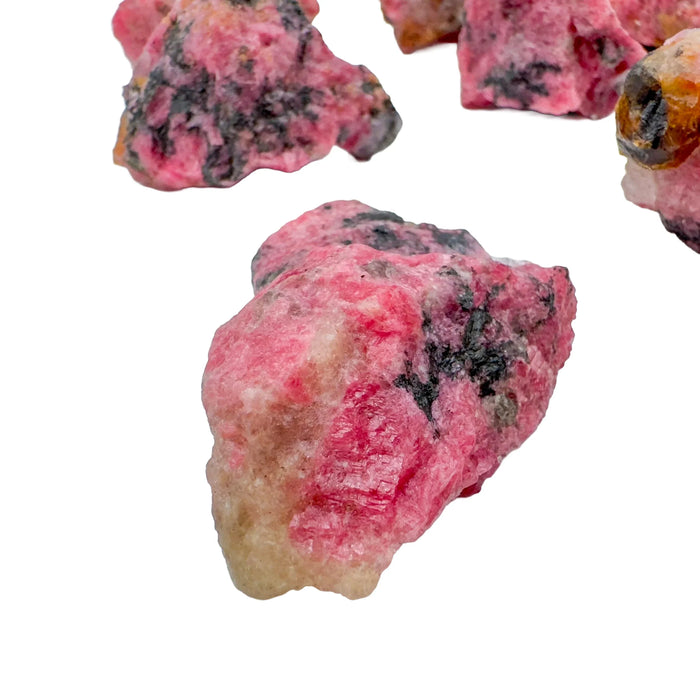
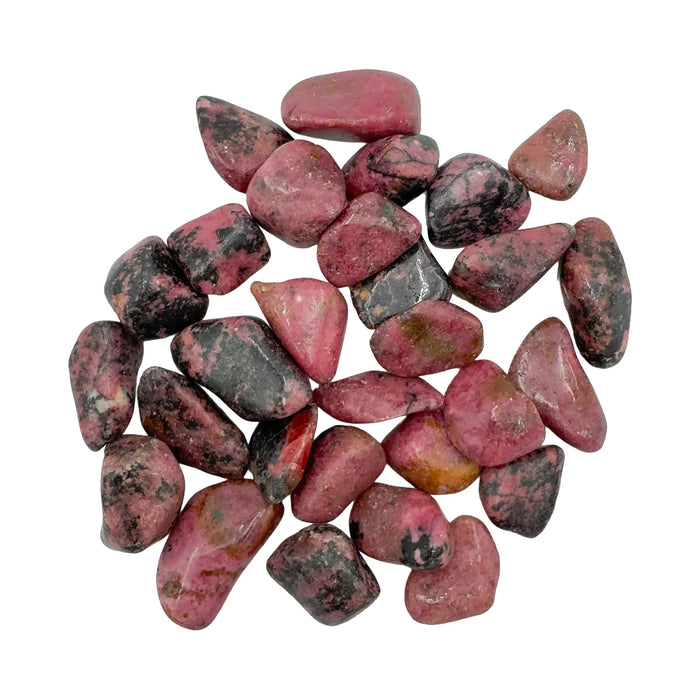
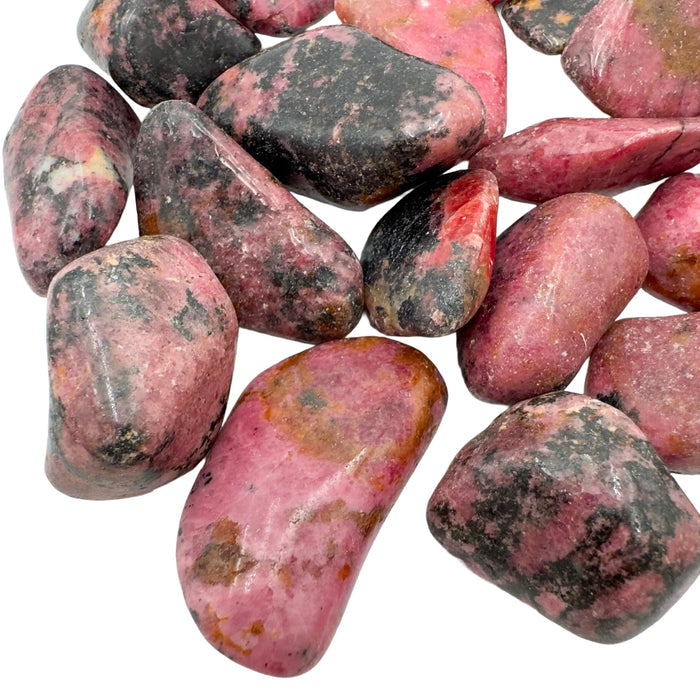
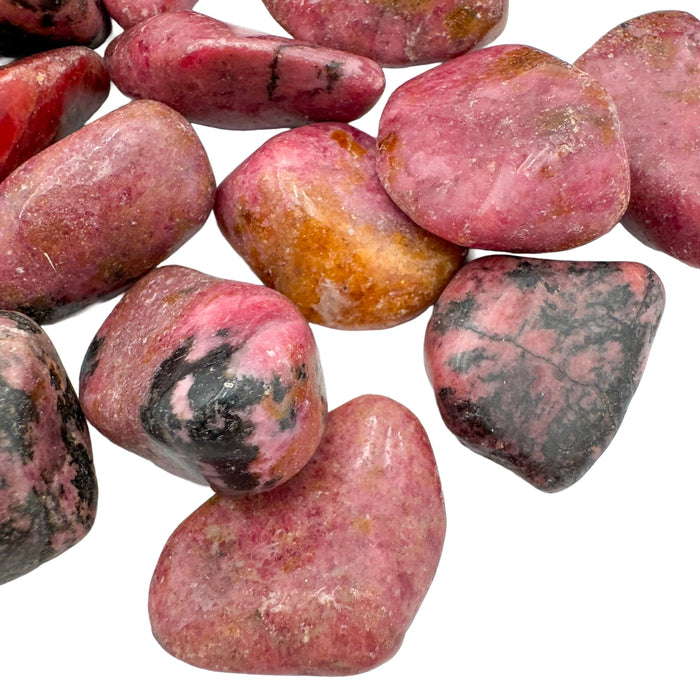
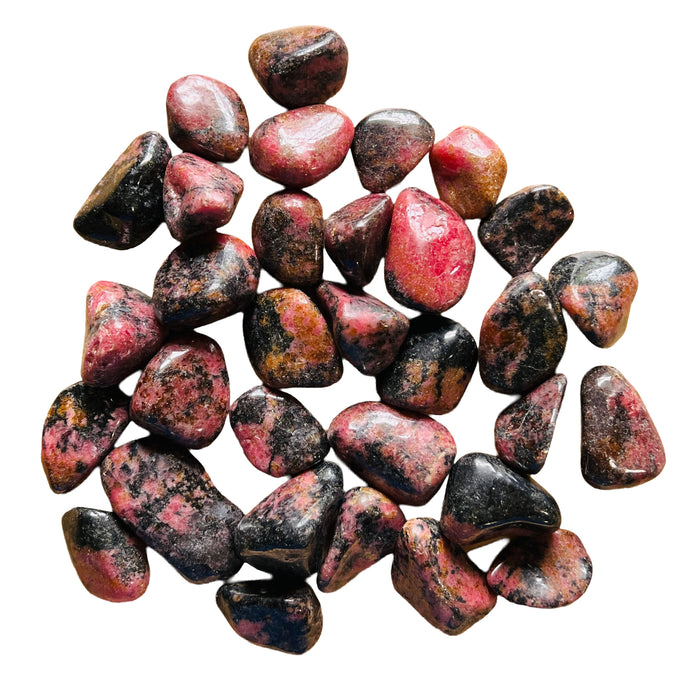
Explore the Crystal GuideThe closest match we carry: Rhodonite.
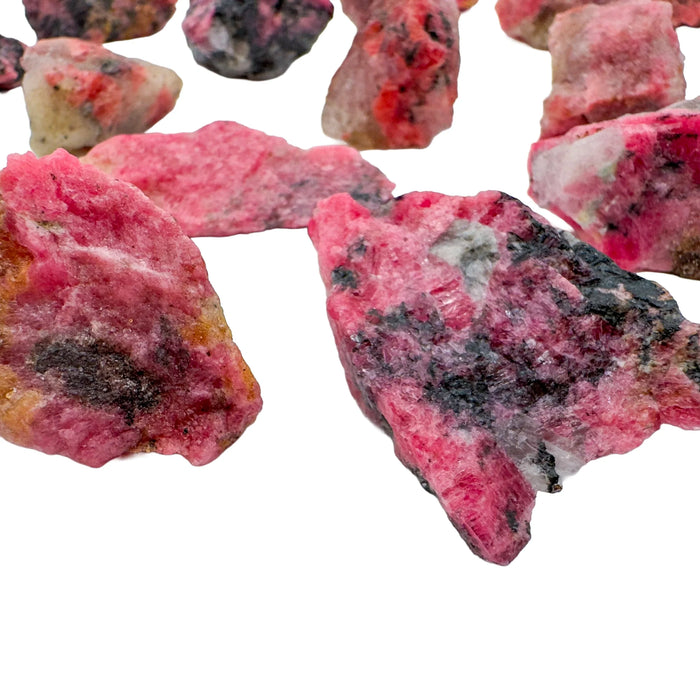
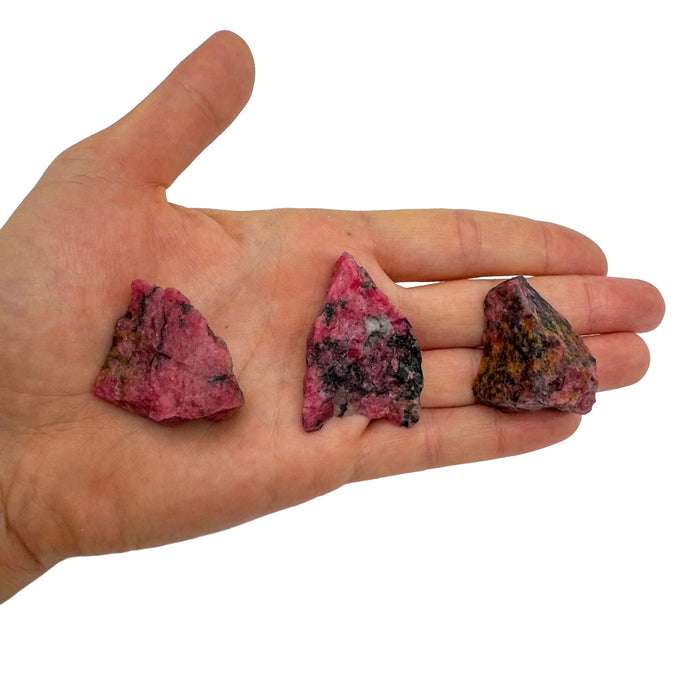
Eudialyte is not something we carry. Rhodonite is the closest match in our collection, and every piece passes our sourcing standards: origin named, treatments disclosed.
- from 1,000+ reviews
- Ships within 72 hoursMonday to Friday, tracked
- 90 days to return itif you do not love it
- Free US shipping over $99$8.99 flat rate under
The Slow Note
New stones go to the list first.
No forwarding, no selling. Unsubscribe in one click. Privacy