









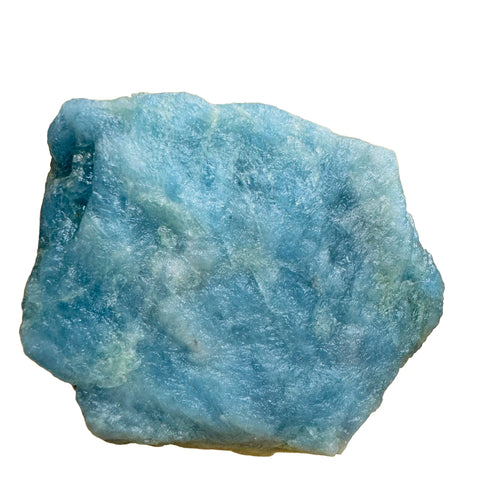











































 Raw Stones
179 pieces
Raw Stones
179 pieces
 Tumbled Stones
162 pieces
Tumbled Stones
162 pieces
 Palm Stones
25 pieces
Palm Stones
25 pieces
 Crystal Points
23 pieces
Crystal Points
23 pieces
 Clusters & Geodes
104 pieces
Clusters & Geodes
104 pieces
 Polished & Decor
148 pieces
Polished & Decor
148 pieces
 Mineral Specimens
259 collector pieces
Mineral Specimens
259 collector pieces
 Crystal Chips
21 pieces
Browse everything
Every collection, one page.
View All Collections →
Crystal Chips
21 pieces
Browse everything
Every collection, one page.
View All Collections →


 Aries
Mar 21 – Apr 19
Carnelian
›
Aries
Mar 21 – Apr 19
Carnelian
›
 Taurus
Apr 20 – May 20
Rose Quartz
›
Taurus
Apr 20 – May 20
Rose Quartz
›
 Gemini
May 21 – Jun 20
Agate
›
Gemini
May 21 – Jun 20
Agate
›
 Cancer
Jun 21 – Jul 22
Moonstone
›
Cancer
Jun 21 – Jul 22
Moonstone
›
 Leo
Jul 23 – Aug 22
Citrine
›
Leo
Jul 23 – Aug 22
Citrine
›
 Virgo
Aug 23 – Sep 22
Amazonite
›
Virgo
Aug 23 – Sep 22
Amazonite
›
 Libra
Sep 23 – Oct 22
Blue Lace Agate
›
Libra
Sep 23 – Oct 22
Blue Lace Agate
›
 Scorpio
Oct 23 – Nov 21
Obsidian
›
Scorpio
Oct 23 – Nov 21
Obsidian
›
 Sagittarius
Nov 22 – Dec 21
Sodalite
›
Sagittarius
Nov 22 – Dec 21
Sodalite
›
 Capricorn
Dec 22 – Jan 19
Black Tourmaline
›
Capricorn
Dec 22 – Jan 19
Black Tourmaline
›
 Aquarius
Jan 20 – Feb 18
Amethyst
›
Aquarius
Jan 20 – Feb 18
Amethyst
›
 Pisces
Feb 19 – Mar 20
Aquamarine
›
Gifting?
A birthday stone is the safe bet.
Read the zodiac guide →
Pisces
Feb 19 – Mar 20
Aquamarine
›
Gifting?
A birthday stone is the safe bet.
Read the zodiac guide →

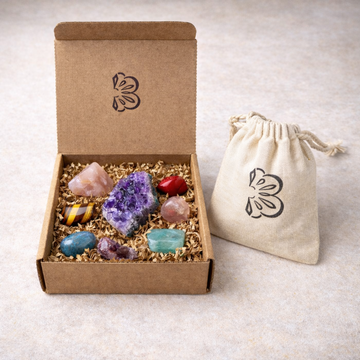
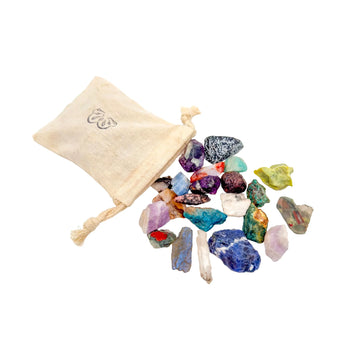










Patagonia Agate
Patagonia Agate is a chalcedony variety from the vast southern region of Argentina and Chile, typically showing pastel banding in blues, greens, pinks, and creams with occasional dramatic patterns. Traditionally associated with stability, adventurous spirit, and the quiet patience of long geological time. A distinctive regional material with genuine collector appeal.
Shop patagonia-agateThe geology.
Patagonia Agate is a variety of chalcedony, microcrystalline quartz (SiO₂) colored by trace minerals and often showing distinctive pastel banding patterns. The material forms in cavities of Patagonian volcanic rocks during slow crystallization of silica-rich groundwater over geological time. The characteristic color palette, soft blues, greens, pinks, and creams, comes from trace iron, manganese, and occasional copper minerals in the crystallization environment.
Hardness runs 6.5 to 7 on the Mohs scale, durable enough for daily-wear jewelry. No cleavage, conchoidal fracture, vitreous-to-waxy luster. Like other agates, Patagonia Agate takes a high polish well. Individual pieces can vary dramatically in pattern, from gentle concentric banding to dramatic landscape-like designs that gave the material its regional identity.
The origins.
Patagonia Agate is specific to the Patagonia region of southern Argentina and Chile, primarily from the Chubut and Santa Cruz provinces of Argentina. The deposits are in volcanic host rock from the region's complex geological history, with significant material collected from the basaltic plateaus and river valleys. Some related material comes from nearby Chilean Patagonia, but Argentinian Patagonia is the primary commercial source.
Within Patagonia, specific areas are known for particular patterns. The Condor Agate variety (with dramatic patterns and vivid color) comes from the Comallo region and commands higher prices. General Patagonia Agate from broader commercial sources tends toward the pastel palette. The regional specificity is part of the appeal for collectors.
Traditional associations.
Patagonia Agate has a shorter documented tradition than many agates because the region was remote from major historical trade networks until the late nineteenth century. Indigenous Tehuelche and Mapuche peoples of Patagonia worked agate and other local stones before European contact, though specific traditional associations with Patagonia Agate are less documented than with Mediterranean or Central American agates.
Contemporary metaphysical practice treats Patagonia Agate as a stone of stability, adventurous spirit, and the quiet patience of geological time. Associations draw on the dramatic Patagonian landscape and the stone's pastel quality: gentle grounding rather than intense grounding. It's associated with the Root and Heart chakras together, the elements of Earth and Water, and the zodiac sign Gemini.
Spotting the real thing.
Real Patagonia Agate shows distinctive pastel banding or patterning, typically in soft blues, greens, pinks, and creams. The color variation within a single piece is natural and organic-looking, with bands of different thicknesses and occasional dramatic pattern features. Under a loupe, the fine microcrystalline structure of chalcedony is sometimes visible at thinner edges.
Dyed agate from other sources is occasionally sold as Patagonia Agate; dyed pieces show saturated rather than pastel color and may pool dye in fractures. Ask for specific origin within Patagonia for higher-grade pieces; Condor Agate and similar named varieties should come from their specific named localities. Reputable sellers name the region and confirm species.
Care & handling.
Water safe for normal cleaning with warm water and a soft cloth. Skip long soaks, saltwater, and ultrasonic cleaners. Stable under sunlight and temperature shifts within reason.
Cleanse energetically with moonlight, sound, smoke, or by placing on selenite overnight. At 6.5 to 7 on the Mohs scale, handles daily wear well in jewelry. Store separately from harder stones to preserve the polish.
Pairs well with.
Proof, not promises.
We measure our own sourcing across five dimensions. Supply chain, environmental footprint, artisan support, market integrity, and pricing. The number is honest, not perfect. Where we can do better, we say so.
A deeper look.
Extended geology, sourcing, authentication, history, varieties, and pricing, for when the quick guide isn't quite enough.
Extended geology
Patagonia Agate is a chalcedony variety, microcrystalline quartz (SiO₂) that formed in cavities of Patagonian volcanic host rock. The pastel coloration comes from trace minerals incorporated during crystallization: iron oxides for pinks and reds, iron hydroxides for yellows, manganese for pinks and purples, copper minerals occasionally for blues and greens. The specific Patagonian volcanic geology, with its complex history of eruptions and hydrothermal alteration, produced the range of trace chemistries that give the material its distinctive palette.
Mohs hardness 6.5 to 7. Specific gravity 2.58 to 2.64. Luster vitreous to waxy. No cleavage; conchoidal fracture. Formation typically involved slow crystallization over long time periods, which produced the banded patterns characteristic of agates generally and the specific pastel palette of Patagonian material.
Extended sourcing
Patagonia Agate is specific to the Patagonia region of southern South America, spanning Argentina and Chile. Argentinian Patagonia, particularly the Chubut and Santa Cruz provinces, is the primary commercial source. The basaltic plateaus of Chubut contain extensive agate deposits exposed by erosion, with material collected from both in-situ cavities and alluvial deposits in river valleys.
Specific varieties come from named localities within Patagonia. Condor Agate, from the Comallo region of Rio Negro province, is the best-known specialty variety, with dramatic patterns and vivid color. Crazy Lace Agate material from parts of Patagonia shows lace-like banding. General commercial Patagonia Agate represents a broader collection of material from multiple localities across the region.
Authentication and warning signs
Real Patagonia Agate shows pastel banding with organic-looking color variation. Hardness 6.5 to 7 (scratches glass). The color palette is distinctive: soft blues, greens, pinks, and creams rather than the more saturated tones typical of other agate varieties. Under magnification, the microcrystalline structure of chalcedony is visible.
Agate from other regions occasionally mislabeled as Patagonia Agate; the pastel pattern and color palette are the most reliable identifiers. Dyed agate shows uniform saturated color and pools dye in fractures. Ask for specific regional origin within Patagonia when buying named varieties like Condor Agate; generic 'Patagonia Agate' is a broader category.
Historical and cultural context
Patagonia was historically remote from major global trade networks until the late nineteenth century, so the documented tradition with Patagonia Agate is shorter than for Mediterranean or Central American agates. Indigenous Tehuelche, Mapuche, and other Patagonian peoples worked local stones including agates for tools, ornaments, and ceremonial objects for thousands of years before European contact, though specific traditional associations with Patagonia Agate are less documented.
Modern commercial Patagonia Agate entered the global market in the twentieth century as Argentine mineral trade developed. Contemporary metaphysical practice treats the material as a stone of gentle stability and adventurous spirit, drawing on the wild landscape of Patagonia and the pastel character of the material.
Varieties and trade names
Patagonia Agate: the general commercial term for agate from the Patagonian region.
Condor Agate: the best-known specialty variety, with dramatic patterns, from Comallo area.
Crazy Lace Agate (Patagonian): lace-banded material from parts of Patagonia.
Chubut Agate: from Chubut province, often with particular banding characteristics.
Santa Cruz Agate: from Santa Cruz province, slightly different character.
Pricing reality
Tumbled Patagonia Agate: 2 to 10 dollars per piece. Small polished pieces and palm stones: 10 to 50 dollars. Larger polished slabs and freeforms: 30 to 200 dollars depending on pattern quality and size. Fine Condor Agate specimens: 100 to 500+ dollars. Museum-grade patterned slabs: collector pricing.
Value drivers: pattern quality and uniqueness, color saturation balance (pastels should be gentle but present), size, clean polish, and documented specific locality within Patagonia. Warning signs: 'Patagonia Agate' without specific regional detail at specimen pricing, or generic agate from other regions sold under the Patagonia name.
Good sourcing is a practice, not a claim.
Nothing we sell is agate from other regions mislabeled as Patagonia Agate. We name our specific Patagonian origins where we can. We walk away from material that doesn't meet our standard, even when it costs us sales.
Bring patagonia-agate home.
Every piece we carry is photographed individually and listed with its specific Patagonian origin and treatment notes. What you see is what ships.
Shop the patagonia-agate collectionThe Slow Note
New stones go to the list first.
No forwarding, no selling. Unsubscribe in one click. Privacy