












































































Reference Hub
Crystal FAQs from the Journal
One hundred and fifty-nine questions and answers about crystal sourcing, identification, treatments, pricing, and how to buy with confidence. Gathered from every article in the Beyond Bohemian Journal that addresses a real buyer question. Each Q&A links back to the full article.
5 Questions to Ask an Ethical Crystal Supplier
What's the most important question to ask a crystal supplier?
"What country and region is this from?" If they can answer with specifics, you've got a starting point. If they answer with a vague continent, you've got your answer.
How many questions should I ask before buying?
Three or four is usually enough. Country, treatments, supplier relationship, and what happens if there's a problem. The answers separate honest sellers from marketing-first ones quickly.
What are warning sign answers?
"Sourced ethically from around the world" is a non-answer. "We can't share that" without a reason is a non-answer. Polished marketing language with no specifics is the biggest signal.
Should I expect every supplier to know everything?
No. Honest suppliers will tell you what they know and what they don't. The willingness to admit limits is the strongest trust signal in this industry.
Are Crystals Ethically Sourced? What's Actually Realistic
Can I trust a seller who claims their crystals are ethically sourced?
Maybe. It depends on whether they can explain what they mean by it. A seller claiming ethical sourcing should be able to: tell you the country of origin, disclose treatments honestly, explain their sourcing standard, name suppliers or at least how long they've worked with them, and answer uncomfortable questions without getting defensive. If they can do all of those things, trust is reasonable. If they hedge on any of them, stay skeptical.
Is there a certification I should look for in crystals?
There's no universal certification covering the entire crystal supply chain the way the GIA certifies diamonds. Some stones have Fair Trade certifications, but not all ethically sourced crystals are certified and not all certified stones are fully ethical. Certification helps, but transparency and the seller's ability to explain their work matters more. Shop with sellers whose practices are traceable, not just labeled.
What if I buy from a seller and later find out their sourcing wasn't as good as they claimed?
It happens. The crystal industry is young and standards are still forming. If you discover a seller misrepresented their sourcing, you have a few options: ask them to do better going forward, stop buying from them, or ask for a refund if you feel genuinely misled. Most honest sellers will listen if you bring it up respectfully. Sellers who get defensive are showing you who they are.
Does "ethically sourced" cost more, and is it worth it?
Yes, it usually costs more. Fair wages, safe working conditions, small-scale production, and relationship-building aren't free. Whether it's worth it depends on your values and budget. If ethical sourcing matters to you, the higher price reflects real costs. If you're shopping on budget and ethical sourcing is secondary, that's valid too. Just be honest about your own priorities instead of pretending you care about something you're not willing to pay for.
How can I shop ethically if I'm on a tight budget?
Buy less, choose carefully, keep what you buy, and support sellers who value transparency even if you can't always afford their highest-price items. Ethical doesn't have to mean expensive if you're willing to accept natural variation and smaller pieces. It also means rewarding sellers who do care about sourcing by buying from them when you can, which builds their business and lets them do better work long-term. Your consistent, thoughtful purchases matter more than occasional big ones.
Beyond Ethical: What Real Transparency Looks Like in Crystal Sourcing
What makes Beyond Ethical different from other sellers claiming ethical sourcing?
The difference is in what we can explain. Most sellers say they're ethical but can't answer follow-up questions about where stones come from, who their suppliers are, how long they've worked together, or what treatments have been applied. We built six explicit principles and work to them consistently. You can ask any seller these same questions to compare. The ones who answer clearly are doing the work. The ones who hedge are not.
Is Beyond Ethical more expensive than other sources?
Sometimes, yes. Fair wages, long-term relationships, and careful sourcing cost more than speed-sourcing. We also carry a range of price points because quality matters more than price premium. An affordable stone from a Beyond Ethical source is worth more than a cheap stone from an unclear source. You're paying for relationships and transparency, which cost money. Whether that matters to your purchasing decision is up to you.
Can I tell if a crystal is ethically sourced just by looking at it?
No. You need the seller's information. A beautiful stone could come from anywhere and be treated in any way. An imperfect stone could be ethically sourced and carefully handled. You have to ask questions and evaluate the seller's answers. That's why transparency matters so much. The stone itself won't tell you its story. The seller has to.
What should I do if I buy from a seller and later find out their sourcing isn't as good as they claimed?
Contact them and give them the chance to explain or improve. Most honest sellers will listen. If they get defensive or refuse to answer, you've learned who they are. You can request a refund if you feel genuinely misled. You can also share your experience to help other buyers make better choices. The crystal industry improves when buyers vote with their purchases and their feedback.
How do I know if I'm just overthinking this and should buy based on what looks good?
Overthinking is fine if it helps you make choices you feel good about. If you don't care about sourcing, don't force it. If you do care, ask questions. Different sourcing paths have different tradeoffs. Online offers convenience and variety. Local offers direct relationships. Direct sourcing offers control but takes time. Pick what matches your actual values, not what the industry is currently hyping. That's the clearest choice you can make.
Brazilian Crystals: A Region-by-Region Geology Guide
What crystals come from Brazil?
Brazil is the world's largest producer of amethyst, citrine, and clear quartz. Rio Grande do Sul state produces most large amethyst geodes; Minas Gerais produces tumbled and raw amethyst and tourmaline; Bahia is known for quartz clusters. Brazil also exports aquamarine, topaz, and tourmaline from its extensive pegmatite belt.
Is Brazilian crystal mining ethical?
Brazil has federal mining law requiring environmental permits and local benefit clauses, but enforcement varies by state and operation size. Some Minas Gerais operations work with licensed cooperatives using regulated practices. Others are informal artisanal operations with less oversight. Country-of-origin alone does not determine ethical sourcing; the specific producer relationship matters.
Which region of Brazil produces the best amethyst?
Rio Grande do Sul, particularly around Ametista do Sul and Soledade, is the world's primary source of large amethyst geodes. Minas Gerais produces smaller material with often deeper, richer purple. Both regions are major commercial suppliers, with grade and color varying significantly by mine rather than by region.
What makes Brazilian quartz different from other origins?
Brazil's silica-rich geological formations produce exceptionally clear quartz in large crystal structures. The Minas Gerais and Goias states have ideal pegmatite conditions for transparent quartz. Brazilian clear quartz is more abundant and generally more affordable than high-clarity material from the Himalayas or Arkansas, without meaningful difference in mineral composition.
How do I know if Brazilian crystals are from a responsible source?
Ask for the specific mine or cooperative, not just the country. Responsible Brazilian suppliers can name the state, municipality, and whether the operation holds IBAMA environmental licensing. Sellers who can only say from Brazil have not verified their supply chain past the export stage.
Can Crystal Sourcing Actually Support People and the Planet?
Can crystal mining ever be good for the environment?
Mining always has a footprint. The realistic question is whether that footprint is mitigated by responsible practices. Small-scale artisanal mining with local oversight tends to have a much smaller impact than industrial operations.
Does buying ethical crystals actually help workers?
It can, when the supply chain is short enough that the premium reaches the people who do the work. Long supply chains tend to absorb the premium in middlemen. Direct partnerships make a real difference.
What's the most sustainable crystal to buy?
The ones with shorter supply chains, less treatment, and natural variation. A perfectly imperfect stone from a known region beats a flawless one with no traceable origin.
How do I support people and planet without buying nothing?
Buy fewer pieces from sellers who can show their work. Choose stones with natural variation. Ask one verification question before every purchase. Skip the trend-chase for rare material with unclear sourcing.
Crystal Bracelets: Why We're Adding Them and What We Can't Trace
Do you sell crystal bracelets?
We're adding them. We stayed out of beads because bead supply chains are hard to verify, and that hasn't changed. Bracelets carry less traceability than our loose stones, and we say so plainly.
Are crystal bracelets ethically sourced?
Nobody can prove that to mine level for beads, and that includes us. We learn the social and environmental conditions of how each stone is mined and require the bead maker to align with our published sourcing standards. It's the best available, short of the ideal.
Can you trace a bracelet's stone to the mine?
No. Beads are cut in volume from rough that has usually passed through several hands and more than one source. We won't claim to trace a bead to a mine.
What should I look for if I want ethical crystal beads elsewhere?
Ask the same questions you'd ask about any crystal: country, region, treatments, supplier name. Most bead sellers can't answer all four. The ones who can are worth supporting.
Crystal Gifts: How to Choose the Right Stone for Any Occasion
What's the best beginner crystal gift?
Clear quartz, rose quartz, or amethyst are reliable starter stones. They're widely loved, easy to source ethically, and they look beautiful in most home settings.
How much should I spend on a crystal gift?
Anywhere from $15 for a quality tumbled stone to $80 for a small specimen will land well. The piece matters more than the price.
Should I buy raw or polished crystals as a gift?
Polished stones usually feel more giftable because they're easier to handle and display. Raw pieces have their own character and work well for collectors or people who already know the basics.
How do I pick the right stone for a specific person?
Pick by what they're drawn to visually first. A crystal someone loves looking at is a crystal they'll actually keep on their desk.
Crystal Grades Explained: What A, AA, and AAA Actually Mean
What does A, AA, and AAA grade mean for crystals?
These are trade shorthand for quality, not universal standards. A typically means standard, AA means above-average clarity or color, and AAA means high-end. Different sellers use the labels differently.
Is AAA grade always better?
It depends on what you are looking for. AAA stones tend to have stronger color and fewer visible inclusions, but they cost more and the difference is not always meaningful for daily use.
How do I know if a grade is honest?
Compare across sellers. If a seller's AAA looks like another seller's A, you have got a marketing-first grading system. Honest sellers grade conservatively and explain their criteria.
Should I pay more for higher grades?
Pay more when the difference matters to you visually or for a specific purpose. Pay less when natural variation works just as well for what you are doing.
Crystal Pricing Explained: Tariffs, Freight, and Transparent Costs
Why don't more crystal shops show their pricing math?
Most don't because the markup chain is uncomfortable. Transparent pricing forces a seller to explain what they paid, what they marked up, and why. Most sellers prefer not to.
What does landed cost mean?
Landed cost is the total price to get a stone from the source to your warehouse, including the wholesale price, freight, customs, duties, and handling. It's the real number behind retail pricing.
Are tariffs the biggest driver of price changes?
They're one of three main drivers right now: tariffs, freight rates, and currency fluctuations. The mix depends on where the stone is from and how it ships.
How can I tell if a seller's pricing is fair?
Compare to a few honest sellers across the same category. Anything significantly cheaper usually has a hidden cost: bad sourcing, hidden treatments, or unsustainable supplier pay.
Crystals in Farming: What Actually Helps Soil (and What Doesn't)
Are crystals actually used in farming?
Some regenerative growers use crushed mineral amendments as part of soil-building. The science around specific crystal applications is mixed, and most claims that go beyond basic mineral content sit in symbolic territory.
Which crystals work in soil amendment?
Zeolite and basalt-derived rock dust are the most evidence-backed mineral amendments. Quartz and other silicates are sometimes used for symbolic purposes in biodynamic farming, with weaker evidence.
Is this approach scalable for commercial farms?
Mineral amendment is scalable. Crystal-specific practices stay mostly in small biodynamic operations because the cost and labor don't pencil out at scale.
Should I add crystals to my garden?
If you enjoy the practice, the small-scale impact is unlikely to harm anything. If you're hoping for measurable yield improvement, mineral amendment from a soil test will give you better results.
Do You Need a Crystal Right Now? A 5-Question Filter
Run the five questions before buying. Will you actually touch the piece. Do you have a stone you're already using that this one pairs with. Can you picture thirty days of use, not just the first week. Do you know the origin, treatment, and grade. Would you still want it with no meaning attached. If any answer is no, wait.
How many crystals should I own?
However many you actually use. Two stones you reach for every week is more honest practice than twenty stones in a basket you have stopped noticing. There is no number that is correct.
Is it bad to buy crystals as decor?
No. A statement cluster, a polished sphere on a stand, a slab on a side table are all legitimate aesthetic choices. The distinction worth keeping is honest, decor is decor and a practice tool is a practice tool. Buying for one reason and pretending it is the other is what creates the shelf full of unused stones.
Which crystal should I buy first?
Start with one stone that solves a specific situation you are in right now. Sleep difficulty, anxiety, grief, focus, transition, protection. Pick the situation, then pick a stone traditionally used for it. Buy one piece, hand-sized, in a price you would not regret if you put it down and never used it. Most first-time buyers do well with rose quartz, black tourmaline, or amethyst, depending on the situation.
How do I know if a stone is actually working?
That is the wrong question. The stone is not doing something to you. The practice you build around it is what matters, and the practice is something you can measure honestly. Are you sitting with intention longer than you used to. Are you sleeping with the stone nearby and noticing your own state. Are you remembering to set it down when you are done. Those are the signals.
Can I just use the same crystal forever?
Yes. The "you need a new crystal every month" model is a marketing pattern, not a spiritual requirement. Most longtime crystal practitioners we know work with a small number of pieces for years. Pairing in is a real reason to add. Replacement because the last one stopped feeling new is not.
From Earth to Your Home: How We Source Crystals Honestly
Where do most crystals come from?
Madagascar, Brazil, Uruguay, India, Pakistan, Afghanistan, Namibia, Zimbabwe, Morocco, the United States, and Peru are among the largest producing regions, depending on the stone.
How long does it take a crystal to reach a customer?
From mine to your hand, anywhere from a few weeks to a year, depending on supply chain length, customs processing, and how many hands handle the stone along the way.
How do you handle customs and import compliance?
We work with verified import partners and maintain documentation for every parcel. Customs compliance is one of the quietest but most important parts of ethical sourcing.
Can you trace every piece in your shop?
We can name a country and usually a region for everything we carry. For some pieces, we can name a specific cooperative or partner. Where we can't go deeper, we say so.
Greenwashing in the Crystal Industry: Red Flags That Actually Matter
What is greenwashing in the crystal industry?
Marketing that uses words like "ethically sourced" or "sustainable" without backing them up with verifiable details. The aesthetics imply ethics, but the substance is missing.
What are the biggest greenwashing red flags?
Vague claims with no specifics, aesthetic packaging with no sourcing data, certifications you can't verify, and refusal to answer direct questions about country and treatments.
How do I avoid greenwashed crystal shops?
Ask one specific question: "Where is this from?" Honest sellers answer plainly. Greenwashed sellers either dodge or give you a continent.
Are big brands more or less likely to greenwash?
Both extremes are common. Some big brands have invested in real sourcing programs. Others rely on marketing language to cover unchanged sourcing practices. Size isn't the signal. Specificity is.
Growing an Ethical Crystal Business During Economic Slowdown
Is wholesale crystal still viable in a recession?
Yes, but the playbook changes. Diversification, smaller more frequent orders, and tighter inventory turns all matter more. The businesses that survive recessions usually have direct supplier relationships and a clear customer niche.
Should I cut prices during a downturn?
Race-to-the-bottom pricing usually doesn't work for ethical inventory. A better move is to communicate value clearly, double down on customer relationships, and protect margins so you can keep paying suppliers fairly.
How do I find new customers when budgets are tight?
Lean into education and trust. Recession buyers are more careful, not less. They reward sellers who can prove their sourcing and explain their pricing.
Should I drop slower-moving inventory?
Not always. Slow movers often turn into your differentiation when competitors thin out. Hold them if they fit your story.
How an Amethyst Geode Forms (and Why Brazil Has So Many)
How does an amethyst geode form?
Amethyst geodes form inside gas pockets left in cooling basalt lava. Over millions of years, silica-rich groundwater seeps into those cavities and slowly precipitates onto the cavity walls. Trace iron and natural irradiation from the surrounding rock give the quartz its purple color. The result is a hollow stone lined with crystals pointing inward.
Why are most amethyst geodes from Brazil?
Southern Brazil and northern Uruguay sit on the Paraná basalt province, one of the largest flood basalt regions on Earth. The basalt formed roughly 130 million years ago and contains an extraordinary number of gas-cavity geodes. The states of Rio Grande do Sul in Brazil and Artigas in Uruguay are the two most productive areas in the world.
What is the difference between Brazilian and Uruguayan amethyst?
Brazilian amethyst tends to grow in larger geodes with a lighter to medium purple color, often with white quartz banding underneath. Uruguayan amethyst is generally smaller in cavity size but holds a deeper, more saturated purple, often with a dark base color. Both come from the same Paraná basalt region, but the local conditions in each deposit produce these recognizable differences.
How long does an amethyst geode take to form?
Geode formation in the Paraná basalt is estimated to span tens of millions of years. The basalt itself dates to roughly 130 million years ago. Crystal growth is slow because it depends on dissolved silica concentration, temperature, and pressure inside the cavity, all of which change over geological time.
Are amethyst geodes always natural?
Most amethyst geodes on the market are natural in formation. Two market practices are worth knowing. Heat treatment above roughly 300 degrees Celsius converts amethyst into yellow or orange material sold as citrine. Synthetic hydrothermal amethyst is also produced in labs and can be hard to distinguish from natural without specialized testing. Reputable sellers disclose both.
How to Spot Fake Ethical Claims in Crystal Shops
How do I spot a fake ethical crystal shop?
Watch for vague language, no country of origin, no treatment disclosure, and a heavy emphasis on aesthetic photos with no sourcing details. Honest sellers are specific. Marketing-first sellers stay vague.
What questions reveal whether a seller is actually ethical?
Ask one question: "What country and region is this from?" Honest answers are specific. Dodgy answers come back as continents, marketing language, or silence.
Are certifications a reliable signal?
Sometimes. Most crystal supply chains sit outside formal certification schemes. A seller with no certification but full traceability is more trustworthy than one with a vague "ethical" badge and no specifics.
Can I trust influencer-recommended shops?
Treat influencer recommendations as a starting point, not a verdict. Check the seller's sourcing claims yourself before you buy.
How to Verify Ethically Sourced Crystals: A Buyer's Checklist
How do I verify a crystal seller is actually ethical?
Three steps: read the listing for specifics, scan their website for sourcing pages and treatment policies, and ask one direct question over email or DM. The combined answer usually tells you everything you need.
What should an ethical crystal listing include?
Country of origin, region when possible, treatment disclosure, supplier relationship type, and a clear photo of the actual piece. Anything missing is a question worth asking.
How long does it take to verify a new seller?
About ten minutes if you know what to look for. Read the about page, check a few product listings, and email one specific question. Honest sellers respond fast and clearly.
What if a seller fails my verification check?
Walk away politely. There are enough honest sellers in this category that you don't need to compromise. Send your money to people who do the work.
How U.S. Tariffs Affect Crystal Prices (And Why It Matters to Ethical Sourcing)
Are crystal prices going up because of tariffs?
Yes. New U.S. tariffs on imports from key crystal-producing countries are passing through to landed costs. Most retailers are absorbing some and passing through some, depending on margin pressure.
How much have tariffs increased crystal prices?
Increases vary by stone and country. Some categories have seen 10-25% landed cost increases. The full impact depends on where the stone originates and how much processing happens before import.
Will tariffs affect ethical sellers more or less than mass-market sellers?
Ethical sellers often feel it more in the short term because they have less margin to absorb. Mass-market sellers tend to switch to cheaper sources, which usually means worse traceability.
Should I stock up before prices rise more?
Buy what you'll actually use. Stockpiling rarely pays off in this category. The market shifts faster than the predictions.
Is That Crystal Actually Rare? What the Label Really Means
Rare on a crystal label is unregulated marketing. Most stones sold as rare are common at the mine and become scarce only by the time they reach U.S. retail, because they are cut, graded, and priced for a specific tier. Ask the seller two questions. Where was it mined, and how much of this material did they pull last year.
What does rare actually mean in the crystal trade?
There is no industry definition. The word rare on a crystal label means whatever the seller wants it to mean. In practice, sellers use it to describe stones that are uncommon in their own inventory, uncommon at U.S. retail, or simply uncommon in a specific size, color, or grade.
Are there genuinely rare stones?
Yes. Some material is genuinely limited at the source. Tanzanite is one example. Larimar from a single small mine in the Dominican Republic is another. Sugilite from a closed mine in South Africa is a third. Most stones marketed as rare are not in this category.
How do I avoid paying for a fake rare label?
Look for specific origin claims, not generic rarity language. A stone described as from a specific mine, region, or year of dig has accountable rarity. A stone described only as rare or hand-selected with no origin context is using the word as a price multiplier.
Is rarity the same as quality?
No. A common stone with strong color, clean inclusion patterns, and good clarity is more useful and often more beautiful than a marketed-rare stone of mediocre grade. Quality is observable. Rarity is mostly told to you.
Which stones are commonly mislabeled as rare?
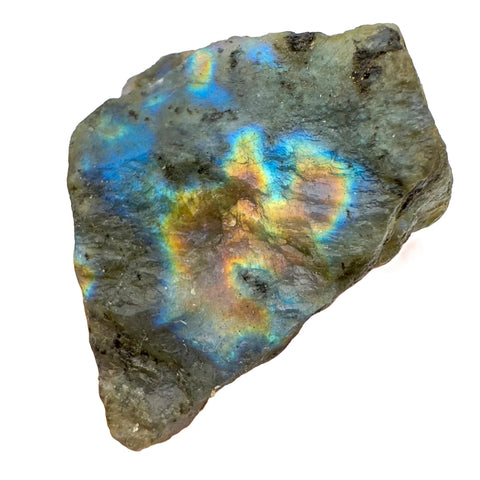
Amethyst clusters from common Brazilian mines, labradorite from Madagascar, rose quartz of any origin, and pink amethyst from Patagonia are widely available at the source but often sold with rare framing in U.S. retail. Pink amethyst in particular is now in steady production.
Madagascar Crystals: Why One Island Punches Above Its Weight
Why is Madagascar a major source of crystals?
Madagascar's geology is the answer. The island sits on ancient Precambrian basement rock, with extensive pegmatite belts in the south and mineral-rich gneiss and metamorphic terrains across the central highlands. That combination produces gem-quality labradorite, celestite, rose quartz, tourmaline, and several rare collector minerals at a scale most countries cannot match.
Which crystals come from Madagascar?
Madagascar is best known commercially for labradorite, celestite (especially Sakoany blue celestite), rose quartz, and elbaite tourmaline. The island is also a meaningful source of demantoid garnet, sapphire, ammolite, ocean jasper, smoky quartz, and a number of named locality specimens that collectors track by mine.
Is mining in Madagascar regulated?
Madagascar has a national mining code and a permit system, but enforcement is uneven and a large share of stones leave the country through artisanal small-scale operations rather than large industrial mines. Buyers who care about sourcing should ask about the specific producer relationship rather than relying on country-of-origin alone.
Are Madagascar crystals ethically sourced?
It depends entirely on the supply chain. Madagascar has both well-run cooperatives that pay miners fairly and informal operations with unsafe conditions and child labor concerns. The country alone is not a sourcing claim. A reputable seller should be able to name the producer or cooperative and explain how they verified labor conditions.
Why does Madagascar produce so much labradorite?
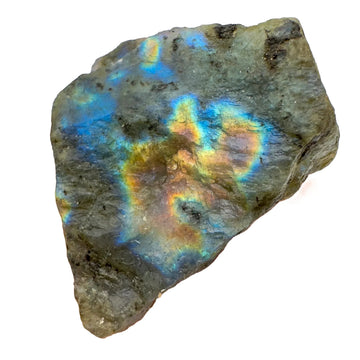
Labradorite forms in slowly cooled mafic intrusions where plagioclase feldspar develops the lamellar structure responsible for labradorescence. Madagascar has several large mafic-anorthositic complexes that produce material with strong blue-to-violet flash, particularly from the Maniry region. Finland and Canada also produce labradorite, but Madagascar's volume and color quality dominate the global supply.
Real vs Fake Citrine: How to Tell If Your Stone Is Natural or Heated Amethyst
Most citrine sold today is heated amethyst from Brazil, not natural citrine. Heated amethyst is bright orange, often with a chalky white quartz base and saturated tips. Natural citrine is pale yellow to smoky gold, usually small, and often expensive. If a citrine cluster is large, vivid orange, and under $40, it is heat-treated.
Is all bright orange citrine fake?
It's not fake, but it's almost certainly heat-treated amethyst. Truly natural citrine in that vibrant orange range is exceptionally rare. If a seller is offering a bright orange "citrine" cluster at an everyday price, the realistic assumption is kilned amethyst.
Does heat treatment change the energy of citrine?
That depends on your framework. Many practitioners feel natural and heated stones carry different qualities. Others treat both as the same mineral and work with them interchangeably. We don't make a metaphysical call for you. We give you the facts about the stone so you can choose for yourself.
How can I tell if a tumbled citrine stone is real?
Tumbled stones lose some of the cluster-level tells, but color is still a strong clue. Pale, soft, smoky honey is natural citrine territory. Bright, uniform orange across a polished surface is more likely heat-treated. Origin information from the seller is the most reliable check.
What's the difference between citrine and yellow quartz?
"Yellow quartz" is a broader trade term that can include natural citrine, heat-treated amethyst, smoky quartz with a yellow tint, or quartz dyed yellow. Citrine specifically refers to the iron-colored variety. If a stone is labeled "yellow quartz" rather than "natural citrine," assume there's a reason the seller chose the looser name.
Is heat-treated amethyst still ethical?
Heat treatment itself is a normal part of the gem and crystal trade. Whether a specific stone is ethical depends on the same factors as any other piece: where it was mined, who was paid, whether the treatment was disclosed, and how the price reflects the real supply chain. Treatment isn't the ethical line. Disclosure is.
Where does natural citrine come from?
The classic sources are Rio Grande do Sul in Brazil, the Anahí mine region of Bolivia (more commonly known for ametrine), parts of the Democratic Republic of Congo, Russia's Ural Mountains, and Madagascar. Spain, Scotland, and France have historic deposits too, though commercial supply is mostly Brazilian and Congolese today.
Rose Quartz vs Rhodonite: Which Is Better for Heart Healing?
Rose quartz is the most commonly chosen stone for heart-centered practice and self-compassion work. Rhodonite, with its pink-and-black contrast, is traditionally associated with active emotional processing including grief and forgiveness. Both are useful. The choice depends on what you are sitting with. Rose quartz if you want one stone. Rhodonite when the work gets specific.
Can I use rose quartz and rhodonite together?
Yes. Many practitioners pair them, rose quartz for daily presence and rhodonite for active work. The minerals do not conflict in any tradition we know of.
Is rhodonite stronger than rose quartz?
The traditional framing is that rhodonite is more targeted, not stronger. Rose quartz is steady ongoing tone. Rhodonite is brought in for specific work. Different purposes, not a stronger-versus-weaker pairing.
How can I tell rhodonite from rhodochrosite?
Rhodonite has black manganese veins through the pink. Rhodochrosite is more uniformly banded with white or pale stripes and almost never has the dark veining pattern. They are different minerals, and rhodochrosite is significantly softer (3.5 to 4 on the Mohs scale versus 5.5 to 6.5 for rhodonite).
Does rose quartz fade in sunlight?
Yes, with prolonged exposure. The titanium and iron that create the pink can break down under UV. We recommend display in indirect light or somewhere that gets occasional sun rather than constant direct sun all day.
Is heated or dyed rose quartz common?
Dyed quartz exists in the market, but it is uncommon at our price points and we do not carry any. Heated rose quartz is rare because the heat tends to remove pink rather than enhance it. Most rose quartz you encounter is natural color.
Which one is better for anxiety?
Neither is the traditional first choice for anxiety. Amethyst and lepidolite are more commonly used for that specific intention. If you are choosing between rose quartz and rhodonite for anxiety, rose quartz is the gentler option. Rhodonite is more focused on grief and processing than on calming the nervous system.
Selenite vs Clear Quartz: Which Crystal Actually Cleanses?
Clear quartz is the better all-purpose cleansing stone if you want one piece. Selenite (technically satin spar in almost all retail) is lighter and traditionally used to clear other stones, but it dissolves in water and breaks under pressure. Pick clear quartz for one stone. Pair with a satin spar plate if you want a charging surface.
Is selenite the same as satin spar?
Functionally yes, mineralogically no. Most stones sold as selenite in the U.S. retail crystal market are satin spar, a fibrous variety of gypsum. True selenite is glassier and less common. Both are soft (Mohs 2) and both share the same care rules: do not submerge in water, keep away from humidity.
Can I cleanse my selenite with water?
No. Selenite and satin spar dissolve in water. Wipe with a dry soft cloth. To reset the stone, set it in indirect sunlight or moonlight for an hour. Smoke from a single stick of palo santo or sage also works.
How often should I cleanse my crystals?
Whenever the stone has done meaningful work and you can tell it feels heavy. For most home practitioners that means after a session of focused intention or grief work, after a stretch where you carried the stone daily, or after someone else has handled it. Routine weekly cleansing is not necessary.
Does clear quartz need cleansing itself?
Yes, but less often than most stones. Clear quartz is hard (Mohs 7), water-safe, and considered self-amplifying in traditional practice, which means it benefits from the same reset rhythms you give other stones. Running water and direct sunlight both work.
Which is better for a first crystal?
Clear quartz. It is durable, water-safe, affordable across grades, and serves more uses than selenite. Add a satin spar plate later if you want a dedicated charging surface for your other stones.
The "Ethically Sourced" Badge Problem
What does "ethically sourced" mean for crystals?
There is no industry-wide certification for ethical crystals, so the phrase means different things at different shops. At a minimum, real ethical sourcing involves verified labor conditions, fair payment to miners and lapidaries, environmental responsibility, and disclosure of treatments. A shop using the phrase should be able to explain each of those in concrete detail.
How can I verify an ethical sourcing claim?
Ask four questions. Who is the producer or cooperative behind this stone? How do you confirm working conditions and fair payment? What treatments are disclosed on this material? What is the country, and where possible, the region of origin? A seller who cannot answer these in plain language is not actually verifying their supply chain.
Why are "ethically sourced" badges often unreliable?
Badges and stamps in the crystal trade are usually self-applied. There is no third-party body certifying crystal supply chains the way the Kimberley Process certifies diamonds, and there is no equivalent of GOTS or Fair Trade for stones. A two-word badge on a product page is a marketing claim. The receipts behind it are what matter.
Is there a certification for ethical crystals?
No widely recognized third-party certification exists for crystals as of 2026. Some adjacent standards apply to specific gem materials or precious metals, but the broader crystal trade is not covered. Until that changes, buyers have to rely on a seller's transparency about producers, treatments, and verification methods rather than on any single label.
What questions should I ask a crystal seller about sourcing?
Five questions reveal whether a seller has real standards. What country and region is this from? Who mined or cut it? What treatments has it had? How long have you worked with this producer? What do you do when you cannot verify a source? Honest answers may include some uncertainty, which is more credible than a perfect-sounding claim.
The True Cost of Crystals: What Ethical Sourcing Actually Requires
What does an ethical crystal actually cost to source?
Far more than the cheap mass-market alternative. Direct supplier relationships, fair labor pay, treatment disclosure, and quality screening all add real cost. The premium is usually 25-40% over the cheapest options.
Why do ethical crystals cost more than online dropshipped ones?
The cheap end of the market relies on opaque supply chains, undisclosed treatments, and labor practices that wouldn't survive scrutiny. Ethical pricing reflects what it actually costs to do better.
Where does the extra money go?
Mostly to the people upstream. Better wages, better working conditions, fewer middlemen taking a cut. Some goes to inventory screening and treatment verification, which most retailers skip.
Is it ever ethical to buy cheap crystals?
Cheap doesn't automatically mean unethical. The question is whether the seller can answer the basic sourcing questions. A cheap stone with full transparency is more ethical than an expensive one without.
What Are the Most Ethical Crystals to Buy? (And Why That's Hard to Answer)
Which crystals are easiest to source ethically?
Stones with shorter, simpler supply chains tend to be the easiest to verify. Quartz from Brazil, amethyst from Uruguay, selenite from Utah, and clear quartz from Madagascar all have well-known mining regions and recognizable trade routes, which makes traceability practical.
Are there crystals you should avoid for ethical reasons?
Stones with chronic transparency issues are worth being cautious about. That includes lapis lazuli from conflict-affected regions, certain rare turquoise varieties, and any stone where the seller refuses to name a country. "Avoid" isn't always the right answer, but "ask more questions" usually is.
Does ethical mean fair trade certified?
Not necessarily. Fair trade certifications are rare in the crystal industry because most mining is artisanal and small-scale, which sits outside formal certification schemes. Ethical here usually means traceable origin, honest treatment disclosure, and direct supplier relationships.
How can I tell if a seller is being honest about ethics?
The fastest test is to ask one specific question, like "what country and region is this from?" Honest sellers answer plainly. Marketing-first sellers either dodge the question or give you a vague continent.
What Honest Crystal Sourcing Actually Looks Like (The Beyond Ethical Standard)
What does "ethically sourced" actually mean if it's not standardized?
It means the seller has made intentional choices about where they buy and why. They can explain their sourcing standard, name their suppliers or at least the countries they source from, disclose treatments honestly, and welcome questions about how they work. There's no universal certification for the entire crystal supply chain, so your job is to find sellers with a clear, explainable standard and consistent practices. A buyer's checklist can help you verify this without becoming an expert.
If I can't have perfect ethics, why try?
Because better is real. You can't eliminate mining impact, but you can reduce it. You can't guarantee perfect conditions everywhere, but you can build relationships with suppliers who maintain standards. You can't verify every detail, but you can reward sellers who answer your questions and penalize those who won't. These choices don't have to be perfect to matter.
How do I know if a seller is greenwashing?
Greenwashing usually has three tells: beautiful language instead of specific details, emotional appeals instead of verifiable facts, and defensiveness when you ask clarifying questions. A seller with real standards can explain why they're transparent about some things and cautious about others. A seller greenwashing will just repeat slogans.
Does "natural" mean the same thing as "untreated"?
Not always. "Natural" usually means the material occurs in nature, which is true of all crystals. "Untreated" means no dyes, heat, irradiation, coatings, or stabilization have been applied. A stone can be natural and treated. The seller should clarify this in plain language. If they use the words "naturally enhanced," they mean it's been treated but they're using marketing language to make it sound better.
Why should I pay more for ethically sourced if the stone looks the same?
Because the story behind it isn't the same. Fair wages, safe working conditions, long-term relationships, reduced waste, and honest disclosure all cost more upfront. You're not just paying for a stone. You're paying for a supply chain that's designed to work differently. The actual cost breakdown of ethical crystals shows where the money goes. If you don't value those things, transparent sourcing won't matter to you, and that's fine. But if you do value them, the price difference makes sense.
What Natural vs Treated Crystals Actually Means
What does "natural" actually mean for a crystal?
Natural means the stone hasn't been heated, irradiated, dyed, coated, reconstituted, or chemically altered. Hand-polishing or cutting alone doesn't disqualify a stone from being natural.
Is a treated crystal still real?
Yes. Treated crystals are usually still genuine mineral specimens. The issue is disclosure, not authenticity. A heated amethyst is still amethyst. A dyed howlite sold as turquoise is a different problem entirely.
How can I tell if a stone has been dyed?
Dye usually pools in cracks and matrix lines, looks suspiciously uniform, or rubs off slightly when wet. Ask the seller directly and see how they answer.
Should I avoid treated stones?
Not necessarily. Some treatments are centuries old and well accepted. The rule is honesty: you should know what you're buying and why.
Where to Buy Ethically Sourced Crystals
What's the best place to buy ethically sourced crystals?
Small online retailers with full sourcing transparency are usually the best balance of selection and trust. Local rock shops can be great if the owner knows their suppliers. Big marketplaces are the highest-risk option.
Are online crystal shops trustworthy?
Some are, some aren't. The trustworthy ones name countries, disclose treatments, and answer specific questions. The marketing-first ones rely on aesthetic photos and vague language.
Should I buy crystals at metaphysical fairs?
Fairs are good for browsing and meeting sellers. They're harder for verification because most vendors source from the same wholesale circuit. Ask the same questions you'd ask online.
Is it safer to buy crystals in person?
Not necessarily. In-person buying lets you see the stone, but the sourcing transparency depends on the seller, not the format. A trustworthy online shop beats a vague in-person shop.
Wholesale Crystal Sourcing Guide: How to Find Suppliers and Avoid Costly Mistakes
How do I find ethical wholesale crystal suppliers?
Start with sellers who can name countries and regions on every parcel. Ask for treatment disclosure in writing. Build relationships with two or three suppliers rather than chasing the cheapest spot price across many.
What should I budget for ethical wholesale?
Expect 25-40% higher landed costs than the cheapest mass-market alternatives. The premium pays for traceability, fair labor, and consistent quality. It also reduces returns and customer complaints, which usually offsets the spread.
Can I start a wholesale crystal business from home?
Yes. Many small operators run home-based businesses with a few hundred dollars of inventory. The bigger constraint is supplier relationships and storage, not capital.
How do I vet a new wholesale supplier?
Ask three questions before you place a first order: where is this from, what treatments has it received, and who handled it before you. The answers tell you what kind of supplier you're dealing with.
Why Crystal Prices Are Rising in 2026: What's Actually Happening
Crystal prices are up across most stones in 2026, driven by U.S. tariffs on imports from China and Brazil, higher international freight, and currency shifts in Madagascar and Peru. Smaller shops absorb less and pass more through to retail. Expect the gap between fair-priced sellers and discount-marketed shops to widen this year.
Why are crystal prices going up in 2026?
Three drivers stack on top of each other. U.S. import tariffs applied to stones routed through China and Brazil. Container freight from Asia and South America has not returned to 2019 levels. And currency weakness in Madagascar and parts of South America has made fair-pay sourcing more expensive in dollars, not less.
Are tariffs the main reason prices changed?
Tariffs are the most visible driver but not always the biggest. For a shop that already sources direct from artisanal cooperatives, fair-labor cost increases at origin often outweigh the tariff line. Tariffs hit hardest on shops that buy from wholesalers and resell.
Will prices come back down?
Some likely will if tariffs ease. Freight is structurally higher than the last decade and unlikely to return to 2019 rates. Origin-cost increases tied to fair pay at the mining cooperative level are also unlikely to reverse, and that is a good thing.
How do I tell if a price increase is real or a markup?
Ask the seller two questions. Where is this stone sourced from, and what changed in their cost over the last twelve months. A shop that can answer specifically is reflecting real cost. A shop that cannot is likely riding the broader narrative to raise margins.
Are some stones affected more than others?
Yes. Stones sourced primarily through China, including most amazonite, fluorite, and some agates, are seeing larger price changes from tariffs. Brazilian quartz, amethyst, and citrine are impacted by both tariffs and freight. Madagascar labradorite, celestite, and rose quartz are most affected by currency and fair-pay cost shifts.
Why Perfection Culture Drives Crystal Waste (And How to Shop Better)
Why are imperfect crystals more sustainable?
When only flawless stones are accepted, usable yield drops and more material gets discarded as scrap. That means more extraction to hit the same amount of "top grade" inventory. Choosing natural variation reduces waste.
Are A-grade crystals worth the price?
Sometimes, especially for collectors. For everyday use, the difference between A-grade and AA-grade is mostly cosmetic, and the lower-grade stones have honest character that high-grade pieces often lack.
What's wrong with wanting perfect crystals?
Nothing is wrong with appreciating quality. The issue is the industry-wide bias against natural variation, which drives waste and pushes out small producers who can't sort to perfection.
Should I avoid grading systems entirely?
No. Grades are useful as shorthand. The mistake is treating them as universal truth instead of trade convention that varies by seller.
Why We Don't Run Constant Sales (and What We Offer Instead)
Why don't you run Black Friday or holiday sales?
Discounting ethical inventory across the board would mean either cutting margins below what keeps suppliers paid fairly or building inflated prices in advance just to mark them down. Neither is honest.
Do you ever offer any discounts?
We offer wholesale pricing for verified retailers and occasional limited promotions for newsletter subscribers. We don't run storewide sales because the math doesn't work for ethical sourcing.
Are your prices higher because you don't run sales?
Our prices reflect what the inventory actually costs to source ethically. They're not inflated to leave room for discounts. Compare line items, not headline percentages.
Will you ever change your sales policy?
Probably not for retail. The reasoning that drives the policy doesn't change with the calendar.
Why We Don't Share Exact Mine Locations
Why won't you share specific mine names?
Three reasons. Some suppliers ask us to protect their identity for safety or competitive reasons. Some mining cooperatives don't want public exposure. And some of our partnerships took years to build, and naming the mine publicly would invite copycats and disrupt the relationship.
How do I know you're being honest if you can't tell me everything?
We share country, region, supplier relationship, and treatment status on every piece. We tell you what we can verify and what we can't. The willingness to say "I don't know" is more honest than fake specificity.
Do other ethical sellers share mine names?
Some do, especially for high-profile partnerships used as marketing. Most can't, for the same reasons we can't. The ones who claim full traceability on everything are usually the ones to be most skeptical of.
What information do you share?
Country of origin, region when possible, treatment disclosure, supplier relationship type, and the chain of custody as far as we can verify it.
Why We Don't Source at Gem Shows
Why don't you source crystals at gem shows?
Gem shows are great for discovery and bad for traceability. The same stone passes through multiple booths and middlemen, and the story usually thins out by the time it reaches retail.
Are gem show crystals worse quality?
Not always. The issue isn't quality. It's that most gem show inventory has lost its origin story by the time it sits on a folding table.
Where do you source instead?
Direct from suppliers we have relationships with. Some are visited in person, some are vetted over years of orders, and all of them can name the country and region of origin.
Do you ever buy from gem shows?
Occasionally, when a known partner brings inventory we already trust. Walking the aisles of a generic show isn't part of our process.