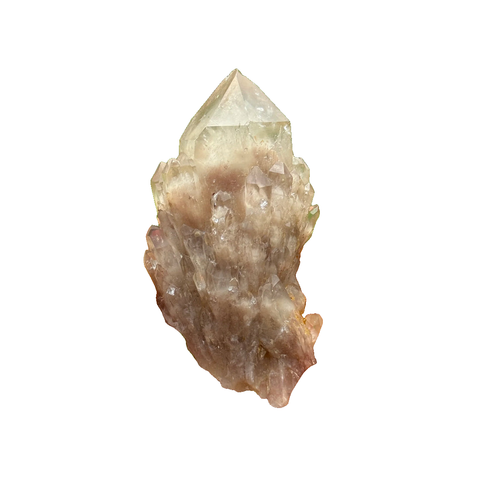
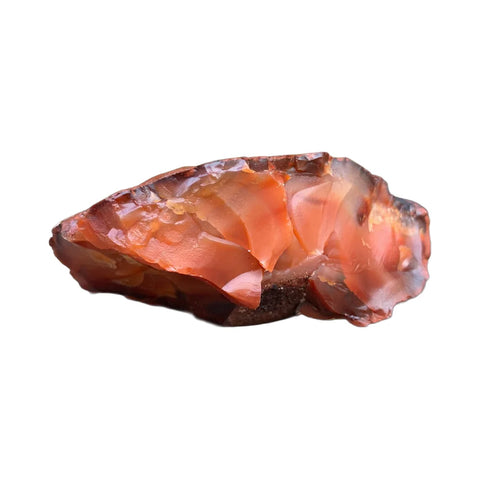
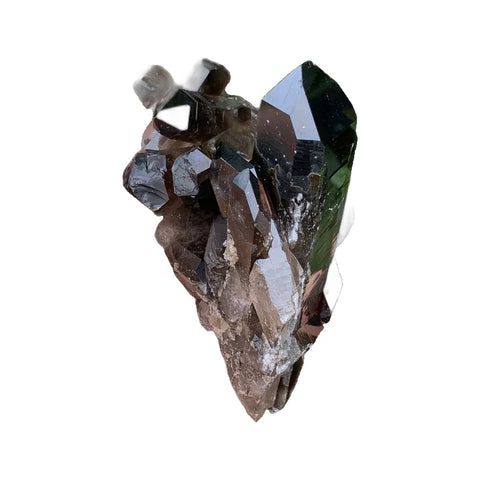









Labradorite Crystal Guide: meaning, origin & properties
For the in-between.
Learn what Labradorite is, where ours comes from, traditional associations across cultures, and how to identify a real specimen, in our complete Labradorite Crystal Guide.
In stock
Sourced through a regional cooperative or community-based workshop. Processing and economic benefit stay local, which means more of the value reaches the people doing the work.
Read our Sourcing Standards →I am so pleased with all crystals I received from Beyond Bohemian. The Rainbow Labradorite is truly a gem (pun intended) of a stone to work with. Thank you
Jennifer B. · Verified buyer · January 2026
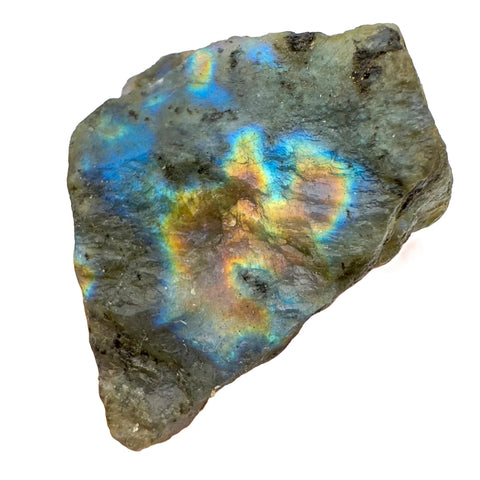
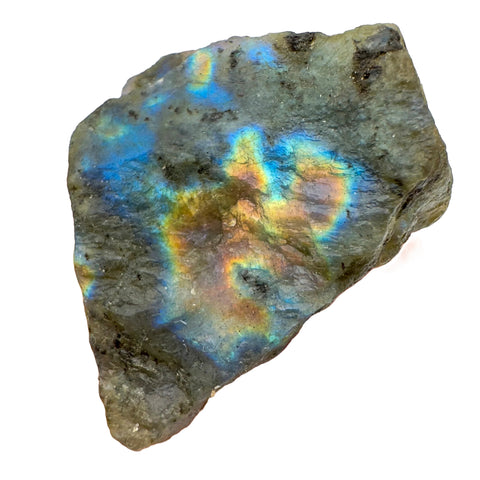
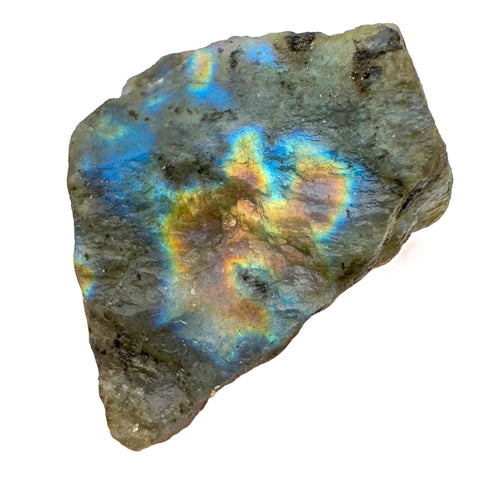
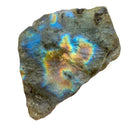
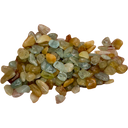
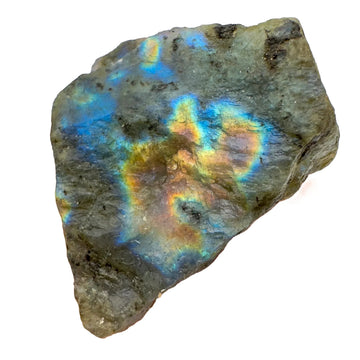
These are AA-grade Labradorite rainbow raw stones from Atsimo-Andrefana, Madagascar, sold by the piece or by the pound. Rainbow-sorted pieces flash multiple colors at once as light strikes the twinned crystal layers inside the feldspar. Each piece runs 1.50-2.50 inches at Mohs 6-6.5, fully natural and untreated. A favorite protection stone for entryways and display shelves.
Labradorite looks like a plain grey stone until you turn it. Then the flash hits, blue, green, gold, sometimes a whole sheet of color that lights up and disappears again. The effect has its own name: labradorescence.
Hand-selected from Atsimo-Andrefana, Madagascar.
Labradorite was first described in Labrador, Canada in 1770, where Moravian missionaries found the flashing stones along the coast.
In the tradition, labradorite shows up most often around listening to the quieter signals, a sense of groundedness when things feel uncertain, and clarifying what you actually want. It's traditionally linked to the third eye and crown chakras. If that resonates, place one on a nightstand or on an altar where you sit. Trust what feels useful and leave the rest.
These are traditional associations drawn from historical practice. This stone is not a substitute for medical or mental health care.
A starting place for your own quiet practice.