

Labradorite Crystal Guide: meaning, origin & properties
For the in-between.
Learn what Labradorite is, where ours comes from, traditional associations across cultures, and how to identify a real specimen, in our complete Labradorite Crystal Guide.
Only 5 left in stock
Sourced through a regional cooperative or community-based workshop. Processing and economic benefit stay local, which means more of the value reaches the people doing the work.
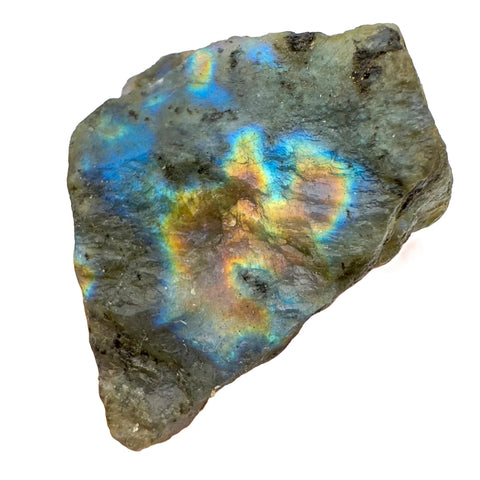
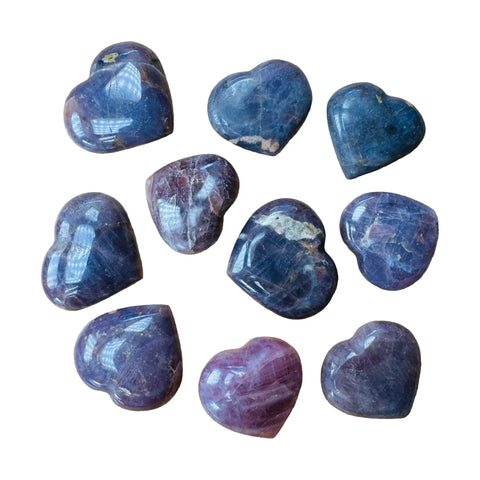
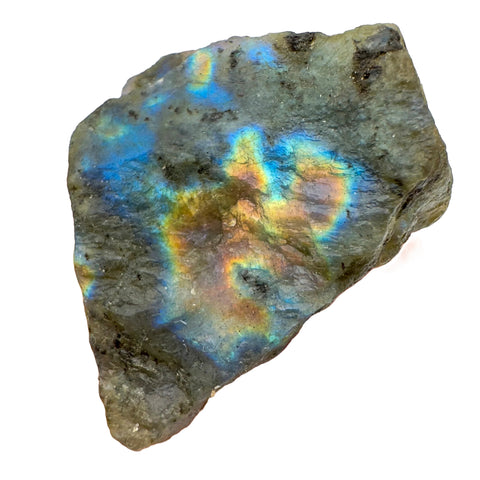
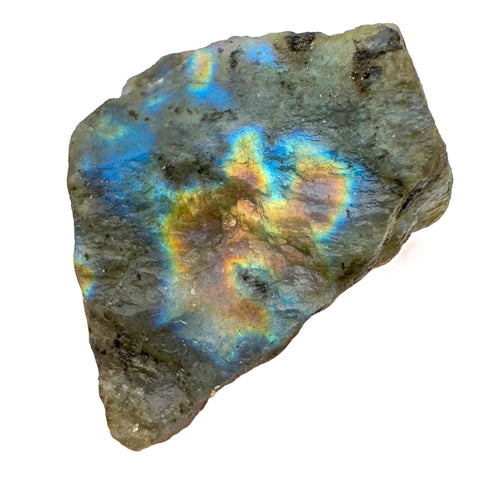
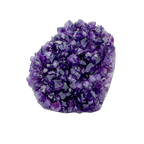
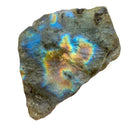
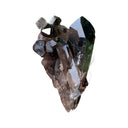
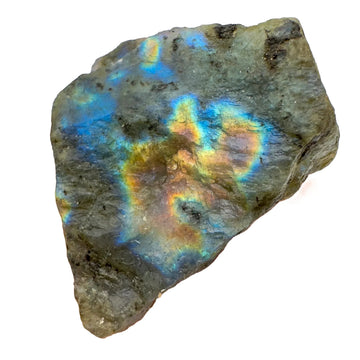
Read our Sourcing Standards →These are AA-grade Labradorite polished hearts from Atsimo-Andrefana, Madagascar. Tilt a heart and the labradorescence flashes, light interference between twinned feldspar layers inside the stone. Each heart runs 1.25-1.75 inches at Mohs 6-6.5, fully natural and untreated. A favorite protection stone for gifting and bedside tables.
Labradorite looks like a plain grey stone until you turn it. Then the flash hits, blue, green, gold, sometimes a whole sheet of color that lights up and disappears again. The effect has its own name: labradorescence. Labradorite was first described in Labrador, Canada in 1770, where Moravian missionaries found the flashing stones along the coast.
Sourced directly from Atsimo-Andrefana, Madagascar.
Labradorite has long been used in practices around listening to the quieter signals, a sense of groundedness when things feel uncertain, and clarifying what you actually want. It's traditionally linked to the third eye and crown chakras. If that resonates, set it in front of you during meditation or quiet reflection. There's no single right way to carry it.
These are traditional associations drawn from historical practice. This stone is not a substitute for medical or mental health care.
A starting place for your own quiet practice.