



















Crystal Bracelets: Why We're Adding Them and What We Can't Trace

Pick almost any crystal bracelet sold online and try to find out where the stone was mined. You'll usually get a stone name and a bead size. You won't get the mine, and often you won't get the country.
That gap is why we stayed out of beads. In February 2026 we published a post here called "Crystal Beads: Why We Don't Carry Them and What Would Change That." One line read, "we'd rather say no and mean it than say yes and hope."
We're adding bracelets to the shop, and we've rewritten this post to say so.
What changed and what didn't
Our decision changed. The bead supply chain didn't. Mine-level transparency is much harder to get for a bead than for a loose stone. We'd like that to be different. It isn't.
So our bracelets come with less traceability than our loose stones, and we'd rather say that here than let you assume otherwise.
Why beads are hard to trace
A bead takes a longer road than a loose stone:
- Rough stone is sold into a broad marketplace, often far from where it was dug.
- Consolidators buy from many sellers and combine what they buy.
- Large production centers cut and drill the material in volume.
- Finished strands are sold on, and by then the origin and treatment details have been lost or simplified.
Each handoff is a round in a game of telephone, and by the last one the story is down to a stone name and a bead size. Treatments are common and often go undisclosed. Pricing pressure is intense, and when margins get tight, labor and safety standards tend to follow.
With a loose stone we can often name the country, the region, and sometimes the mine, and we put that on every loose stone's product page. With a bead, the rough has usually passed through several hands and more than one source before it is ever drilled. Nobody can honestly trace it back to one hole in the ground, and we won't pretend to.
The standard we hold instead
Direct, cooperative sourcing is what we want for beads. It is what we do for our loose stones. For beads it isn't available, so we do the next best thing, and we think it is worth stating plainly:
- We learn the social and environmental conditions of how each stone in a bracelet is mined, by stone and by region, not by bead.
- We require the bead maker to align with our published sourcing standards before we buy. Treatment disclosure is one of those standards, so what has been done to the stone goes on the product page.
- Where we can't answer a question about a bracelet, we'll say so rather than fill the gap with a nicer story.
That is the best available. It is short of the ideal, and we'd rather tell you that than have you learn it later.
What we still recommend
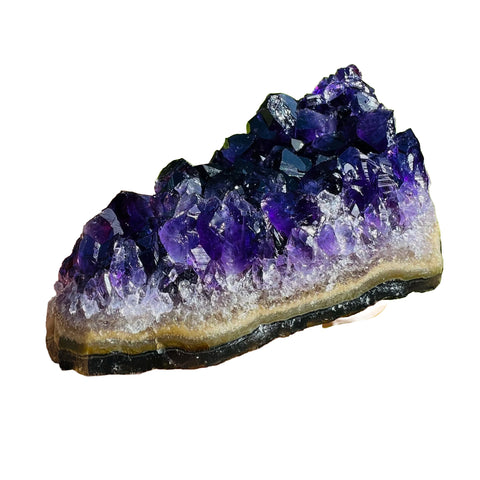
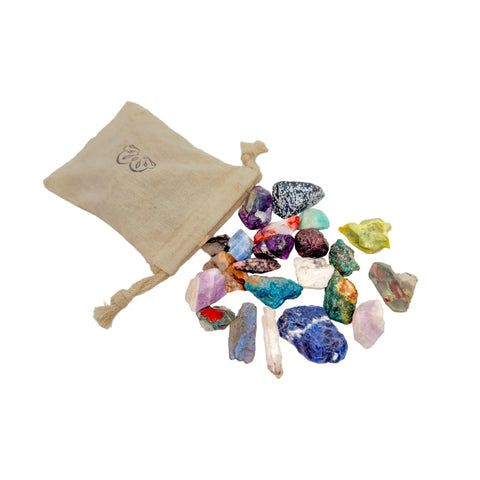
If traceability matters most to you, buy loose stones. Our tumbled stones and polished crystals carry the fuller record.
The One Question
Before you buy a crystal bracelet anywhere, ours included, ask the seller what region the stone came from. Not the country. The region. Most sellers can't answer. For a bracelet, we may not be able to answer it ourselves, and when we can't, we'll say so rather than fill the gap. If you make jewelry, ask your bead supplier the same thing.
Keep reading
More on how we source: what honest sourcing looks like, questions to ask a supplier, and what ethical sourcing costs.
Frequently asked questions
Do you sell crystal bracelets?
We're adding them. We stayed out of beads because bead supply chains are hard to verify, and that hasn't changed. Bracelets carry less traceability than our loose stones, and we say so plainly.
Can you trace a bracelet's stone to the mine?
No. Beads are cut in volume from rough that has usually passed through several hands and more than one source. We won't claim to trace a bead to a mine.
Are crystal bracelets ethically sourced?
Nobody can prove that to mine level for beads, and that includes us. We learn the social and environmental conditions of how each stone is mined and require the bead maker to align with our published sourcing standards. It's the best available, short of the ideal.