





Sodalite Crystal Guide: meaning, origin & properties
For clear thinking.
Learn what Sodalite is, where ours comes from, traditional associations across cultures, and how to identify a real specimen, in our complete Sodalite Crystal Guide.
Only 5 left in stock
Sourced through a regional cooperative or community-based workshop. Processing and economic benefit stay local, which means more of the value reaches the people doing the work.
Read our Sourcing Standards →This is a natural sodalite reed oil diffuser from Minas Gerais, Brazil, cut from a solid block and hollowed to hold a removable plastic tube for the oil. It stands about 4 to 5 inches tall, runs 2.5 to 3.5 inches across, weighs 2 to 3 pounds, and rates Mohs 5.5 to 6. The rough exterior is hand-finished with natural jojoba oil and a chrome collar seats into the top. Reeds are not included.
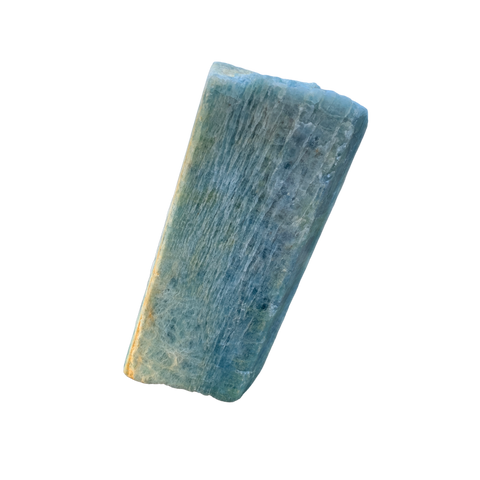
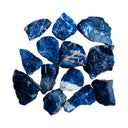
Sodalite is a deep royal-blue stone streaked with white veins of calcite, part of the sodalite group of feldspathoid minerals. Left rough rather than polished glossy, the blue reads granular and mineral, closer to how it looks in the ground.
These diffusers are cut and hollowed from solid blocks sourced in Minas Gerais, Brazil. The outside is finished with a light coat of natural jojoba oil, which deepens the blue without adding shine.
Sodalite is softer than the quartz stones in this line at Mohs 5.5 to 6, so it wants a little more care on a hard countertop.
Sodalite is traditionally a stone of the throat and third eye, associated with honest communication, intuition, and a calm, ordered mind. Many people keep it in workspaces and reading corners.
As a diffuser it sits where you pause and breathe, which suits the stone's steady, thoughtful character.
These are traditional associations drawn from historical practice. This stone is not a substitute for medical or mental health care.
A starting place for your own quiet practice.