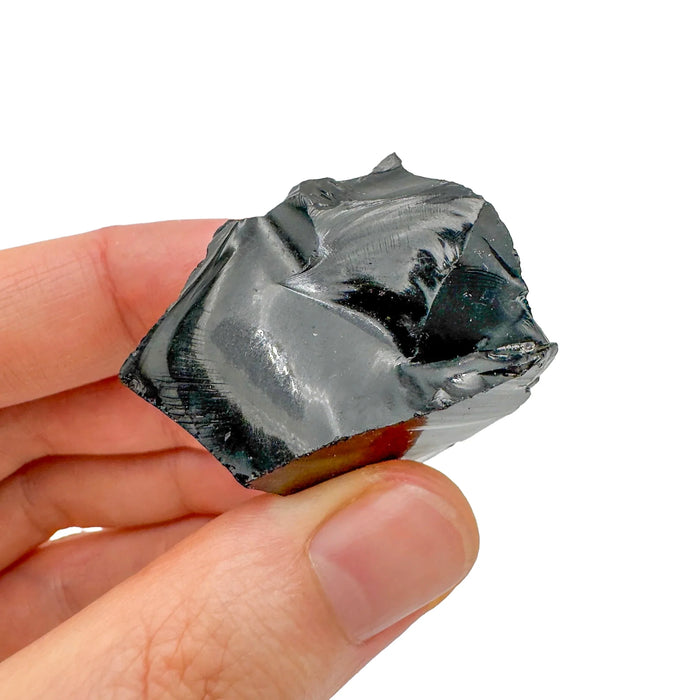
























































Most smoky quartz on the market got its color from a lab, not the ground. Here’s how to read the difference, why it matters for what you paid, and the three questions to ask before you buy.
Is Your Smoky Quartz Natural or Irradiated?

You buy a smoky quartz point online. It shows up darker than the photo, almost black, with one corner so clear it looks like glass. You hold it to the window and wonder: did the earth make this color, or did a machine?
Quick answer
Most commercial smoky quartz gets its color from artificial irradiation, not the ground. The treatment is stable and safe to handle, but few sellers mention it. Naturally colored stones show uneven zoning and lean warm brown; irradiated quartz often looks uniformly jet black. Ask where the color came from before you buy.
It’s a fair question, and the answer is more interesting than most sellers let on. A lot of the smoky quartz on the market got its color from a lab, not the ground. That isn’t a scandal on its own. The treatment is stable and safe to hold. The problem is how rarely anyone says so.
Mineral
Quartz (silicon dioxide)
Color source
Radiation color centers
Common treatment
Irradiation
Natural origins
Brazil, Scotland
The color is the question, not the crystal
Here’s the reframe. When you ask “is this real smoky quartz,” the answer is almost always yes. It’s real quartz, the same silicon dioxide as clear quartz or amethyst. The honest question is narrower: where did the smoky color come from?
Think of treatments like seasoning. Some are upfront, some are hiding something. The seasoning here is radiation, and whether it came from the ground over millions of years or from a beam in an afternoon changes what you actually bought.
How smoky quartz gets its color
Pure quartz is clear. Smoky quartz forms when the crystal holds a trace of aluminum in place of some of its silicon, then sits near natural radiation in the ground, from surrounding granite or trace uranium and thorium, over very long stretches of time. That radiation nudges electrons loose and creates what mineralogists call color centers: tiny sites in the crystal that absorb light and leave the warm gray-to-brown tone we read as “smoky.”
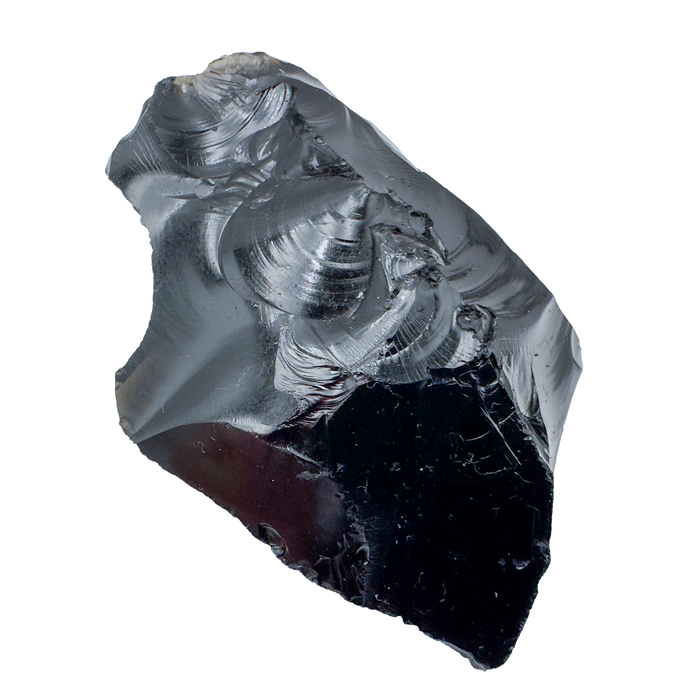
A crystal is a record of time. Natural smoky color is the receipt for a slow process. It tends to be uneven and zoned, often warm and brown, sometimes shading from clear at one end to deep gray at the other. Scotland’s Cairngorm smoky quartz and many Brazilian pieces formed exactly this way. You can see more of how stones earn their color in our crystal guide.
What a lab does in an afternoon
The shortcut is simple. Take pale, milky, or colorless quartz that never picked up much color in the ground, expose it to a gamma source or an electron beam, and the same color centers form in hours instead of millennia. The result can be a deep smoky or near-black stone, often sold at the price of something rarer.
Two things worth saying plainly. First, the stone is still genuine quartz, and the color is usually stable in everyday light. Second, properly treated quartz is not radioactive by the time it reaches you. The worry isn’t safety. It’s the silence. A stone that needed a beam to get dark carries a different value, and a different story, than one the earth darkened on its own.
We made the same point about heated citrine. The treatment can be fine. The missing label is the problem.
“The worry isn’t safety. It’s the silence.”
Natural or irradiated: what to look for
No kitchen-table test is perfect. Lab equipment can read the difference for certain; your eyes can only catch the tells. Here’s where naturally colored and irradiated stones tend to part ways.
| What to check | Naturally colored | Often irradiated |
|---|---|---|
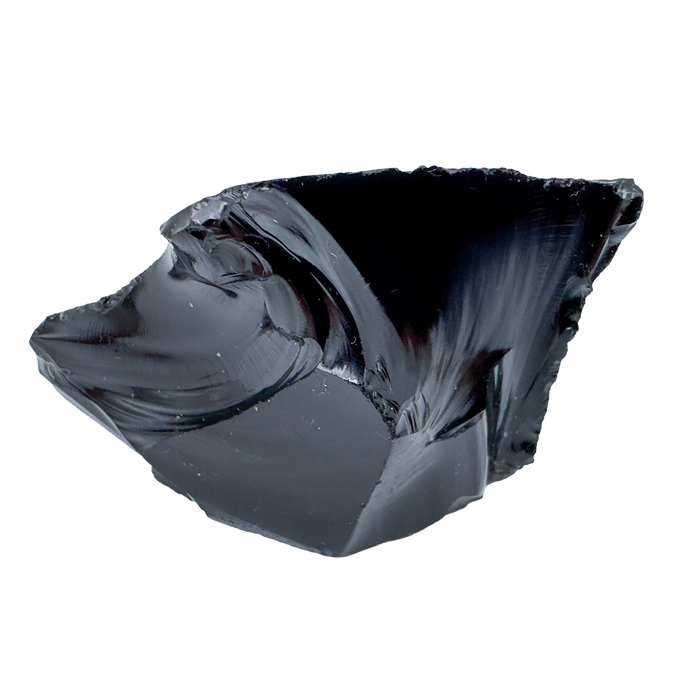
| Color tone | Warm gray to brown, sometimes a golden cast | Cool and very dark, often close to jet-black |
| Color spread | Uneven and zoned, can fade from clear to gray in one piece | Uniform edge to edge, little variation |
| Under UV light | May show a faint yellowish glow | Often stays dark |
| Price vs darkness | Deep natural color usually costs more | Very dark at a very low price is a yellow light |
| The label | Names where the color came from | Says nothing, or just “smoky quartz” |
The UV light note
Under a UV light, naturally colored smoky quartz sometimes shows a faint yellowish glow, while irradiated material often stays dark. It’s a soft clue, not proof. Treat it as one data point, not a verdict.
Three questions to ask before you buy
- Where did the color come from, natural or irradiated? A seller who knows their stock will answer without flinching.
- Where was it mined? A real origin, like Brazil or the Scottish Highlands, is a sign someone actually traced the piece.
- If they can’t answer either, what else aren’t they telling you? Silence on the easy questions is its own answer.
Where we stand
We’d rather tell you than let you guess. Our smoky quartz listings name where the color comes from, and we carry raw pieces we can confirm were never irradiated, so the stone in your hand matches the story on the page. You can browse the smoky quartz collection or read how we vet every piece in our sourcing standards.
People have long reached for smoky quartz for grounding and a sense of steadiness, the stone you keep on the desk through a long day. That part you bring to it. Where the color came from is the part we owe you.
The honest version
Smoky quartz is real quartz either way. The honest question is where the color came from, slow natural radiation in the ground or a lab beam in an afternoon. The treatment is safe; the silence around it is the problem. Ask before you buy.
Ask before you buy. A seller who knows the answer will be glad you asked.