




















































 Raw Stones
179 pieces
Raw Stones
179 pieces
 Tumbled Stones
162 pieces
Tumbled Stones
162 pieces
 Palm Stones
25 pieces
Palm Stones
25 pieces
 Crystal Points
23 pieces
Crystal Points
23 pieces
 Clusters & Geodes
104 pieces
Clusters & Geodes
104 pieces
 Polished & Decor
148 pieces
Polished & Decor
148 pieces
 Mineral Specimens
259 collector pieces
Mineral Specimens
259 collector pieces
 Crystal Chips
21 pieces
Browse everything
Every collection, one page.
View All Collections →
Crystal Chips
21 pieces
Browse everything
Every collection, one page.
View All Collections →


 Aries
Mar 21 – Apr 19
Carnelian
›
Aries
Mar 21 – Apr 19
Carnelian
›
 Taurus
Apr 20 – May 20
Rose Quartz
›
Taurus
Apr 20 – May 20
Rose Quartz
›
 Gemini
May 21 – Jun 20
Agate
›
Gemini
May 21 – Jun 20
Agate
›
 Cancer
Jun 21 – Jul 22
Moonstone
›
Cancer
Jun 21 – Jul 22
Moonstone
›
 Leo
Jul 23 – Aug 22
Citrine
›
Leo
Jul 23 – Aug 22
Citrine
›
 Virgo
Aug 23 – Sep 22
Amazonite
›
Virgo
Aug 23 – Sep 22
Amazonite
›
 Libra
Sep 23 – Oct 22
Blue Lace Agate
›
Libra
Sep 23 – Oct 22
Blue Lace Agate
›
 Scorpio
Oct 23 – Nov 21
Obsidian
›
Scorpio
Oct 23 – Nov 21
Obsidian
›
 Sagittarius
Nov 22 – Dec 21
Sodalite
›
Sagittarius
Nov 22 – Dec 21
Sodalite
›
 Capricorn
Dec 22 – Jan 19
Black Tourmaline
›
Capricorn
Dec 22 – Jan 19
Black Tourmaline
›
 Aquarius
Jan 20 – Feb 18
Amethyst
›
Aquarius
Jan 20 – Feb 18
Amethyst
›
 Pisces
Feb 19 – Mar 20
Aquamarine
›
Gifting?
A birthday stone is the safe bet.
Read the zodiac guide →
Pisces
Feb 19 – Mar 20
Aquamarine
›
Gifting?
A birthday stone is the safe bet.
Read the zodiac guide →











Cacoxenite
Cacoxenite is a rare golden iron phosphate that grows in fine, radiating needles. You will almost never meet it as a standalone gem. Nearly every piece sold under the name is really amethyst or quartz holding golden inclusions, which makes cacoxenite as much a story about honest labeling as about the mineral itself.
The geology.
Cacoxenite is a hydrated iron aluminum phosphate, a mineral built from iron, aluminum, phosphate, and water. It is known for one distinctive look: warm golden-yellow to brownish-yellow crystals that grow as fine needles and fan out into radiating tufts and starburst sprays. The individual crystals are tiny, so the mineral usually reads as a soft golden shimmer rather than a single defined gem.
It is a soft mineral, sitting at just 3 to 4 on the Mohs scale, far below the quartz it is so often found inside. Cacoxenite is a secondary mineral, which means it forms later in a rock's life, as earlier iron-bearing minerals weather and their elements recombine. It crystallizes in the hexagonal system, shows no distinct cleavage, and carries a silky to greasy luster on its fibrous crystals.
The origins.
Cacoxenite was first described in 1825 from the Hrbek Mine in Bohemia, now part of the Czech Republic. As a species it turns up in oxidized iron ore deposits, granite pegmatites, and phosphate-rich sediments across a scattered list of countries, including Germany, England, Sweden, France, the United States, Madagascar, and Brazil.
Here is the part that matters most for a buyer. Loose cacoxenite crystals are a collector's micro-mineral, small and fragile, and rarely made into jewelry. Almost every polished piece sold as cacoxenite is really amethyst or quartz carrying golden inclusions, most of it from Espirito Santo in Brazil, and often labeled Super Seven, Melody Stone, or Sacred Seven.
Traditional associations.
Because loose cacoxenite is so rarely handled, most of its traditional reputation travels with the amethyst and quartz that carry it, especially the Super Seven blend. In that setting many people associate the golden inclusions with spiritual insight, alignment, and a sense of the bigger picture.
Cacoxenite is most often linked to the Crown and Third Eye chakras and to themes of higher awareness and steady personal growth. It has no single traditional birthstone sign, and it is commonly described as working with all of them. A frequent practice is simply to keep a Super Seven or amethyst piece nearby during reflection or meditation.
Spotting the real thing.
Start by asking what you are actually looking at. Real cacoxenite shows as fine golden or brownish-yellow needles that radiate outward in tufts, usually suspended inside clear, smoky, or purple quartz. In a loose specimen it looks like a soft mineral starburst, and because it is soft at 3 to 4 on the Mohs scale, standalone crystals stay small and delicate.
The honest question to ask a seller is whether the golden material is confirmed cacoxenite or the more common goethite and lepidocrocite, which look nearly identical to the eye. Watch also for plain yellow or gold dyed quartz with no radiating structure, and for pieces where the gold sits as a flat surface stain rather than as inclusions set at different depths inside the stone.
Care & handling.
How you care for cacoxenite depends on how you own it. As a golden inclusion inside quartz or amethyst, the tough quartz host does the protecting, and the piece handles normal display and gentle wear. A loose cacoxenite crystal is a different matter, soft and fragile at 3 to 4 on the Mohs scale, and is best treated as a delicate collector specimen.
For quartz-hosted pieces, rinse briefly with warm water and a soft cloth, and skip harsh chemicals, ultrasonic cleaners, and long soaks. If your piece is amethyst based, keep it out of prolonged direct sunlight so the purple does not fade. Store it away from harder stones so the quartz surface stays clean. To reset it energetically, many people use moonlight, sound, or a night on a selenite plate.
Pairs well with.
A deeper look.
Extended geology, sourcing, the cacoxenite or goethite question, history, and varieties, for when the quick guide isn't quite enough.
Extended geology
Cacoxenite is a hydrated iron aluminum phosphate. Its published formula is complex and water rich, an iron aluminum phosphate with additional oxygen, hydroxide, and many water molecules. What matters in the hand is that it is an iron phosphate that forms as a secondary mineral, crystallizing after primary iron minerals such as magnetite and other phosphates break down and their elements recombine in oxidized, wet conditions.
The mineral grows as slender hexagonal needles that splay into radial tufts, spheres, and starburst aggregates. Color runs from golden yellow through honey to brownish yellow, driven by its iron content. Hardness is 3 to 4, cleavage is absent, and the luster is silky to greasy on the fibrous crystals. It is these fine golden fibers, rather than any single crystal face, that give cacoxenite its look.
Extended sourcing
Classic mineral specimens come from a spread of oxidized iron and phosphate deposits. The type locality is the Hrbek Mine in Bohemia. Germany's Hagendorf pegmatite, several localities in Cornwall, England, sites in Sweden and France, and United States occurrences such as the novaculite of Arkansas and deposits in Arizona, Alabama, and New York have all produced collector cacoxenite.
The lapidary and metaphysical trade, though, is dominated by one source. Amethyst and quartz carrying golden inclusions, sold as cacoxenite or Super Seven, come mainly from small mines and lapidaries in Espirito Santo, Brazil. That single origin supplies most of the cabochons, towers, and beads that reach shops under the cacoxenite name.
The cacoxenite or goethite question
This is the honest heart of the stone. For decades, golden radiating inclusions in Brazilian amethyst were sold as cacoxenite, and the name stuck to the Super Seven blend. Many mineralogists now argue that most of those golden tufts are not cacoxenite at all, but goethite or lepidocrocite, two iron oxide and oxide-hydroxide minerals that form the same feathery gold sprays.
The reasoning is chemical. Cacoxenite is a phosphate and needs phosphorus in its environment to form, and the settings where this amethyst crystallized are not thought to supply it. None of this makes the stones less beautiful or less genuine as natural quartz. It simply means the golden guest may be misnamed. The transparent move is to sell the piece as amethyst or quartz with golden inclusions, and to say cacoxenite only when it has actually been confirmed.
History and the name
Cacoxenite carries one of the more honest names in mineralogy. It comes from the Greek kakos, meaning bad, and xenos, meaning guest, so it reads literally as the bad guest. The name was given because its phosphorus content lowered the quality of iron smelted from ore that contained it. To the ironmasters who first met it, this golden mineral was an unwelcome visitor in the furnace.
It was formally described in 1825 from Bohemia. For most of its history it stayed a specialist collector's mineral, admired for its radiating golden sprays under magnification. Its wider fame arrived much later and secondhand, through the Super Seven amethyst trade, which borrowed the cacoxenite name for the golden threads running through the Brazilian stone.
Varieties and trade names
Loose cacoxenite: small collector specimens of golden radiating needles on or in matrix, prized by mineral collectors rather than jewelers.
Cacoxenite in amethyst or quartz: the common lapidary material, clear, smoky, or purple quartz threaded with golden inclusions. Often those inclusions are goethite or lepidocrocite rather than confirmed cacoxenite.
Super Seven, Melody Stone, Sacred Seven: trade names for a Brazilian amethyst reported to combine amethyst, clear quartz, smoky quartz, rutile, goethite, lepidocrocite, and cacoxenite in one stone. Not every piece contains all seven.
What it costs in the market
Pricing follows the material, not the mineral name. Tumbled Super Seven or cacoxenite amethyst runs roughly 4 to 20 dollars a piece. Cabochons, towers, and beaded strands with clear golden inclusions in good amethyst range from around 15 to well over 100 dollars, depending on size, clarity, and how striking the inclusions are.
Fine loose cacoxenite mineral specimens are a separate collector market, valued for sharp radiating sprays and good matrix rather than for size. Across both markets, the honest driver of value is the quality of the golden inclusions and the clarity of the quartz around them, not the label alone.
An education-first guide.
We don't currently carry cacoxenite, so there's nothing to sell you here. This guide exists because the more you understand a stone, the better every decision you make about it becomes, wherever you buy it. Explore the rest of our crystal guides for stones we do source, each with full origin and treatment notes.
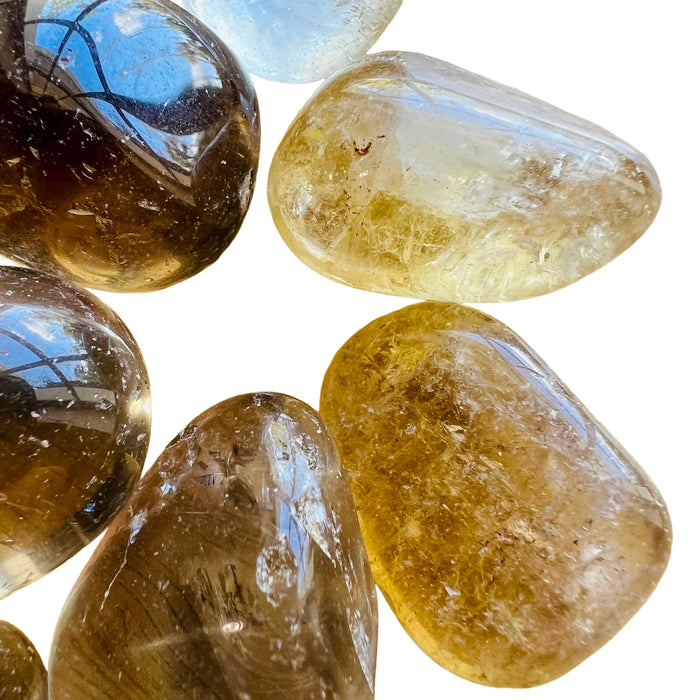
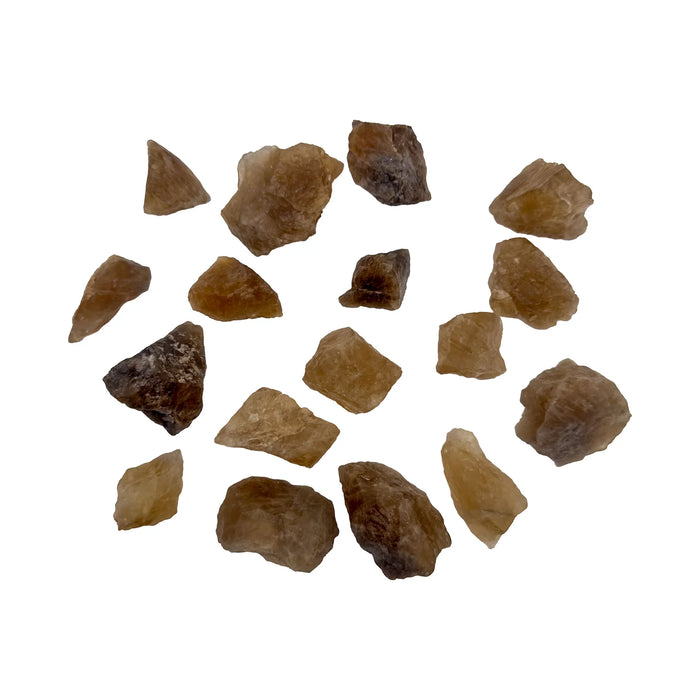
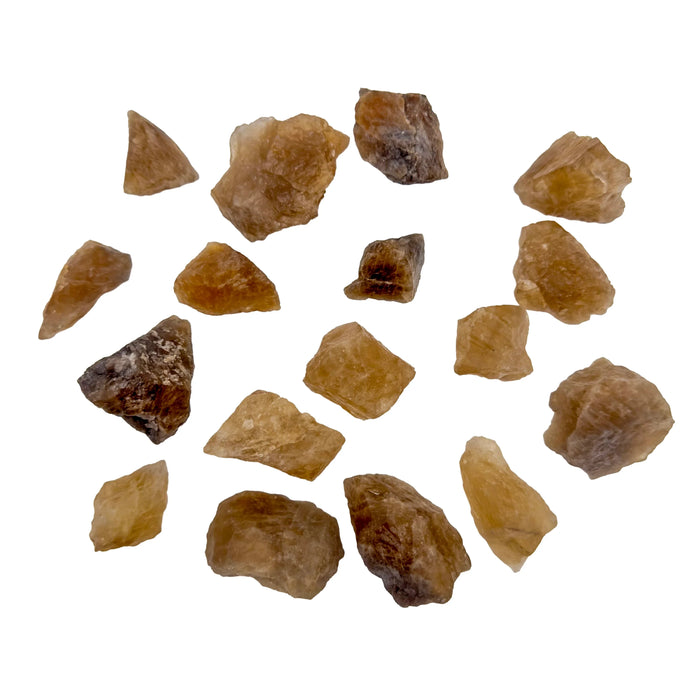
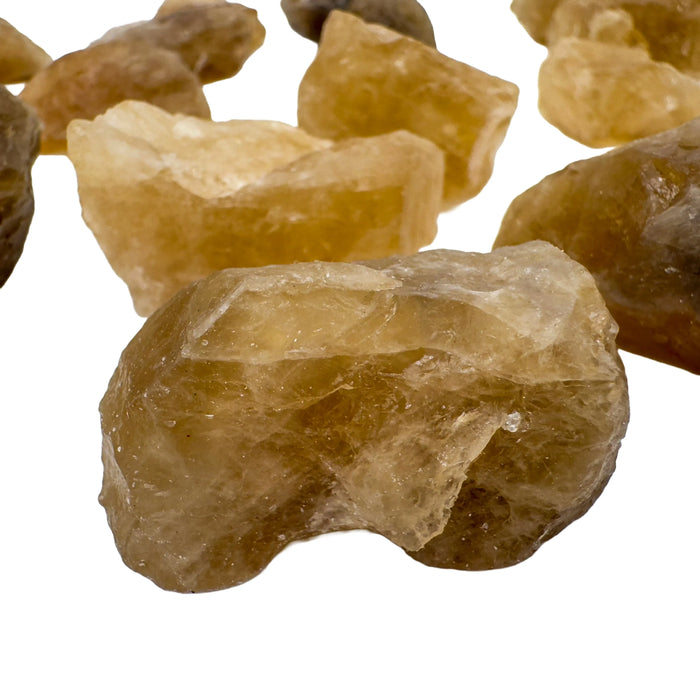
Explore the Crystal GuideLove Cacoxenite? Meet Citrine.
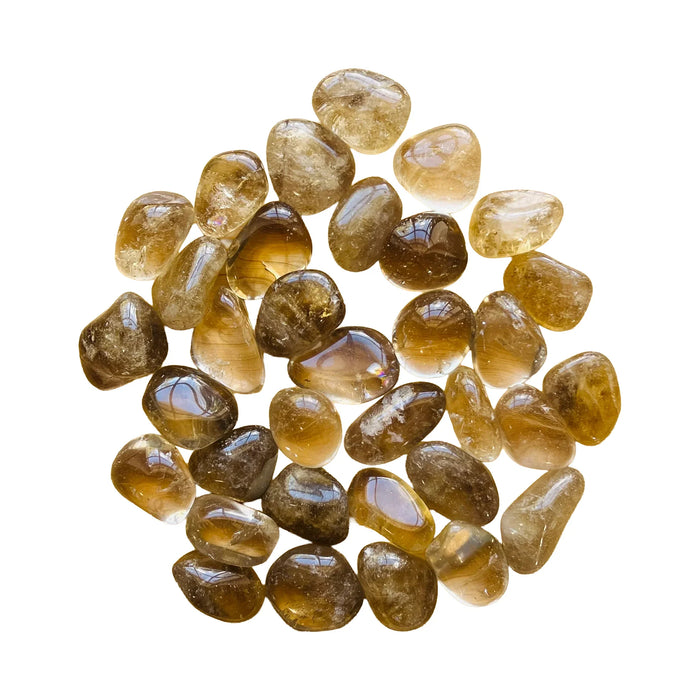
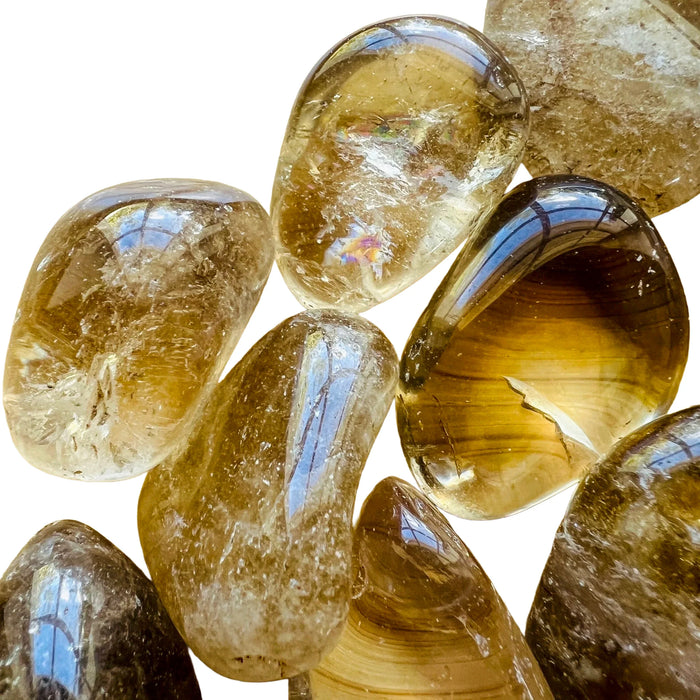
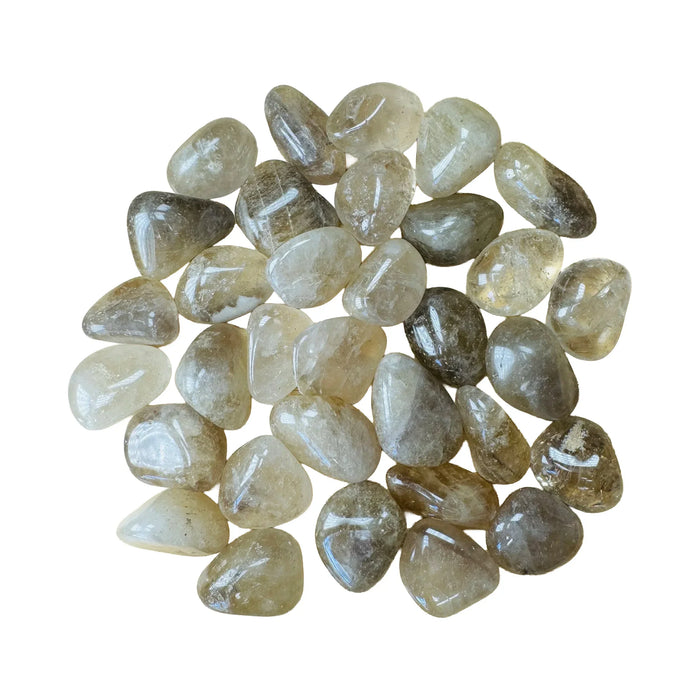
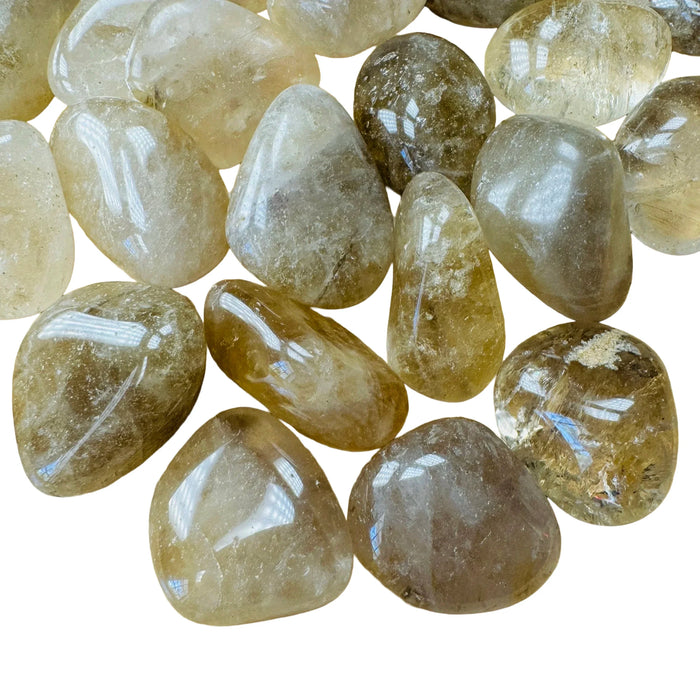
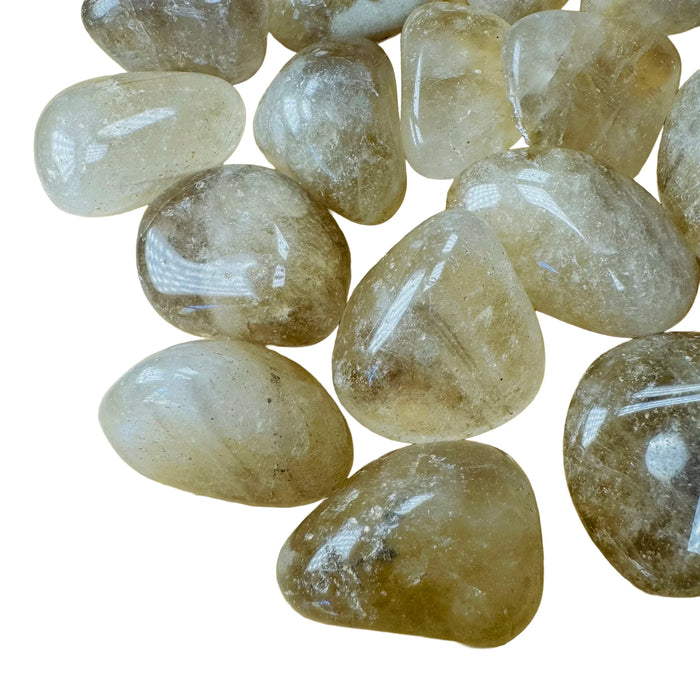
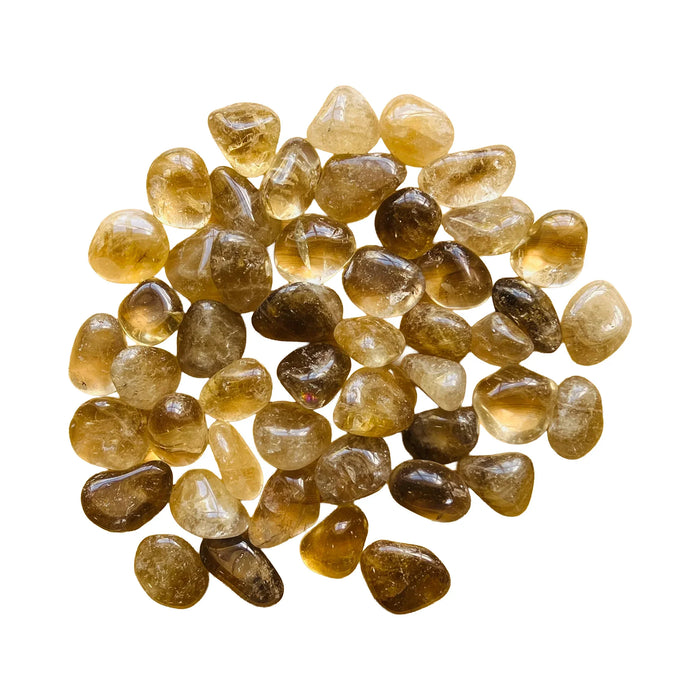
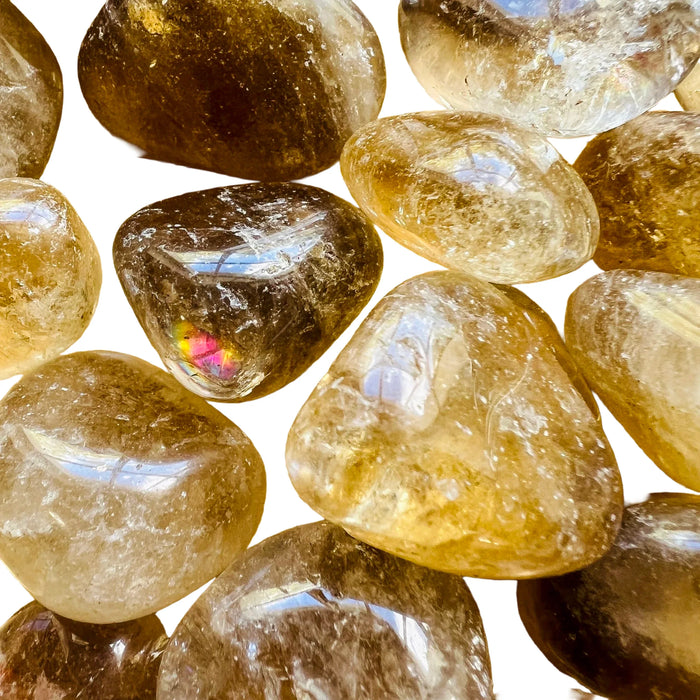
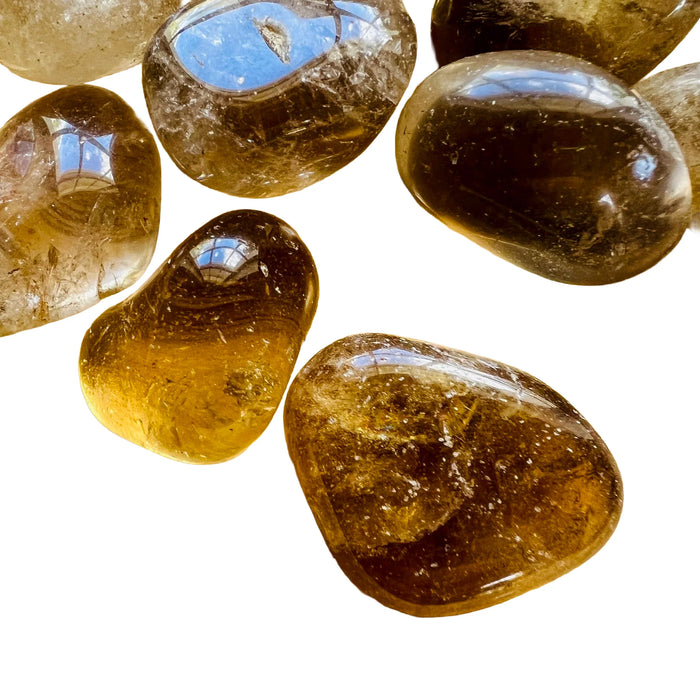
Cacoxenite is not something we carry. Citrine is the closest match in color, and every piece passes our sourcing standards: origin named, treatments disclosed.
- from 1,000+ reviews
- Ships within 72 hoursMonday to Friday, tracked
- 90 days to return itif you do not love it
- Free US shipping over $99$8.99 flat rate under
The Slow Note
New stones go to the list first.
No forwarding, no selling. Unsubscribe in one click. Privacy