


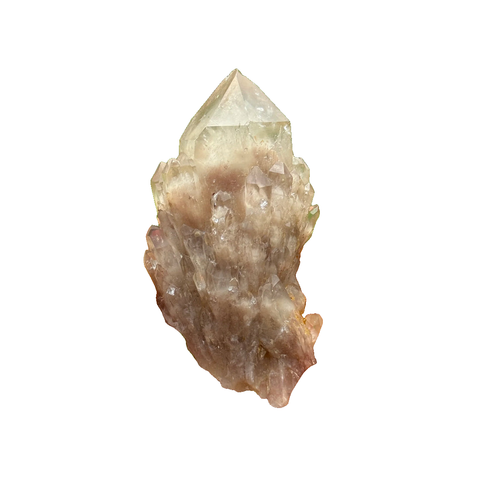
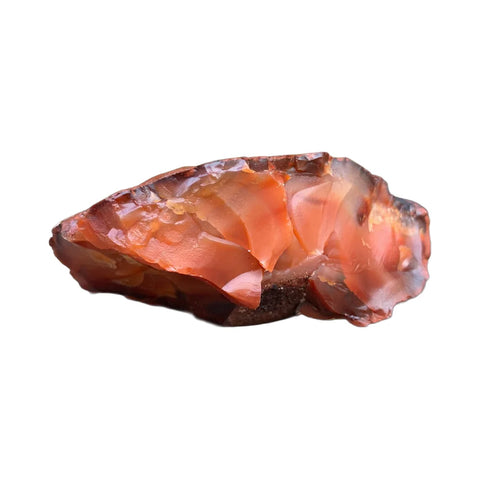
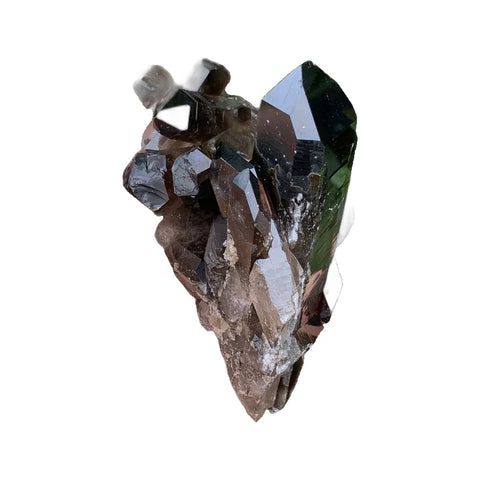
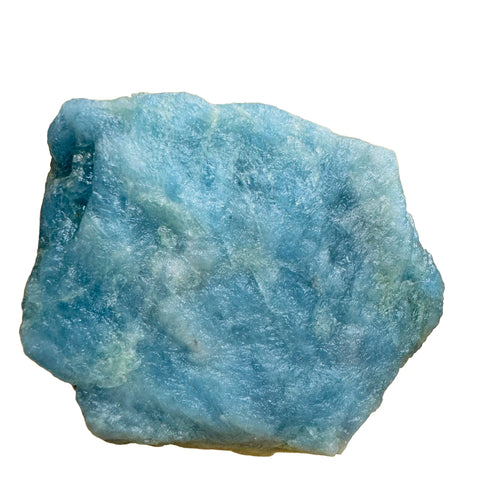
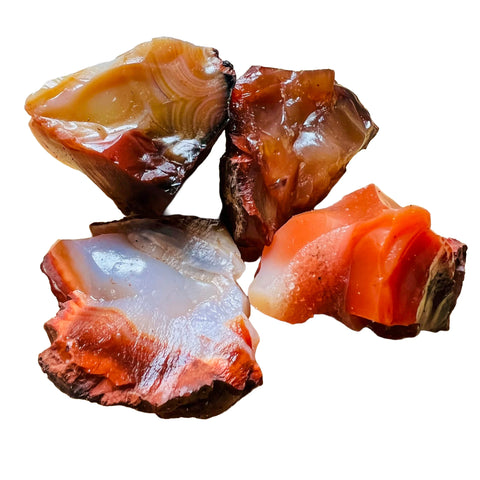


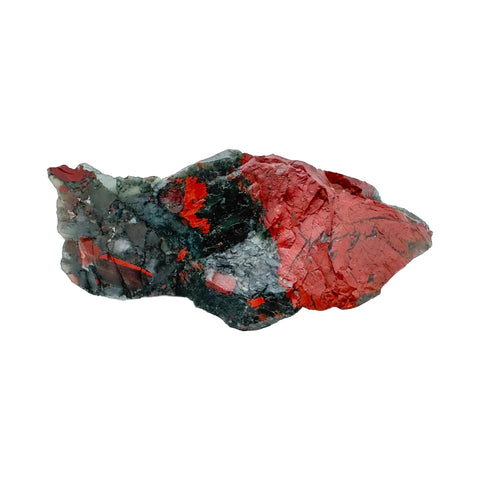
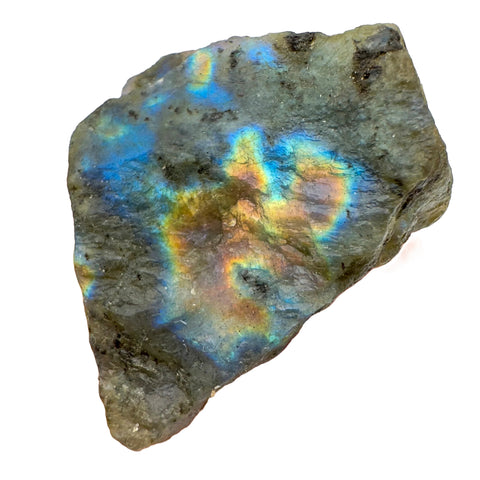
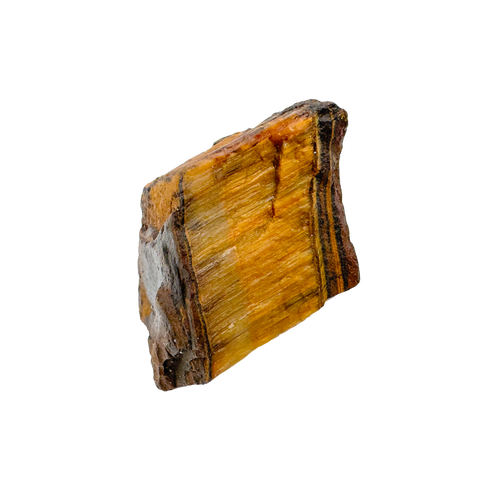
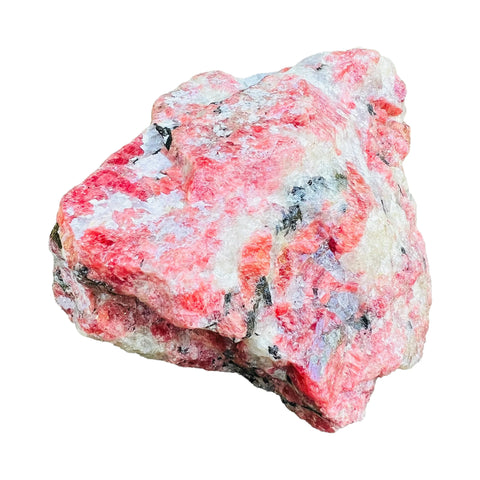
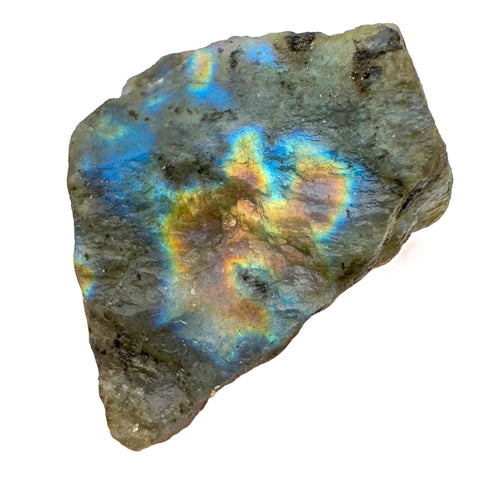
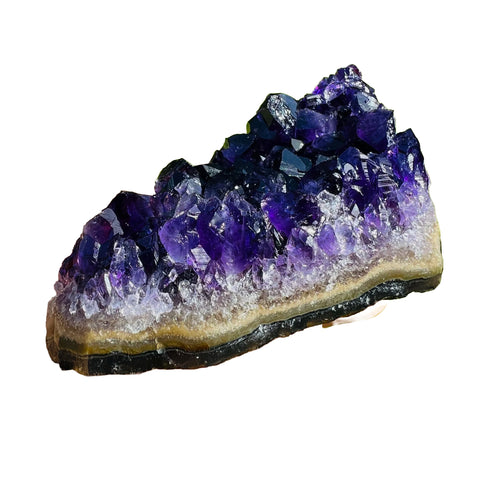



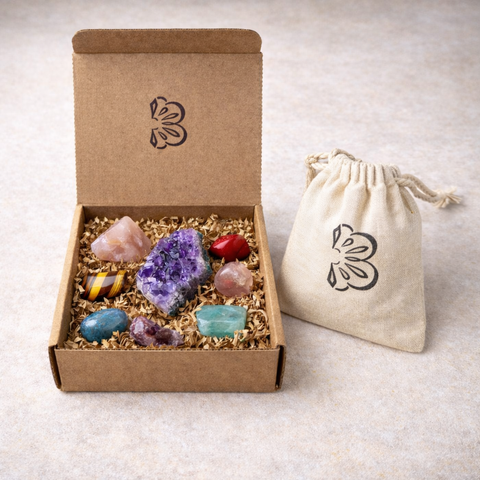
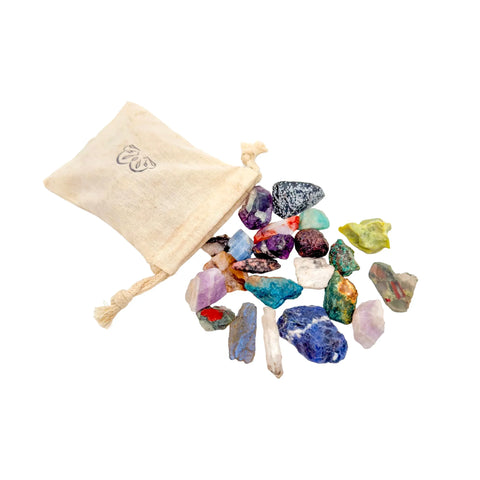
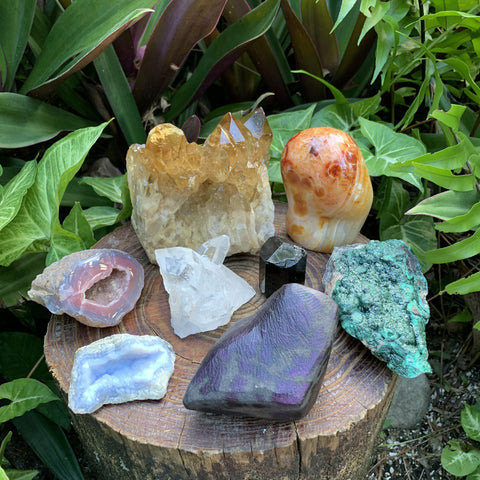
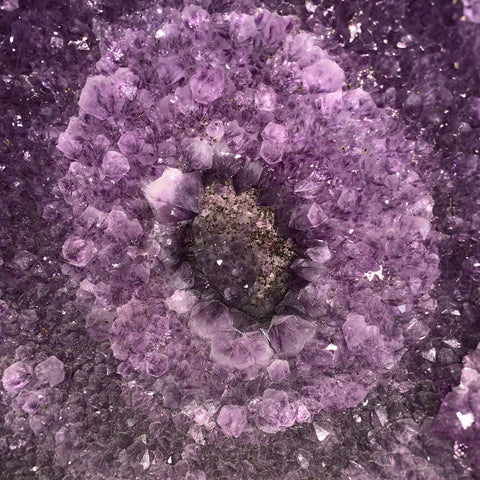
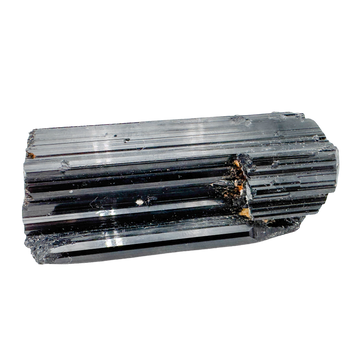
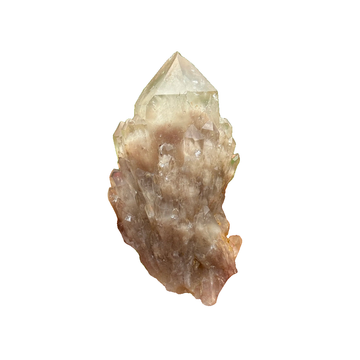
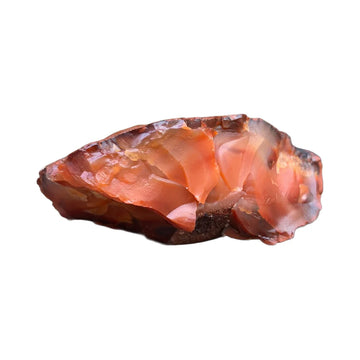
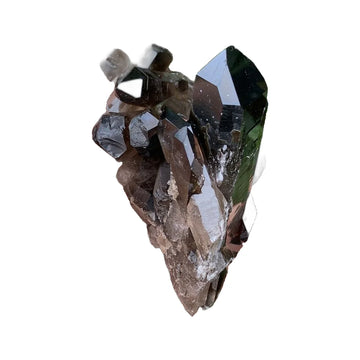
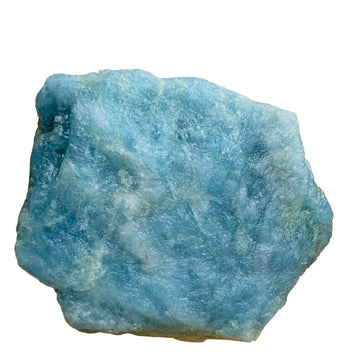
 Raw Stones
180 pieces
Raw Stones
180 pieces
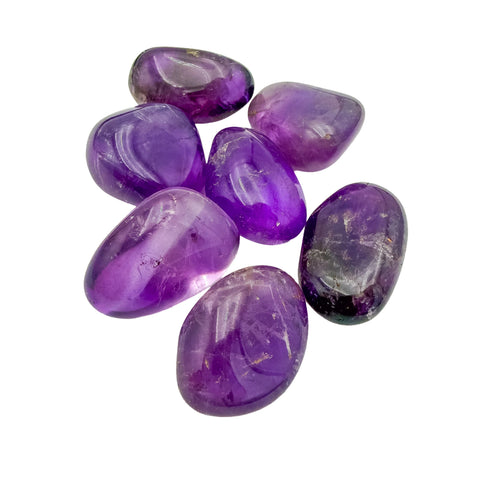
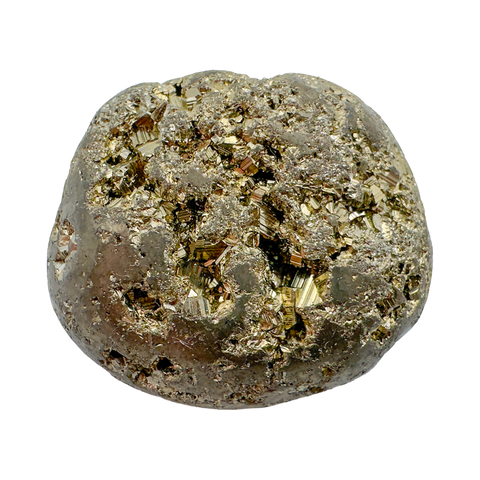
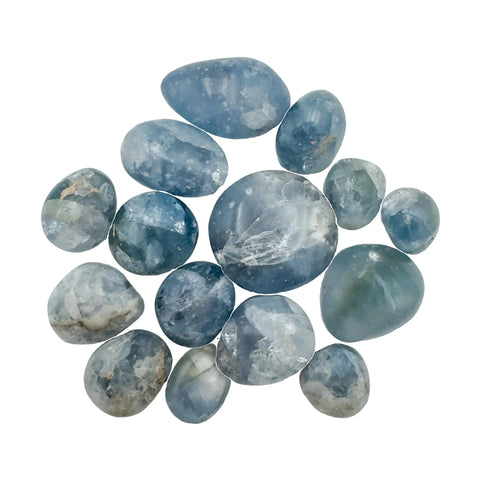
 Tumbled Stones
162 pieces
Tumbled Stones
162 pieces
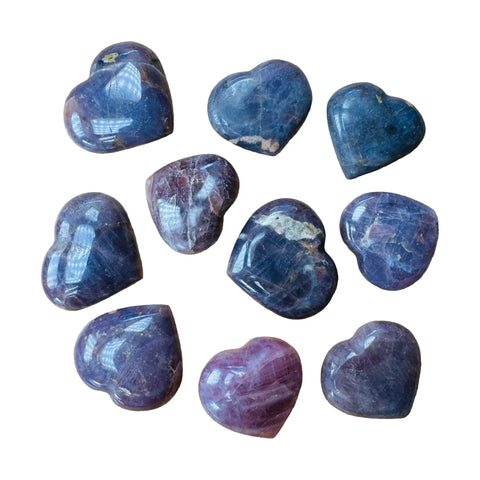
 Palm Stones
26 pieces
Palm Stones
26 pieces
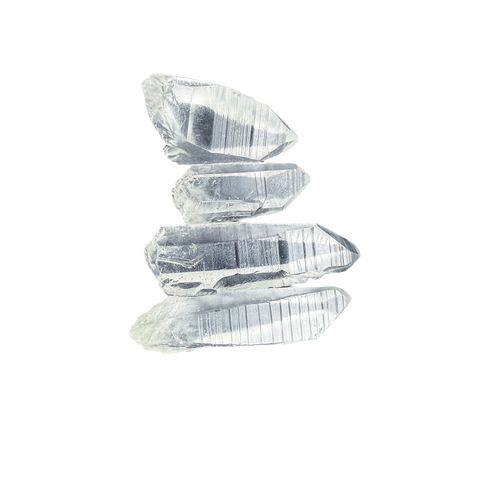
 Crystal Points
23 pieces
Crystal Points
23 pieces
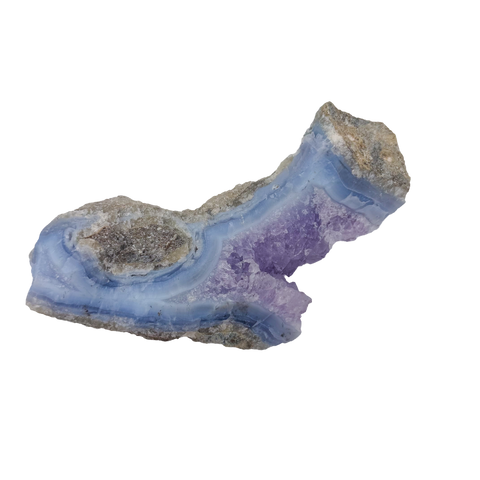
 Clusters & Geodes
112 pieces
Clusters & Geodes
112 pieces
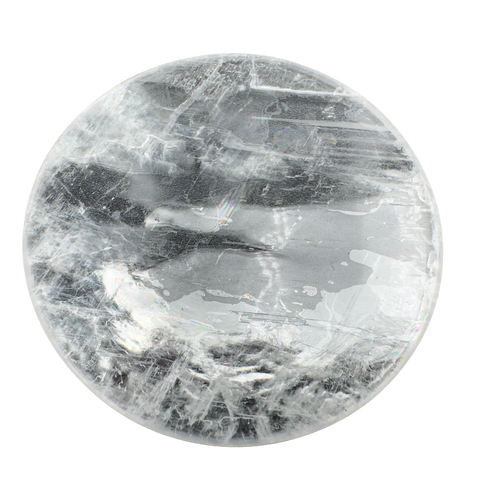
 Polished & Decor
155 pieces
Polished & Decor
155 pieces
 Mineral Specimens
269 collector pieces
Mineral Specimens
269 collector pieces
 Crystal Chips
21 pieces
Browse everything
Every collection, one page.
View All Collections →
Crystal Chips
21 pieces
Browse everything
Every collection, one page.
View All Collections →


 Aries
Mar 21 – Apr 19
Carnelian
›
Aries
Mar 21 – Apr 19
Carnelian
›
 Taurus
Apr 20 – May 20
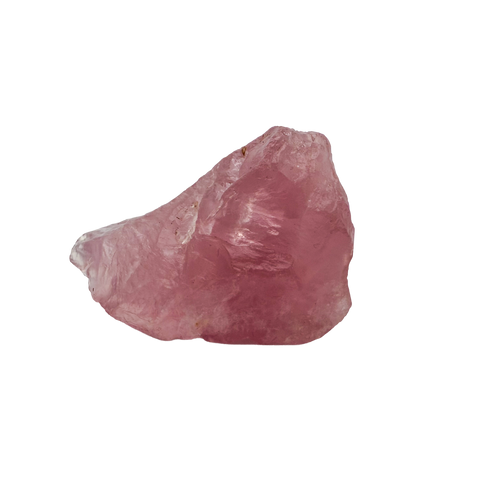
Rose Quartz
›
Taurus
Apr 20 – May 20
Rose Quartz
›
 Gemini
May 21 – Jun 20
Agate
›
Gemini
May 21 – Jun 20
Agate
›
 Cancer
Jun 21 – Jul 22
Moonstone
›
Cancer
Jun 21 – Jul 22
Moonstone
›
 Leo
Jul 23 – Aug 22
Citrine
›
Leo
Jul 23 – Aug 22
Citrine
›
 Virgo
Aug 23 – Sep 22
Amazonite
›
Virgo
Aug 23 – Sep 22
Amazonite
›
 Libra
Sep 23 – Oct 22
Blue Lace Agate
›
Libra
Sep 23 – Oct 22
Blue Lace Agate
›
 Scorpio
Oct 23 – Nov 21
Obsidian
›
Scorpio
Oct 23 – Nov 21
Obsidian
›
 Sagittarius
Nov 22 – Dec 21
Sodalite
›
Sagittarius
Nov 22 – Dec 21
Sodalite
›
 Capricorn
Dec 22 – Jan 19
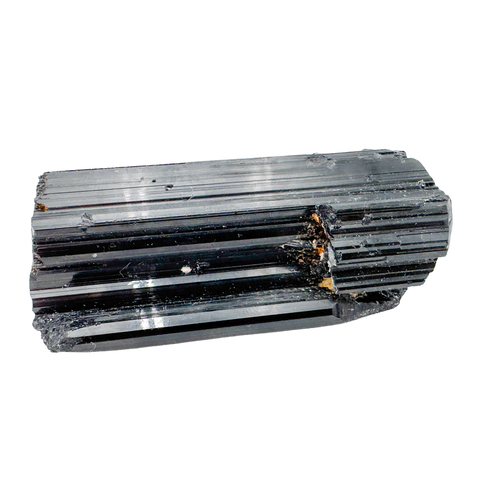
Black Tourmaline
›
Capricorn
Dec 22 – Jan 19
Black Tourmaline
›
 Aquarius
Jan 20 – Feb 18
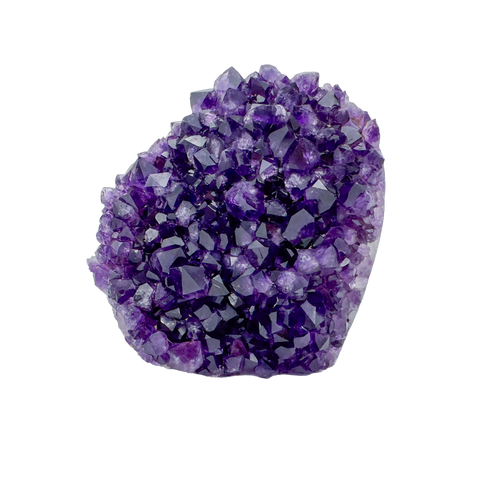
Amethyst
›
Aquarius
Jan 20 – Feb 18
Amethyst
›
 Pisces
Feb 19 – Mar 20
Aquamarine
›
Gifting?
A birthday stone is the safe bet.
Read the zodiac guide →
Pisces
Feb 19 – Mar 20
Aquamarine
›
Gifting?
A birthday stone is the safe bet.
Read the zodiac guide →

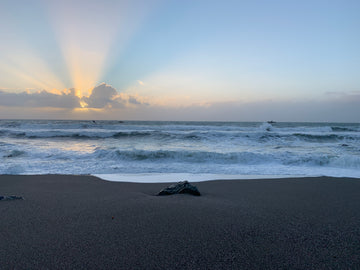
Seraphinite
Seraphinite is a trade name for a gem form of clinochlore, a deep green chlorite mineral threaded with silvery, feather-like fibers that shimmer as the stone is turned. It comes from a single region in Siberia. People have long reached for it around spiritual connection, renewal, and a quiet, heart-centered calm.
The geology.
Seraphinite is a trade name, not a species name. The mineral itself is clinochlore, a magnesium-iron member of the chlorite group of phyllosilicates, with an approximate formula of (Mg,Fe)5Al(Si3Al)O10(OH)8. What sets it apart is its chatoyance, fine silvery fibers laid through a deep green body in feather and fern patterns, which is where the angelic nickname comes from.
It is a soft, layered mineral, ranking only 2 to 4 on the Mohs scale, and crystallizes in the monoclinic system. The silvery sheen shifts as the stone is turned, a cat's-eye effect produced by light bouncing off the aligned fibers. Because it is soft and micaceous, seraphinite is almost always cut into cabochons, beads, and small carvings rather than faceted.
The origins.
Seraphinite comes from essentially one place on Earth. It is found in the Korshunovskoye deposit, an iron skarn in the Lake Baikal region of Irkutsk Oblast in Eastern Siberia, Russia. This single-source character is unusual for a popular stone and is a large part of what makes it collectible.
The material was documented in the 1800s by the Russian mineralogist Nikolai Koksharov, a director of the Imperial Mineralogical Society, and the poetic trade name seraphinite, after the seraphim, later came into use for the finest feathered pieces. Because it comes from one remote region, supply is limited and quality ranges from dull green to dramatic, high-contrast silver chatoyance.
Traditional associations.
Seraphinite's very name ties it to the angelic. Coined for the seraphim of religious tradition, it reflects the feather-and-wing look of the silver fibers. In modern crystal practice the stone is treated as one of the Heart and higher chakras, bridging grounded green with a lighter, more spiritual feel.
Many people work with seraphinite around spiritual connection, self-renewal, and a sense of calm. As a green stone it is most often associated with the Heart chakra and the element of Earth, and some traditions link it to Sagittarius. A common practice is to hold a piece during meditation and let the shifting sheen settle the attention.
Spotting the real thing.
The signature of real seraphinite is its three-dimensional chatoyance: silvery, feather-like fibers that flash and move across a deep green body as you tilt it. The pattern should look organic and layered, like frost or plumage, not printed or static. Genuine material is also noticeably soft, so a hard, glassy green stone is not seraphinite.
Watch for dyed serpentine or other green stones sold under the seraphinite name without the fibrous silver shimmer, and for resin-stabilized pieces, which are common and acceptable when disclosed. Since the stone is single-source, a seller who can confirm Russian origin is a good sign. Ask for the species, clinochlore, and the country of origin.
Care & handling.
Seraphinite is delicate. At just 2 to 4 on the Mohs scale it scratches easily and is not suited to rings or bracelets that take knocks. It is best worn as pendants and earrings and handled gently. Keep it away from harder stones that will mark its surface.
Clean seraphinite only with a dry or barely damp soft cloth. Avoid soaking, since water can work into the layered structure over time, and avoid salt, acids, and ultrasonic cleaners entirely. Store it separately in a soft pouch. To reset it energetically, many people use moonlight or sound rather than water.
Pairs well with.
A deeper look.
Extended geology, sourcing, authentication, history, and varieties, for when the quick guide isn't quite enough.
Extended geology
Clinochlore, the mineral behind the seraphinite name, belongs to the chlorite group of phyllosilicates, sheet minerals related to the micas. Its deep green comes from iron and magnesium in the layered structure. The silver chatoyance is produced by parallel fibers within the stone that reflect light in a shifting, feathered band, an optical effect rather than an inclusion of a second mineral.
Because chlorite minerals are soft and platy, seraphinite has a hardness of only 2 to 4 and a pearly to silky luster on the fibrous surfaces. Specific gravity runs around 2.6 to 2.8. It forms in metamorphic and skarn environments where magnesium-rich rocks are altered, which at Korshunovskoye means an iron skarn setting.
Extended sourcing
The commercial supply of seraphinite is tied almost entirely to the Korshunovskoye deposit near Lake Baikal in the Irkutsk region of Eastern Siberia. This narrow origin is one of the stone's defining features and a reason quality material has stayed limited and collectible. There is no large secondary source that matches it.
Grading turns on the contrast and pattern of the silver against the green. The most valued pieces show bright, high-contrast feathering with a clear cat's-eye shift, sometimes called silver-leaf grade in the trade. Dull, low-contrast material is far more common and far less expensive.
Authentication and warning signs
Genuine seraphinite shows fibrous, three-dimensional silver chatoyance and is soft enough to scratch with modest effort. The strongest warning sign is a hard, glassy green stone with a flat, painted-looking pattern, which points to a dyed or substitute material rather than clinochlore. Dyed serpentine is the most common stand-in.
Resin stabilization is common because the stone is fragile, and it is acceptable when the seller discloses it. Single-source origin means a reputable seller should be able to confirm Russian material. Ask for the species name, clinochlore, and treat unusually large flawless pieces at low prices with caution.
History and folklore
Seraphinite was documented by Nikolai Koksharov, a leading Russian mineralogist of the nineteenth century, though as a gem it stayed obscure for a long time. The evocative name, drawn from the seraphim, took hold as the feathered material reached Western metaphysical circles in recent decades, where it was quickly linked to angelic and spiritual themes.
As a result, seraphinite carries a modern, spiritually framed reputation rather than deep ancient folklore. Its story is really about a single Siberian deposit and a poetic name that captured the look of the stone.
Varieties and trade names
Seraphinite: the standard trade name for chatoyant gem clinochlore, deep green with silver feathering.
Silver-leaf seraphinite: an informal name for the highest-contrast, most dramatic feathered material.
Not to be confused with serpentine, seraphine (a different trade name), or dyed green stones sold under the seraphinite label.
What it costs in the market
Seraphinite is affordable at the low end and climbs with pattern quality. Dull, low-contrast tumbles and beads are inexpensive, while cabochons and pieces with bright, well-defined silver feathering cost considerably more. Large, high-grade carvings and fine cabochons are the priciest. Value tracks the brightness, contrast, and completeness of the chatoyant pattern more than sheer size.
An education-first guide.
We don't currently carry seraphinite, so there's nothing to sell you here. This guide exists because the more you understand a stone, the better every decision you make about it becomes, wherever you buy it. Explore the rest of our crystal guides for stones we do source, each with full origin and treatment notes.
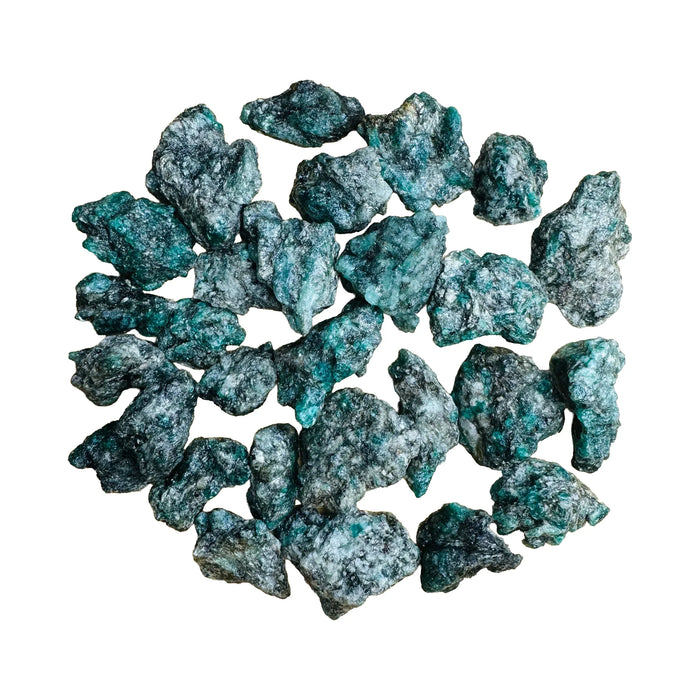
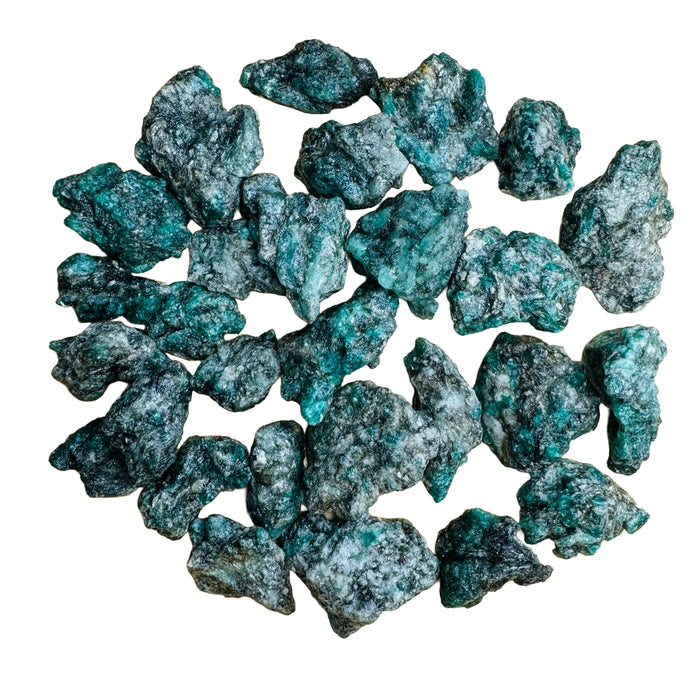
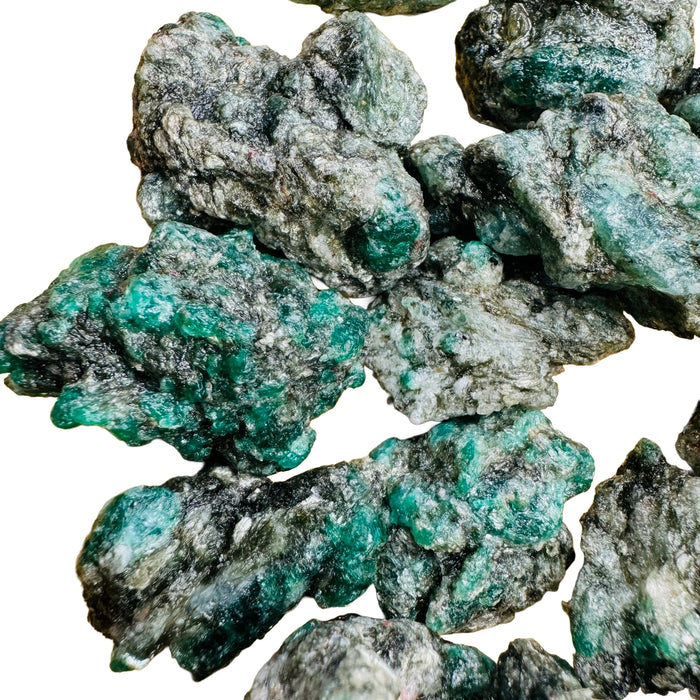
Explore the Crystal GuideLove Seraphinite? Meet Emerald.
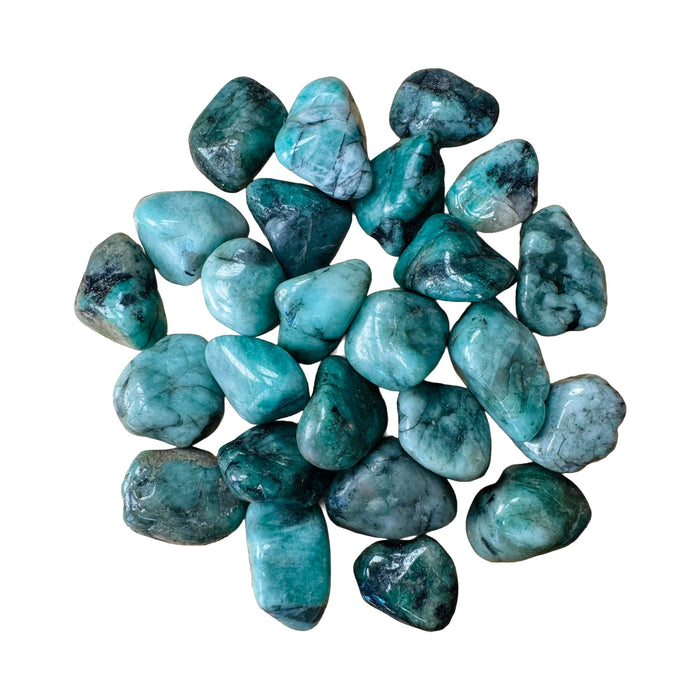
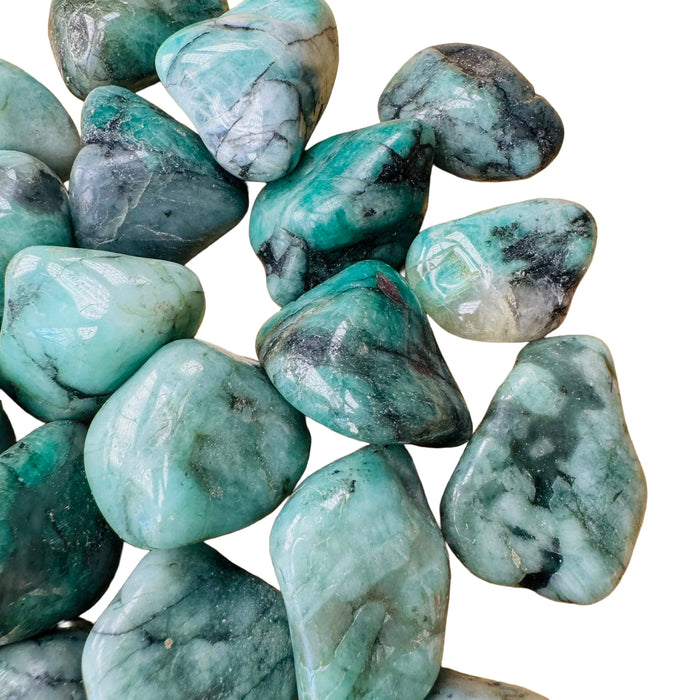
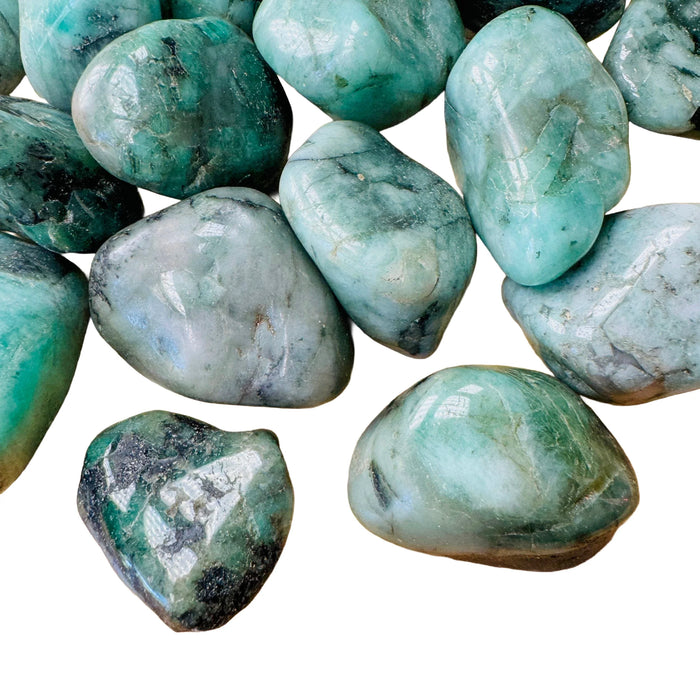
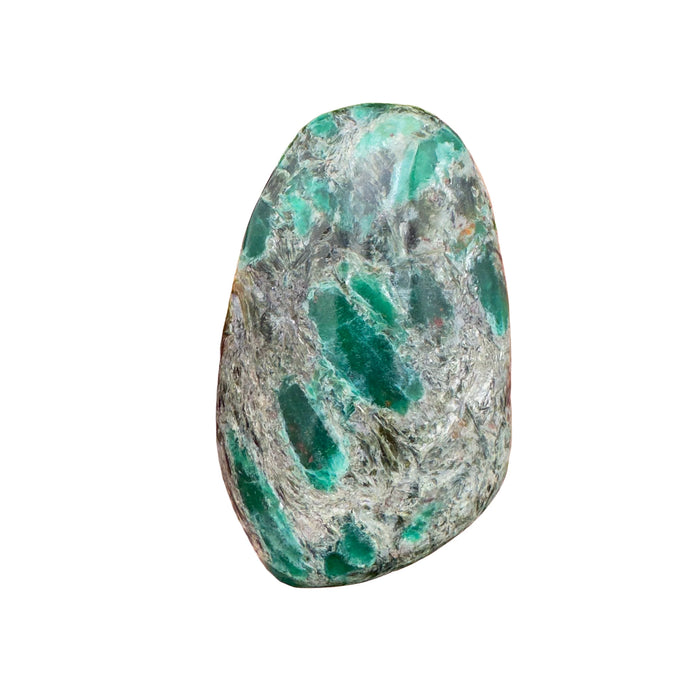
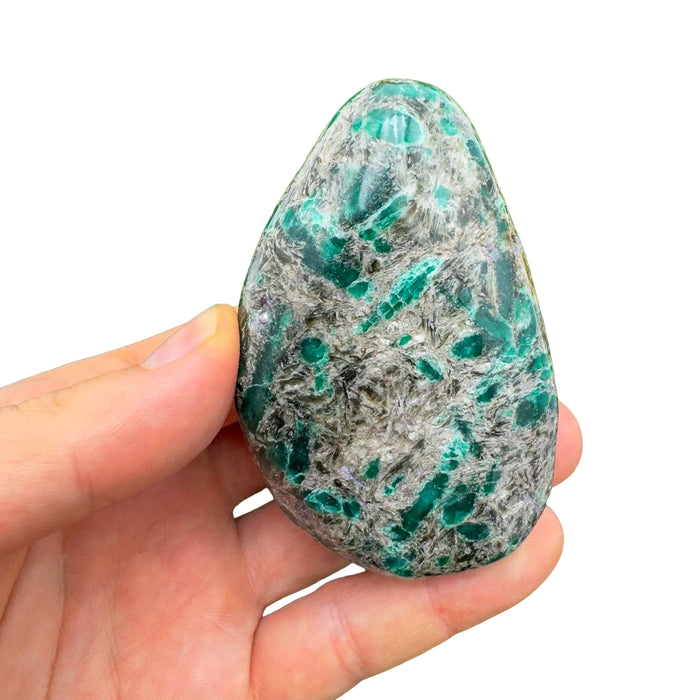
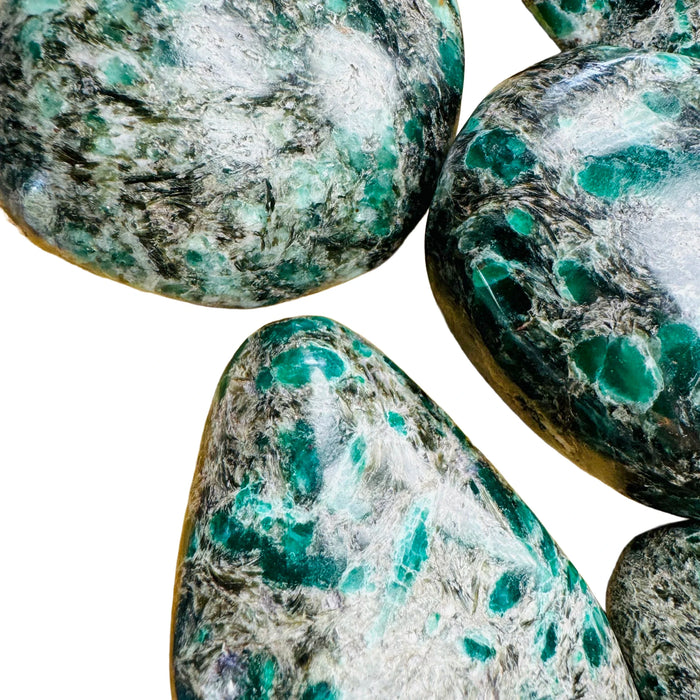
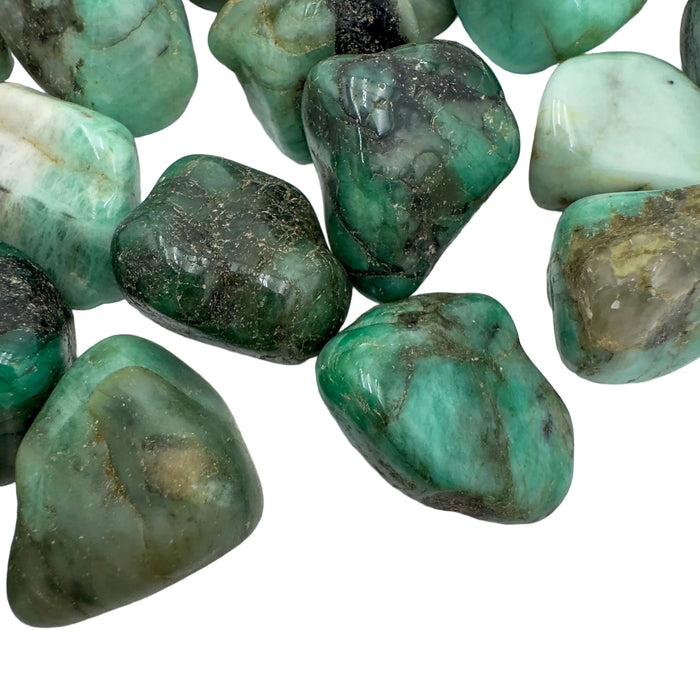
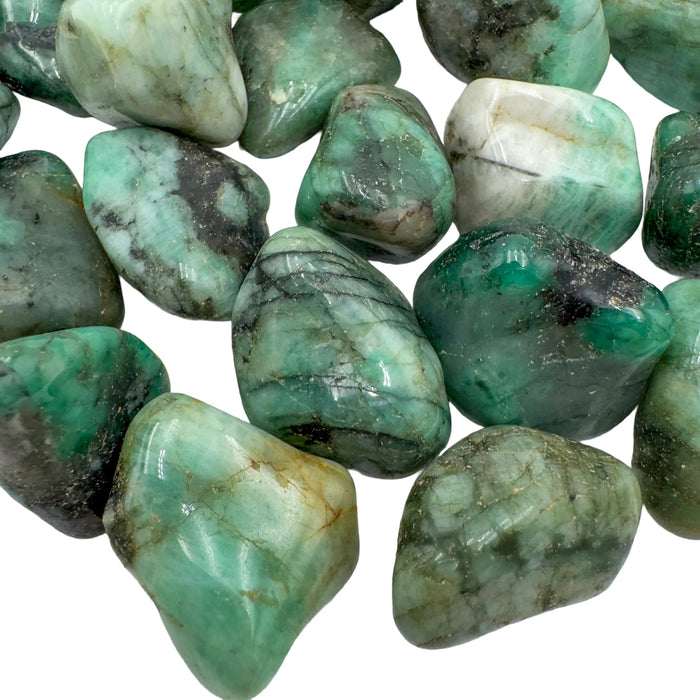
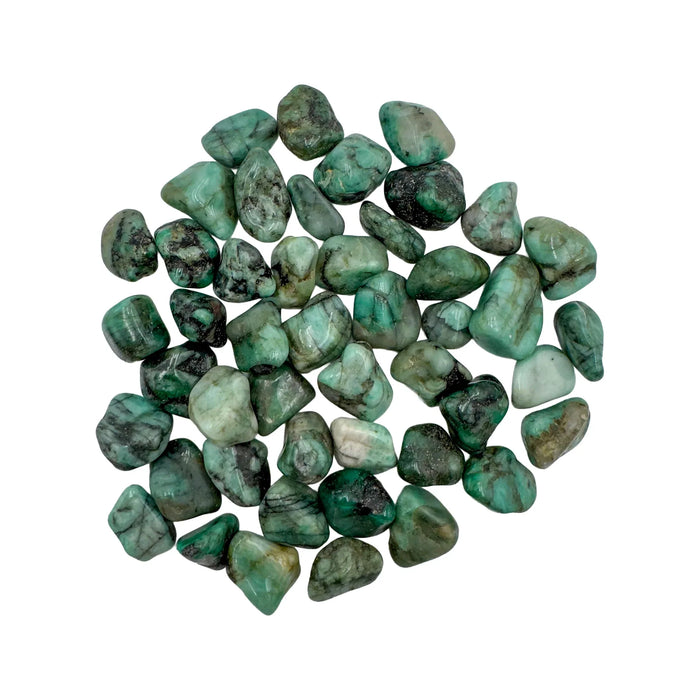
Seraphinite is not something we carry. Emerald is the closest match in color, and every piece passes our sourcing standards: origin named, treatments disclosed.
- 4.9 out of 5from 1,000+ reviews
- Ships within 72 hoursMonday to Friday, tracked
- 90 days to return itif you do not love it
- Free US shipping over $99$8.99 flat rate under