




















































 Raw Stones
179 pieces
Raw Stones
179 pieces
 Tumbled Stones
162 pieces
Tumbled Stones
162 pieces
 Palm Stones
25 pieces
Palm Stones
25 pieces
 Crystal Points
23 pieces
Crystal Points
23 pieces
 Clusters & Geodes
104 pieces
Clusters & Geodes
104 pieces
 Polished & Decor
148 pieces
Polished & Decor
148 pieces
 Mineral Specimens
259 collector pieces
Mineral Specimens
259 collector pieces
 Crystal Chips
21 pieces
Browse everything
Every collection, one page.
View All Collections →
Crystal Chips
21 pieces
Browse everything
Every collection, one page.
View All Collections →


 Aries
Mar 21 – Apr 19
Carnelian
›
Aries
Mar 21 – Apr 19
Carnelian
›
 Taurus
Apr 20 – May 20
Rose Quartz
›
Taurus
Apr 20 – May 20
Rose Quartz
›
 Gemini
May 21 – Jun 20
Agate
›
Gemini
May 21 – Jun 20
Agate
›
 Cancer
Jun 21 – Jul 22
Moonstone
›
Cancer
Jun 21 – Jul 22
Moonstone
›
 Leo
Jul 23 – Aug 22
Citrine
›
Leo
Jul 23 – Aug 22
Citrine
›
 Virgo
Aug 23 – Sep 22
Amazonite
›
Virgo
Aug 23 – Sep 22
Amazonite
›
 Libra
Sep 23 – Oct 22
Blue Lace Agate
›
Libra
Sep 23 – Oct 22
Blue Lace Agate
›
 Scorpio
Oct 23 – Nov 21
Obsidian
›
Scorpio
Oct 23 – Nov 21
Obsidian
›
 Sagittarius
Nov 22 – Dec 21
Sodalite
›
Sagittarius
Nov 22 – Dec 21
Sodalite
›
 Capricorn
Dec 22 – Jan 19
Black Tourmaline
›
Capricorn
Dec 22 – Jan 19
Black Tourmaline
›
 Aquarius
Jan 20 – Feb 18
Amethyst
›
Aquarius
Jan 20 – Feb 18
Amethyst
›
 Pisces
Feb 19 – Mar 20
Aquamarine
›
Gifting?
A birthday stone is the safe bet.
Read the zodiac guide →
Pisces
Feb 19 – Mar 20
Aquamarine
›
Gifting?
A birthday stone is the safe bet.
Read the zodiac guide →











Stilbite
Stilbite is a zeolite that grows in sheaf-like and bowtie-shaped bundles, often in warm peach, salmon, or white. Like its zeolite neighbors it fills cavities in old basalt lava, and India is the great source. It is soft and untreated, and people often work with it as a gentle heart and calm stone.
The geology.
Stilbite is a zeolite, a hydrated sodium calcium aluminum silicate, most commonly the calcium-rich species stilbite-Ca. It crystallizes in the monoclinic system and is famous for its habit: thin, tabular crystals that bundle into sheaf-like or bowtie shapes, sometimes called wheat-sheaf clusters. Colors run from white and cream to warm peach, salmon, and pale orange, with a pearly to vitreous luster.
Hardness is only 3.5 to 4 on the Mohs scale, so stilbite is soft and easily scratched, and specific gravity is low, around 2.1 to 2.2. Like other zeolites, it holds water in an open framework, and it often grows in the same basalt pockets as apophyllite, heulandite, and scolecite.
The origins.
India is the world's great source of stilbite, especially the Deccan Traps basalt of Maharashtra, around Pune, Nashik, and Jalgaon, where warm peach bowties grow in lava cavities beside green apophyllite and white zeolites. These Indian pieces set the standard for color and form.
Iceland, Scotland, and the Faroe Islands are classic older localities in basalt country, and stilbite also comes from Brazil, Norway, Germany, Canada, and the United States, notably the trap rocks of New Jersey. A named Indian source usually signals the peach, well-formed clusters most collectors want.
Traditional associations.
Stilbite has a reputation as a gentle, heart-centered stone. People often describe it as soothing and supportive, a crystal for calm, creativity, and a soft sense of joy, and it is popular for meditation and quiet spaces.
Many work with it for emotional ease, loving awareness, and intuition, linking it most often to the Heart chakra, with Crown and Third Eye notes. It is associated with the element of Air and the sign Aries. A common practice is to keep a peach cluster in a room where calm matters or hold a piece during gentle reflection.
Spotting the real thing.
Real stilbite shows its signature sheaf or bowtie bundles of thin, tabular crystals, often in a warm peach that deepens toward the center of each cluster, with a pearly luster on the crystal faces. It is soft, 3.5 to 4 on the Mohs scale, so surfaces mark easily. Growing in basalt cavities beside apophyllite and other zeolites helps confirm Indian material.
The closest relative is heulandite, which shares chemistry and habitat and can look similar, though heulandite tends toward blockier, coffin-shaped crystals rather than bowties. Stilbite is rarely faked, so the main issue is loose naming within the zeolite family. A careful seller will use the species name and note associated minerals.
Care & handling.
Stilbite is soft and delicate, so it lives best as a display specimen rather than jewelry. At 3.5 to 4 on the Mohs scale it scratches and chips easily, and the layered crystals can flake, so handle it by the base and dust it gently with a soft brush.
Keep it dry, since water-bearing zeolites can be harmed by long soaking. Avoid water cleaning, salt, ultrasonic and steam cleaners, heat, and harsh chemicals, and store it apart from harder minerals that could scratch it. To reset it, many people use moonlight, sound, or a gentle rest on a selenite plate.
Pairs well with.
A deeper look.
Extended geology, sourcing, authentication, history, and varieties, for when the quick guide isn't quite enough.
Extended geology
Stilbite is a zeolite, one of the hydrated aluminosilicates whose open frameworks trap water and exchangeable ions. The common species is stilbite-Ca, a hydrated calcium (with sodium and potassium) aluminum silicate, and its name comes from the Greek word for luster, for the pearly shine on its crystal faces. It crystallizes in the monoclinic system as thin tabular crystals that intergrow into the sheaf-like and bowtie bundles that make it instantly recognizable.
It forms at low temperatures in the vesicles and fractures of basaltic lava, deposited by circulating silica-rich waters. This is why it shares its home with apophyllite, heulandite, scolecite, and other zeolites. Hardness is 3.5 to 4, specific gravity about 2.1 to 2.2, and peach to salmon colors come from traces of iron.
Extended sourcing
The Deccan Traps of Maharashtra, India are the world's leading source of fine stilbite, producing the warm peach bowties, often on green apophyllite, that define the species in the trade. Iceland, Scotland, and the Faroe Islands are historic basalt localities. Brazil, Norway, Germany, Canada, and the United States, especially the trap rocks of New Jersey and Nova Scotia in Canada, also produce good stilbite.
Collectors value color, the crispness and symmetry of the bowtie or sheaf form, size, and associated minerals. Undamaged peach clusters with contrasting apophyllite from India are especially sought after.
Authentication and warning signs
The sheaf or bowtie habit is the clearest sign, along with a pearly luster and warm peach color. Softness confirms it, since at 3.5 to 4 stilbite marks easily. Its basalt-cavity setting and zeolite companions support Indian material. Heulandite is the main lookalike, closely related and similar in setting, though usually blockier and more coffin-shaped than stilbite's bundles.
Because stilbite is common and inexpensive as specimens, forgery is not a real concern. The issue is naming, since the trade sometimes blurs stilbite and heulandite. A seller who names the species and notes the locality and associations is a good sign. Inspect for chips, which are common on soft, layered clusters.
History and folklore
Stilbite was named in 1797 by the French mineralogist Rene Just Hauy, from the Greek stilbein, to shine, for the pearly luster of its faces. Recognized only in the modern scientific era, it has no ancient lore. Its reputation as a soft, heart-centered, calming stone has grown within the contemporary crystal community, often grouped with other zeolites prized for gentleness and quiet.
Varieties and trade names
Peach stilbite: the warm-colored Indian bowties most common in the trade.
White and cream stilbite: paler clusters, sometimes on other zeolites.
Stilbite with apophyllite: classic Indian specimens combining peach bundles and green apophyllite.
Heulandite: a closely related zeolite, sometimes confused with or sold near stilbite.
What it costs in the market
Small stilbite specimens: roughly 6 to 35 dollars. Larger peach bowties and clusters: around 25 to 120 dollars depending on size, color, and form. Fine Indian pieces with vivid peach stilbite and contrasting green apophyllite: from a hundred into several hundred dollars. Value tracks color, the crispness of the bowtie form, size, condition, and associated minerals.
An education-first guide.
We don't currently carry stilbite, so there's nothing to sell you here. This guide exists because the more you understand a stone, the better every decision you make about it becomes, wherever you buy it. Explore the rest of our crystal guides for stones we do source, each with full origin and treatment notes.
Explore the Crystal GuideLove Stilbite? Meet Peach Moonstone.
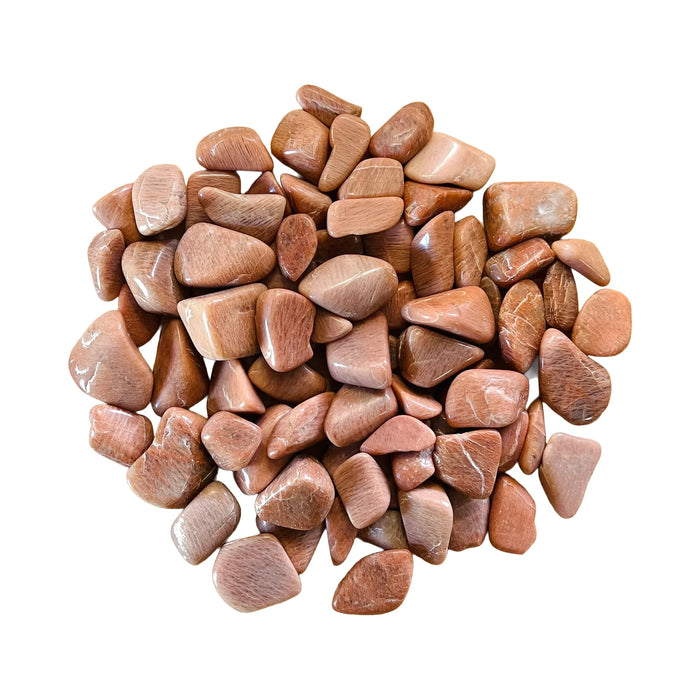
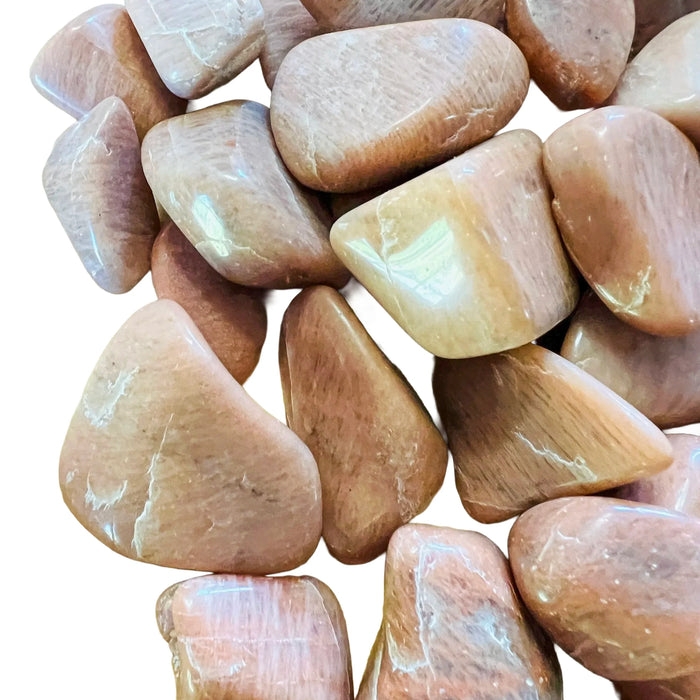
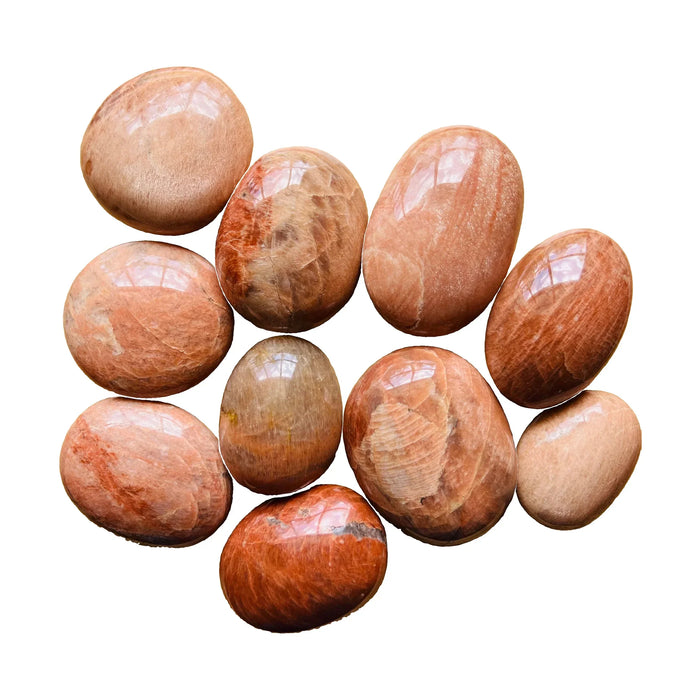
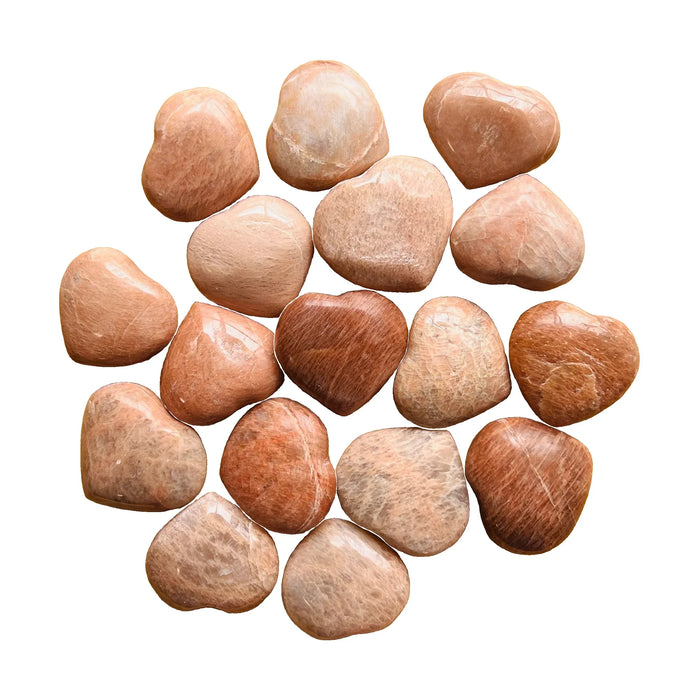
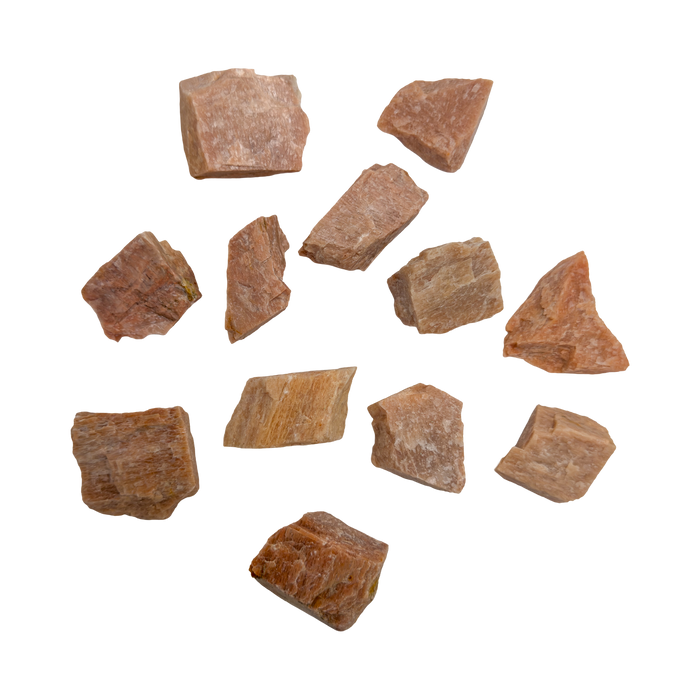
Stilbite is not something we carry. Peach Moonstone is the closest match in color, and every piece passes our sourcing standards: origin named, treatments disclosed.







- from 1,000+ reviews
- Ships within 72 hoursMonday to Friday, tracked
- 90 days to return itif you do not love it
- Free US shipping over $99$8.99 flat rate under
The Slow Note
New stones go to the list first.
No forwarding, no selling. Unsubscribe in one click. Privacy