




















































 Raw Stones
179 pieces
Raw Stones
179 pieces
 Tumbled Stones
162 pieces
Tumbled Stones
162 pieces
 Palm Stones
25 pieces
Palm Stones
25 pieces
 Crystal Points
23 pieces
Crystal Points
23 pieces
 Clusters & Geodes
104 pieces
Clusters & Geodes
104 pieces
 Polished & Decor
148 pieces
Polished & Decor
148 pieces
 Mineral Specimens
259 collector pieces
Mineral Specimens
259 collector pieces
 Crystal Chips
21 pieces
Browse everything
Every collection, one page.
View All Collections →
Crystal Chips
21 pieces
Browse everything
Every collection, one page.
View All Collections →


 Aries
Mar 21 – Apr 19
Carnelian
›
Aries
Mar 21 – Apr 19
Carnelian
›
 Taurus
Apr 20 – May 20
Rose Quartz
›
Taurus
Apr 20 – May 20
Rose Quartz
›
 Gemini
May 21 – Jun 20
Agate
›
Gemini
May 21 – Jun 20
Agate
›
 Cancer
Jun 21 – Jul 22
Moonstone
›
Cancer
Jun 21 – Jul 22
Moonstone
›
 Leo
Jul 23 – Aug 22
Citrine
›
Leo
Jul 23 – Aug 22
Citrine
›
 Virgo
Aug 23 – Sep 22
Amazonite
›
Virgo
Aug 23 – Sep 22
Amazonite
›
 Libra
Sep 23 – Oct 22
Blue Lace Agate
›
Libra
Sep 23 – Oct 22
Blue Lace Agate
›
 Scorpio
Oct 23 – Nov 21
Obsidian
›
Scorpio
Oct 23 – Nov 21
Obsidian
›
 Sagittarius
Nov 22 – Dec 21
Sodalite
›
Sagittarius
Nov 22 – Dec 21
Sodalite
›
 Capricorn
Dec 22 – Jan 19
Black Tourmaline
›
Capricorn
Dec 22 – Jan 19
Black Tourmaline
›
 Aquarius
Jan 20 – Feb 18
Amethyst
›
Aquarius
Jan 20 – Feb 18
Amethyst
›
 Pisces
Feb 19 – Mar 20
Aquamarine
›
Gifting?
A birthday stone is the safe bet.
Read the zodiac guide →
Pisces
Feb 19 – Mar 20
Aquamarine
›
Gifting?
A birthday stone is the safe bet.
Read the zodiac guide →











Thulite
Thulite is the rose-pink, manganese-bearing variety of zoisite, the same mineral family that gives us blue tanzanite and green ruby-in-zoisite. Usually seen as an opaque pink stone mottled with white, it was first found in Norway and named for a mythical land at the edge of the known world.
The geology.
Thulite is a variety of zoisite, a calcium aluminum silicate. Its pink to rose-red color comes from manganese, which substitutes for a small amount of the calcium in the crystal structure. Only a little manganese, up to around two percent, is enough to produce the characteristic color.
It belongs to the same mineral species as two better-known gems. Tanzanite is the blue to violet variety of zoisite, and anyolite, or ruby-in-zoisite, is the green variety often speckled with red ruby. Thulite is simply zoisite wearing pink, which places it in distinguished company.
Most thulite is massive and opaque rather than in clear crystals, often veined and mottled with white calcite or paler zoisite. It crystallizes in the orthorhombic system and rates about 6 to 6.5 on the Mohs scale, which makes it a good ornamental and carving stone.
The origins.
Thulite was first identified in 1820 at Sauland in Telemark county, Norway, which remains its classic source and gave the country a stone it still celebrates. The name comes from Thule, a mythical land far to the north in ancient geography, often taken to mean Scandinavia.
Since then, thulite has been found in several other countries, including the United States (notably North Carolina and Washington), Australia, Austria, and Namibia. It is used mainly as an ornamental stone for cabochons, beads, carvings, and small decorative objects.
Traditional associations.
Thulite is associated in crystal practice with the heart, with warmth, and with affection, in keeping with its rosy color. Many people work with it for self-love, compassion, and encouragement, and it is sometimes grouped with other pink stones used to support emotional balance.
Its northern origin and long history in Norway have also given it a quiet association with resilience and steady warmth. These are traditional and contemporary associations offered as context, not as health claims.
Spotting the real thing.
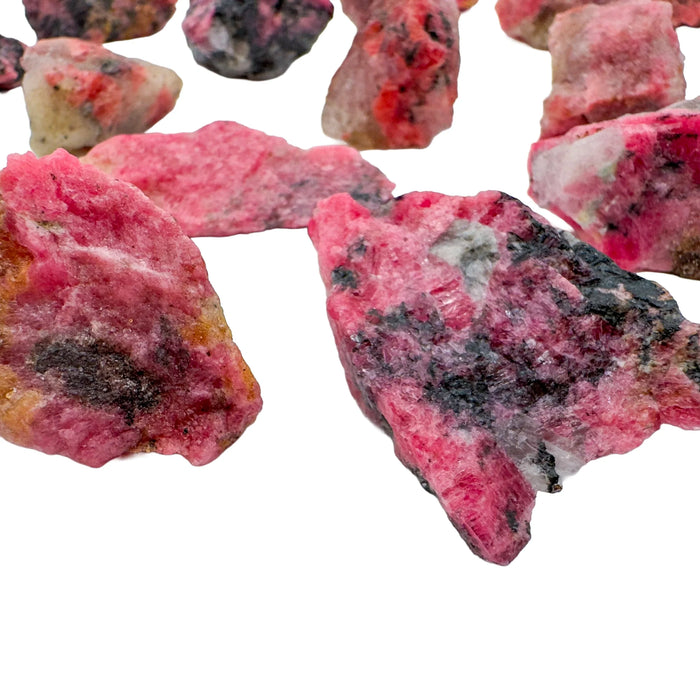
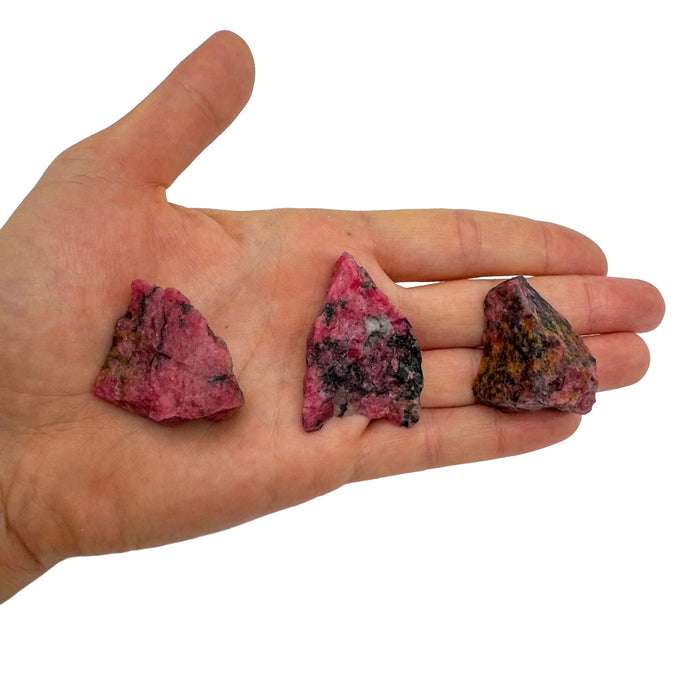
Genuine thulite is usually opaque and pink, frequently marbled with white and sometimes black, with a waxy to vitreous polish. Its color is even and natural rather than dyed, and the pink tends to sit within the stone rather than pooling in cracks the way dye does. A hardness around 6 to 6.5 helps separate it from softer imitations.
Because it resembles other pink stones, thulite is sometimes confused with rhodonite, mangano-calcite, or dyed materials. Rhodonite often shows black manganese-oxide veining and is a little harder, while mangano-calcite is much softer and reacts to acid. If a pink stone is suspiciously bright and uniform, consider whether it has been dyed.
For carvings and cabochons, look for the natural interplay of pink zoisite and white matrix. That mottled texture is part of thulite's identity and a good sign of authenticity.
Care & handling.
Thulite rates about 6 to 6.5 on the Mohs scale, durable enough for beads, cabochons, and carvings but worth protecting from hard knocks. Clean it with mild soapy water and a soft cloth, then dry it.
Avoid prolonged soaking, acids, and harsh chemicals, particularly where white calcite is present, since calcite is sensitive to acid. The pink color is stable in normal light and will not fade with reasonable care.
Pairs well with.
A deeper look.
Extended geology, sourcing, authentication, history, and varieties, for when the quick guide isn't quite enough.
Thulite in the zoisite family
Zoisite is a single mineral species that appears in strikingly different colors depending on trace elements. Vanadium gives the blue and violet of tanzanite. Chromium produces the green of anyolite, the ruby-in-zoisite carving stone. Manganese produces the pink of thulite. Recognizing that these are all one species, colored by different impurities, is one of those facts that makes the mineral world click into place. Thulite is the pink sibling of tanzanite.
The color of manganese
Thulite's rose color is the signature of manganese. As zoisite crystallized, a small fraction of manganese ions took the place of calcium in the structure, and even a couple of percent is enough to shift the stone into pink and rose-red. This is why thulite needs no dye. The depth of color varies with the amount of manganese and the way light scatters through the often massive, granular material.
A name from the edge of the map
Thulite was described in 1820 from Telemark in Norway and named after Thule, a place ancient Greek and Roman writers used for the farthest north they could imagine. For classical geographers, Thule lay somewhere beyond the known world, and later readers often identified it with Scandinavia. Naming a Norwegian pink stone after that mythical northern land was a fitting choice, and it ties the mineral to its home.
Thulite, rhodonite, and other pinks
Pink ornamental stones are easy to mix up. Thulite is manganese zoisite, usually pink mottled with white. Rhodonite is a manganese silicate, typically deeper pink to red with black veining, and slightly harder. Mangano-calcite is a soft pink carbonate that reacts to acid. Rose quartz is translucent and glassy. Knowing thulite's opaque, white-marbled look and its zoisite chemistry helps you tell it apart from these neighbors on a crowded shelf.
Using and collecting thulite
Because most thulite is massive and tough enough to polish, it is used mainly for cabochons, beads, spheres, and small carvings rather than faceted gems. Rare transparent crystals exist and are collector items. Value depends on the strength and evenness of the pink and on an attractive pattern of pink and white. Norwegian material carries historical prestige as the original source, while good ornamental thulite also comes from the United States and elsewhere.
An education-first guide.
We don't currently carry thulite, so there's nothing to sell you here. This guide exists because the more you understand a stone, the better every decision you make about it becomes, wherever you buy it. Explore the rest of our crystal guides for stones we do source, each with full origin and treatment notes.
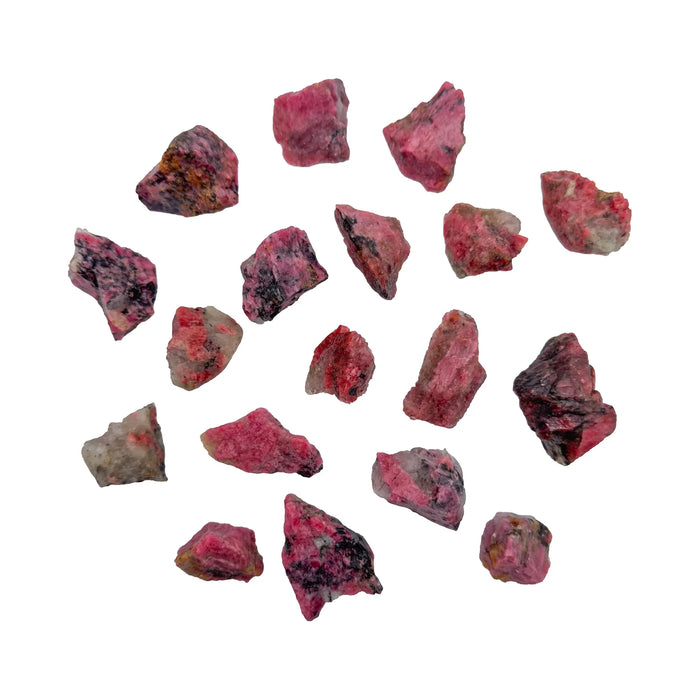
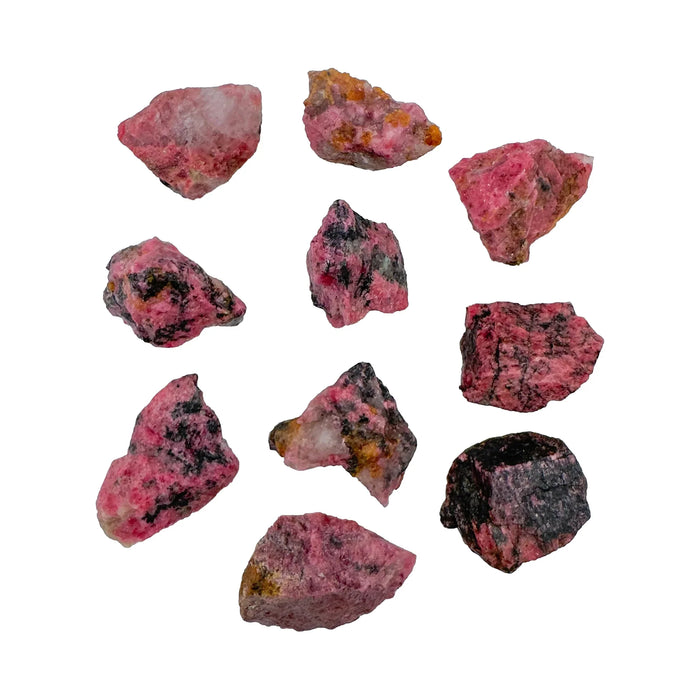
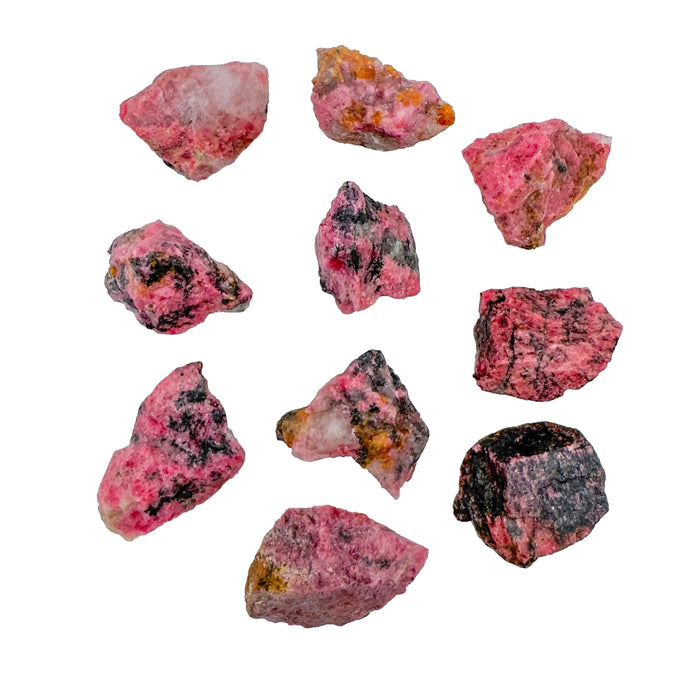
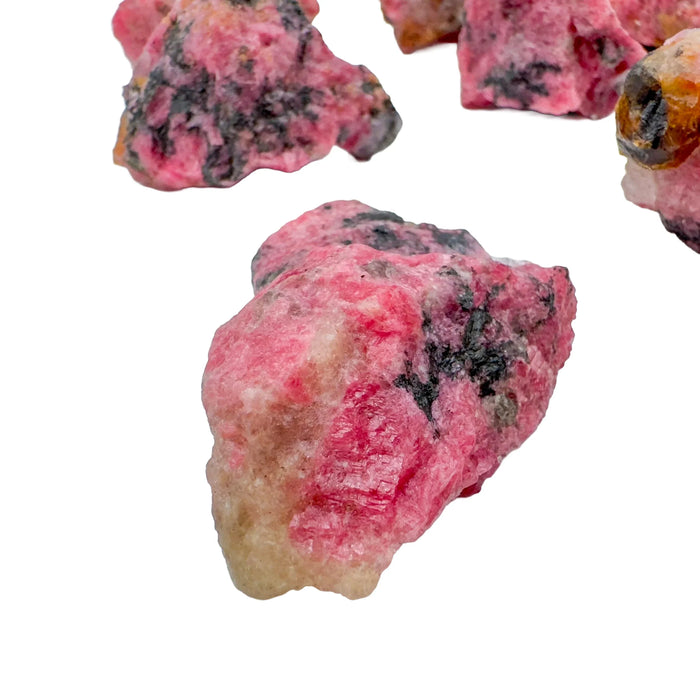
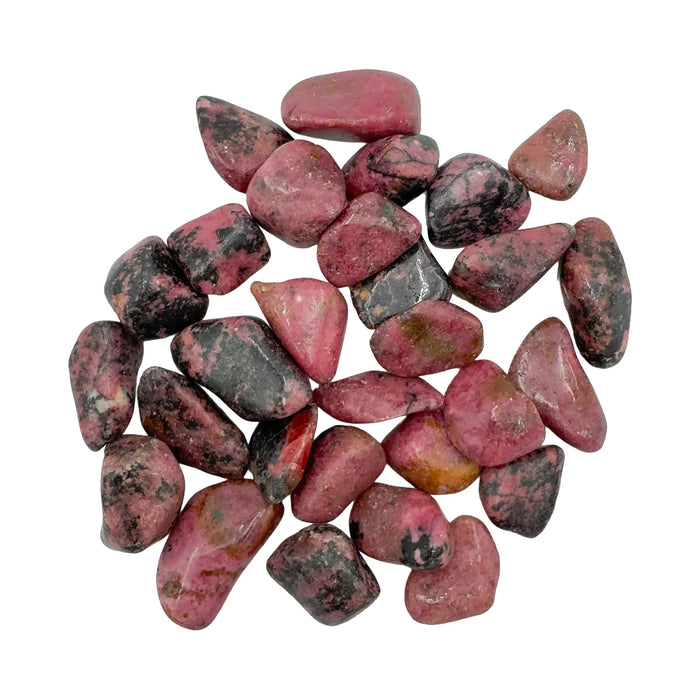
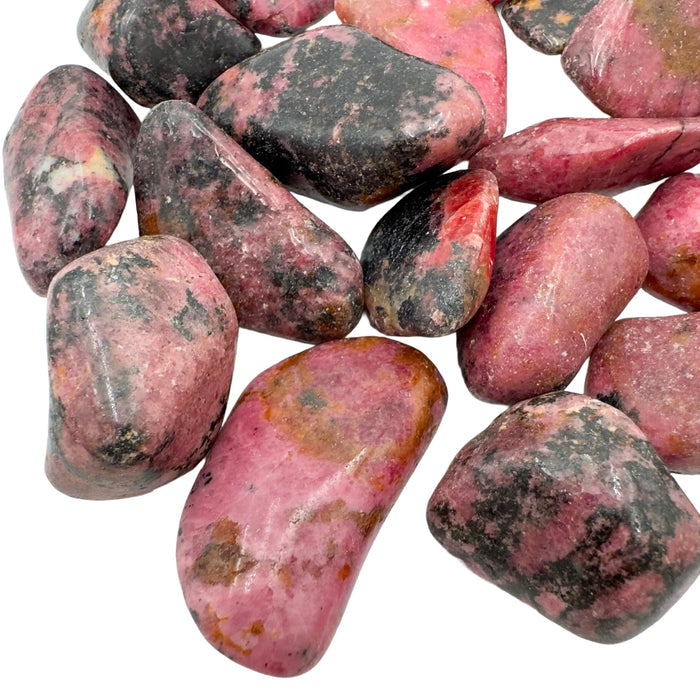
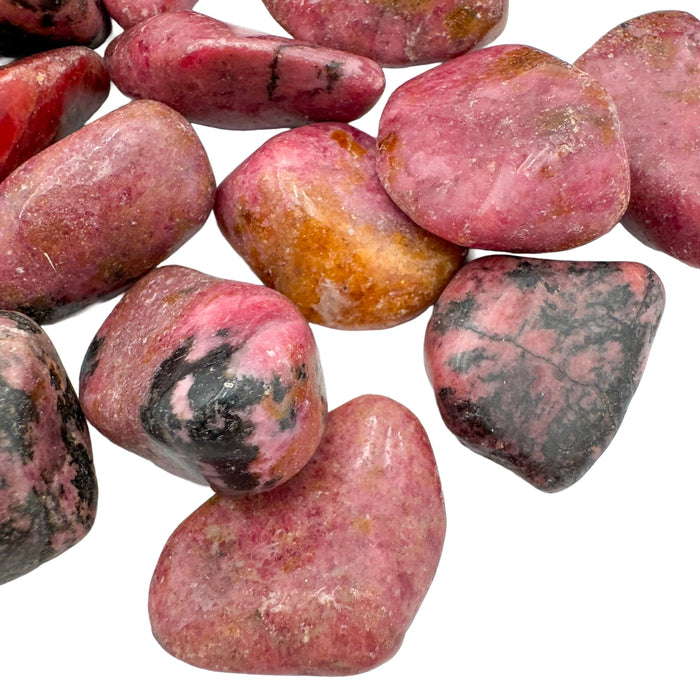
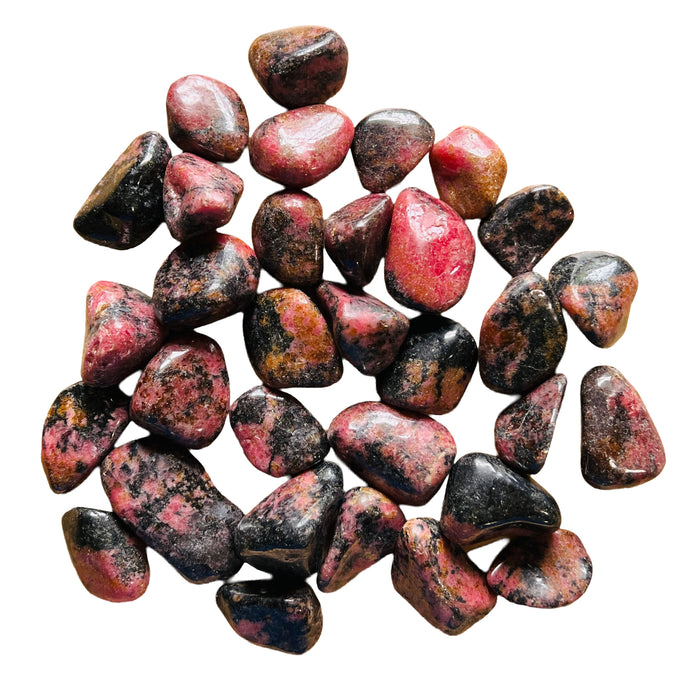
Explore the Crystal GuideThe closest match we carry: Rhodonite.
Thulite is not something we carry. Rhodonite is the closest match in our collection, and every piece passes our sourcing standards: origin named, treatments disclosed.
- from 1,000+ reviews
- Ships within 72 hoursMonday to Friday, tracked
- 90 days to return itif you do not love it
- Free US shipping over $99$8.99 flat rate under
The Slow Note
New stones go to the list first.
No forwarding, no selling. Unsubscribe in one click. Privacy