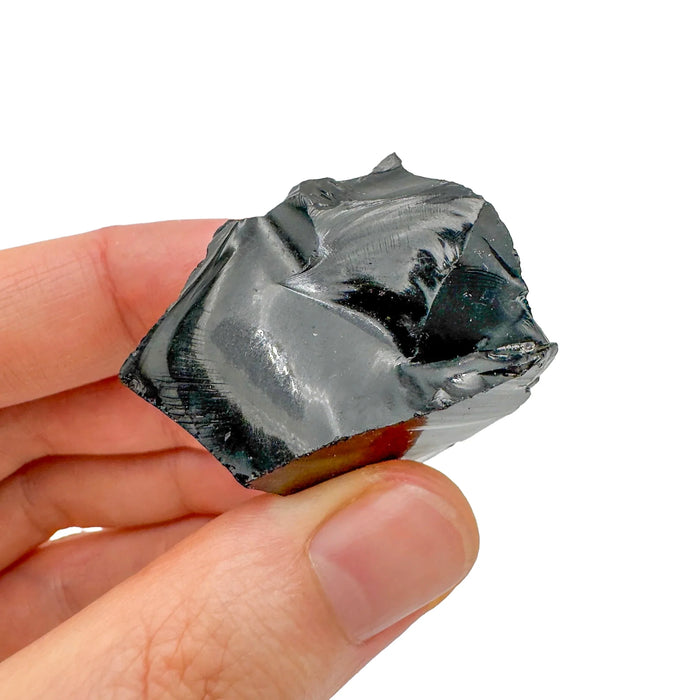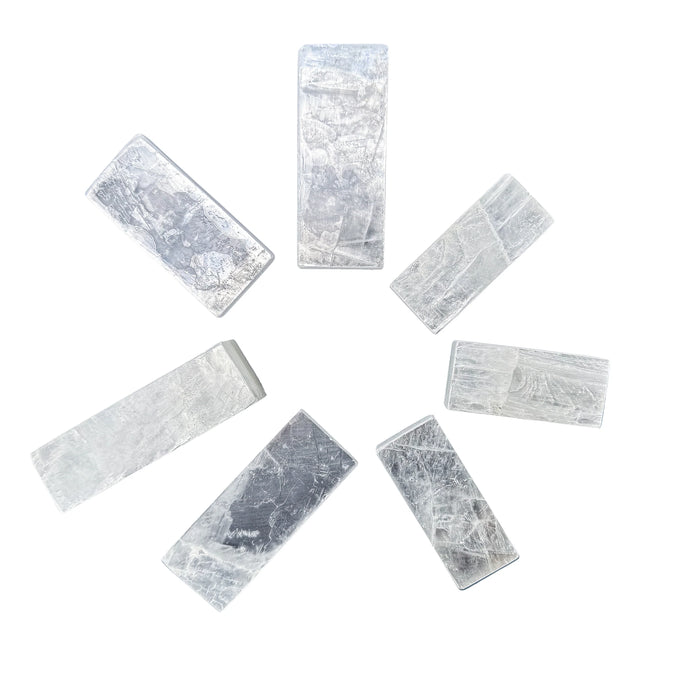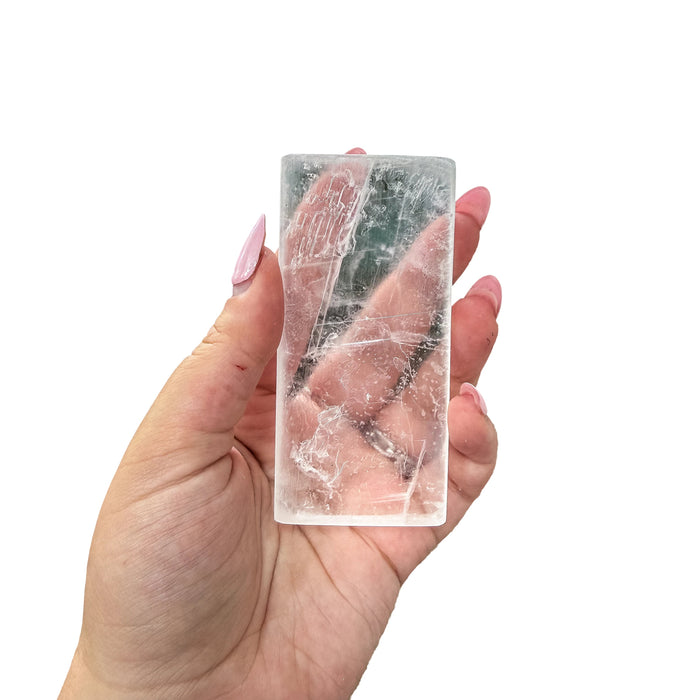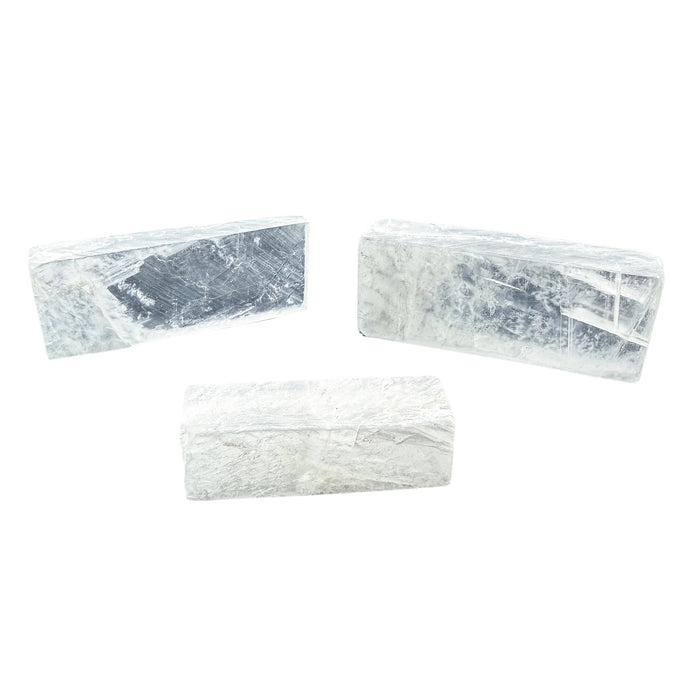






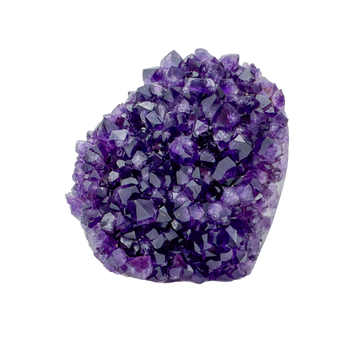
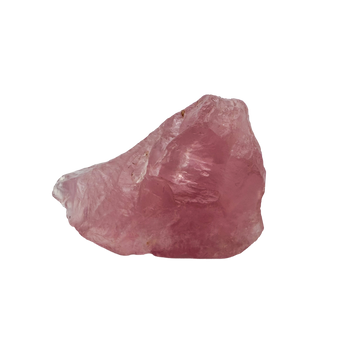
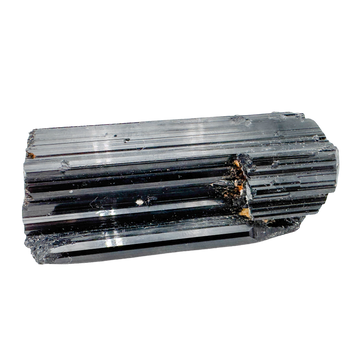






Angelite, Lemurian quartz, and iolite are all trade names rather than mineral names. What each stone actually is, where it was mined, and the one that should never get wet.
Crystals for Intuition: Three Stones With Borrowed Names

Three of the stones on the intuition shelf are sold under names that are not their mineral names. That is not unusual in this trade and it is not always dishonest, but it does mean the label on the bin will not tell you how hard the stone is, whether it can get wet, or what you are actually looking at. In one case we sell the identical mineral under two different names on two different pages, which is the clearest example we can give you of how the naming works.
Angelite
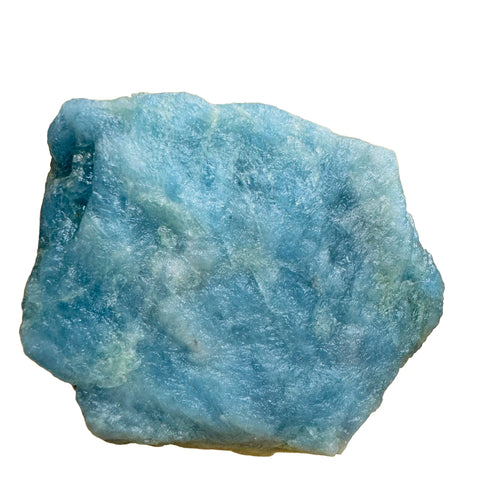
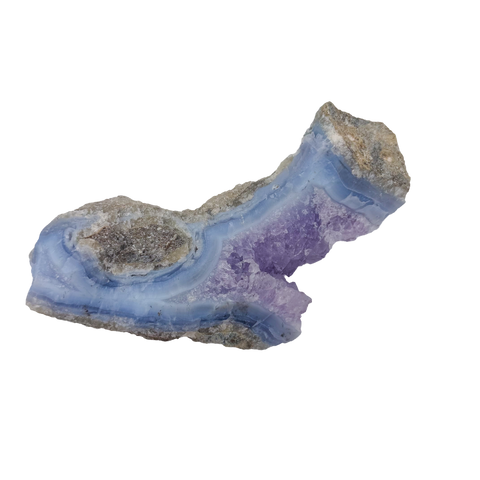
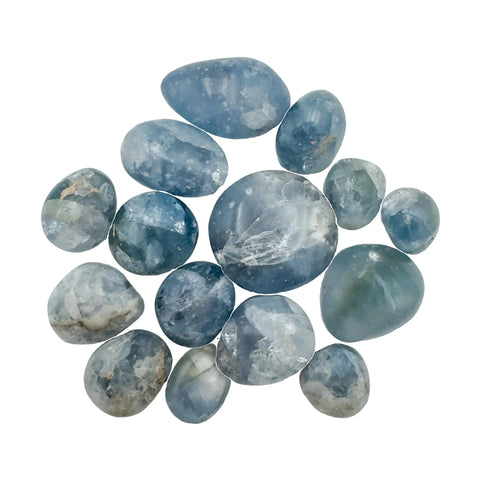
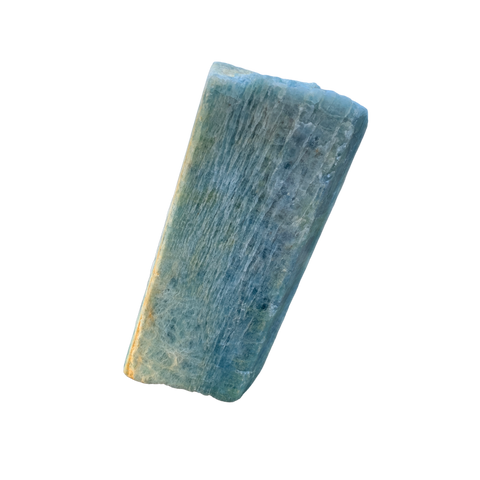
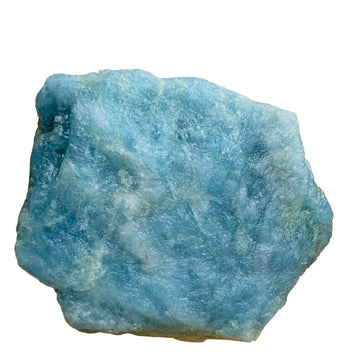
Angelite is anhydrite. Anhydrite is calcium sulfate, and angelite is a trade name applied to the pale blue material from Peru, coined a few decades ago rather than inherited from mineralogy. We stock both, on separate pages, and they are the same mineral: our angelite from Huarochiri, Peru and our anhydrite from Androy, Madagascar. We list them the way the trade asks for them and then tell you what they are.
The practical part matters more than the naming. Anhydrite is soft, around 3.5 on the Mohs scale, so it marks easily against harder stones. It is also anhydrous, which is the entire point of the name: it is calcium sulfate without water in the structure. Give it water and it will slowly take some on and begin converting toward gypsum, which is softer still. So it does not belong in a water bowl, a bath, or a sunny windowsill that collects condensation. Ours is hand polished and otherwise untreated. The angelite guide and the anhydrite guide both go further.
A note on labradorite and moonstone
The two stones that normally lead an intuition list are labradorite and moonstone, and we already put them side by side in labradorite vs moonstone. That comparison covers the optical effects properly, so this piece leaves it there.
Lemurian Quartz
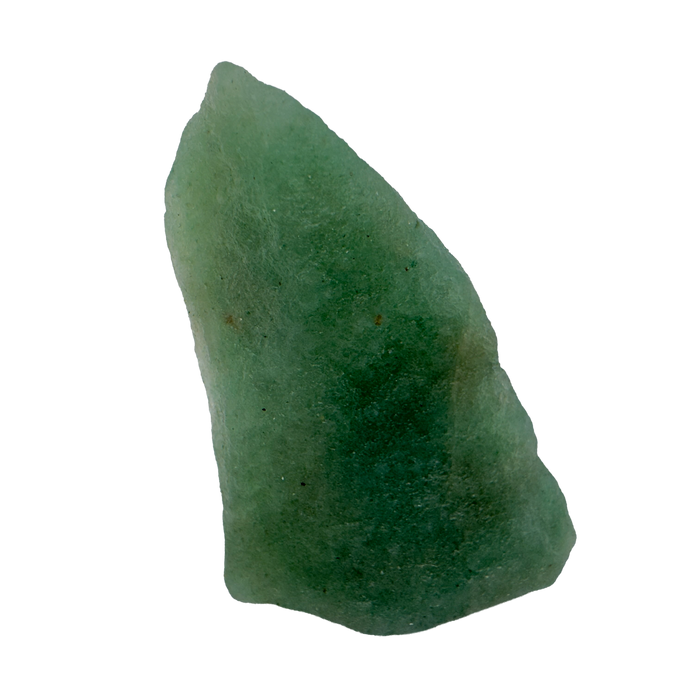
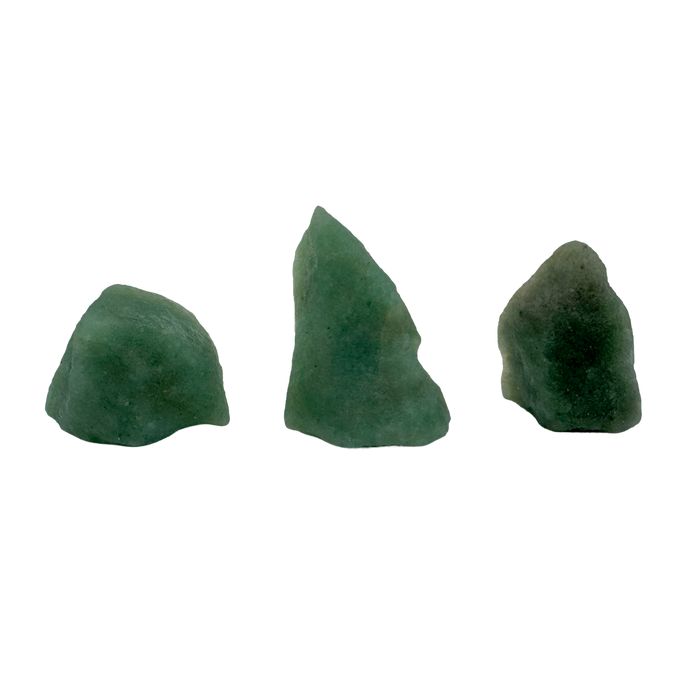
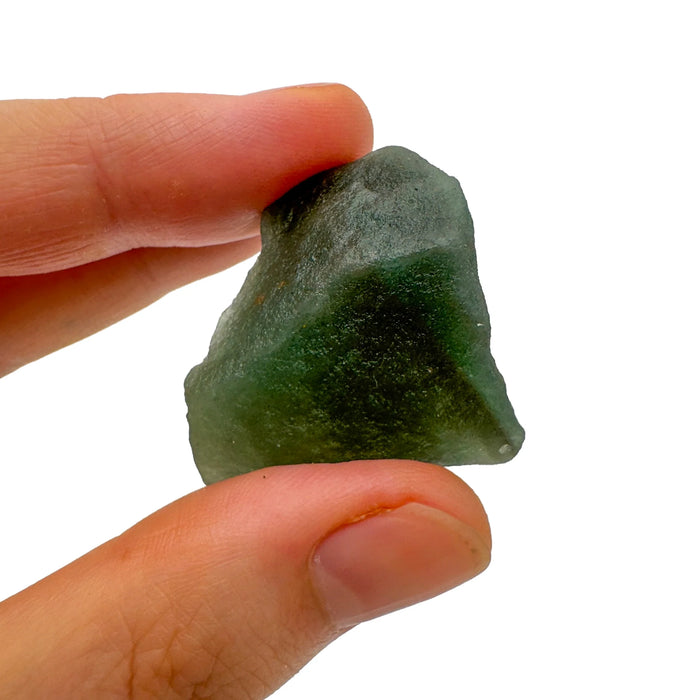
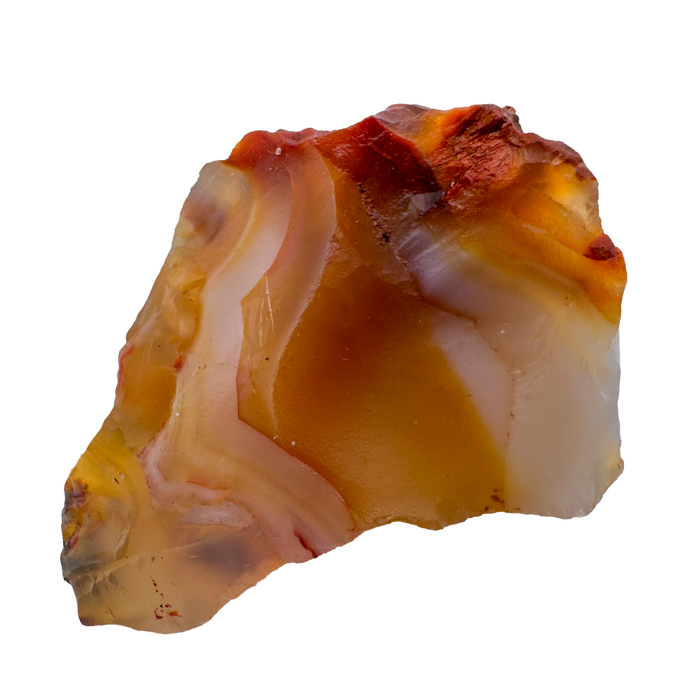
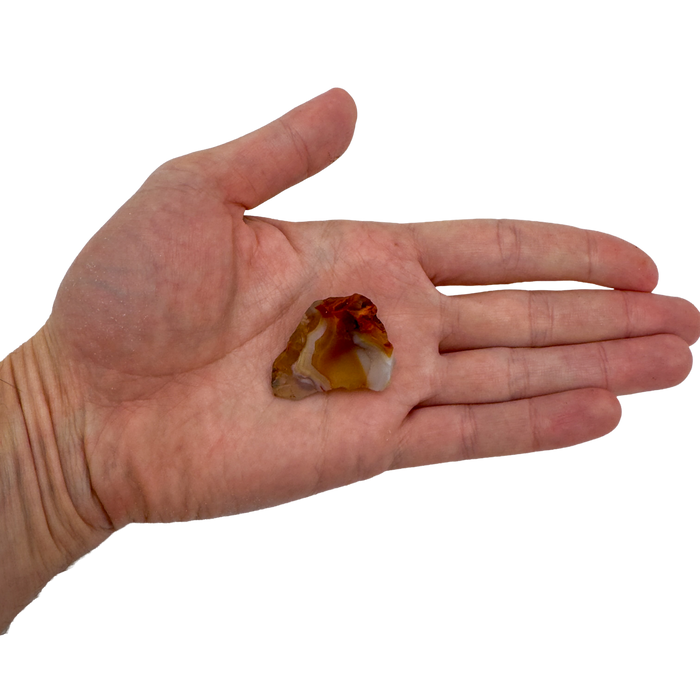
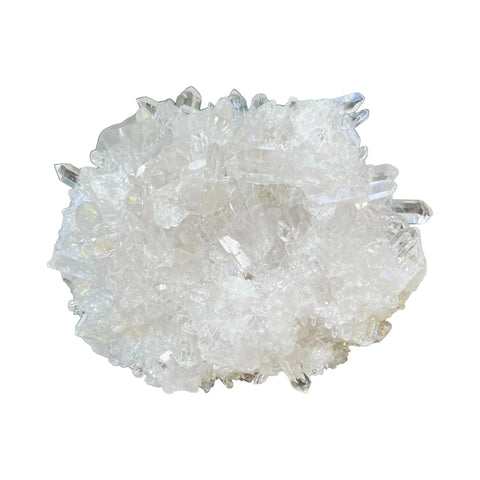
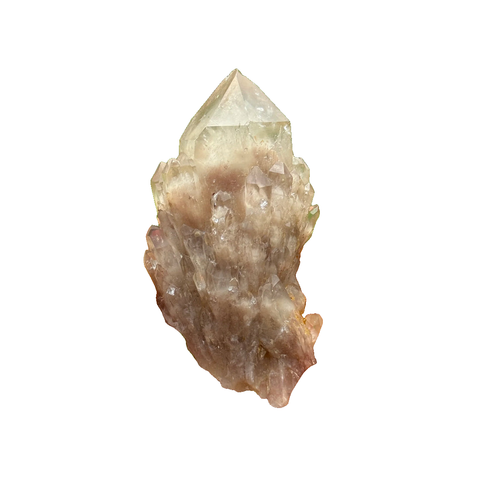
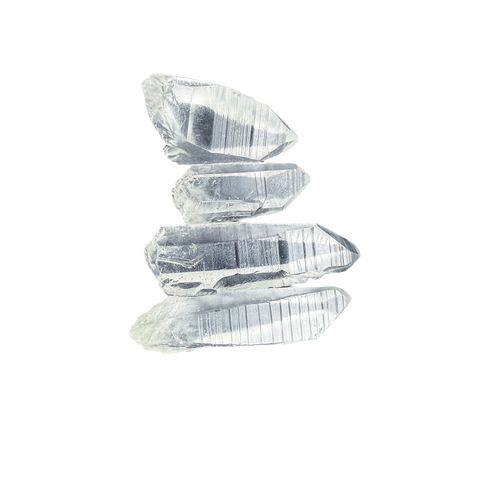
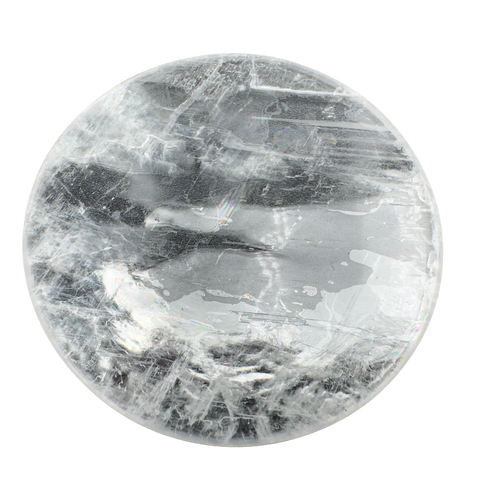
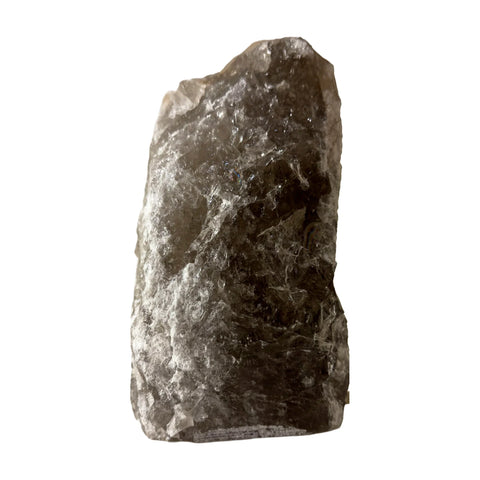
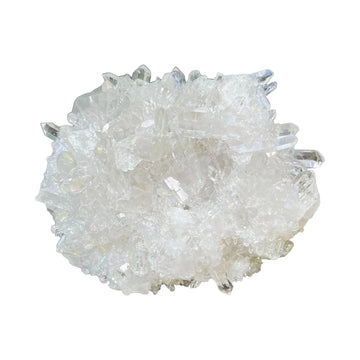
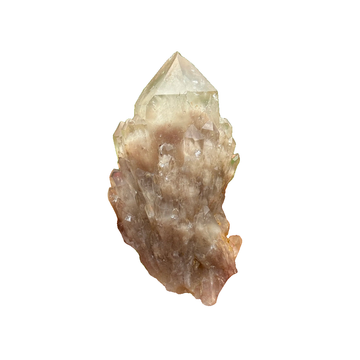
Lemurian quartz is clear quartz. The name comes from a story about a lost continent, not from geology, and there is no mineral called lemurian. What is real is the physical feature the name got attached to: fine horizontal lines running across the faces of the points, like ridges you can feel with a thumbnail. Those are natural growth striations, a record of the crystal pausing and resuming as it formed, and they turn up on quartz from many places. On these points they happen to be unusually well defined. It is quartz at 7 on the Mohs scale, durable, and easy to live with. Ours is raw from Minas Gerais, Brazil, hand-finished with jojoba oil and otherwise untreated. The Lemurian quartz guide has the longer version, and the trade names article covers why names like this stick.
Iolite
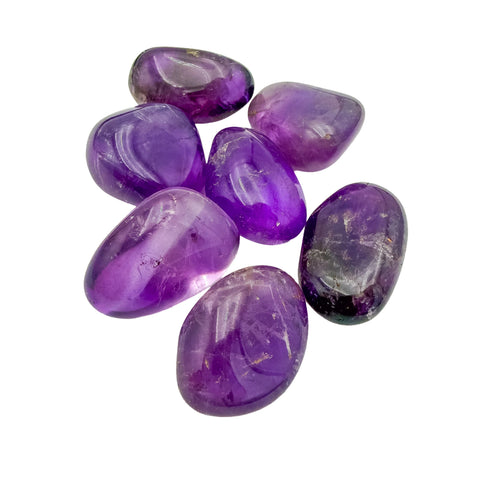
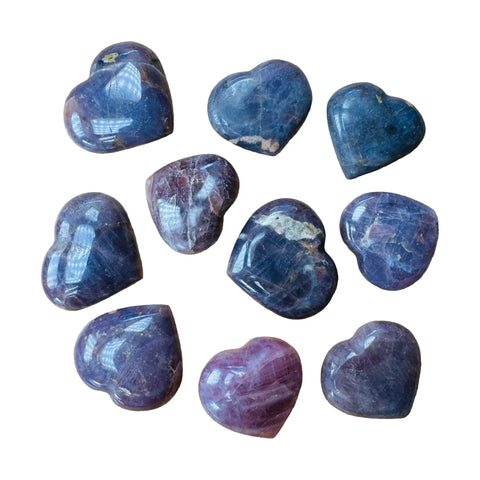
Iolite is the gem trade name for cordierite, a magnesium aluminum silicate, and it is the one on this list where the borrowed name is hiding something genuinely worth seeing. Iolite is strongly pleochroic, which means it shows different colors along different crystal directions. Turn a piece slowly in daylight and it moves between a deep violet blue, a paler gray blue, and something close to straw yellow, all from the same stone with nothing added. Cutters have to orient the rough carefully because of it. At 7 to 7.5 on the Mohs scale it is durable enough to carry, though it does have a cleavage direction worth respecting. Ours are palm stones from Amoron'i Mania, Madagascar. More in the iolite guide.
Angelite
Lemurian Quartz
Iolite
If one of the three is calling, a hand polished angelite is the one to keep dry and away from harder stones, a raw Lemurian quartz point is the one where you can feel the striations with a thumbnail, and an iolite palm stone is the one to turn slowly in a window. The rest of the shelf is in the intuition collection.
What intuition means here
Intuition is not a property a mineral has. The tradition is quieter than the marketing around it. People keep a particular object nearby while they think, and the object becomes a small ritual attached to slowing down before deciding something. That is worth doing on its own terms and it does not need a mechanism. What we can tell you is what the stone actually is underneath whatever the trade calls it, where it was mined, and whether anyone treated it. That is on our sourcing page, the wider list for this intention is on crystals for intuition, and terms like pleochroic and trade name are defined in the crystal glossary.