





















Crystals for Leo: Birthstones and the Geology Behind Them

Leo runs from July 23 to August 22, and the stones tied to it tend to share one thing: warmth. Golden, coppery, sun colored. That's not an accident of taste. Leo is ruled by the Sun, and the tradition of matching stones to the sign has always leaned into that. Here's what those stones actually are, where they come from, and what the birthstone facts really say.
Leo's birthstones, the calendar version
Because Leo straddles two months, it carries two traditional birthstones. Ruby is the July stone, a red variety of the mineral corundum and one of the hardest gems there is at 9 on the Mohs scale. Peridot is the August stone, a green gem that is a gem quality form of the mineral olivine, born in volcanic rock and, unusually, in some meteorites. Onyx and citrine turn up often as modern alternatives. None of this is a rule you have to follow. It's simply the lineage.
The stones most often linked to Leo
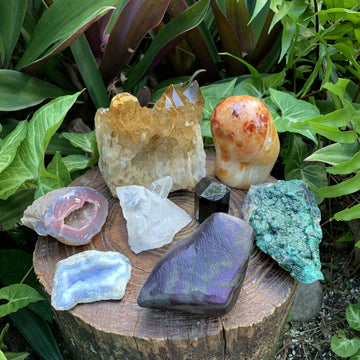
Set the birthstones aside and a clear group remains, chosen across many crystal traditions for their color and their tie to the Sun.
Carnelian
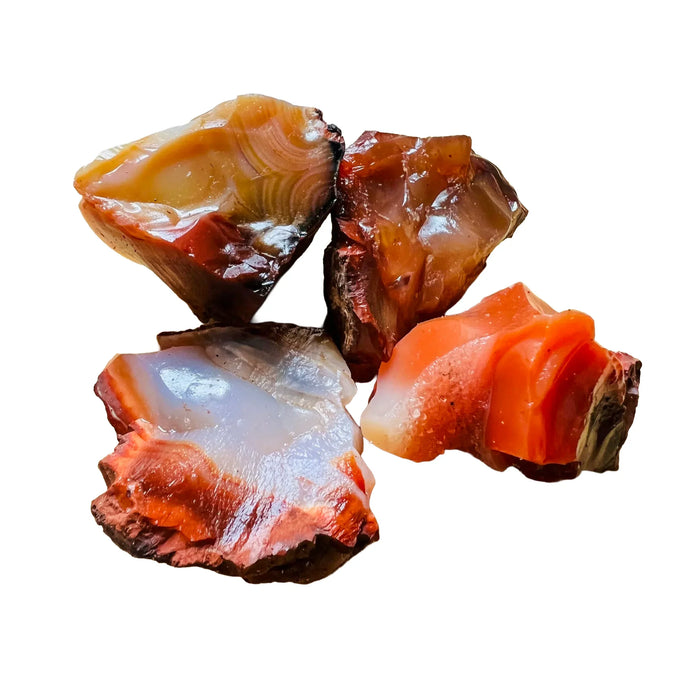
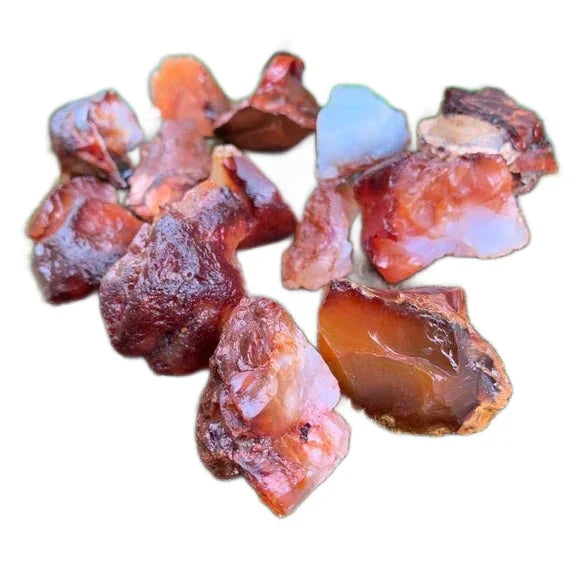
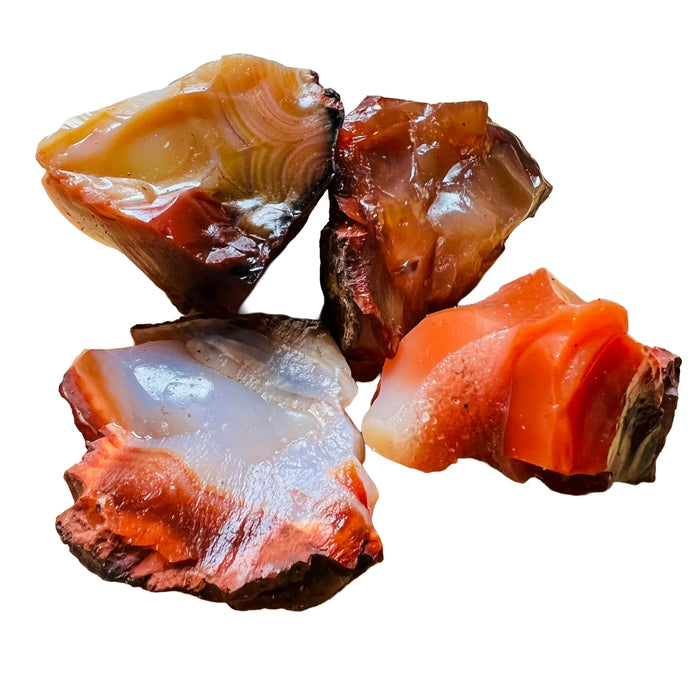
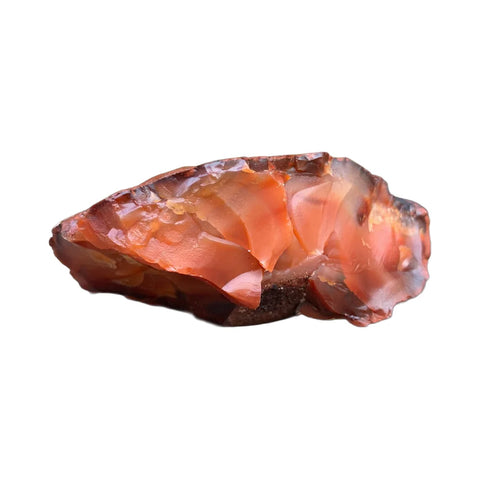
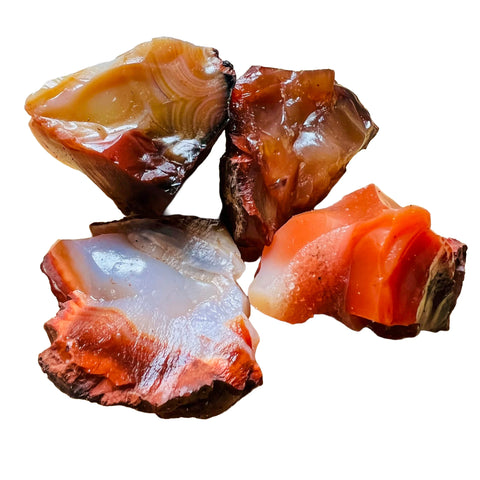
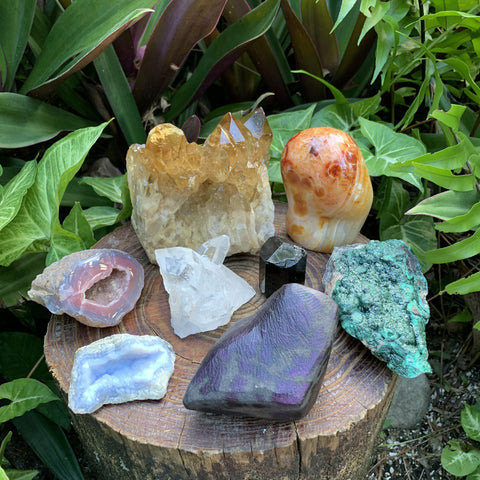
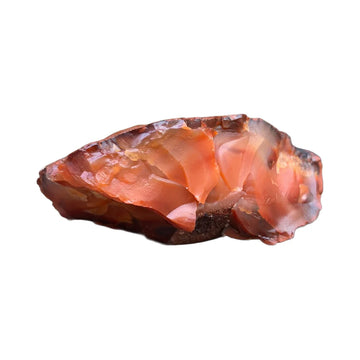
Carnelian is the stone most consistently paired with Leo. It's a variety of chalcedony, which is quartz grown in crystals too small to see, so it rates a solid 7 on the Mohs scale and wears well. Its orange to deep red color comes from iron oxide inside the stone. Ours is raw from Madagascar and tumbled from Brazil and Malawi, with the origin printed on each listing. The full mineral story is in our carnelian guide.
Tiger's Eye
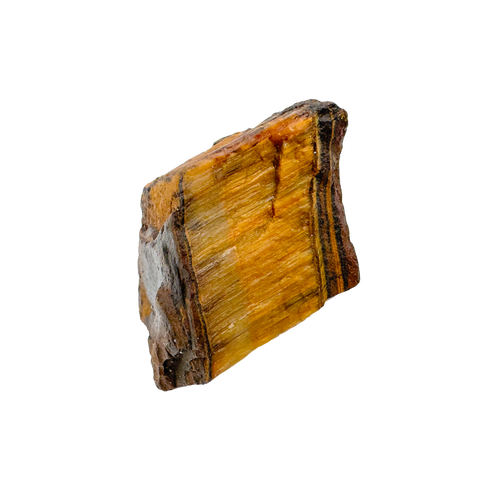
Tiger's eye is the golden, banded stone with a moving line of light across it. That shimmer, called chatoyancy, comes from parallel fibers locked inside the quartz as it formed, which catch light the way velvet does. Most of the world's tiger's eye, including ours, comes from South Africa. More on how it forms is in the tiger's eye guide.
Black Onyx
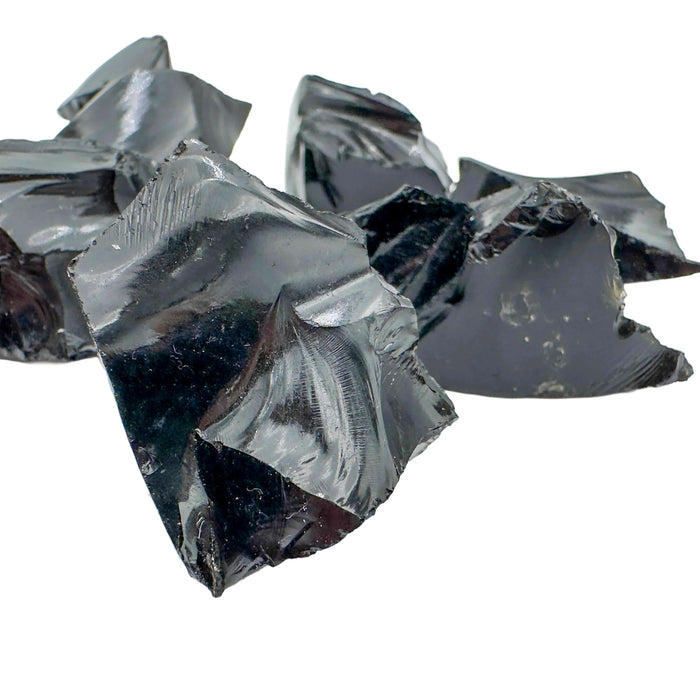
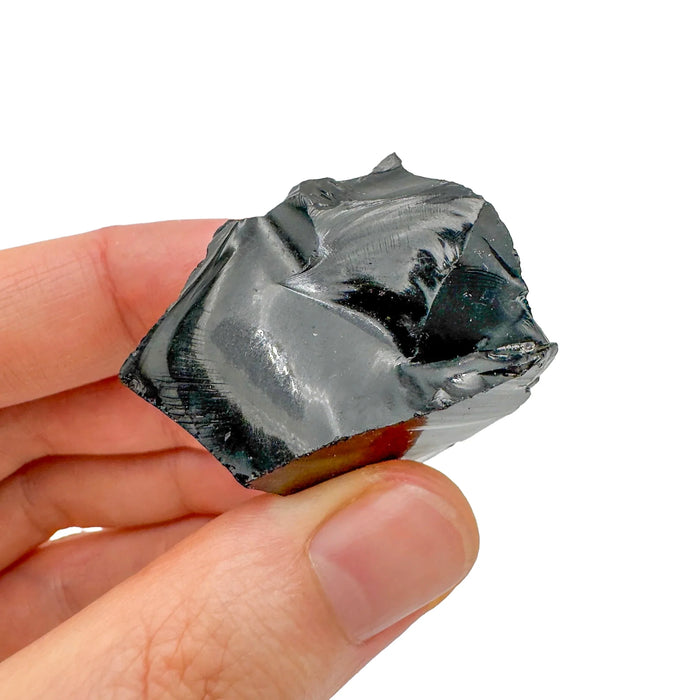
Onyx is a banded form of chalcedony, and black onyx is its most familiar face. Worth knowing before you buy anywhere: solid black onyx is very often dyed to deepen and even out its color. That's a long standing and accepted trade practice, not a trick, but it should be disclosed rather than hidden. Our onyx guide covers the how and why.
If one of these calls to you, a raw carnelian shows the color at its most natural, a tumbled tiger's eye puts the shimmer in the hand, and a black onyx brings the quieter end of the range. You can see every stone tied to the sign in the Leo collection.
What the association actually means
None of this is science. A stone doesn't know your birthday, and no gem changes a personality. What the zodiac tradition offers is a way in, a starting point for people who like the idea of a stone that echoes their sign's warmth. The peridot often called Leo's lucky stone is lucky the way a four leaf clover is: by story, not by physics. We'd rather tell you that plainly and let the stone be what it is. What a piece comes to mean is yours to find. If you want the fuller origin of these birthstone lists, our birthstones by month page traces where they came from.