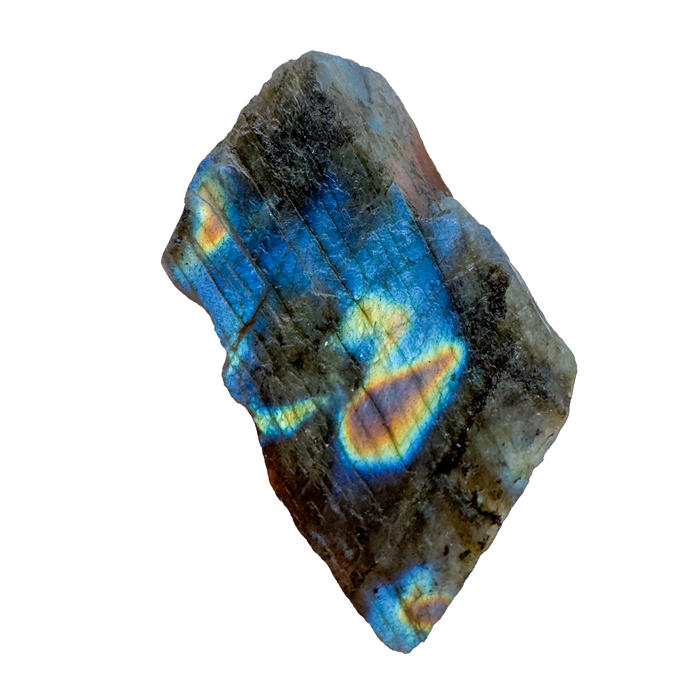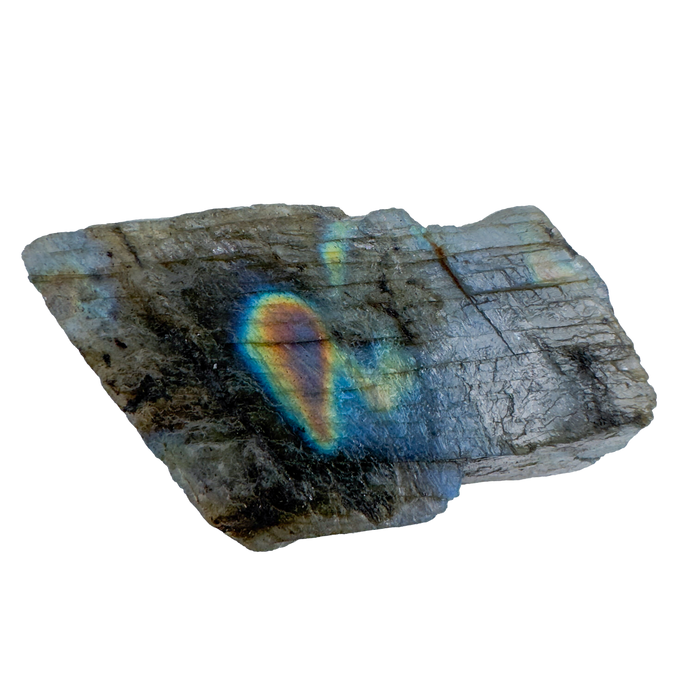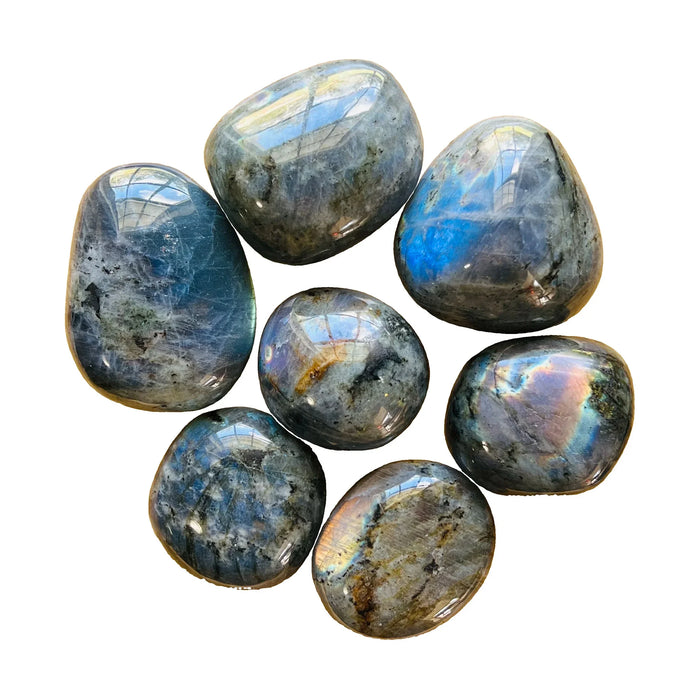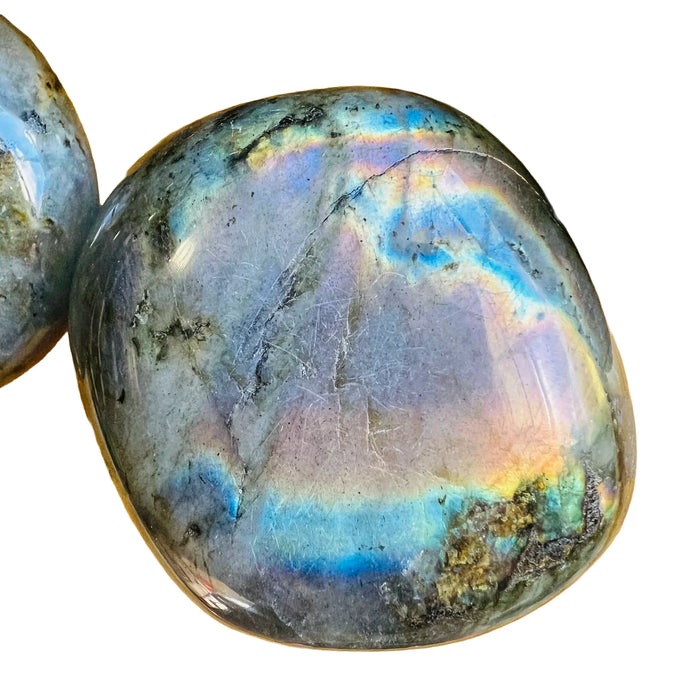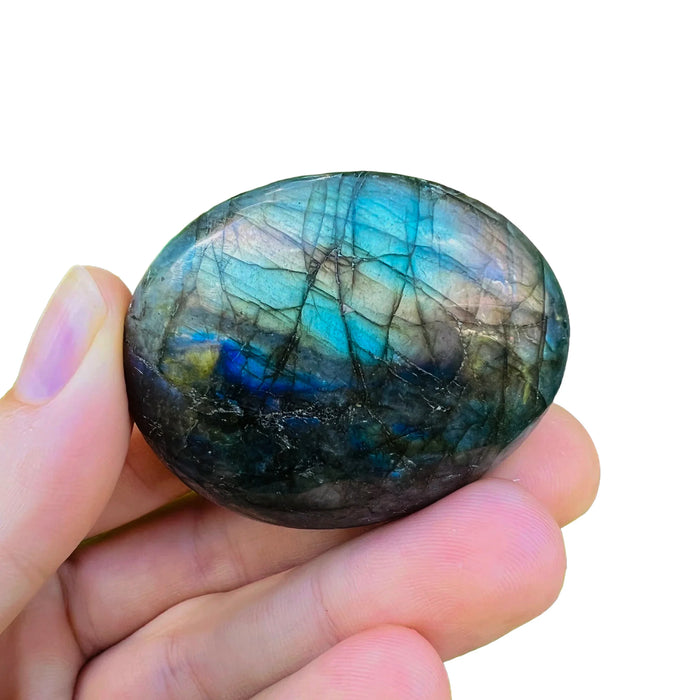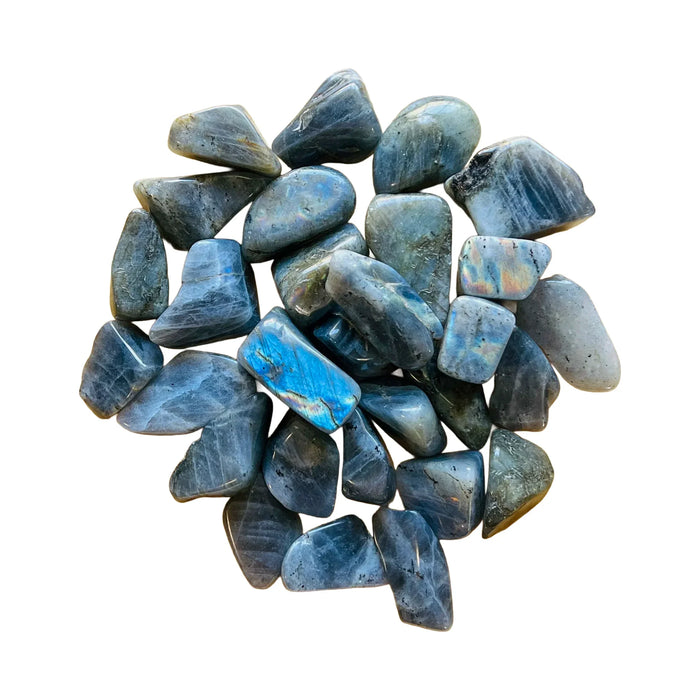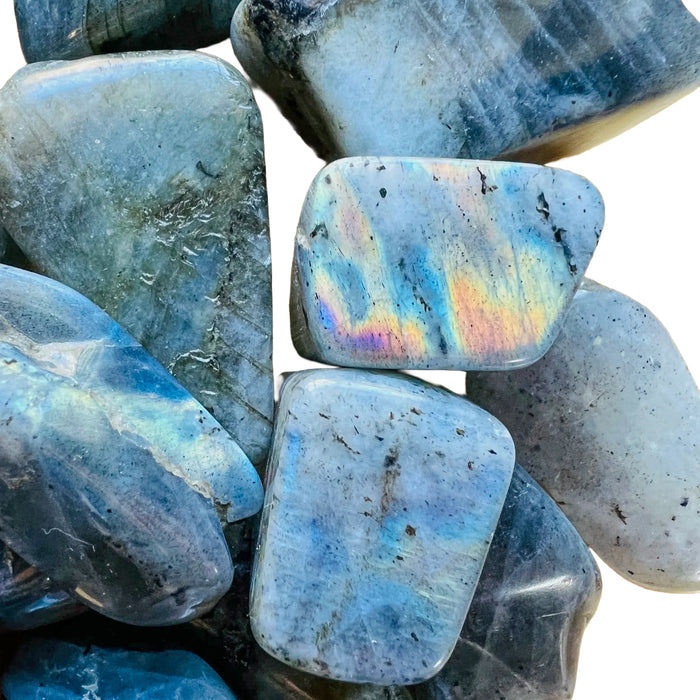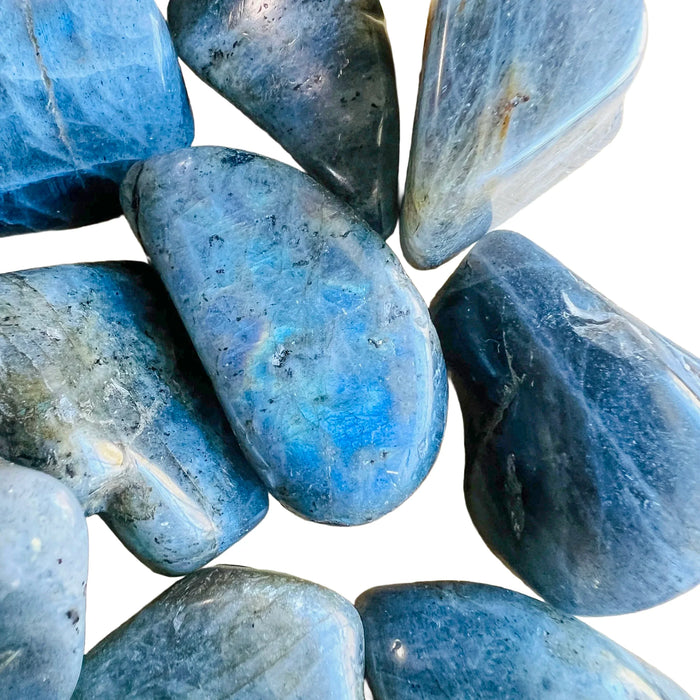


















Labradorite’s blue-and-gold flash isn’t a coating or a dye. It comes from nanometer-thin layers inside the stone bending light. Here’s the geology, why the colors shift as you tilt it, and how to tell real flash from a faked look.
Why Does Labradorite Flash? The Geology of Labradorescence

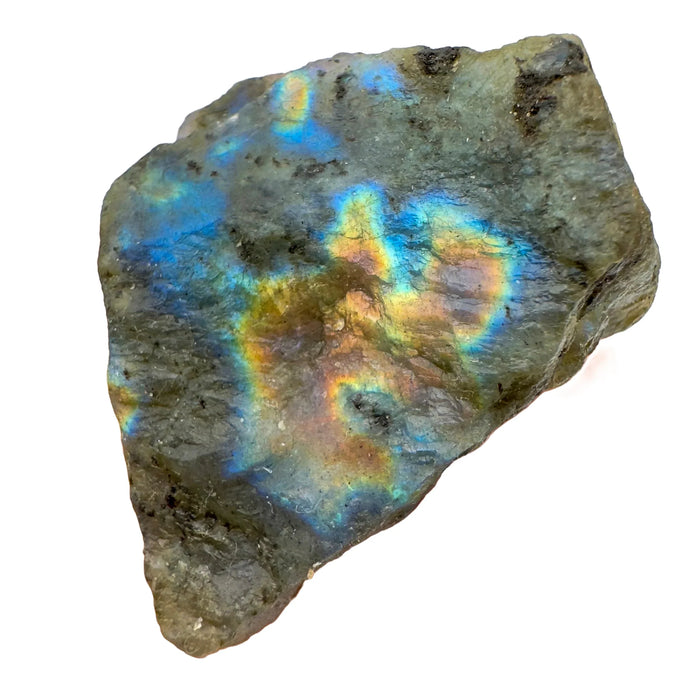
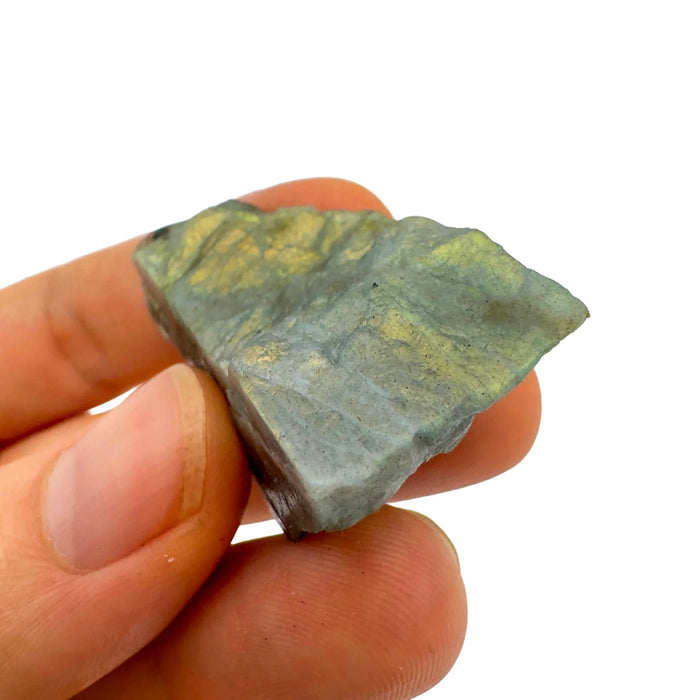
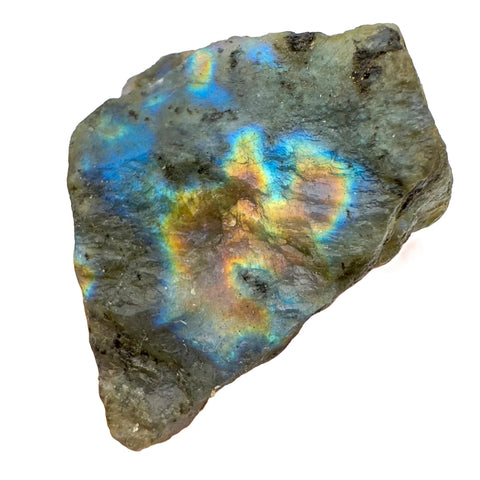
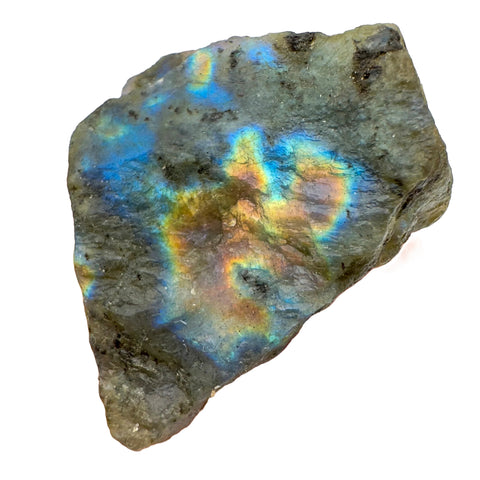
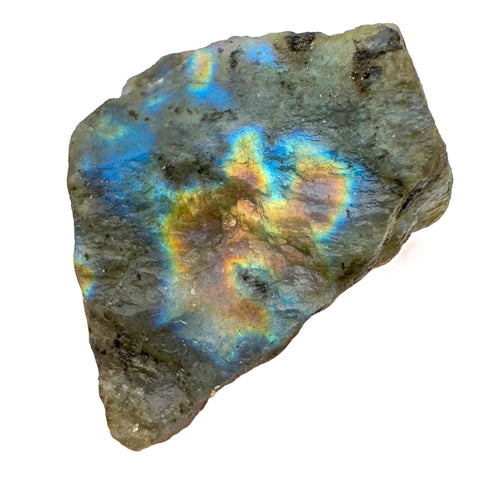
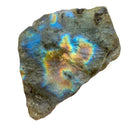
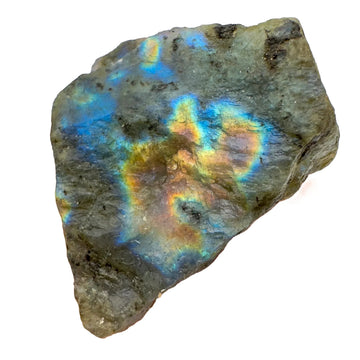
Pick up a piece of raw labradorite in flat light and you might wonder what the fuss is about. It looks like a dull gray rock. Then you tilt it toward a window, and a sheet of electric blue slides across the surface like light moving under water. It looks like a trick of the light. It’s actually geometry.
Quick answer
Labradorite's blue-to-gold flash, called labradorescence, comes from light bouncing between nanometer-thin layers inside the stone, not from any dye or coating. The colors shift as you tilt it because the effect depends on angle. Real flash moves; a flat color that stays put doesn't. Most flashing labradorite comes from Madagascar.
The flash has a name, labradorescence, and it isn’t a coating, a dye, or a clever bit of polishing. It’s built into the stone at a scale far too small to see. Once you understand where it comes from, you’ll know how to tell a real piece from a faked one, and why no two flash quite the same way.
Mineral family
Plagioclase feldspar
Hardness
Mohs 6 to 6.5
Optical effect
Labradorescence
Main source
Madagascar
What labradorite actually is
Labradorite is a feldspar, part of the most common mineral family in the Earth’s crust. More precisely it’s a plagioclase feldspar, a natural blend that sits between two end points: sodium-rich albite and calcium-rich anorthite. Its formula, (Ca,Na)(Al,Si)4O8, is just a tidy way of saying it’s an aluminum silicate carrying both calcium and sodium.
It forms in slow-cooling igneous rock, the kind that crystallizes deep underground instead of erupting and chilling fast. You’ll find it in basalt, gabbro, and norite. That slow cooling is the first clue to the flash, and we’ll come back to it. On the Mohs hardness scale it sits around 6 to 6.5, a little softer than quartz. It’s sturdy enough for everyday handling, but worth keeping away from harder stones that can scratch the polish.
Where the flash comes from
Here’s the part most listings skip. As labradorite cools slowly, the sodium-rich and calcium-rich parts of the mix can’t stay evenly blended. They separate into incredibly thin alternating layers, a process geologists call exsolution. Picture oil and water settling apart, except it happens over thousands of years and freezes in place as solid rock.
Those layers are tiny. The ones that produce visible flash sit roughly 128 to 252 nanometers apart. For scale, a human hair is about 80,000 nanometers wide. When light hits these layers it bounces between them, and the waves interfere with each other, canceling some colors and amplifying others. The color you see depends on how far apart the layers are. Wider spacing leans blue and violet; tighter or thicker stacks push toward green, gold, and once in a while red.
It’s the same physics that makes a soap bubble shimmer or oil on a puddle throw a rainbow. The color isn’t a pigment sitting on the surface. It’s light itself, sorted by structure.
Why the colors shift as you tilt it
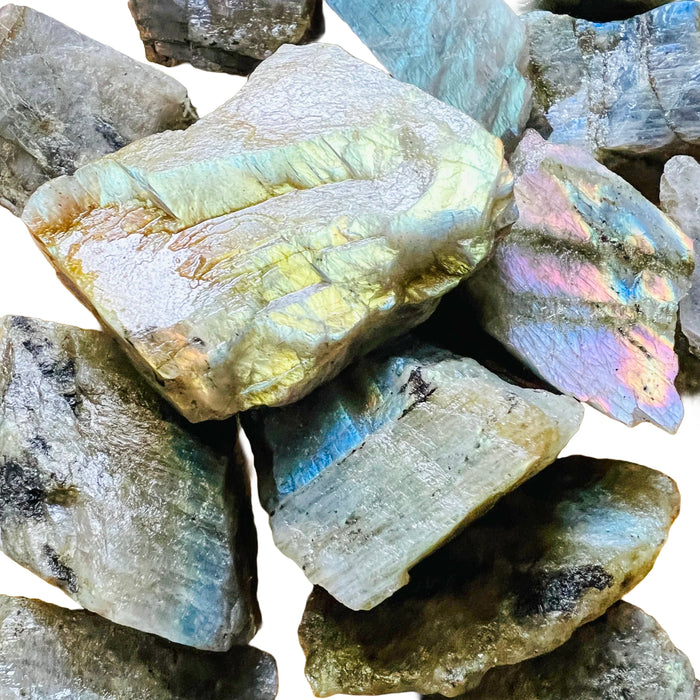
Because the flash is a reflection off internal layers, you only catch it when those layers meet the light at the right angle. Tilt the stone and the angle changes, so the color appears, travels across the face, and disappears. That movement is the surest sign you’re looking at the real thing. A flat color that stays put no matter how you turn the stone is a warning, not a feature.
The most vivid material, where the flash covers the whole face in strong color, has its own name: spectrolite, first described from Finland. Most labradorite on the market, ours included, comes from Madagascar, where the deposits produce those deep blue and peacock flashes.
“That movement is the surest sign you’re looking at the real thing.”
Natural flash, or a faked look?
Once you know the flash is structural, the imitations get easier to catch. Here’s what to weigh in your hand.
| What you’re holding | What gives it away |
|---|---|
| Natural labradorite | A gray to near-black body. The flash moves and changes color as you tilt it, and it only shows from certain angles. |
| Dyed or coated pieces | Color sits on the surface and doesn’t shift when you turn it. Often too even, edge to edge, with no gray body showing through. |
| Glass or “opalite” imitations | An even, glassy sheen with no directional flash. Look for tiny bubbles inside or a clarity that’s a little too perfect. |
| Moonstone (a cousin, not a copy) | A soft floating glow called adularescence, more like light under frosted glass than a sharp sheet of metallic color. |
How to see the flash at its best
Labradorite rewards a little patience. Next time you have a piece in hand, try this:
- Find a single light source. A window or one lamp beats flat overhead lighting. Hold the stone near it.
- Tilt slowly. Rotate the piece through different angles until the color appears, then keep turning to watch it travel across the face.
- Move your head, not just the stone. The flash depends on the angle between the light, the stone, and your eye. Small shifts reveal more.
- Compare daylight and lamplight. Some pieces read bluer by day and warmer under a bulb. Both are real.
Where ours comes from
All of our labradorite is mined in Madagascar, an island that sits among the world’s most important sources for flashing feldspar. We carry it as raw stones, tumbled pieces, palm stones, and polished hearts, in grades that run from a soft everyday flash up to the vivid blue-predominant AAA rough.
We’d rather tell you the country and the grade than dress a stone up with words it can’t back. If you want the full picture of how we choose what we sell, our ethical sourcing approach lays it out, and the Crystal Guide goes deeper on individual stones. If labradorite is what caught your eye, the labradorite collection is the place to start. And if you like a feldspar with its own quiet glow, black moonstone is a close relative worth meeting.
The honest version
Real labradorescence is structural, not a coating or a dye. It moves and changes color as you tilt the stone, and a flat color that stays put is the warning sign. Ours is Madagascar feldspar, named by country and grade.
A plain gray stone that hides a sheet of blue light is a good reminder that the most interesting things often need the right angle to show themselves. Tilt it toward the window. That’s where labradorite earns its name.