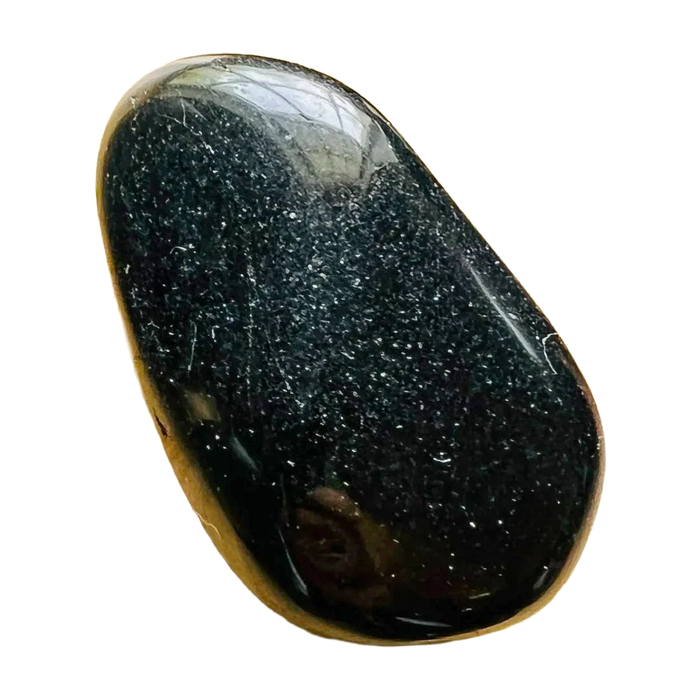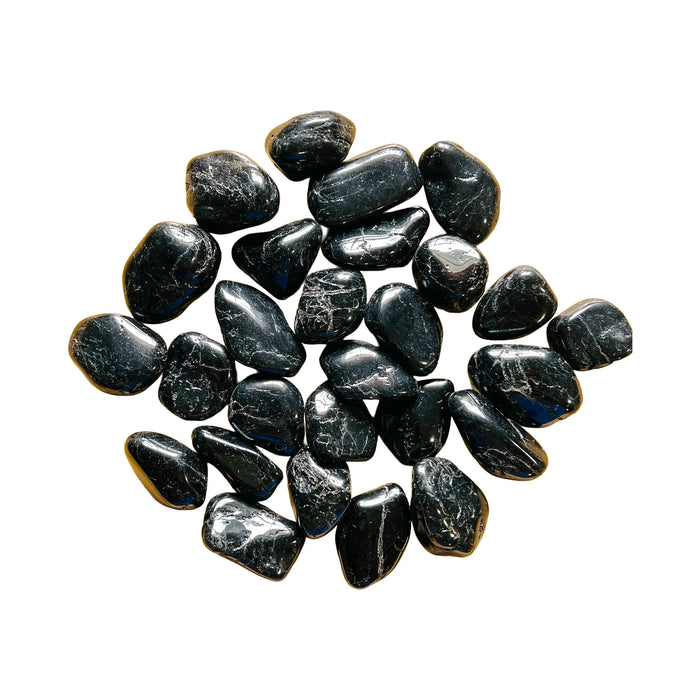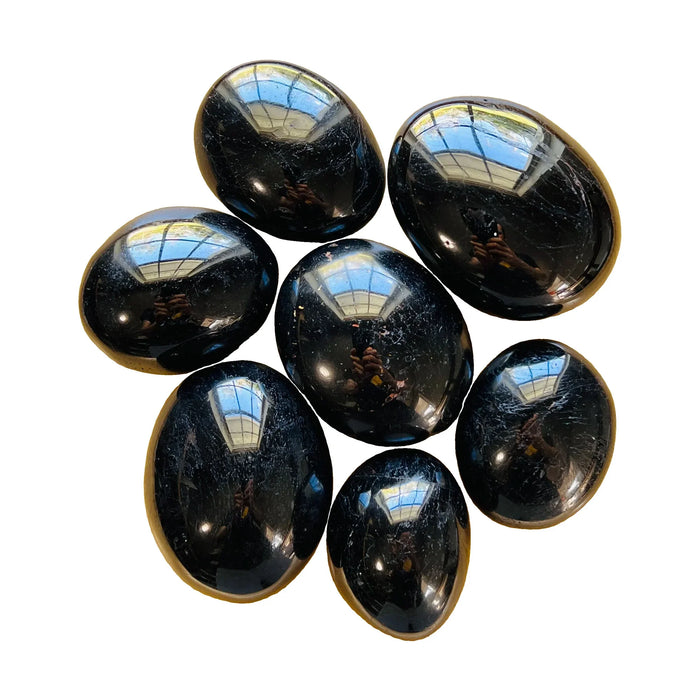


















Why Is Black Tourmaline Black? The Geology of Schorl

Most listings for black tourmaline tell you what it’s for long before they tell you what it actually is. Grounding. Protection. A stone for the doorway. All of that comes from tradition, and we’ll get to it. But if you’ve ever held a rough piece and wondered why it’s so dark, so heavy, and so oddly grooved down its length, the answer isn’t mysterious at all.
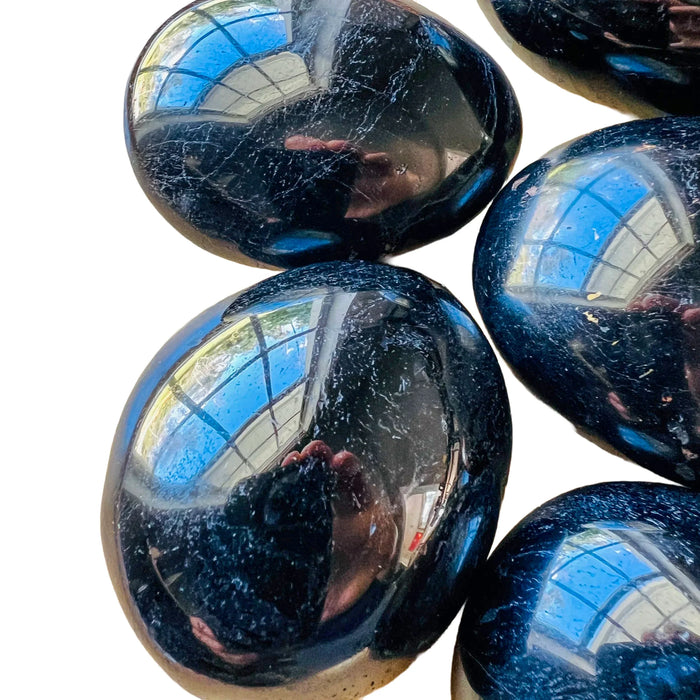
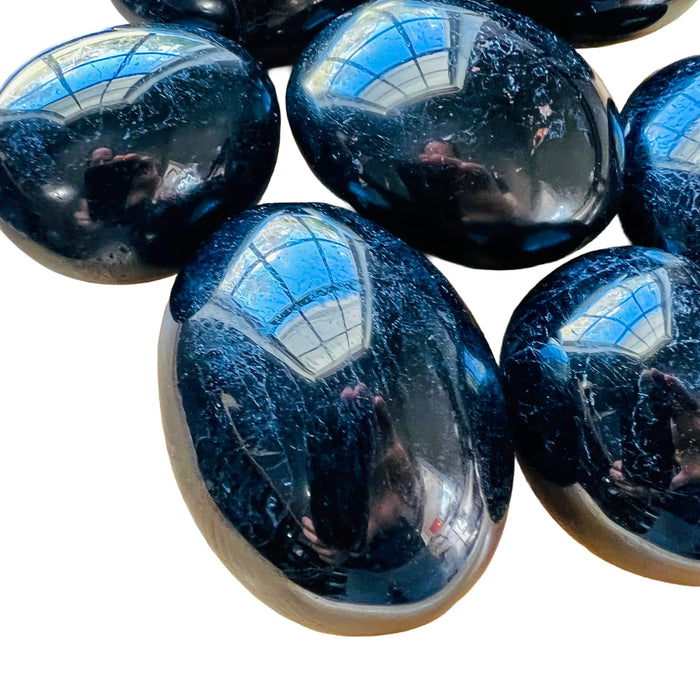
Black tourmaline is schorl, the iron-rich member of the tourmaline family. Iron gives it its black color, and it grows in granite pegmatites at high heat. It’s a 7 to 7.5 on the Mohs scale, and like all tourmaline it carries a faint electric charge when heated or pressed.
Black tourmaline is one of the most studied minerals on Earth. It even has its own name: schorl. And once you know the geology, you also know how to tell a real piece from a dyed look-alike. The science is the buyer’s guide.
What black tourmaline actually is
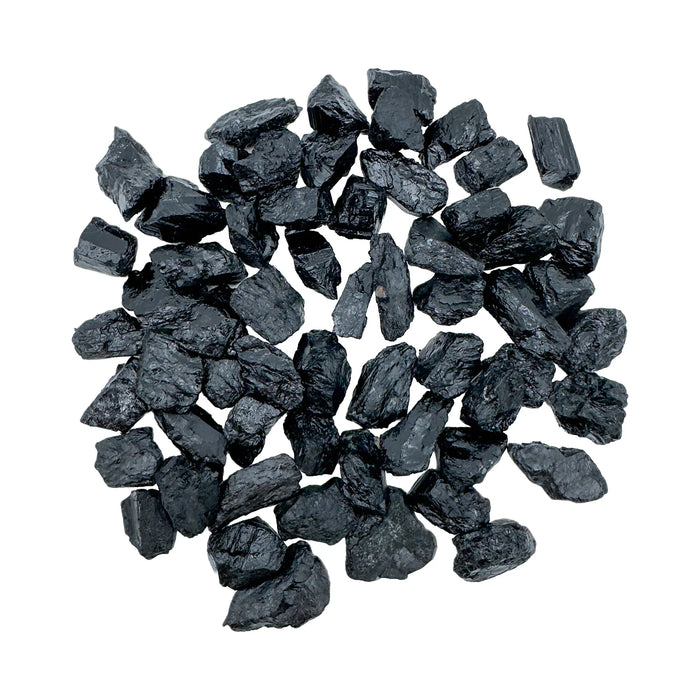
Tourmaline isn’t a single mineral. It’s a family, and the members differ by which metals sit inside the same basic crystal structure. The iron-rich member is schorl, and schorl is what almost every “black tourmaline” on the market really is. By most estimates, schorl makes up around 90 percent of all the tourmaline found in nature, so when a stone is plain black, the odds it’s schorl are high.
Chemically it’s a sodium iron borosilicate, which is a long way of saying it’s built from silicon, boron, aluminum, and iron locked into a repeating lattice. That boron is part of why tourmaline is interesting to geologists: boron is fairly rare in the deep Earth, so where you find tourmaline, you’re reading a record of where boron-rich fluids once moved.
Why it’s black
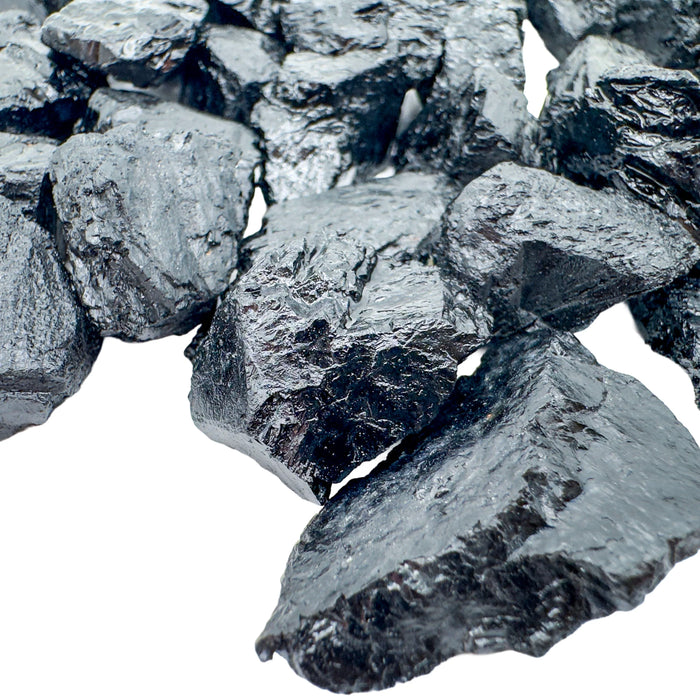
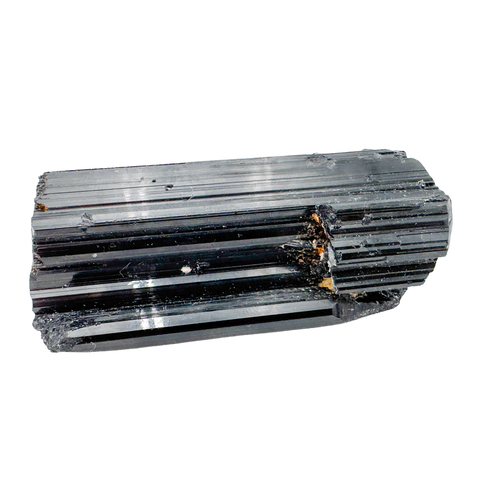
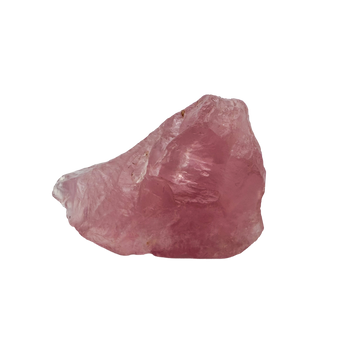
The color comes down to one element: iron. In schorl, iron (specifically iron in its Fe2+ form) absorbs nearly all the visible light that hits the crystal, which is what leaves it looking black to deep brownish-black. Swap that iron for other metals and the same tourmaline structure turns pink, green, or the famous watermelon banding. Same skeleton, different metal, completely different color.
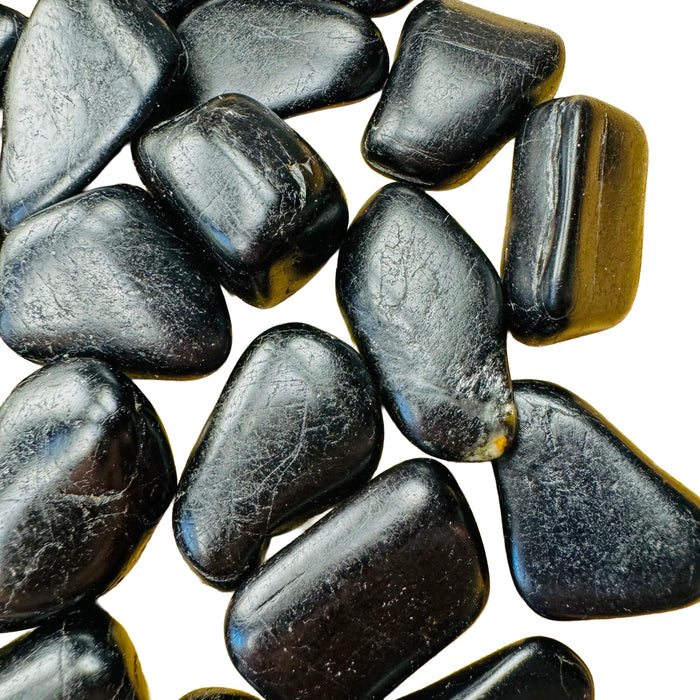
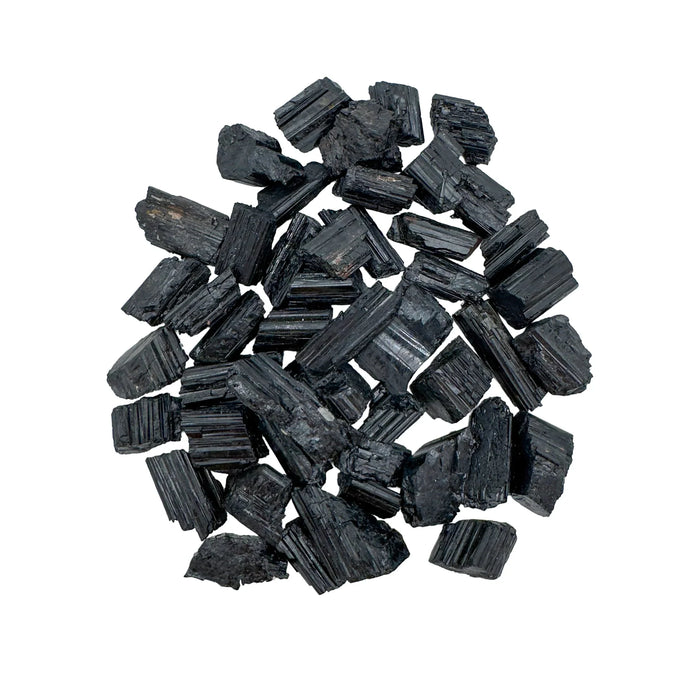
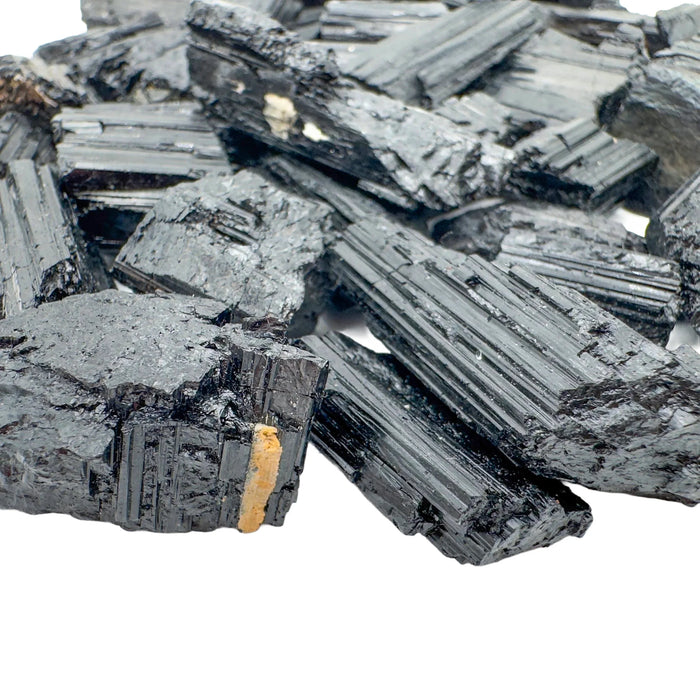
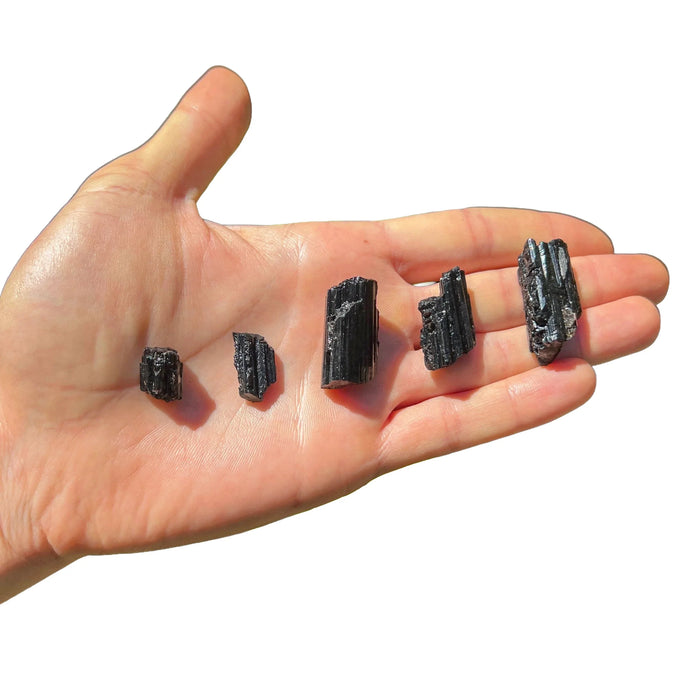
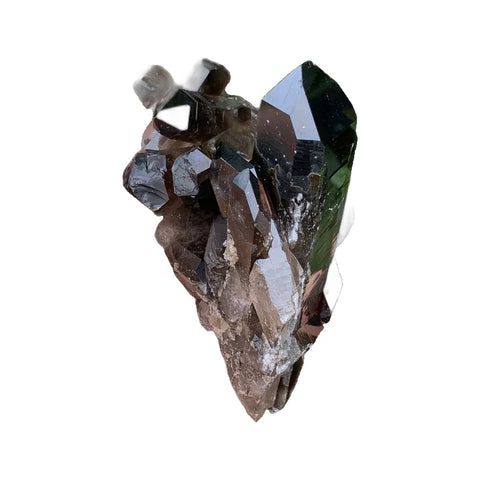
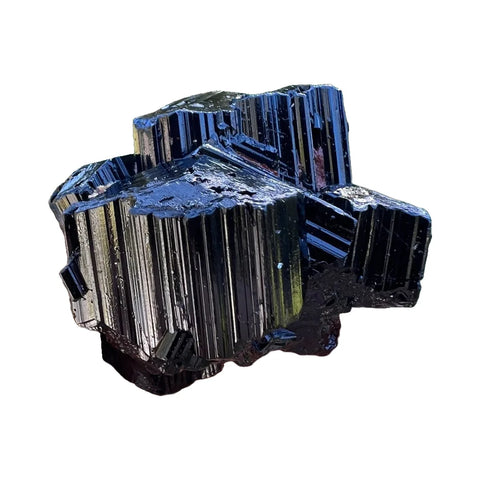
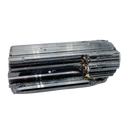
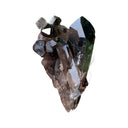
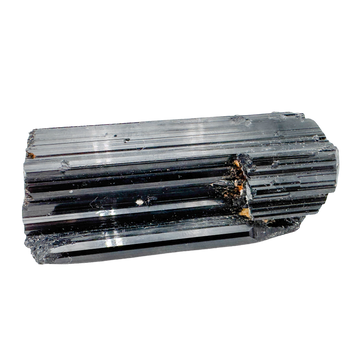
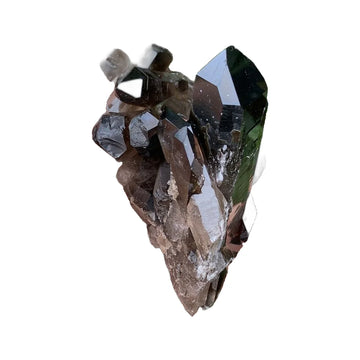
Look closely at a raw piece and you’ll usually see lengthwise grooves running down the crystal, almost like someone dragged a comb along it. Those are called striations, and they form because tourmaline grows in the trigonal crystal system as long, columnar prisms. Those grooves matter later, because glass and most fakes don’t have them.
How and where it forms
A crystal is a record of time, and schorl records a slow, hot one. Most black tourmaline grows in granite pegmatites, the coarse-grained pockets that form in the final stages of a cooling magma. As the magma cools, the last fluids left over are rich in water, boron, and dissolved metals, and they get trapped in gas-filled cavities where crystals can grow large and well-formed. Temperatures in that window typically run somewhere between 600 and 900 degrees Celsius. It also forms in certain metamorphic rocks, where heat and pressure rework the chemistry over time.
That formation story is also a sourcing story. Schorl shows up wherever the right granite did, which is a long list of countries. Here’s where the better material tends to come from, including the origins of the rough we carry: Brazil, Madagascar, Namibia, and Zimbabwe.
| Region | Known For | Notes |
|---|---|---|
| Brazil (Minas Gerais) | Large, lustrous schorl prisms | A leading tourmaline source for centuries |
| Madagascar | Well-formed raw crystals | One of the origins of our raw black tourmaline |
| Pakistan | Sharp, collector-grade prisms | Skardu district, high-altitude pegmatites |
| Afghanistan | Fine crystals from Nuristan | Mined in rugged mountain terrain |
| USA (Maine & California) | Pegmatite schorl | A reminder that “exotic” stones grow at home too |
The part most shops skip: it makes a tiny electric charge
Here’s the detail almost no listing mentions, and it’s the most genuinely interesting thing about the stone. Tourmaline, schorl included, is both piezoelectric and pyroelectric. In plain terms, it builds up a small surface charge when you press on it (piezoelectric) or when you heat or cool it (pyroelectric). Opposite ends of the crystal take on opposite charges.
This isn’t folklore. It’s measurable physics, and people noticed it a long time ago. Dutch traders in the 1700s gave tourmaline a nickname that translated to “ash puller,” because a warmed crystal would attract ash and dust as it cooled. The same family of properties shows up in quartz, which is why related minerals ended up in pressure gauges and other instruments.
One honest note, because it matters: that charge is real, but it’s faint, and it has nothing to do with any health or healing claim. It’s a quirk of the crystal structure, not medicine. We’d rather tell you the true, smaller story than dress it up into something it isn’t.
How to tell real black tourmaline from a look-alike
Black tourmaline is rarely faked the way turquoise or some agates are, mostly because schorl is common and cheap enough that there’s little reason to. The bigger risk is confusion: black onyx, black obsidian, and plain dyed or glass pieces can all read as “black stone” in a photo. The geology gives you simple tells.
| Stone | What It Is | Quick Tell |
|---|---|---|
| Black Tourmaline (schorl) | Iron-rich silicate, Mohs 7 to 7.5 | Lengthwise grooves (striations), often a 3-sided prism shape |
| Black Obsidian | Volcanic glass | Smooth, glassy, often with curved chip marks; no striations |
| Black Onyx | Chalcedony (often dyed) | Very even, banded when cut; smooth, not grooved |
| Glass or Resin | Manufactured | Air bubbles, mold seams, warm to the touch, too uniform |
Three quick checks before you buy
- Look for the grooves. Real raw schorl almost always shows those lengthwise striations down the prism. Glass and onyx don’t.
- Test the hardness. At a 7 to 7.5 on the Mohs scale, black tourmaline won’t scratch easily. Obsidian is softer and onyx behaves differently under a blade.
- Ask where it’s from. A seller who can name the region (and tell you whether anything was done to it) is giving you the one thing a fake can’t. If the answer is a shrug, that’s your answer.
And the side people actually shop for
None of the geology cancels out the reason most people reach for this stone. Black tourmaline has long been associated with grounding and a sense of protection, which is why it tends to live by the front door, on a desk, or in a bag. We think the tradition is better, not weaker, when you also know what you’re holding: an iron-rich crystal that grew slowly in hot granite and carries a faint charge of its own.
If you want the fuller properties-and-care rundown, our black tourmaline crystal guide covers it, and you can read how we choose our partners on our sourcing page. Curious how it stacks up against the other dark protector? We compared them in black tourmaline vs black obsidian.
Black tourmaline is schorl, colored black by iron and grown slowly in hot granite. It is rarely faked, and the geology is your buyer’s guide: look for the lengthwise grooves, check the hardness, and ask where it is from.
When you’re ready, take a look at the raw pieces and see which one you actually want to pick up.