




















































 Raw Stones
179 pieces
Raw Stones
179 pieces
 Tumbled Stones
162 pieces
Tumbled Stones
162 pieces
 Palm Stones
25 pieces
Palm Stones
25 pieces
 Crystal Points
23 pieces
Crystal Points
23 pieces
 Clusters & Geodes
104 pieces
Clusters & Geodes
104 pieces
 Polished & Decor
148 pieces
Polished & Decor
148 pieces
 Mineral Specimens
259 collector pieces
Mineral Specimens
259 collector pieces
 Crystal Chips
21 pieces
Browse everything
Every collection, one page.
View All Collections →
Crystal Chips
21 pieces
Browse everything
Every collection, one page.
View All Collections →


 Aries
Mar 21 – Apr 19
Carnelian
›
Aries
Mar 21 – Apr 19
Carnelian
›
 Taurus
Apr 20 – May 20
Rose Quartz
›
Taurus
Apr 20 – May 20
Rose Quartz
›
 Gemini
May 21 – Jun 20
Agate
›
Gemini
May 21 – Jun 20
Agate
›
 Cancer
Jun 21 – Jul 22
Moonstone
›
Cancer
Jun 21 – Jul 22
Moonstone
›
 Leo
Jul 23 – Aug 22
Citrine
›
Leo
Jul 23 – Aug 22
Citrine
›
 Virgo
Aug 23 – Sep 22
Amazonite
›
Virgo
Aug 23 – Sep 22
Amazonite
›
 Libra
Sep 23 – Oct 22
Blue Lace Agate
›
Libra
Sep 23 – Oct 22
Blue Lace Agate
›
 Scorpio
Oct 23 – Nov 21
Obsidian
›
Scorpio
Oct 23 – Nov 21
Obsidian
›
 Sagittarius
Nov 22 – Dec 21
Sodalite
›
Sagittarius
Nov 22 – Dec 21
Sodalite
›
 Capricorn
Dec 22 – Jan 19
Black Tourmaline
›
Capricorn
Dec 22 – Jan 19
Black Tourmaline
›
 Aquarius
Jan 20 – Feb 18
Amethyst
›
Aquarius
Jan 20 – Feb 18
Amethyst
›
 Pisces
Feb 19 – Mar 20
Aquamarine
›
Gifting?
A birthday stone is the safe bet.
Read the zodiac guide →
Pisces
Feb 19 – Mar 20
Aquamarine
›
Gifting?
A birthday stone is the safe bet.
Read the zodiac guide →











Danburite
Danburite is a calcium boron silicate that grows as clear, glassy prisms with a distinctive chisel-shaped tip. Usually colorless, it also appears in soft pink and pale yellow. It is a hard, durable stone that stays largely untreated, and people often work with it as a calm, high-heart crystal.
The geology.
Danburite is a calcium boron silicate with the formula CaB2Si2O8. It crystallizes in the orthorhombic system as prismatic crystals, typically striated along their length and ending in a wedge or chisel-shaped termination that helps identify it. It is most often colorless and transparent, though iron and other traces can lend pale yellow, and manganese can give the sought-after pink.
At 7 to 7.5 on the Mohs scale, danburite is harder than quartz and quite durable, with a vitreous to slightly greasy luster and a specific gravity around 3.0. Unlike topaz, it lacks easy cleavage, which makes it more forgiving to cut and wear despite its glassy clarity.
The origins.
Danburite is named for Danbury, Connecticut, its type locality, though that original site was built over long ago and no longer produces. Today the finest crystals come from Mexico, especially Charcas in San Luis Potosi, known for large, clear, lustrous prisms. Myanmar produces gemmy material including pink, and other sources include Japan, Madagascar, Russia, Bolivia, and Tanzania.
Because danburite forms in contact-metamorphic and hydrothermal settings, it often grows with calcite and other silicates. A named source such as Charcas usually signals the clean, water-clear crystals collectors look for.
Traditional associations.
Danburite has a reputation as a gentle, high-vibration stone. People often describe it as calming and heart-opening, a crystal for peace of mind and a lighter emotional state, and it is a favorite for meditation.
Many work with it for serenity, clarity, and a sense of connection to the higher self, linking it most often to the Crown and Heart chakras. It is associated with the element of Air and the sign Leo. A common practice is to hold a clear point during quiet reflection or to keep one by the bed for restful sleep.
Spotting the real thing.
Real danburite shows glassy, transparent to translucent prisms, usually striated lengthwise and tipped with a characteristic wedge-shaped end. Its hardness of 7 to 7.5 and lack of easy cleavage separate it from topaz, which cleaves readily, and its crystal habit differs from the six-sided points of quartz.
Colorless danburite is sometimes mistaken for clear quartz, topaz, or glass sold under its name. Look for the distinct terminations and lengthwise striations, and be cautious of perfectly flawless faceted stones sold cheaply, which may be glass. For pink material, ask whether the color is natural. Reputable sellers name the species and locality.
Care & handling.
Danburite is durable and easy to live with at 7 to 7.5 on the Mohs scale, fine for pendants, earrings, and rings with normal care. A rinse in warm water with a soft cloth is all it needs, and it is stable in everyday light.
Because it grows as clear crystals, avoid sudden thermal shock, and skip ultrasonic and steam cleaners for included pieces along with harsh chemicals. Store it apart from harder stones like topaz and sapphire to protect the polish. To reset it, many people use moonlight, sound, or a rest on a selenite plate.
Pairs well with.
A deeper look.
Extended geology, sourcing, authentication, history, and varieties, for when the quick guide isn't quite enough.
Extended geology
Danburite is a framework silicate related in structure to the feldspars, with boron sitting alongside silicon in its atomic framework and calcium filling the spaces. Its formula, CaB2Si2O8, makes it one of the more accessible boron minerals for collectors. Crystals are orthorhombic, prismatic, and strongly striated, with the wedge-shaped termination that is a reliable identifier. Colorless is most common, with pale yellow from iron and pink from manganese.
It forms in contact metamorphic zones, in dolomite altered by igneous activity, and in some hydrothermal veins and evaporite settings. Companion minerals include calcite, and in the Charcas deposits danburite grows as large, clear, doubly terminated crystals. Hardness is 7 to 7.5, specific gravity near 3.0, luster vitreous to slightly greasy.
Extended sourcing
The type locality is Danbury, Connecticut, where danburite was first described in the 1830s, though that site is long gone. Charcas in San Luis Potosi, Mexico is the modern classic, producing large water-clear prisms. Myanmar supplies gem-quality stones including pink, and Japan, Madagascar, the Ural Mountains of Russia, Bolivia, and Tanzania add to the supply.
Collectors value clarity, size, luster, and sharp terminations. Faceted gem danburite is prized for its brilliance and its unusual status as a hard, clean, and relatively affordable collector gemstone. Pink and richly gemmy stones command the highest prices.
Authentication and warning signs
Look for lengthwise striations and the wedge-like termination, both strong signs of danburite. A hardness above quartz, and the absence of the easy cleavage that topaz shows, help confirm it. Colorless danburite can resemble clear quartz, topaz, or glass, so crystal habit is the best guide on rough pieces.
For cut stones, be wary of flawless, inexpensive material that may be glass, and ask whether any pink is natural. Danburite is not commonly faked, but it is often mislabeled, so a seller who names the species and locality is a good sign.
History and folklore
Danburite was first described in 1839 and named for Danbury, Connecticut, the town where it was found. As a mineral recognized only in the modern era, it has no ancient lore. Its reputation as a calming, heart-and-crown stone has developed within the contemporary crystal community, where its clarity and gentle appearance suit its associations with peace and higher awareness.
Varieties and trade names
Colorless danburite: the most common form, clear and glassy.
Pink danburite: manganese-tinted material, notably from Myanmar.
Yellow danburite: pale gold to champagne stones colored by iron.
Some clear danburite has been marketed with fanciful trade names, though the species name is always danburite.
What it costs in the market
Small danburite crystals and tumbles: roughly 5 to 30 dollars. Larger clear Charcas prisms and clean points: around 25 to 150 dollars depending on size and clarity. Faceted gem danburite and fine pink crystals: from tens into the hundreds of dollars. Value tracks clarity, size, color where present, luster, and sharpness of the terminations.
An education-first guide.
We don't currently carry danburite, so there's nothing to sell you here. This guide exists because the more you understand a stone, the better every decision you make about it becomes, wherever you buy it. Explore the rest of our crystal guides for stones we do source, each with full origin and treatment notes.
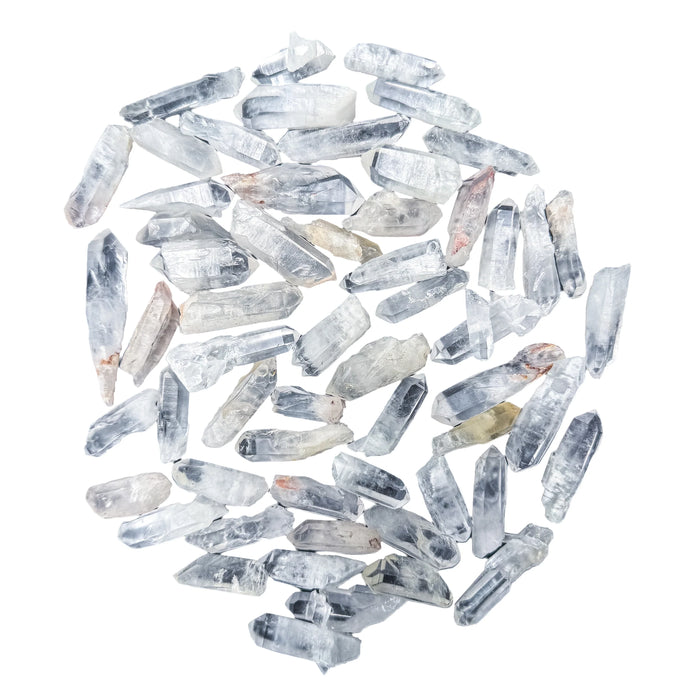
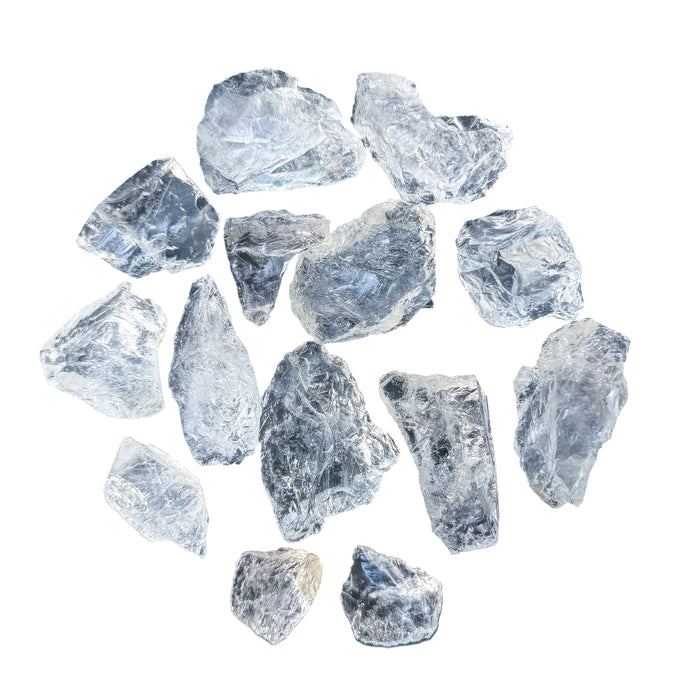
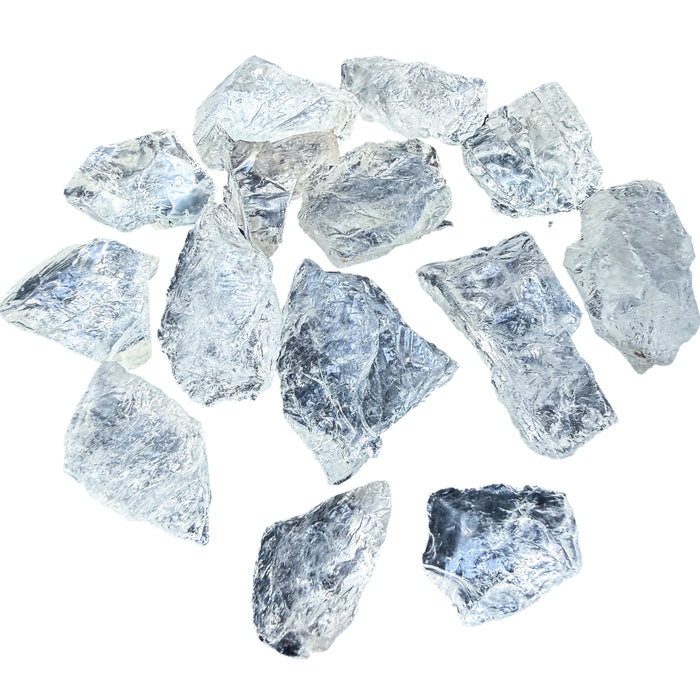
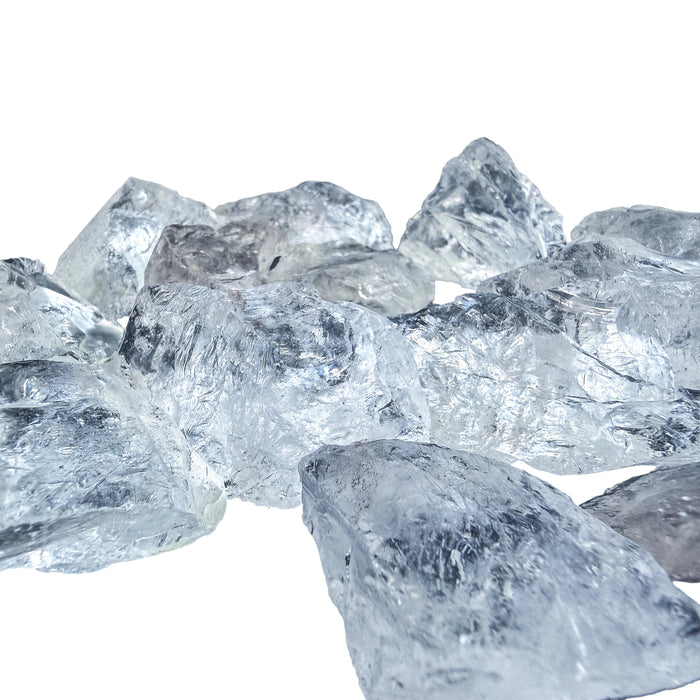
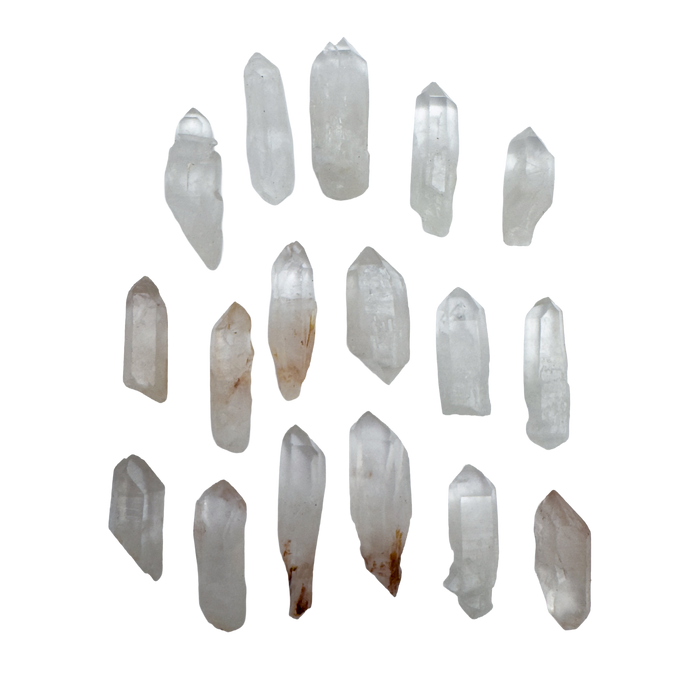
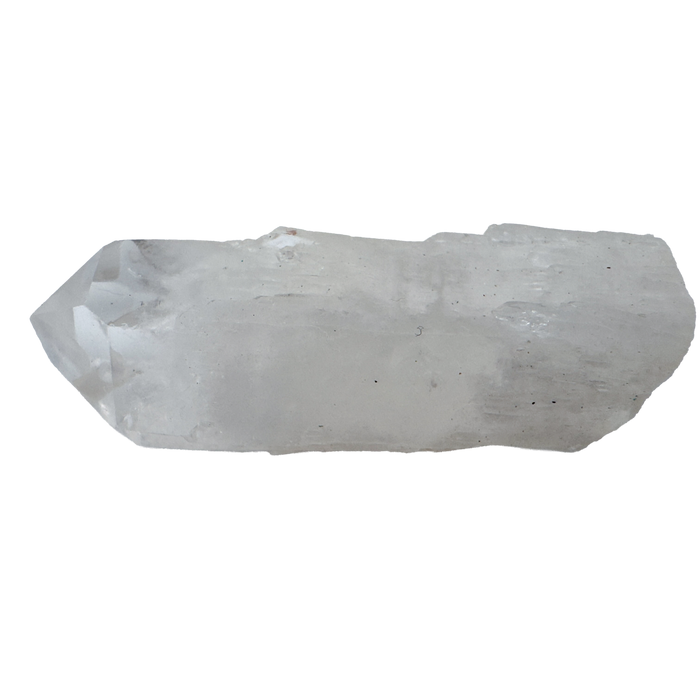
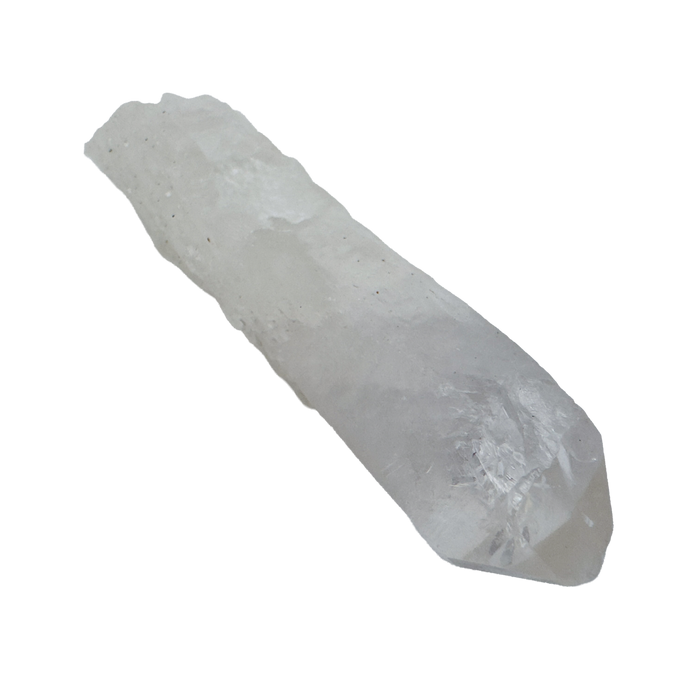
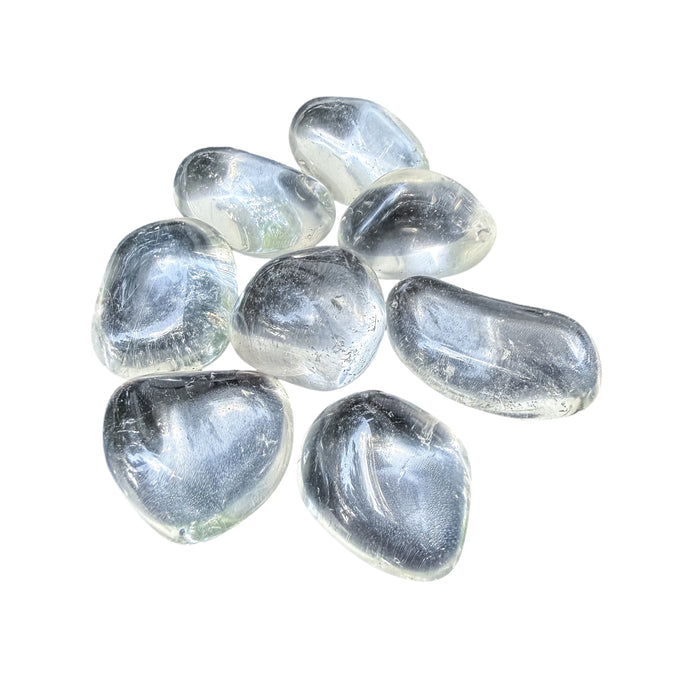
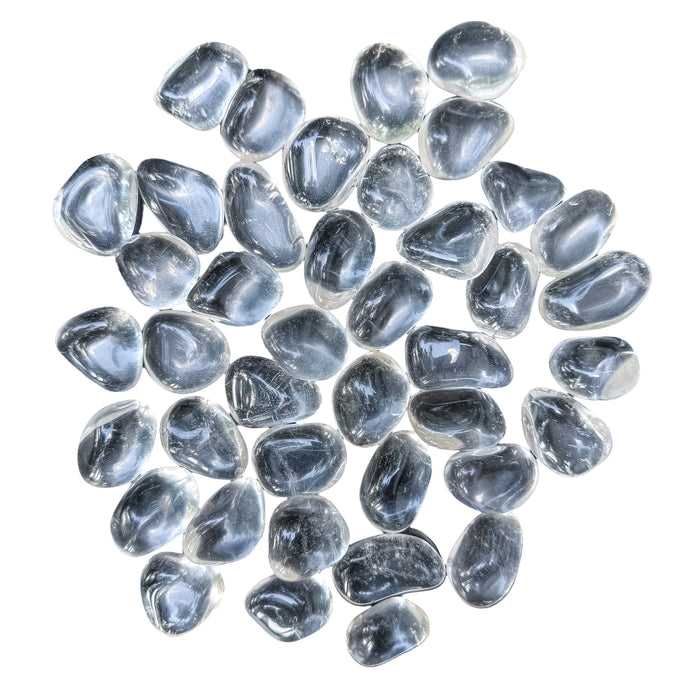
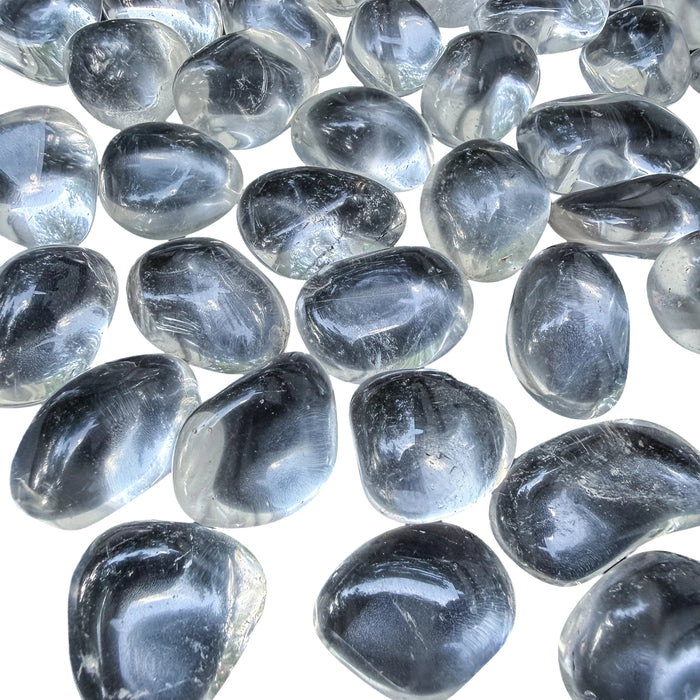
Explore the Crystal GuideThe closest match we carry: Clear Quartz.
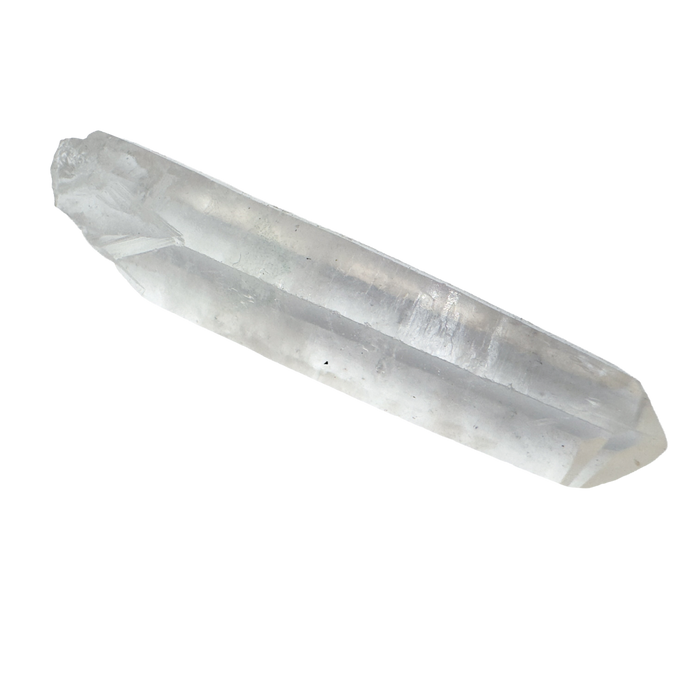
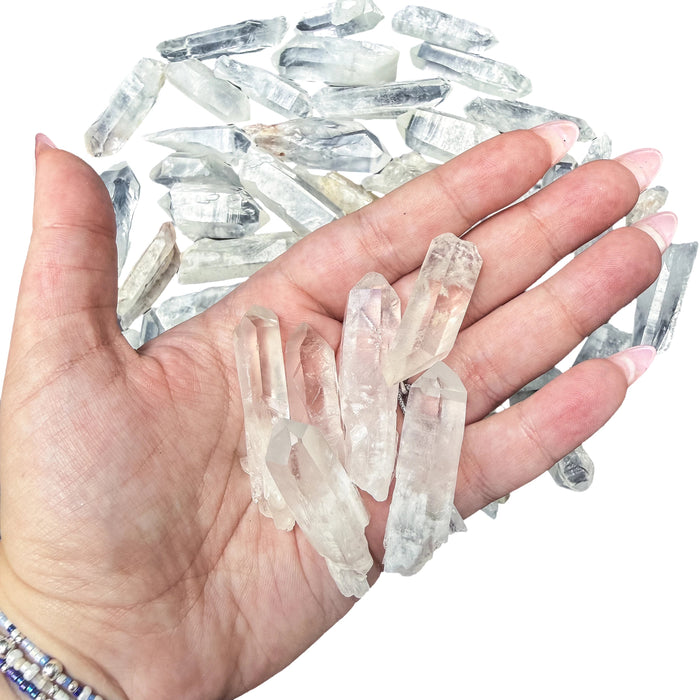
Danburite is not something we carry. Clear Quartz is the closest match in our collection, and every piece passes our sourcing standards: origin named, treatments disclosed.
- from 1,000+ reviews
- Ships within 72 hoursMonday to Friday, tracked
- 90 days to return itif you do not love it
- Free US shipping over $99$8.99 flat rate under
The Slow Note
New stones go to the list first.
No forwarding, no selling. Unsubscribe in one click. Privacy