









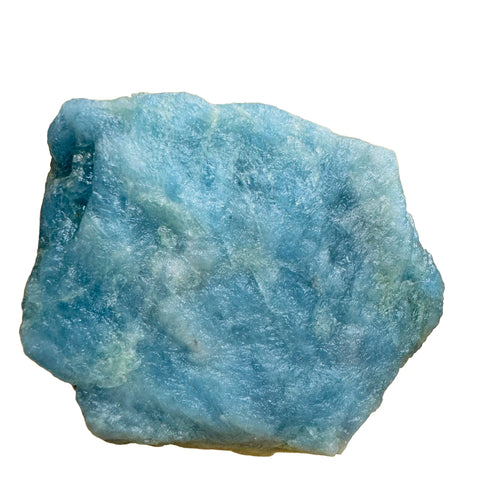











































 Raw Stones
179 pieces
Raw Stones
179 pieces
 Tumbled Stones
162 pieces
Tumbled Stones
162 pieces
 Palm Stones
25 pieces
Palm Stones
25 pieces
 Crystal Points
23 pieces
Crystal Points
23 pieces
 Clusters & Geodes
104 pieces
Clusters & Geodes
104 pieces
 Polished & Decor
148 pieces
Polished & Decor
148 pieces
 Mineral Specimens
259 collector pieces
Mineral Specimens
259 collector pieces
 Crystal Chips
21 pieces
Browse everything
Every collection, one page.
View All Collections →
Crystal Chips
21 pieces
Browse everything
Every collection, one page.
View All Collections →


 Aries
Mar 21 – Apr 19
Carnelian
›
Aries
Mar 21 – Apr 19
Carnelian
›
 Taurus
Apr 20 – May 20
Rose Quartz
›
Taurus
Apr 20 – May 20
Rose Quartz
›
 Gemini
May 21 – Jun 20
Agate
›
Gemini
May 21 – Jun 20
Agate
›
 Cancer
Jun 21 – Jul 22
Moonstone
›
Cancer
Jun 21 – Jul 22
Moonstone
›
 Leo
Jul 23 – Aug 22
Citrine
›
Leo
Jul 23 – Aug 22
Citrine
›
 Virgo
Aug 23 – Sep 22
Amazonite
›
Virgo
Aug 23 – Sep 22
Amazonite
›
 Libra
Sep 23 – Oct 22
Blue Lace Agate
›
Libra
Sep 23 – Oct 22
Blue Lace Agate
›
 Scorpio
Oct 23 – Nov 21
Obsidian
›
Scorpio
Oct 23 – Nov 21
Obsidian
›
 Sagittarius
Nov 22 – Dec 21
Sodalite
›
Sagittarius
Nov 22 – Dec 21
Sodalite
›
 Capricorn
Dec 22 – Jan 19
Black Tourmaline
›
Capricorn
Dec 22 – Jan 19
Black Tourmaline
›
 Aquarius
Jan 20 – Feb 18
Amethyst
›
Aquarius
Jan 20 – Feb 18
Amethyst
›
 Pisces
Feb 19 – Mar 20
Aquamarine
›
Gifting?
A birthday stone is the safe bet.
Read the zodiac guide →
Pisces
Feb 19 – Mar 20
Aquamarine
›
Gifting?
A birthday stone is the safe bet.
Read the zodiac guide →











Blue Topaz
Most blue topaz did not come out of the ground blue. It started as colorless topaz, then was irradiated and heated to a stable blue. Natural blue topaz exists, but it is rare and usually pale. At 8 on the Mohs scale, blue topaz is bright, affordable, and durable, and the honest version of its story is part of what makes it worth knowing.
The geology.
Topaz is an aluminum silicate with fluorine and hydroxyl, formula Al2SiO4(F,OH)2. It crystallizes in the orthorhombic system, rates a hard 8 on the Mohs scale, and has one direction of perfect cleavage, a built-in weakness that cutters and wearers respect. Pure topaz is colorless, and many famous topaz colors are caused by tiny structural color centers rather than added elements.
Blue is one of those color-center colors. Natural blue topaz is usually a faint sky tone, because the natural radiation that creates it in the ground is slow and weak. The vivid blues people love are almost always the result of treating colorless topaz, which we cover plainly in the next section, since the treatment is the real story of this stone.
The origins.
The colorless topaz that becomes blue is mined in several countries, with Brazil, especially Minas Gerais, the dominant source, along with Nigeria, Sri Lanka, China, and others. The rough is then sent to treatment facilities, so the country on a blue topaz is really the country of the original colorless crystal, not of its color.
The trade names you see describe shades that come from treatment, not localities. Sky Blue is the lightest and softest, Swiss Blue is a bright, vivid blue, and London Blue is a deep, slightly steely or inky blue. Knowing that these are treatment results, not natural grades or origins, keeps the buying honest.
Traditional associations.
Topaz has long been tied to clarity, honesty, and calm communication, a stone for saying what you mean. Blue topaz leans into that throat-centered theme, often kept by people who want to feel more level-headed and clear when they speak.
It is most often associated with the Throat and Third Eye chakras and the element of water. Blue topaz is also a modern December birthstone, a cool, calming blue for the heart of winter.
Spotting the real thing.
Real topaz is hard, dense, and slightly slippery to the touch, with a high luster and a specific gravity around 3.5, noticeably heavy for its size. Glass imitations are lighter and warmer, scratch more easily, and can show round bubbles. The single perfect cleavage is a quiet identifier, since topaz can be cleaved cleanly in one direction.
With blue topaz, treatment is assumed rather than hidden, so the honest question is natural versus treated for the rare untreated stones, which command more. Do not pay a natural-blue premium without a lab report. For everyday blue topaz, simply know that the color was made in a lab and enjoy it for what it is.
Care & handling.
Topaz is hard at 8, but that perfect cleavage means a sharp knock at the wrong angle can split it, so avoid hard impacts and protect ring stones in sturdy settings. Skip ultrasonic and steam cleaners, which can find that cleavage, and clean with warm soapy water and a soft brush.
The irradiated blue color is stable and will not fade in normal light. Avoid sudden temperature changes and harsh chemicals, and store topaz on its own so it neither scratches softer stones nor gets knocked by harder ones.
Pairs well with.
A deeper look.
Extended geology, sourcing, authentication, history, and varieties, for when the quick guide isn't quite enough.
Extended geology
Topaz forms in cavities and veins of igneous rocks such as granite and rhyolite and in pegmatites, sometimes as very large, clean crystals. The formula Al2SiO4(F,OH)2 places it among the harder gem minerals at Mohs 8, but its one perfect basal cleavage is a real consideration. Blue, like several topaz colors, arises from color centers, subtle defects in the crystal structure that absorb light, rather than from a coloring element.
Extended sourcing
Brazil is the leading source of the colorless topaz used for treatment, with major production from Minas Gerais, followed by Nigeria, Sri Lanka, China, Russia, and others. Because the blue is added later, the relevant geography is where the colorless rough formed. Treatment then happens at specialized facilities worldwide, so a blue topaz is really a colorless crystal from one place that gained its color in another.
Treatment in depth
Colorless topaz is irradiated, by high-energy electrons in a linear accelerator or by neutrons in a reactor, then heated to stabilize the color. Reactor-treated material can hold faint residual radioactivity, so it is held and tested until it falls below regulatory limits before sale, a process overseen in the United States by the Nuclear Regulatory Commission. The resulting Sky, Swiss, and London blues are permanent and light stable.
Authentication and warning signs
Topaz is denser and harder than glass and than aquamarine, and its single cleavage and high specific gravity help separate it from imitations. The practical caution is not fakery but pricing: since treated blue topaz is abundant and inexpensive, be skeptical of natural-blue claims without documentation, and do not overpay for ordinary treated material described as something rarer.
History and varieties
Topaz has been valued since antiquity, long associated with the warm golden and Imperial topaz colors. Treated blue topaz is a modern arrival, becoming widely available from the late 1970s and 1980s once commercial irradiation made vivid, affordable blue possible. Mystic topaz, with a rainbow sheen, is colorless topaz given a thin metallic surface coating, another treatment to know by name.
Market pricing
Blue topaz is one of the most affordable transparent blue gems precisely because treatment makes saturated color reliable and plentiful, even in large, clean sizes. London Blue often carries a modest premium over Sky and Swiss for its deep tone. Genuine untreated natural blue topaz, which is pale and scarce, can cost far more, but only with a report to back the claim.
An education-first guide.
We made this guide to explain what blue topaz really is, why nearly all of it is irradiated and heated, and how the Sky, Swiss, and London names work, so every decision you make about it is a better one, wherever you buy. Explore the rest of our crystal guides for more stones, each with full origin and treatment notes.
Explore the Crystal GuideLove Blue Topaz? Meet Aquamarine.
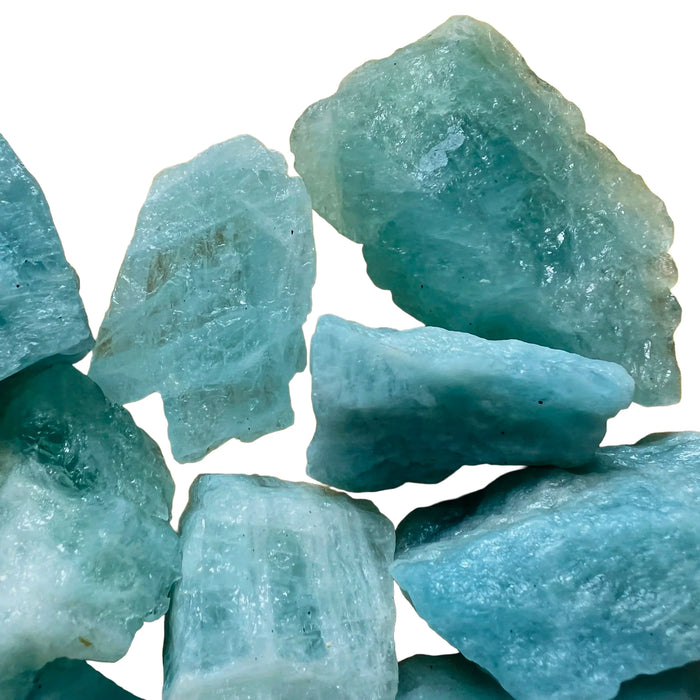
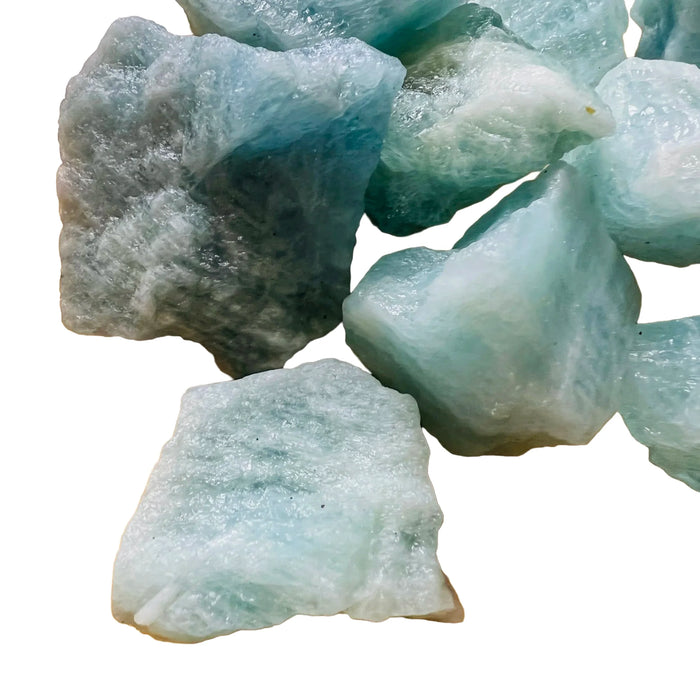
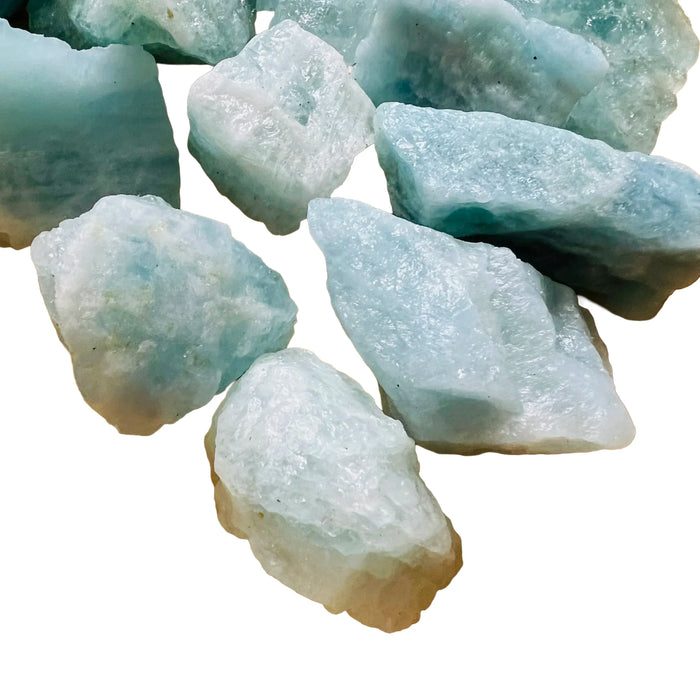
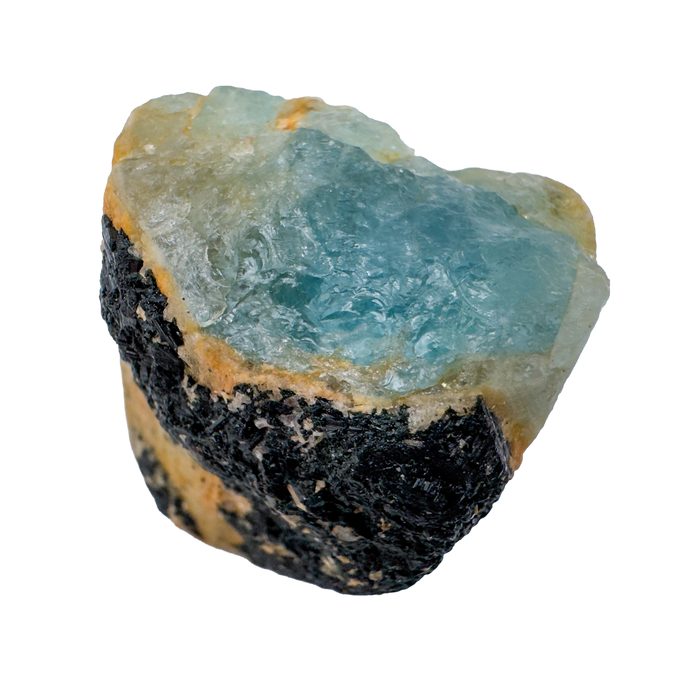
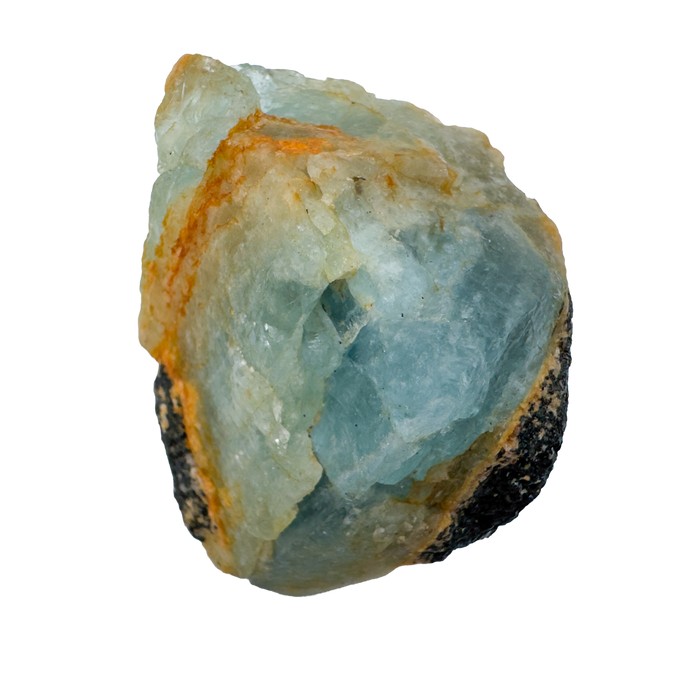
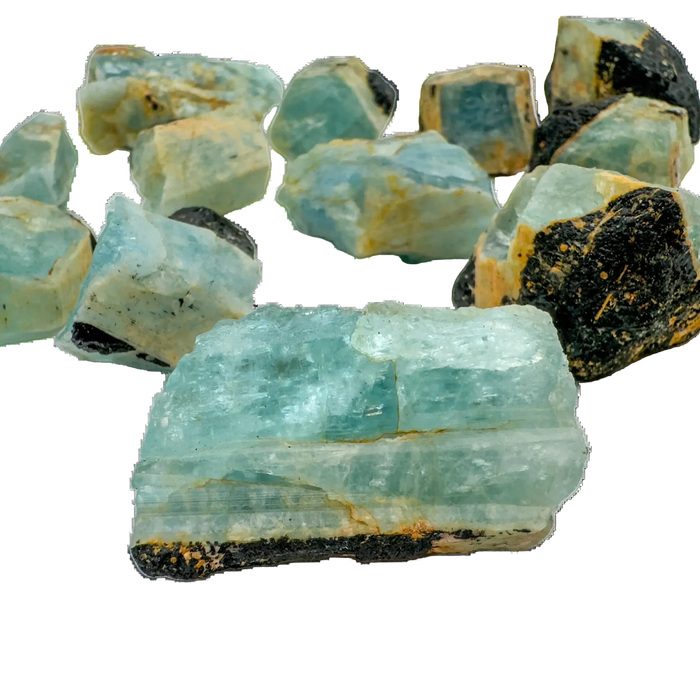
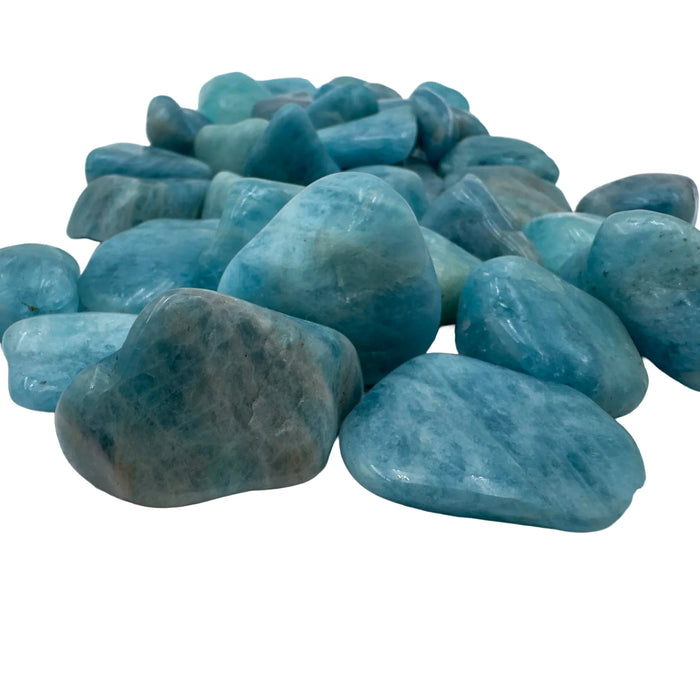
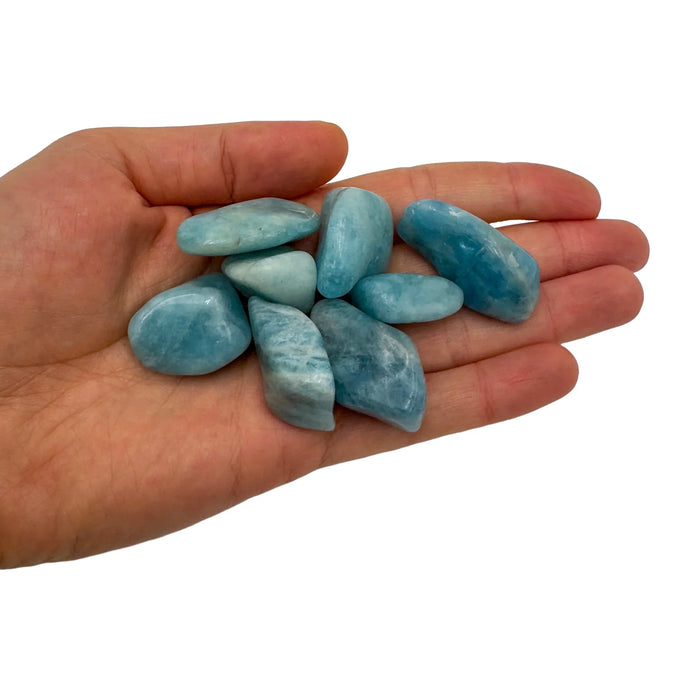
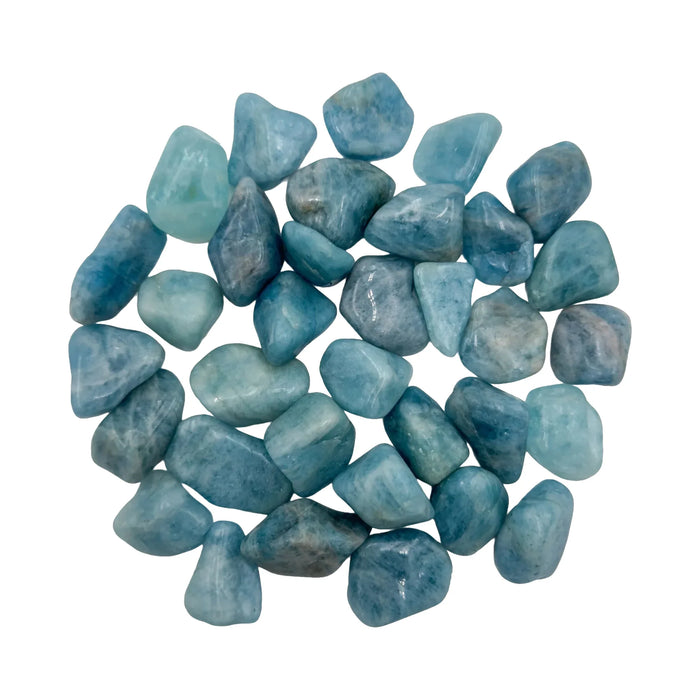
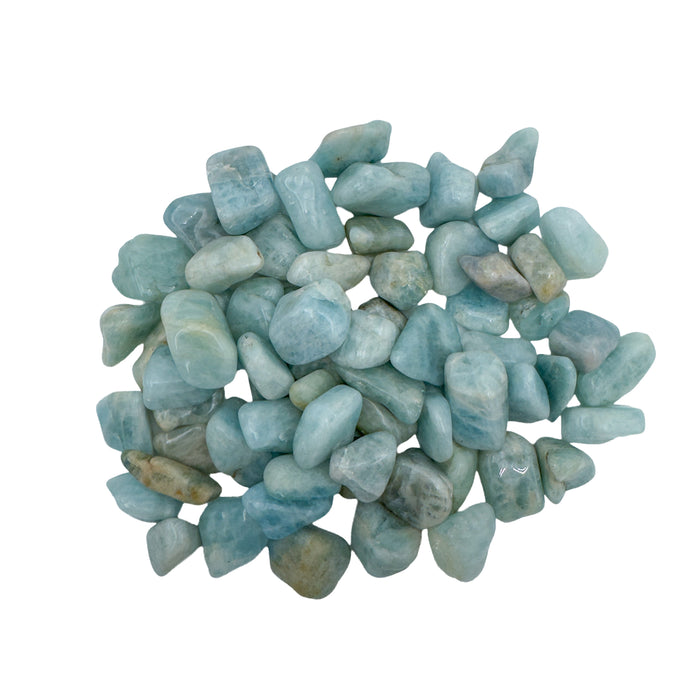
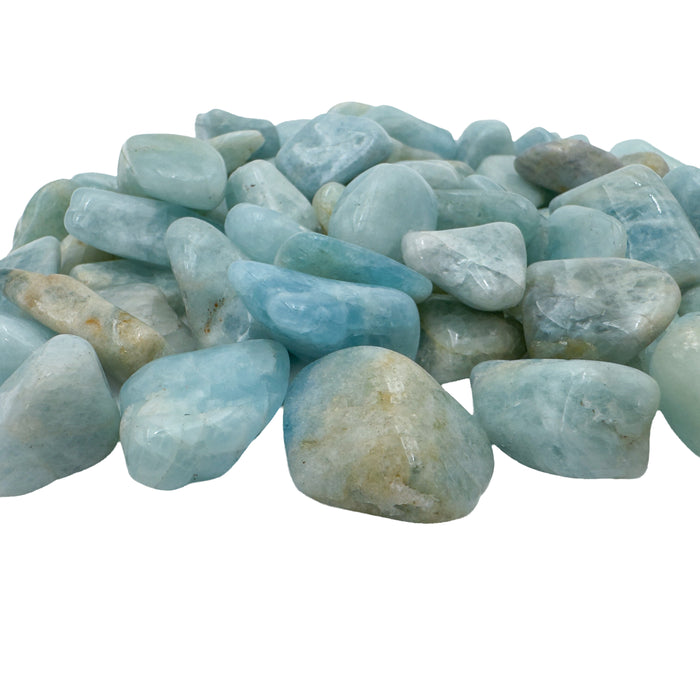
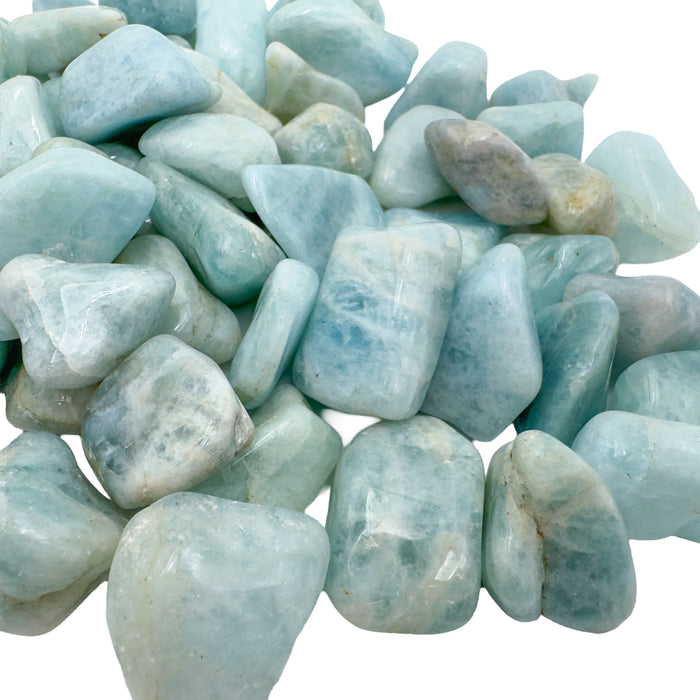
Blue Topaz is not something we carry. Aquamarine is the closest match in color, and every piece passes our sourcing standards: origin named, treatments disclosed.
- from 1,000+ reviews
- Ships within 72 hoursMonday to Friday, tracked
- 90 days to return itif you do not love it
- Free US shipping over $99$8.99 flat rate under
The Slow Note
New stones go to the list first.
No forwarding, no selling. Unsubscribe in one click. Privacy