









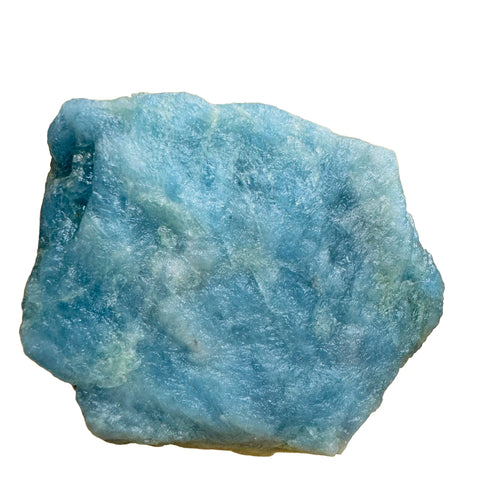











































 Raw Stones
180 pieces
Raw Stones
180 pieces
 Tumbled Stones
162 pieces
Tumbled Stones
162 pieces
 Palm Stones
26 pieces
Palm Stones
26 pieces
 Crystal Points
23 pieces
Crystal Points
23 pieces
 Clusters & Geodes
112 pieces
Clusters & Geodes
112 pieces
 Polished & Decor
155 pieces
Polished & Decor
155 pieces
 Mineral Specimens
269 collector pieces
Mineral Specimens
269 collector pieces
 Crystal Chips
21 pieces
Browse everything
Every collection, one page.
View All Collections →
Crystal Chips
21 pieces
Browse everything
Every collection, one page.
View All Collections →


 Aries
Mar 21 – Apr 19
Carnelian
›
Aries
Mar 21 – Apr 19
Carnelian
›
 Taurus
Apr 20 – May 20
Rose Quartz
›
Taurus
Apr 20 – May 20
Rose Quartz
›
 Gemini
May 21 – Jun 20
Agate
›
Gemini
May 21 – Jun 20
Agate
›
 Cancer
Jun 21 – Jul 22
Moonstone
›
Cancer
Jun 21 – Jul 22
Moonstone
›
 Leo
Jul 23 – Aug 22
Citrine
›
Leo
Jul 23 – Aug 22
Citrine
›
 Virgo
Aug 23 – Sep 22
Amazonite
›
Virgo
Aug 23 – Sep 22
Amazonite
›
 Libra
Sep 23 – Oct 22
Blue Lace Agate
›
Libra
Sep 23 – Oct 22
Blue Lace Agate
›
 Scorpio
Oct 23 – Nov 21
Obsidian
›
Scorpio
Oct 23 – Nov 21
Obsidian
›
 Sagittarius
Nov 22 – Dec 21
Sodalite
›
Sagittarius
Nov 22 – Dec 21
Sodalite
›
 Capricorn
Dec 22 – Jan 19
Black Tourmaline
›
Capricorn
Dec 22 – Jan 19
Black Tourmaline
›
 Aquarius
Jan 20 – Feb 18
Amethyst
›
Aquarius
Jan 20 – Feb 18
Amethyst
›
 Pisces
Feb 19 – Mar 20
Aquamarine
›
Gifting?
A birthday stone is the safe bet.
Read the zodiac guide →
Pisces
Feb 19 – Mar 20
Aquamarine
›
Gifting?
A birthday stone is the safe bet.
Read the zodiac guide →











Hackmanite
Hackmanite is a rare variety of sodalite with an unusual trick. It changes color when it meets light, a natural, reversible effect called tenebrescence. A pale stone can deepen to violet or pink in sunlight, then fade again in the dark. The color shift is real, natural, and one of the most striking phenomena in the mineral world.
The geology.
Hackmanite is a sulfur-bearing member of the sodalite group, a feldspathoid with the general formula Na8(Al6Si6O24)(Cl,S)2. Sulfur species trapped inside the mineral's cage-like structure are responsible for both its color and its famous light response. It crystallizes in the cubic system and usually appears as massive material rather than sharp crystals, with a hardness around 5.5 to 6.
The defining feature is tenebrescence. When ultraviolet light or sunlight strikes the stone, electrons shift within those sulfur-bearing sites and the color deepens, often from near-white or pale gray to violet, pink, or raspberry. Kept in the dark, the stone slowly reverts. Hackmanite is also strongly fluorescent, glowing orange under ultraviolet light. The effect is physical and repeatable, not a coating.
The origins.
The finest hackmanite comes from Afghanistan, particularly the Badakhshan region and the Koksha Valley, along with neighboring Myanmar. These stones often start creamy white and flush to violet or pink-red in sunlight. Historic and scientifically important material comes from the Ilimaussaq complex in southern Greenland and from Mont Saint-Hilaire and Bancroft in Quebec, Canada.
Different sources behave differently, which is part of the fascination. Some Canadian and Greenland hackmanite is vivid violet when freshly exposed and fades toward gray or greenish white in light, while Afghan and Burmese material tends to darken in sunlight. Knowing the source helps set expectations for how a given piece will shift.
Traditional associations.
Hackmanite is a relative newcomer to crystal culture, and its meanings lean naturally on its light-changing nature. Many people are drawn to it as a stone of transformation and intuition, seeing its shift between hidden and revealed color as a mirror for insight and change.
As a sodalite relative, it is most often linked to the Third Eye chakra and to themes of clarity and inner vision. A common practice is to keep a piece where sunlight can wake its color, then watch it settle again. These associations are traditional and symbolic rather than proven effects.
Spotting the real thing.
The best authentication test is the phenomenon itself. Real hackmanite changes color, reversibly, with light. Take a pale piece from a dark drawer into sunlight or under a UV lamp and watch for a deepening to violet or pink over seconds to minutes, then a slow fade in the dark. Most hackmanite also fluoresces orange under ultraviolet light.
Ordinary sodalite is blue and does not tenebresce, so a stone sold as hackmanite that shows no light response may simply be sodalite. Be cautious of dyed material and of pieces photographed under dramatic lighting to exaggerate the change. Because the effect can fade with prolonged exposure, a genuine stone rested in darkness should recover its ability to shift again.
Care & handling.
Hackmanite is reasonably durable at 5.5 to 6 on the Mohs scale, suitable for pendants and earrings, though it is softer than quartz and benefits from care in rings. A quick rinse in warm water with a soft cloth is fine, and harsh chemicals and ultrasonic cleaners are best avoided.
One quirk sets hackmanite apart. Constant bright light can temporarily bleach or tire the color, so many collectors store it in the dark to keep the tenebrescence lively, bringing it into light to enjoy the show. Keep it away from harder stones, and reset it energetically with gentle methods like moonlight or sound.
Pairs well with.
A deeper look.
Extended geology, sourcing, authentication, history, and varieties, for when the quick guide isn't quite enough.
Extended geology
Hackmanite belongs to the sodalite group of feldspathoids, framework silicates built around a cage-like aluminosilicate structure with sodium and chloride, and, crucially, some sulfur.
Extended sourcing
Afghanistan and Myanmar produce most of the gem and specimen hackmanite in the market, generally the type that darkens in sunlight.
Authentication and warning signs
The phenomenon is the proof. A true hackmanite performs the reversible color change and typically fluoresces orange under ultraviolet light.
History and folklore
Hackmanite was first described around the turn of the twentieth century and named for the Finnish geologist Victor Axel Hackman.
Varieties and trade names
Afghan and Burmese hackmanite: usually pale to creamy stones that flush violet or pink-red in sunlight.
Canadian and Greenland hackmanite: often vivid when freshly exposed, fading in light, prized by collectors and researchers.
Massive versus crystallized: most gem material is massive, while sharp crystals are rare and specimen-grade.
What it costs in the market
Hackmanite is priced as an uncommon collector stone.
An education-first guide.
We don't currently carry hackmanite, so there's nothing to sell you here. This guide exists because the more you understand a stone, the better every decision you make about it becomes, wherever you buy it. Explore the rest of our crystal guides for stones we do source, each with full origin and treatment notes.
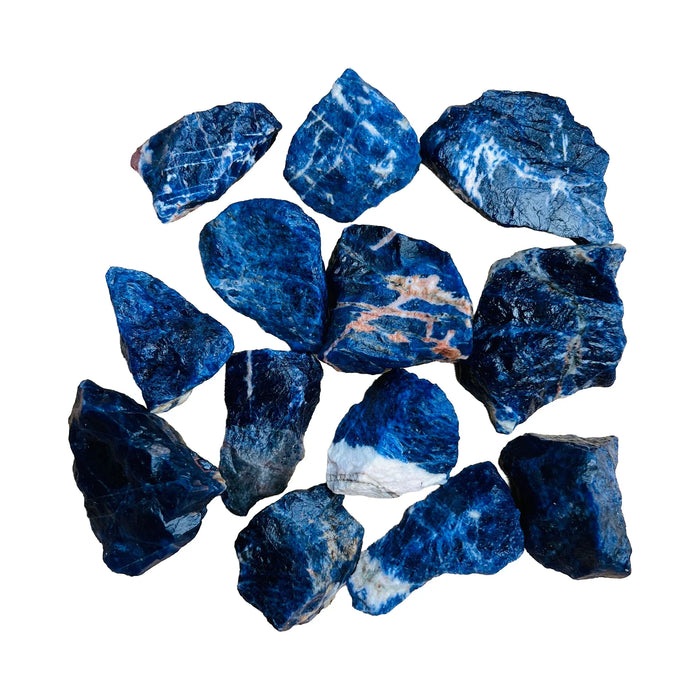
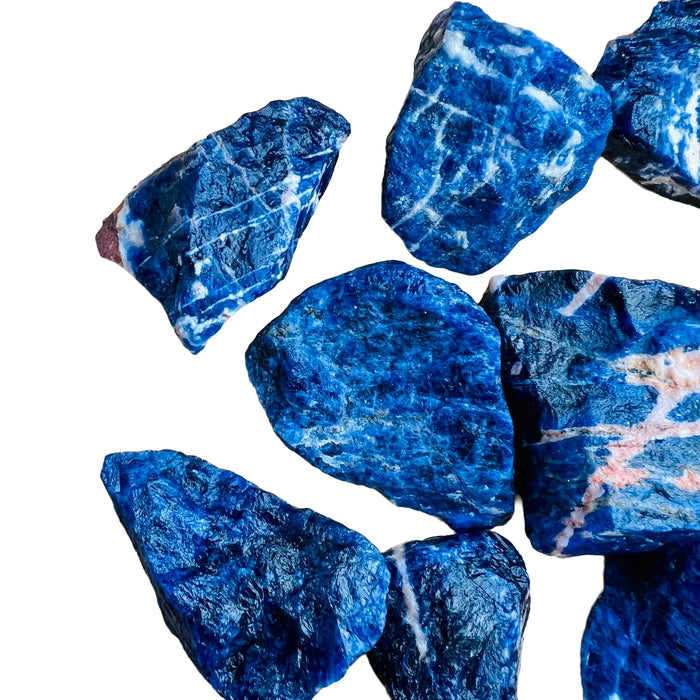
Explore the Crystal GuideThe closest match we carry: Sodalite.
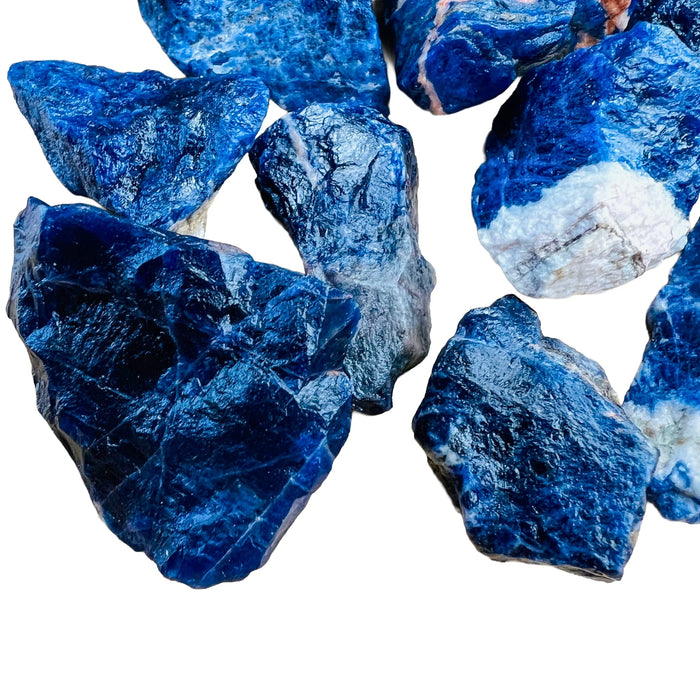
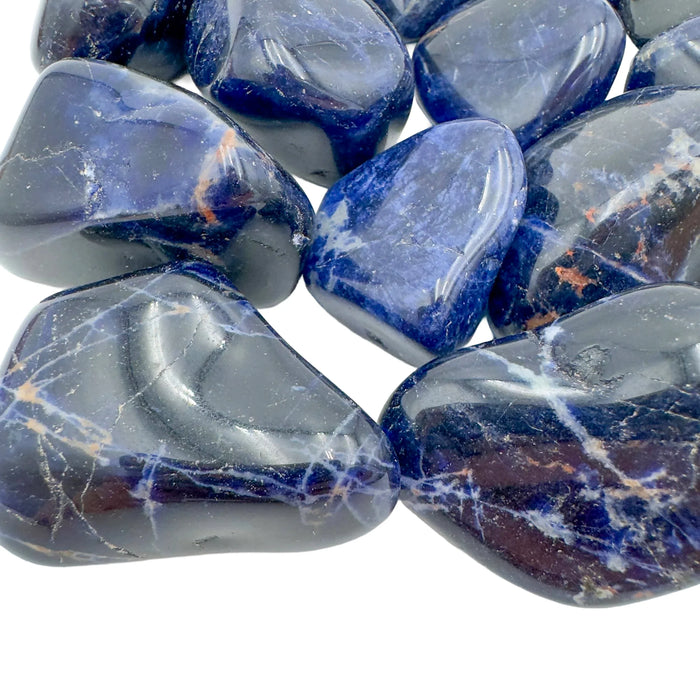
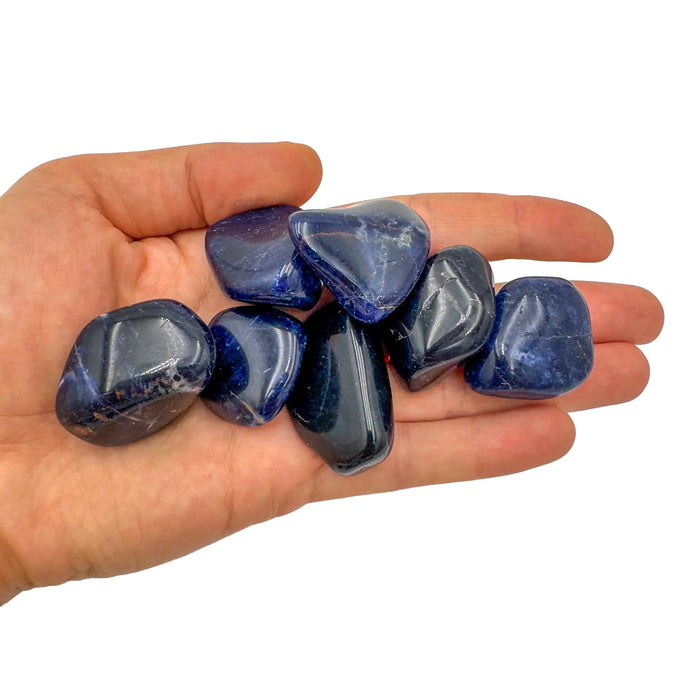
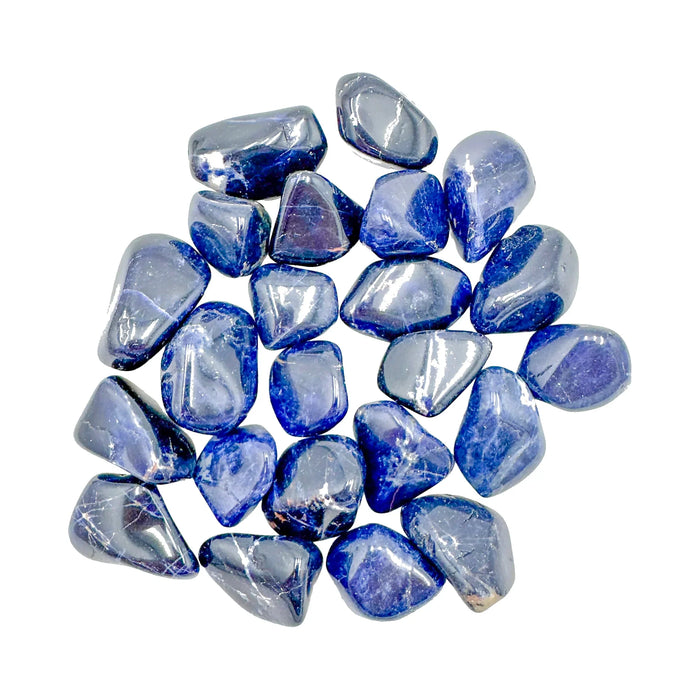
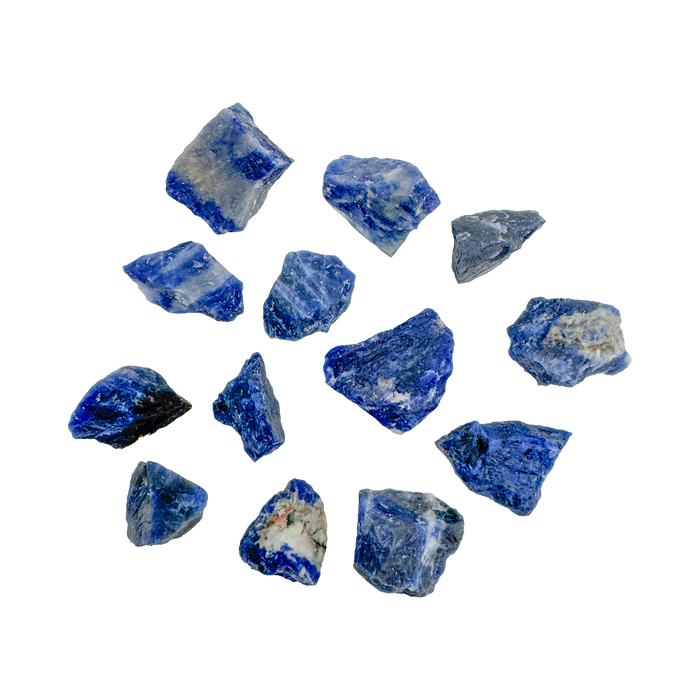
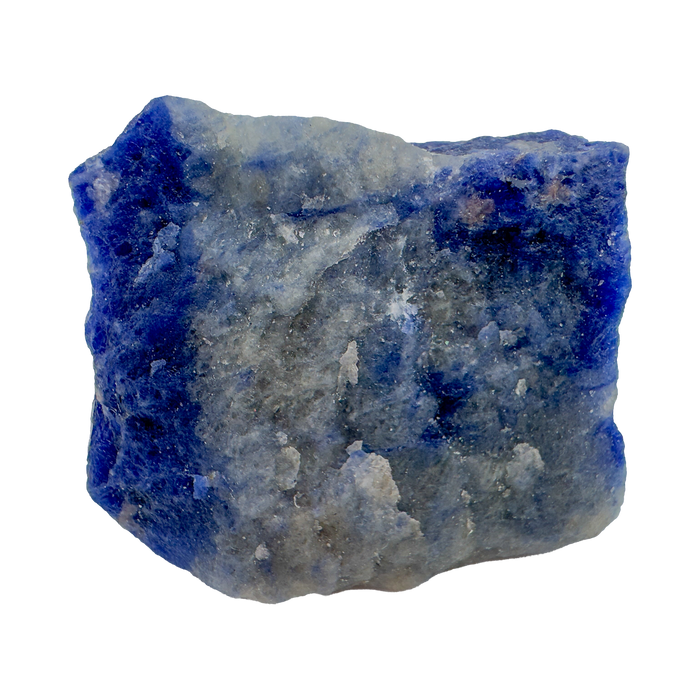
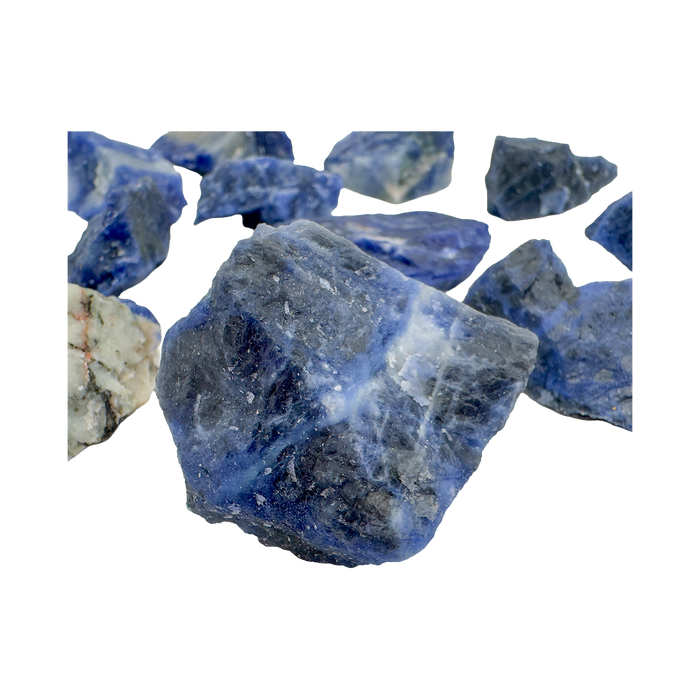
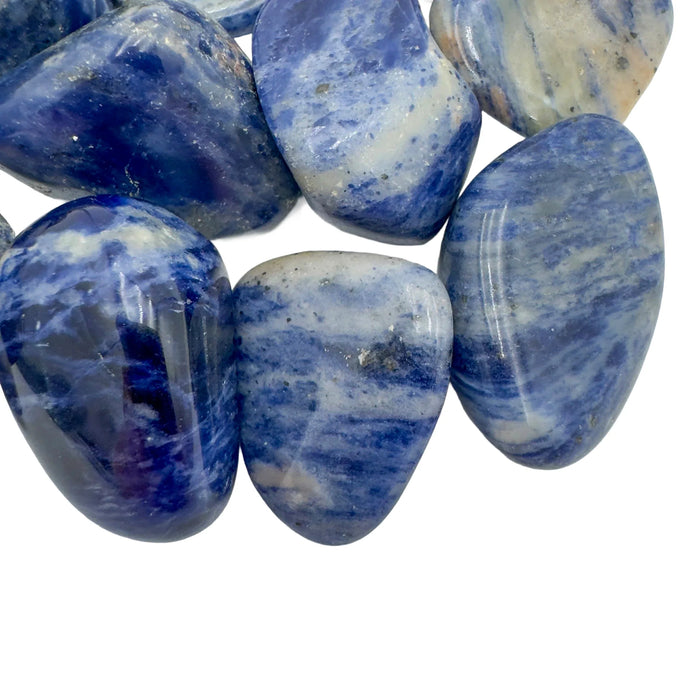
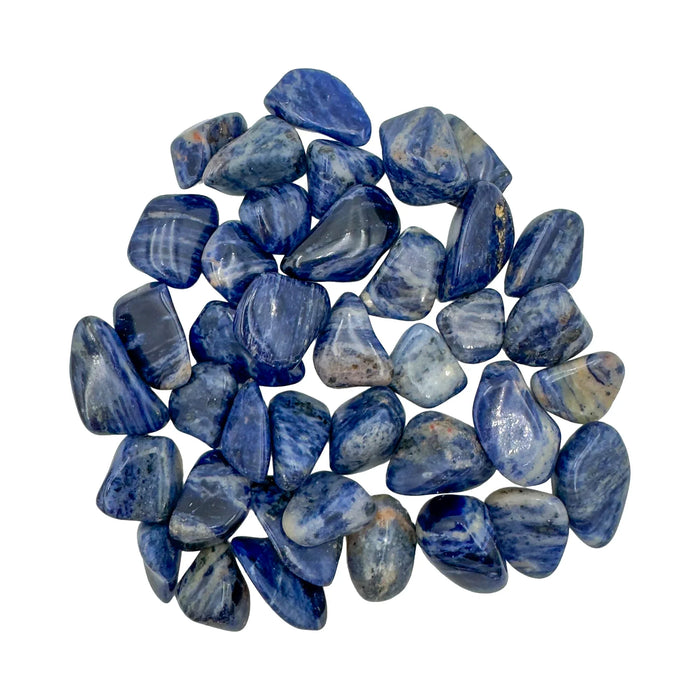
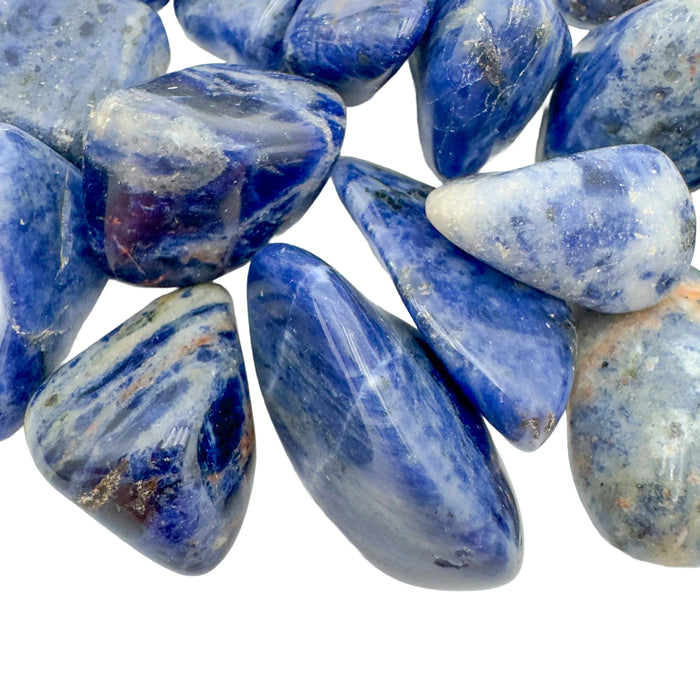
Hackmanite is not something we carry. Sodalite is the closest match in our collection, and every piece passes our sourcing standards: origin named, treatments disclosed.
- 4.9 out of 5from 1,000+ reviews
- Ships within 72 hoursMonday to Friday, tracked
- 90 days to return itif you do not love it
- Free US shipping over $99$8.99 flat rate under