




















































 Raw Stones
180 pieces
Raw Stones
180 pieces
 Tumbled Stones
162 pieces
Tumbled Stones
162 pieces
 Palm Stones
26 pieces
Palm Stones
26 pieces
 Crystal Points
23 pieces
Crystal Points
23 pieces
 Clusters & Geodes
112 pieces
Clusters & Geodes
112 pieces
 Polished & Decor
155 pieces
Polished & Decor
155 pieces
 Mineral Specimens
269 collector pieces
Mineral Specimens
269 collector pieces
 Crystal Chips
21 pieces
Browse everything
Every collection, one page.
View All Collections →
Crystal Chips
21 pieces
Browse everything
Every collection, one page.
View All Collections →


 Aries
Mar 21 – Apr 19
Carnelian
›
Aries
Mar 21 – Apr 19
Carnelian
›
 Taurus
Apr 20 – May 20
Rose Quartz
›
Taurus
Apr 20 – May 20
Rose Quartz
›
 Gemini
May 21 – Jun 20
Agate
›
Gemini
May 21 – Jun 20
Agate
›
 Cancer
Jun 21 – Jul 22
Moonstone
›
Cancer
Jun 21 – Jul 22
Moonstone
›
 Leo
Jul 23 – Aug 22
Citrine
›
Leo
Jul 23 – Aug 22
Citrine
›
 Virgo
Aug 23 – Sep 22
Amazonite
›
Virgo
Aug 23 – Sep 22
Amazonite
›
 Libra
Sep 23 – Oct 22
Blue Lace Agate
›
Libra
Sep 23 – Oct 22
Blue Lace Agate
›
 Scorpio
Oct 23 – Nov 21
Obsidian
›
Scorpio
Oct 23 – Nov 21
Obsidian
›
 Sagittarius
Nov 22 – Dec 21
Sodalite
›
Sagittarius
Nov 22 – Dec 21
Sodalite
›
 Capricorn
Dec 22 – Jan 19
Black Tourmaline
›
Capricorn
Dec 22 – Jan 19
Black Tourmaline
›
 Aquarius
Jan 20 – Feb 18
Amethyst
›
Aquarius
Jan 20 – Feb 18
Amethyst
›
 Pisces
Feb 19 – Mar 20
Aquamarine
›
Gifting?
A birthday stone is the safe bet.
Read the zodiac guide →
Pisces
Feb 19 – Mar 20
Aquamarine
›
Gifting?
A birthday stone is the safe bet.
Read the zodiac guide →











Vivianite
Vivianite is an iron phosphate with a strange habit: fresh crystals are nearly colorless, then deepen through blue-green to indigo and near-black as light oxidizes the iron inside them. It is very soft and fragile, and it famously grows in bogs, sediments, and even on old bones and fossils. Collectors treasure sharp blue blades.
The geology.
Vivianite is a hydrated iron phosphate, Fe3(PO4)2 with eight waters, a monoclinic mineral that forms flattened, bladed, or prismatic crystals and fibrous or earthy masses. When first exposed it is colorless to pale, but it quickly begins to change color. Hardness is only 1.5 to 2, and the crystals are flexible and sectile, so they bend and cut rather than shatter.
Its signature is a light-driven color change. As light reaches the crystal, iron in the structure oxidizes from its ferrous to its ferric state, and the mineral turns progressively deeper, from pale blue-green through rich blue to indigo and eventually near-black. This is a natural process, not a treatment, and it is one of the mineral's most distinctive traits.
The origins.
Bolivia is famous for superb crystallized vivianite, including large lustrous blue-green crystals from tin and other deposits. Ukraine's Kerch Peninsula produces vivianite in fossil shells and sedimentary iron ores, and England, where the mineral was first recognized, has classic Cornish occurrences.
Vivianite also turns up in Germany, Brazil, Japan, the United States, and Cameroon, and in many bogs, lake sediments, and archaeological sites, where it forms on buried organic matter, bones, and ivory. The most collectible specimens are sharp, deeply colored crystals that have been protected from excessive light.
Traditional associations.
Many people associate vivianite with insight, renewal, and emotional depth, drawing on its shifting blues and its quiet growth in hidden places. In modern practice it is sometimes described as a stone for compassion, reflection, and gentle transformation, linked with the Heart and the deeper blues of intuition.
Because it is so soft and light-sensitive, vivianite is worked with strictly as a specimen kept protected rather than carried, worn, or placed in water. These associations are traditional and personal, not medical claims. It is most often linked with the Heart chakra and the element of Water.
Spotting the real thing.
Genuine vivianite is very soft and often shows the telltale range of color within a single specimen, from paler blue-green to deep indigo, along with a flexible, sectile character and a pearly luster on cleavage surfaces. Blades and prisms are common, and fibrous or earthy blue masses appear in sediments and on organic remains.
Fakes are rare because the mineral is fragile and hard to work. The main confusions are with other blue minerals such as azurite or lazulite, which are harder, and the honest point to understand is that the color deepens over time in light. A darkening crystal is behaving normally, not being altered by a seller.
Care & handling.
Vivianite needs gentle, low-light care. Keep it in a dark drawer or closed box, since prolonged light exposure will steadily darken it toward black and can cause fragile crystals to break down. Handle it as little as possible, because at 1.5 to 2 on the Mohs scale it is extremely soft and easily crushed, scratched, or bent.
Keep it dry and away from heat, and store it apart from harder minerals that could damage the delicate crystals. Support specimens by their matrix and avoid direct contact where you can. Wash your hands after handling as a routine precaution, and keep it out of reach of children and pets.
Pairs well with.
A deeper look.
Extended geology, sourcing, authentication, history, and varieties, for when the quick guide isn't quite enough.
Extended geology
Vivianite crystallizes in the monoclinic system as flattened, elongated, bladed crystals, as well as radiating, fibrous, and earthy aggregates. Its perfect cleavage in one direction yields thin, flexible, sectile plates with a pearly to metallic sheen. The hydrated iron phosphate structure holds eight water molecules, and the mineral has a low specific gravity, around 2.6 to 2.7.
It is a secondary mineral that forms in reducing, phosphate-rich, iron-bearing environments: bogs, lake and river sediments, weathered iron and manganese deposits, pegmatites, and around buried organic material. This is why it is often found on fossil shells, mammoth ivory, bone, and in peat, and why it has earned nicknames tied to its growth on once-living matter. Freshly formed crystals are colorless until light and air begin the oxidation that colors them blue.
Extended sourcing
Bolivia has produced some of the finest crystallized vivianite, with large, lustrous, deep blue-green crystals from tin-mining districts. The Kerch Peninsula of Ukraine is a classic source of vivianite in fossil shells and oolitic iron ore, and Cornwall in England, near where the mineral was first identified, is part of its early history.
Additional notable material comes from Germany, Brazil, Japan, Cameroon, and the United States, along with countless bogs, sediments, and archaeological contexts worldwide. Because vivianite darkens and can deteriorate in light, the best display specimens are those collected and then carefully stored away from bright, prolonged illumination.
Authentication and warning signs
Recognize vivianite by its blue to blue-green color, very low hardness, flexible sectile cleavage plates, pearly luster, and the way a single specimen can grade from pale to deep in color. Its occurrence on fossils, bones, and in sediments, and its low weight, help separate it from harder blue minerals.
Tell it apart from azurite, lazulite, and other blue minerals by its extreme softness and flexibility, which are unusual. Because it is not imitated, the practical honesty concerns behavior rather than authenticity: the mineral naturally darkens in light, so buyers should expect color change over time and store specimens accordingly.
History and folklore
Vivianite was named in 1817 after John Henry Vivian, an English mineralogist and politician associated with its early study, though the blue mineral had been noticed in bogs and sediments long before. It has practical and scientific interest well beyond collecting: geologists and archaeologists use its presence as a marker of phosphate-rich, oxygen-poor conditions, and it is frequently encountered on buried bone, ivory, and artifacts, where its blue crust records the chemistry of the burial environment.
Varieties and forms
Bladed and prismatic crystals: sharp blue to indigo crystals, the most prized collectible form, notably from Bolivia.
Fibrous and radiating aggregates: sprays of slender blue crystals.
Earthy vivianite: soft blue to green powdery masses in sediments and soils, sometimes called blue iron earth.
Fossil and bone associations: blue vivianite grown on shells, bone, and ivory, valued as natural curiosities.
What it costs in the market
Earthy and small specimens are inexpensive, while large, sharp, deeply colored crystals and fine crystal groups, especially classic Bolivian material, can reach hundreds of dollars or more. Crystal size, color depth, luster, condition, and locality drive value, and because the mineral is fragile and light-sensitive, well-preserved specimens carry a premium.
An education-first guide.
We don't currently carry vivianite, so there's nothing to sell you here. This guide exists because the more you understand a stone, the better every decision you make about it becomes, wherever you buy it. Explore the rest of our crystal guides for stones we do source, each with full origin and treatment notes.
Explore the Crystal GuideLove Vivianite? Meet Aquamarine.
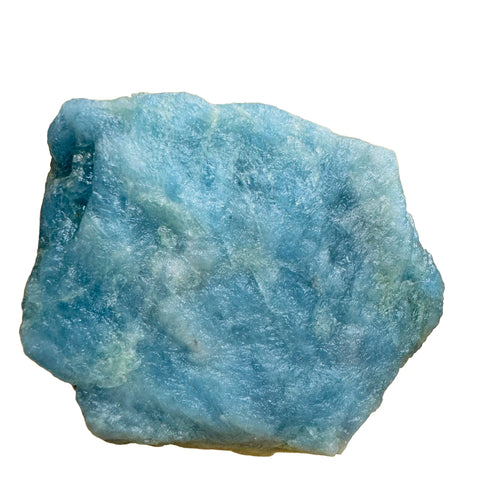
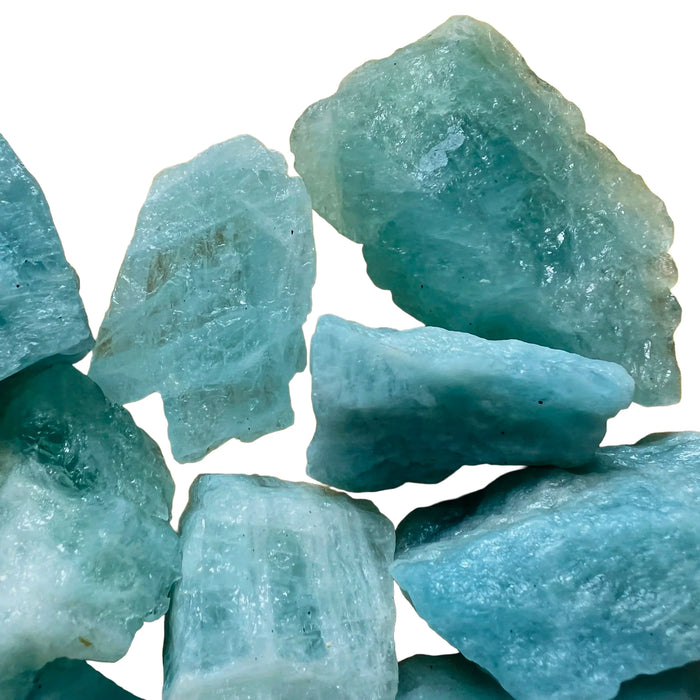
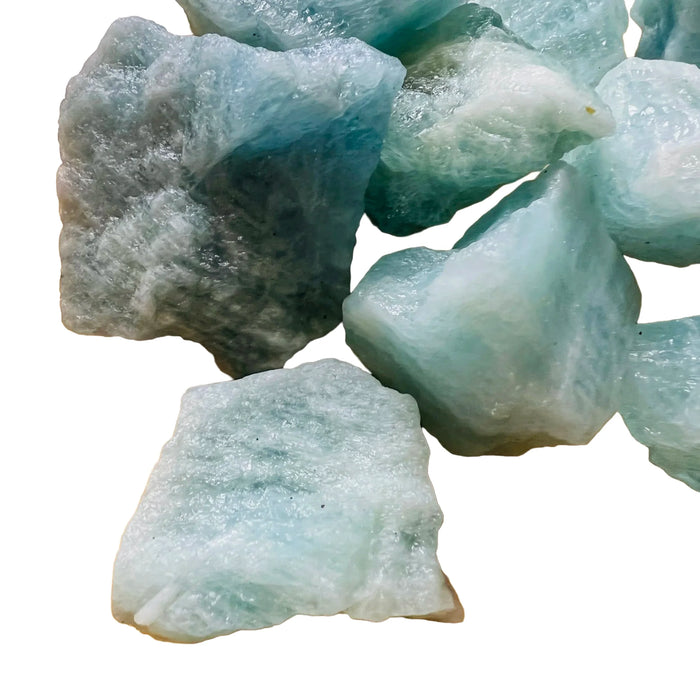
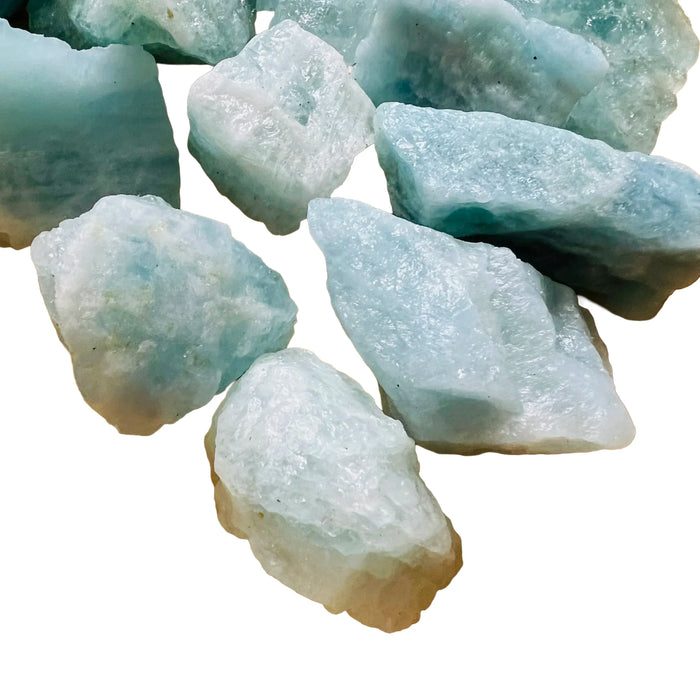
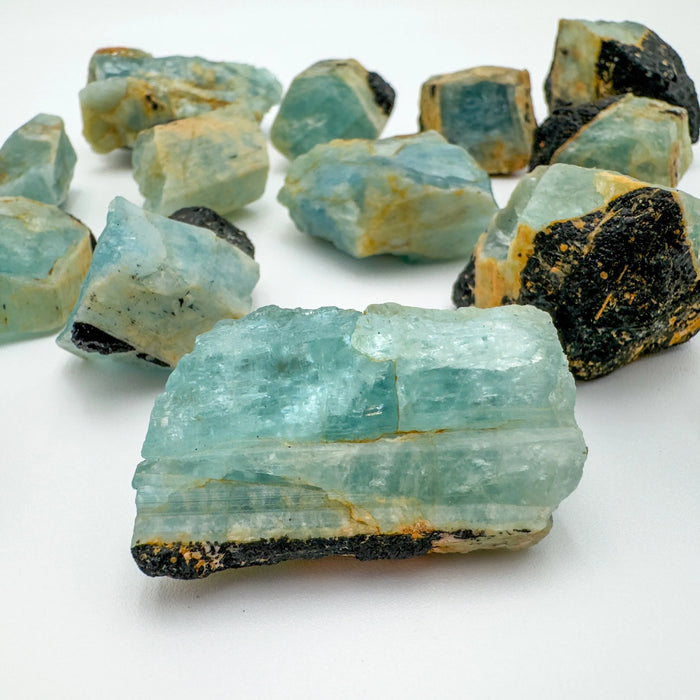
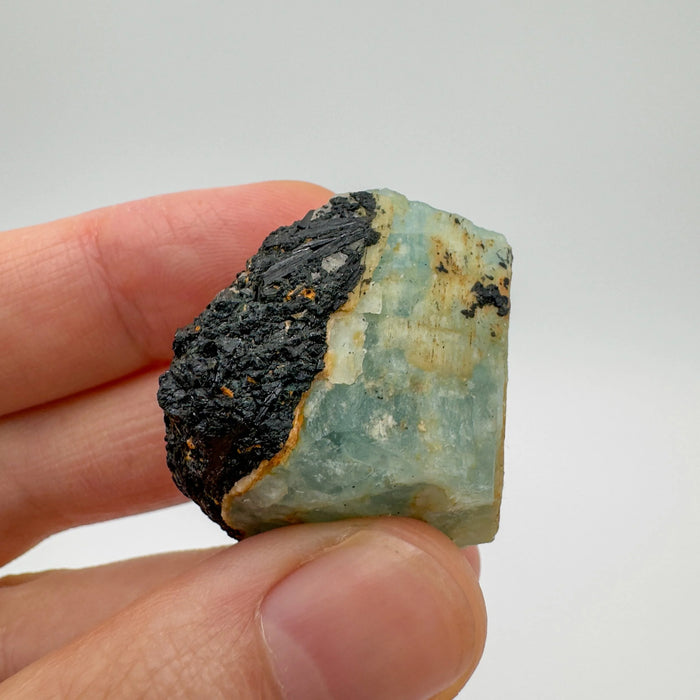
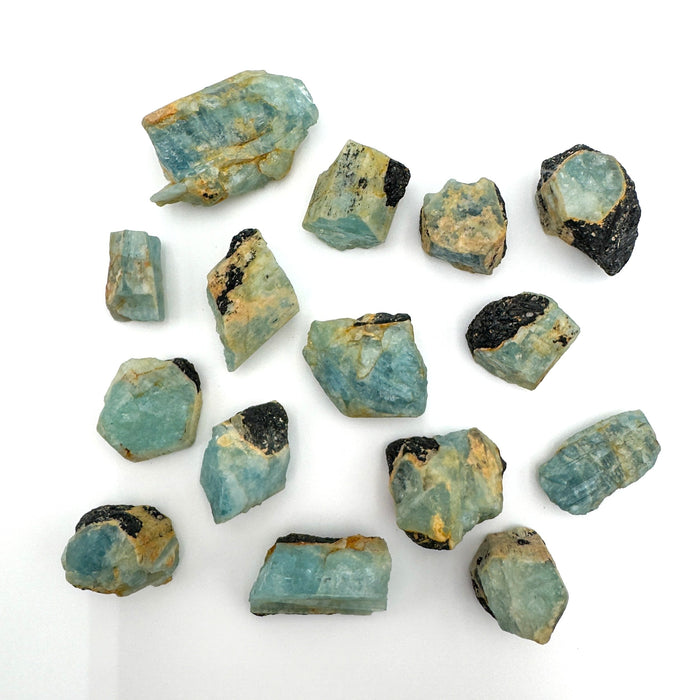
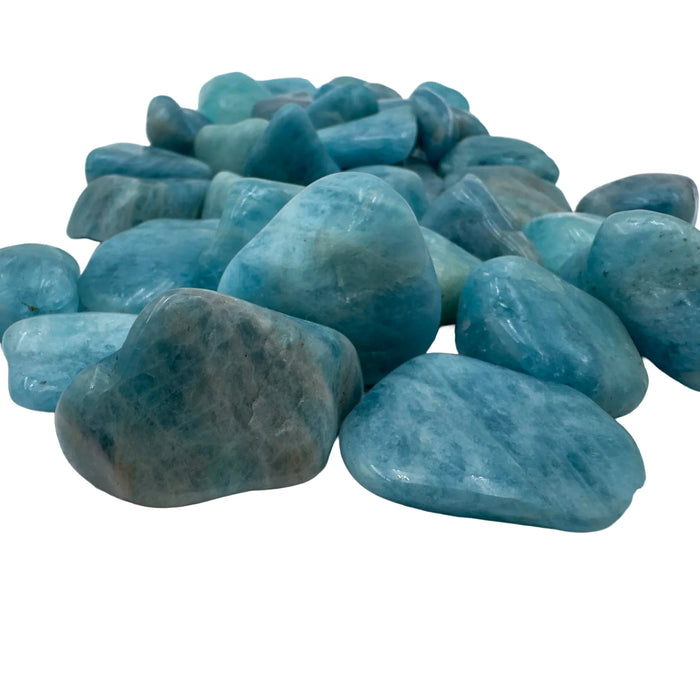
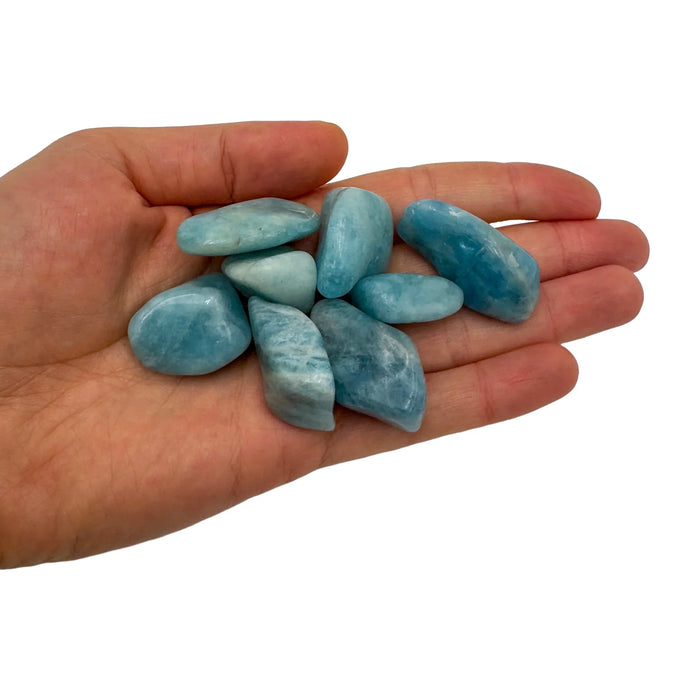
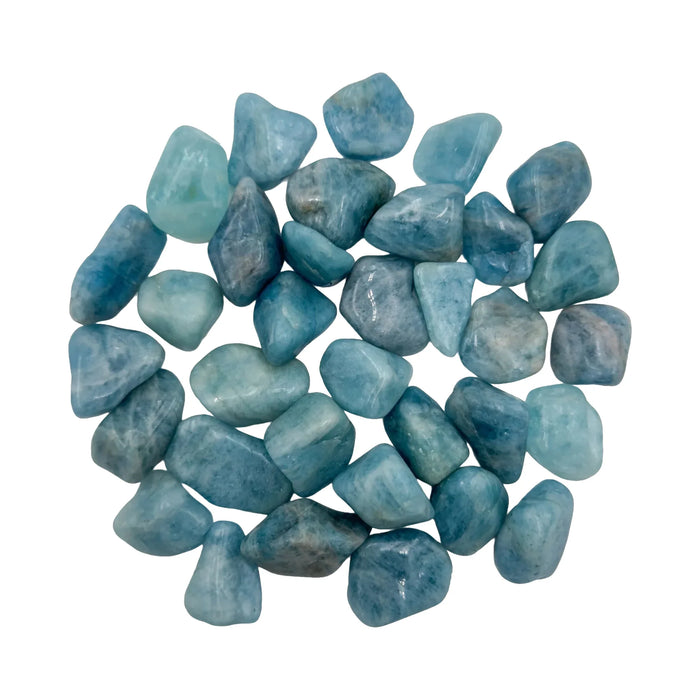
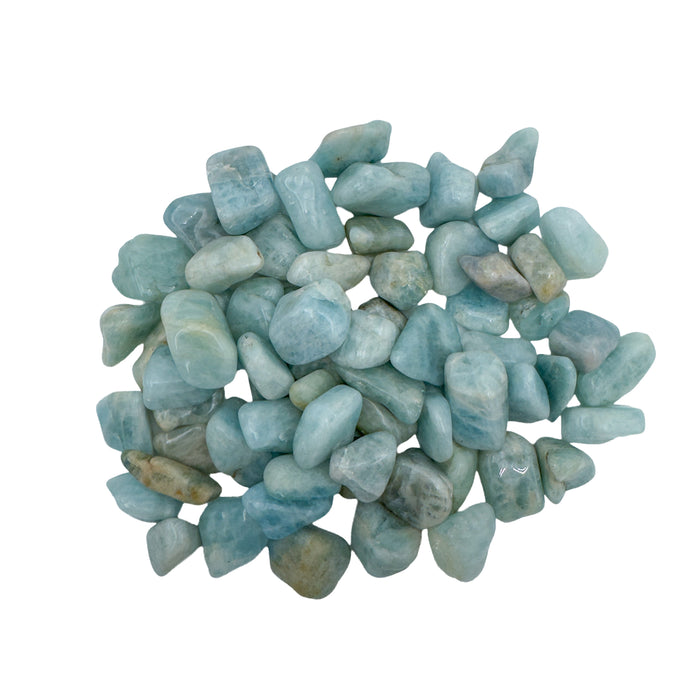
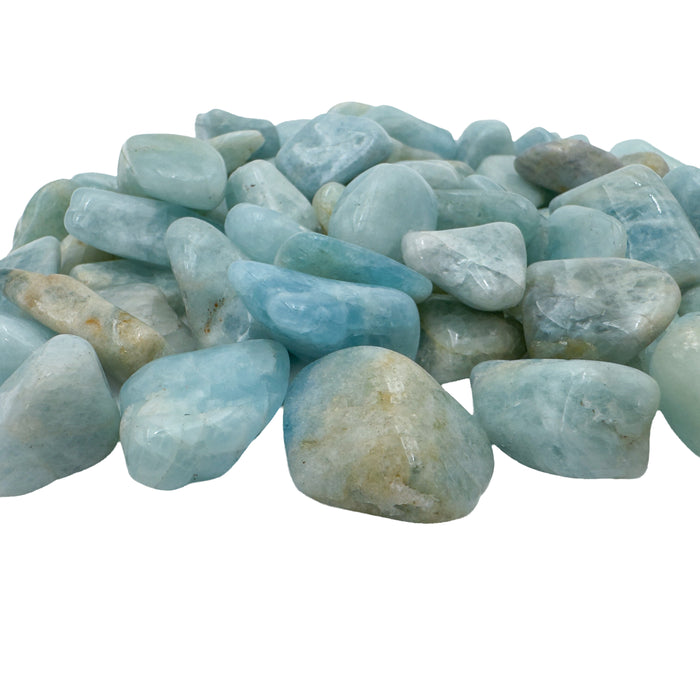
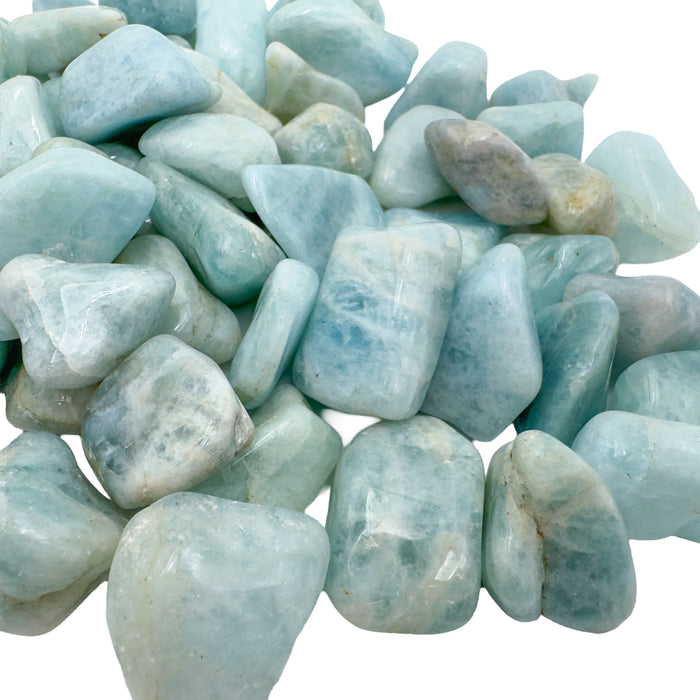
Vivianite is not something we carry. Aquamarine is the closest match in color, and every piece passes our sourcing standards: origin named, treatments disclosed.
- 4.9 out of 5from 1,000+ reviews
- Ships within 72 hoursMonday to Friday, tracked
- 90 days to return itif you do not love it
- Free US shipping over $99$8.99 flat rate under