


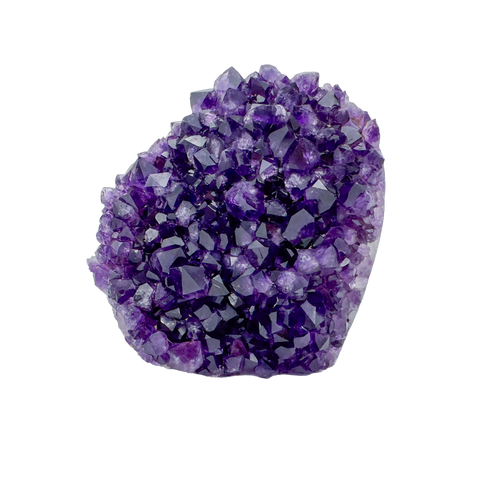
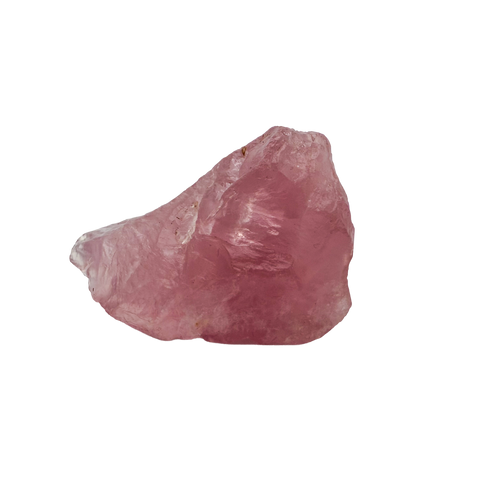
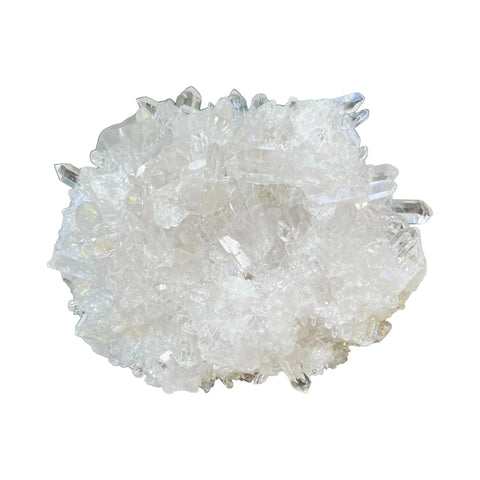
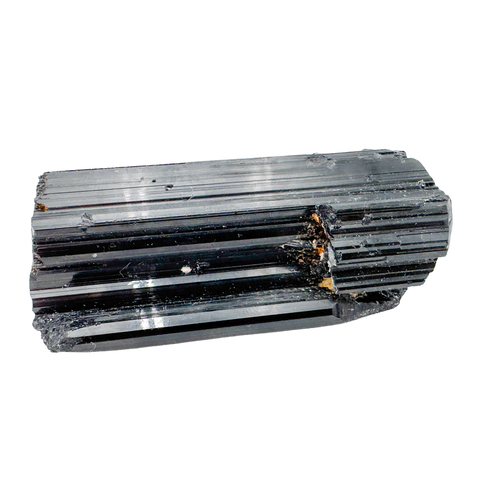
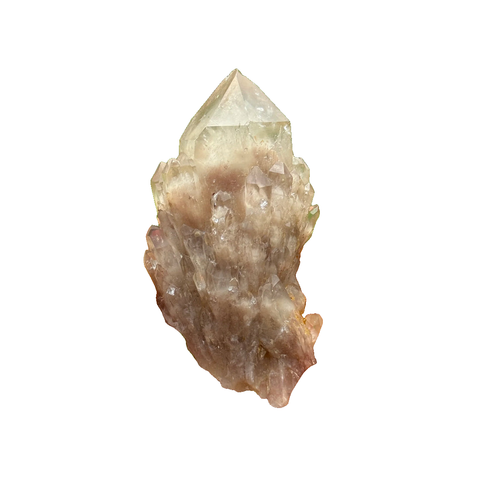
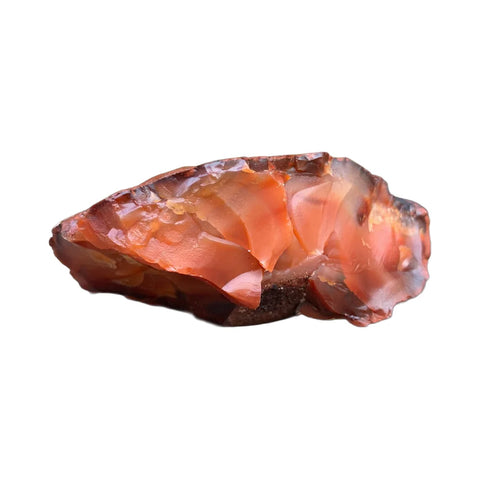
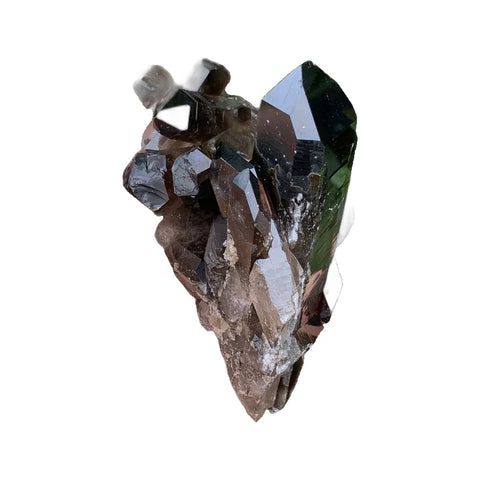
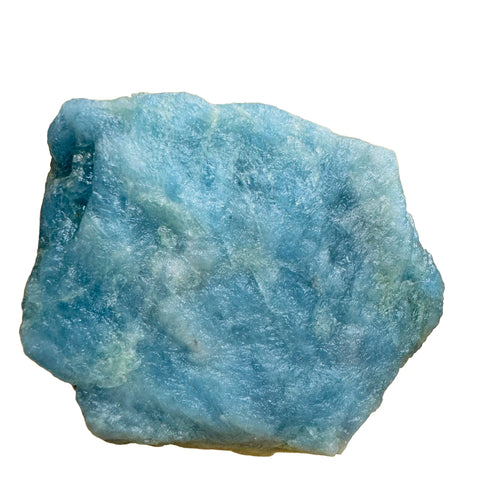
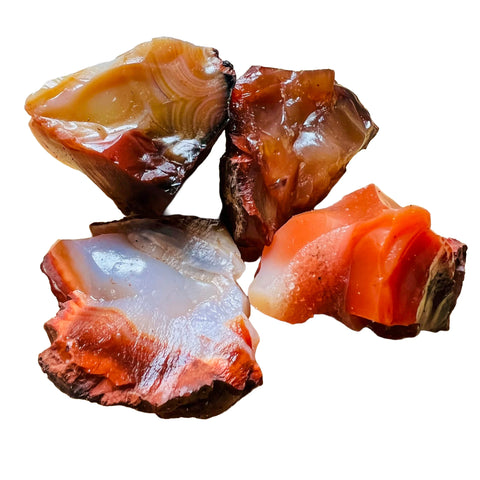


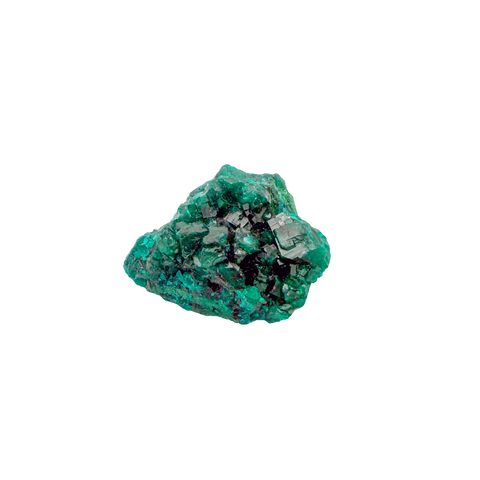
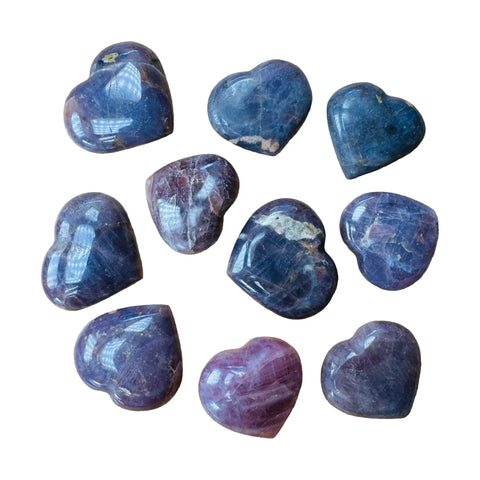
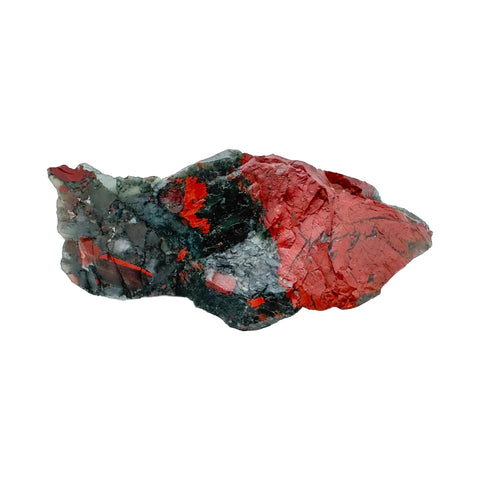
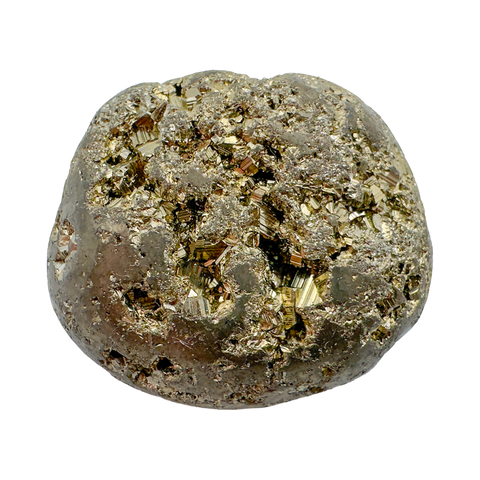
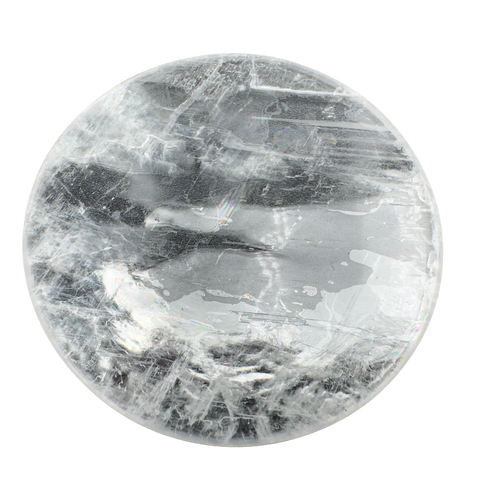
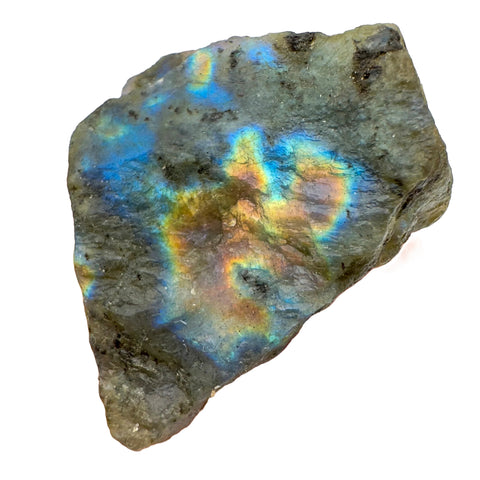
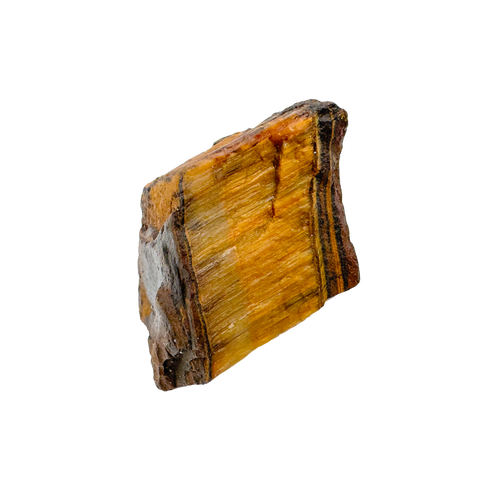
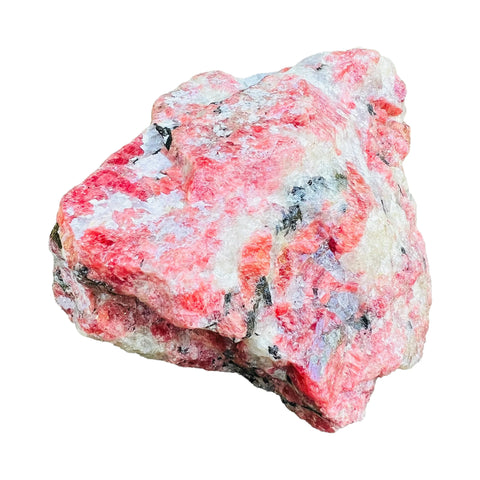
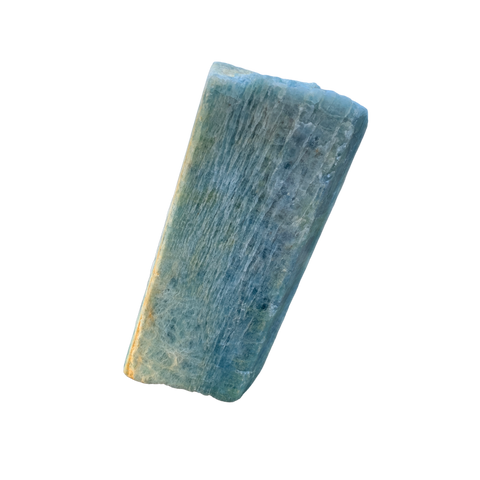
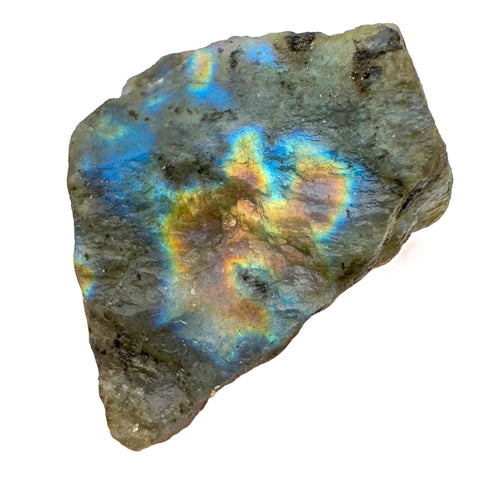
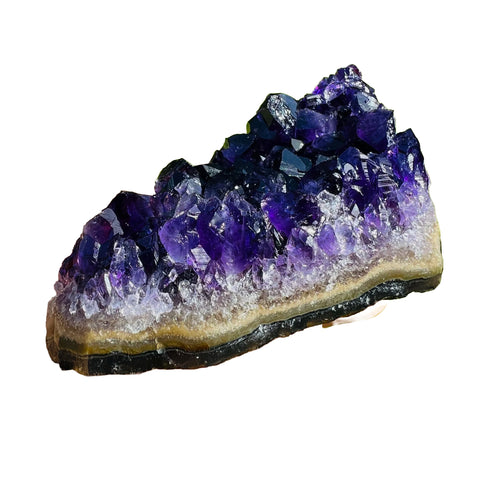




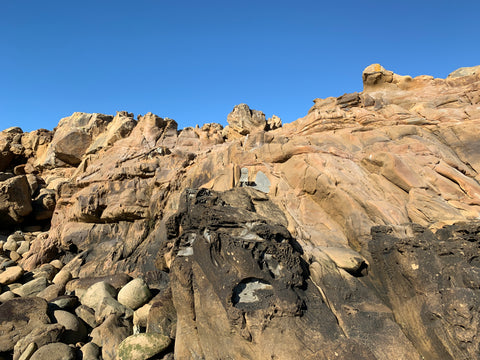
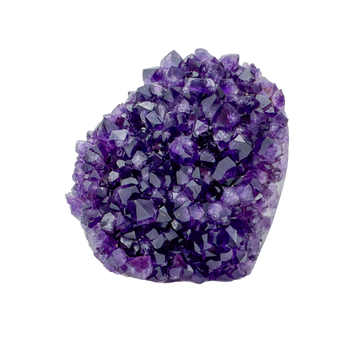
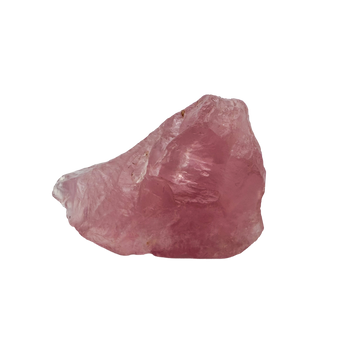
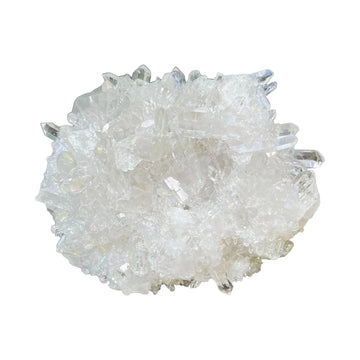
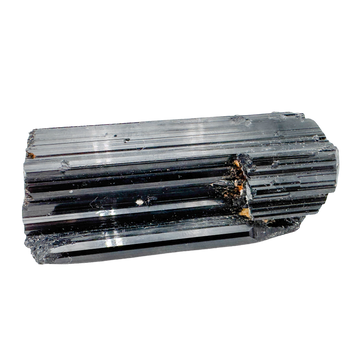
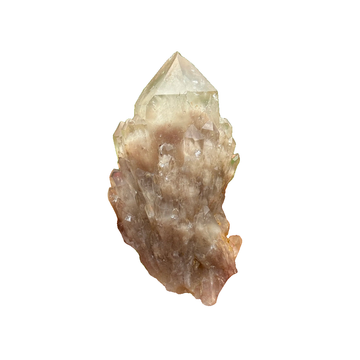
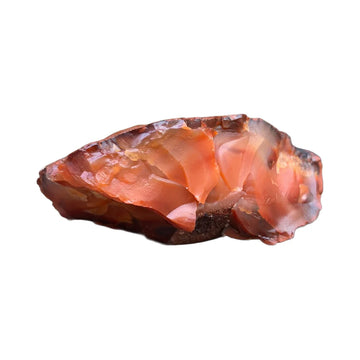
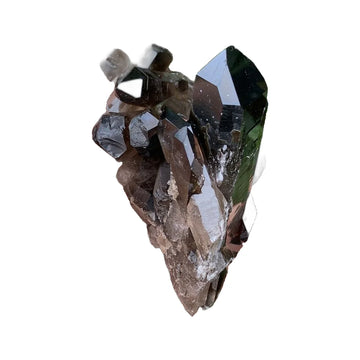
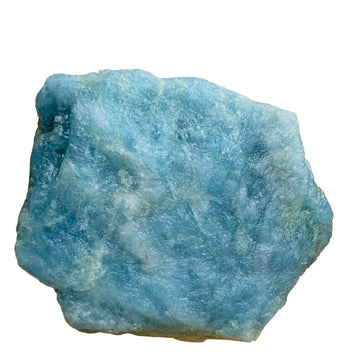
 Raw Stones
179 pieces
Raw Stones
179 pieces
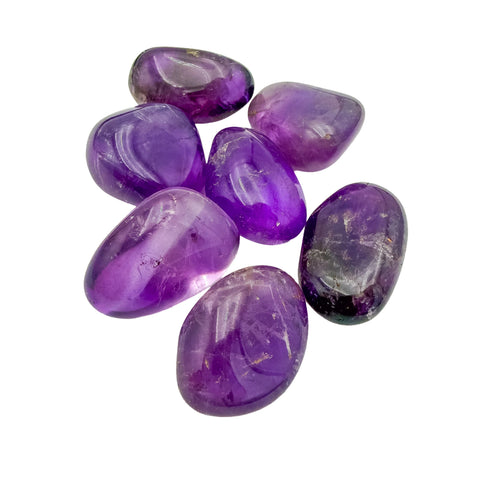
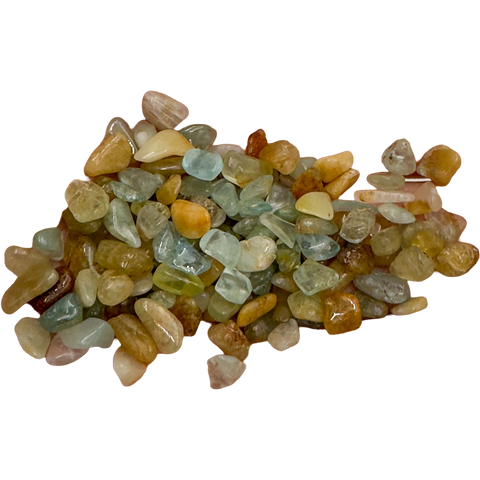
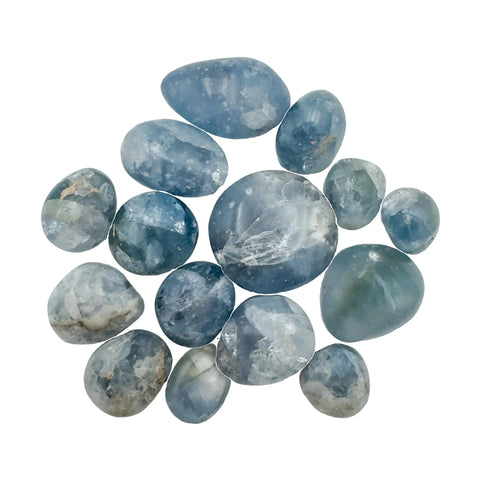
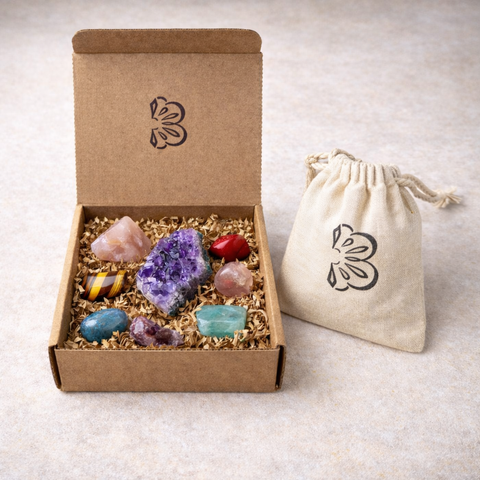
 Tumbled Stones
162 pieces
Tumbled Stones
162 pieces
 Palm Stones
25 pieces
Palm Stones
25 pieces
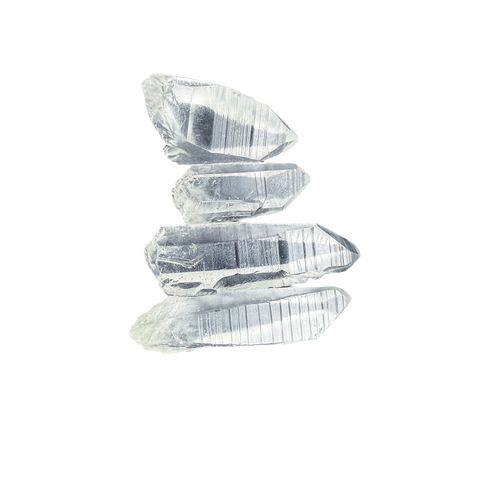
 Crystal Points
23 pieces
Crystal Points
23 pieces
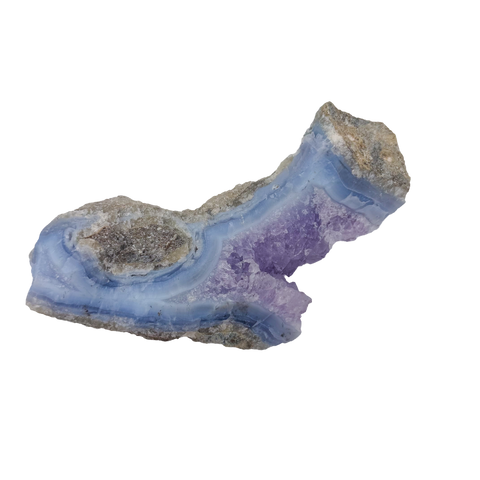
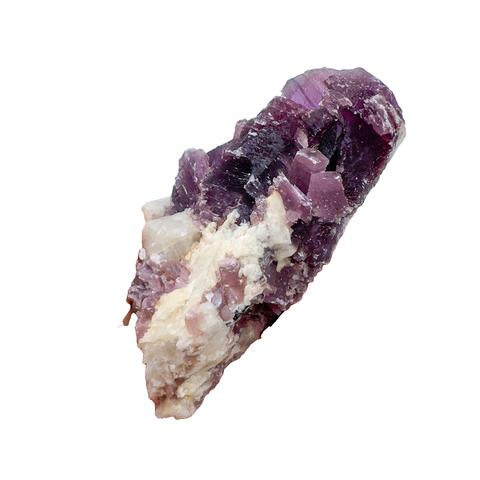
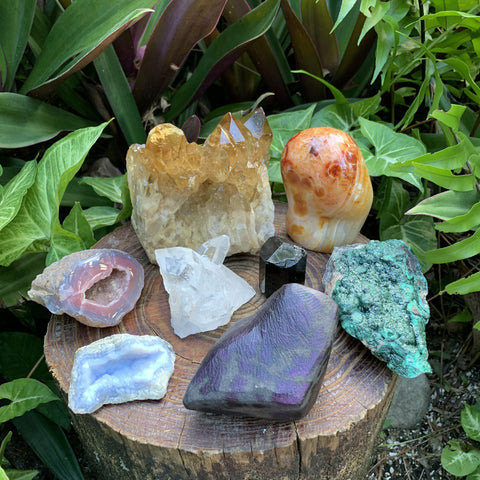
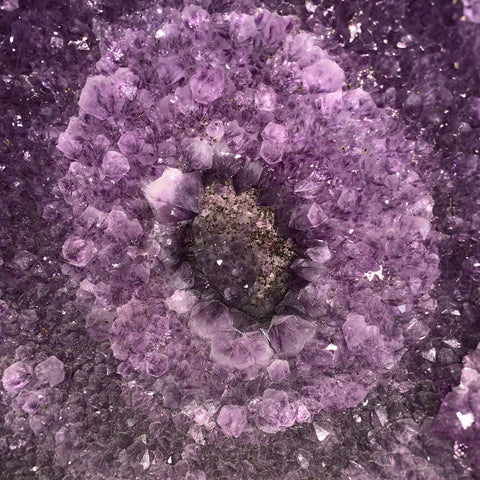
 Clusters & Geodes
104 pieces
Clusters & Geodes
104 pieces
 Polished & Decor
148 pieces
Polished & Decor
148 pieces
 Mineral Specimens
259 collector pieces
Mineral Specimens
259 collector pieces
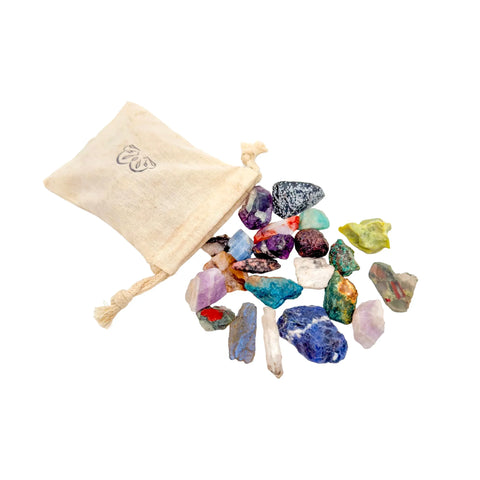
 Crystal Chips
21 pieces
Browse everything
Every collection, one page.
View All Collections →
Crystal Chips
21 pieces
Browse everything
Every collection, one page.
View All Collections →


 Aries
Mar 21 – Apr 19
Carnelian
›
Aries
Mar 21 – Apr 19
Carnelian
›
 Taurus
Apr 20 – May 20
Rose Quartz
›
Taurus
Apr 20 – May 20
Rose Quartz
›
 Gemini
May 21 – Jun 20
Agate
›
Gemini
May 21 – Jun 20
Agate
›
 Cancer
Jun 21 – Jul 22
Moonstone
›
Cancer
Jun 21 – Jul 22
Moonstone
›
 Leo
Jul 23 – Aug 22
Citrine
›
Leo
Jul 23 – Aug 22
Citrine
›
 Virgo
Aug 23 – Sep 22
Amazonite
›
Virgo
Aug 23 – Sep 22
Amazonite
›
 Libra
Sep 23 – Oct 22
Blue Lace Agate
›
Libra
Sep 23 – Oct 22
Blue Lace Agate
›
 Scorpio
Oct 23 – Nov 21
Obsidian
›
Scorpio
Oct 23 – Nov 21
Obsidian
›
 Sagittarius
Nov 22 – Dec 21
Sodalite
›
Sagittarius
Nov 22 – Dec 21
Sodalite
›
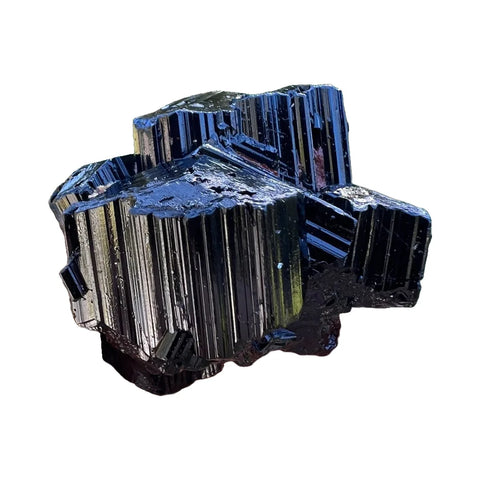
 Capricorn
Dec 22 – Jan 19
Black Tourmaline
›
Capricorn
Dec 22 – Jan 19
Black Tourmaline
›
 Aquarius
Jan 20 – Feb 18
Amethyst
›
Aquarius
Jan 20 – Feb 18
Amethyst
›
 Pisces
Feb 19 – Mar 20
Aquamarine
›
Gifting?
A birthday stone is the safe bet.
Read the zodiac guide →
Pisces
Feb 19 – Mar 20
Aquamarine
›
Gifting?
A birthday stone is the safe bet.
Read the zodiac guide →


Optical Calcite
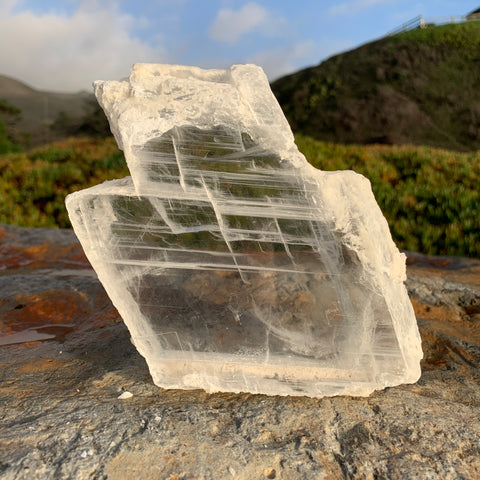
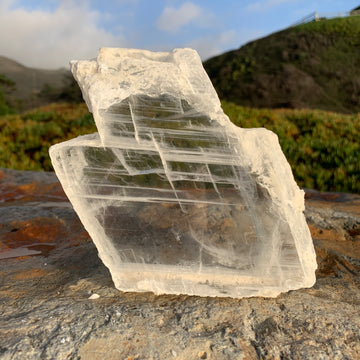
Optical calcite, better known as Iceland spar, is a water-clear form of calcite famous for one striking trick. Look through a clean piece and everything doubles. That double refraction made it one of the most important minerals in the history of optics, and it remains a favorite for its clarity and light.
The geology.
Optical calcite is simply calcite, calcium carbonate (CaCO3), in an exceptionally clear and colorless form. What sets it apart is an optical property called birefringence, or double refraction. Light entering the crystal splits into two rays that travel at different speeds, so an image seen through the stone appears as two offset copies.
Like all calcite it is soft, at 3 on the Mohs scale, with perfect rhombohedral cleavage that lets it break into clean, slanted blocks. Fine specimens are transparent and glassy. The doubling effect is sharpest when the piece is clear and the faces are smooth.
The origins.
For centuries the finest clear calcite came from near Reydarfjordur in eastern Iceland, which is how the stone earned the name Iceland spar (spar being an old word for a bright, easily cleaved mineral). That classic deposit is largely worked out and now protected.
Today most optical calcite on the market comes from Mexico, with additional material from Brazil, the United States, China, and Peru. Clear, well-formed cleavage blocks that show a crisp double image are the ones to look for.
Traditional associations.
Because it takes one image and shows it as two, optical calcite has become associated with clarity, perspective, and seeing a situation from more than one angle. Many people work with it for mental clarity and for cutting through confusion.
It is often linked with the Crown chakra and with amplifying intention. A common practice is to keep a clear piece on a desk or workspace as a reminder to look at a situation fully before deciding.
Spotting the real thing.
The signature test is the one the stone is named for. Place a clear piece over a single line or dot and it should appear doubled. That double refraction is diagnostic of calcite and cannot be faked with ordinary glass or resin, which show only a single image.
Real optical calcite is soft and will not scratch glass, and its cleavage blocks meet at slanted, non-square angles. Be cautious of perfectly clear cubes with right-angle corners and no doubling, which are likely glass. A genuine piece feels cool, glassy, and shows the split image clearly.
Care & handling.
Optical calcite is delicate. At 3 on the Mohs scale it scratches and chips easily, and a knock along a cleavage plane can split it cleanly, so handle it gently and store it padded and apart from other stones. Its clarity is part of the appeal, and scratches show.
Keep it away from water, which can dull the polish over time, and from anything acidic, which will etch a carbonate quickly. Clean it with a soft dry cloth only. For an energetic reset, many people use sound, moonlight, or selenite rather than water or salt.
Pairs well with.
A deeper look.
Extended geology, sourcing, authentication, history, and varieties, for when the quick guide isn't quite enough.
Extended geology
Calcite crystallizes in the trigonal system and is one of the most abundant minerals on Earth. Its double refraction was described scientifically in 1669 by the Danish scientist Rasmus Bartholin, who studied how Iceland spar split an image in two. That property is unusually strong in calcite, which is why clear specimens became essential laboratory material. Specific gravity is about 2.71, hardness 3, cleavage perfect rhombohedral.
Extended sourcing
The classic source was eastern Iceland, mined from the seventeenth century and the origin of the name Iceland spar. With that deposit depleted and protected, Mexico is now the leading commercial supplier of clear cleavage rhombs, alongside Brazil, China, Peru, and the United States. Value rises with size, transparency, and the sharpness of the doubling.
Authentication and warning signs
Double refraction is the definitive test: a real piece doubles any line or dot seen through it, and no glass or plastic imitation can do this. Optical calcite is also soft, scratching with a steel point and failing to scratch glass, and it cleaves into rhombs with slanted rather than right angles. Perfectly clear right-angled cubes that show a single image are glass. As a carbonate it fizzes in dilute acid, a test best kept for rough pieces.
History and folklore
Iceland spar shaped the science of optics. After Bartholin's 1669 study, Christiaan Huygens used it to develop his wave theory of light, and in the nineteenth century William Nicol cut it into the Nicol prism, a tool that made polarized light practical for microscopy. There is also a long-discussed theory that Norse navigators used a clear calcite sunstone to find the sun through cloud, though this idea remains debated among historians.
Varieties and trade names
Optical calcite, or Iceland spar: the clear, colorless, strongly doubling form.
The same mineral occurs in many colors sold under their own names, including orange, honey, blue, green, and pink or mangano calcite.
Clear quartz is the most common look-alike, but quartz is much harder and shows no doubling, which separates the two at a glance.
What it costs in the market
Small clear cleavage rhombs: roughly 3 to 15 dollars. Larger clear blocks with strong doubling: 15 to 60 dollars. Exceptional water-clear specimens and fine points: higher still. Clarity and the crispness of the double image drive value more than size alone.
An education-first guide.
We don't currently carry optical calcite, so there's nothing to sell you here. This guide exists because the more you understand a stone, the better every decision you make about it becomes, wherever you buy it. Explore the rest of our crystal guides for stones we do source, each with full origin and treatment notes.
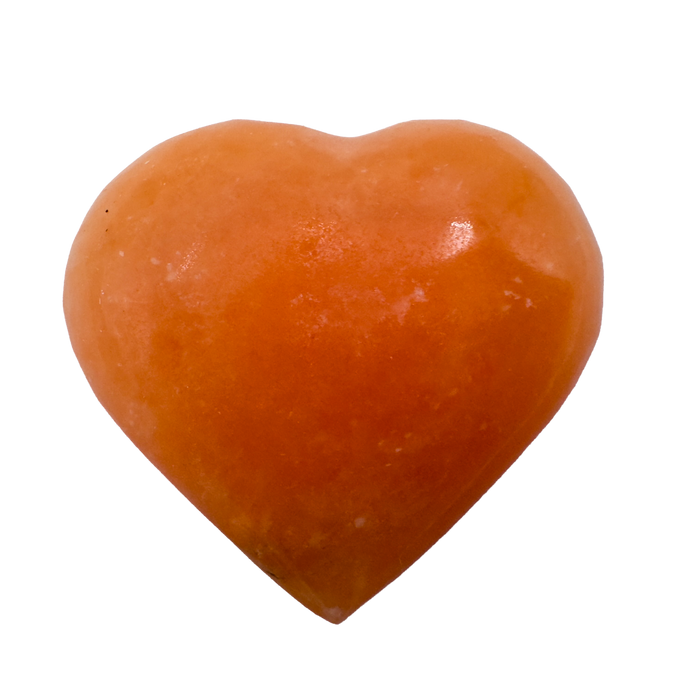
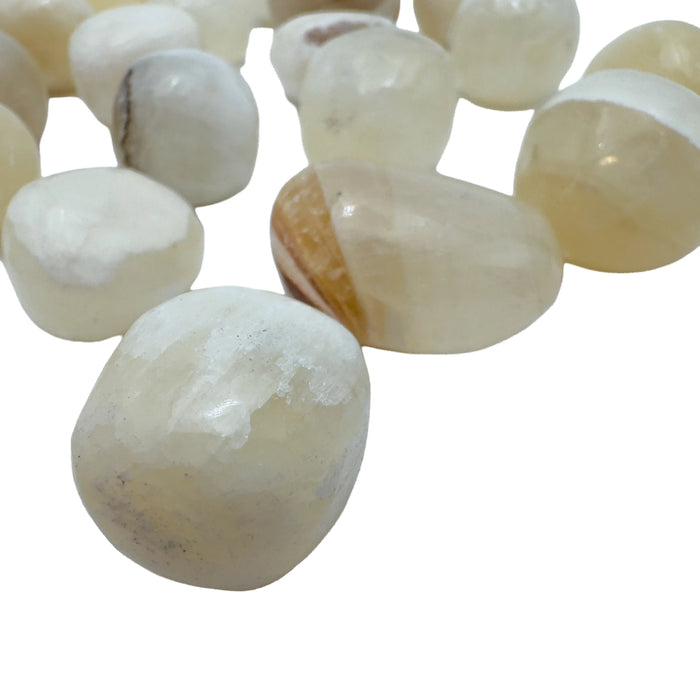
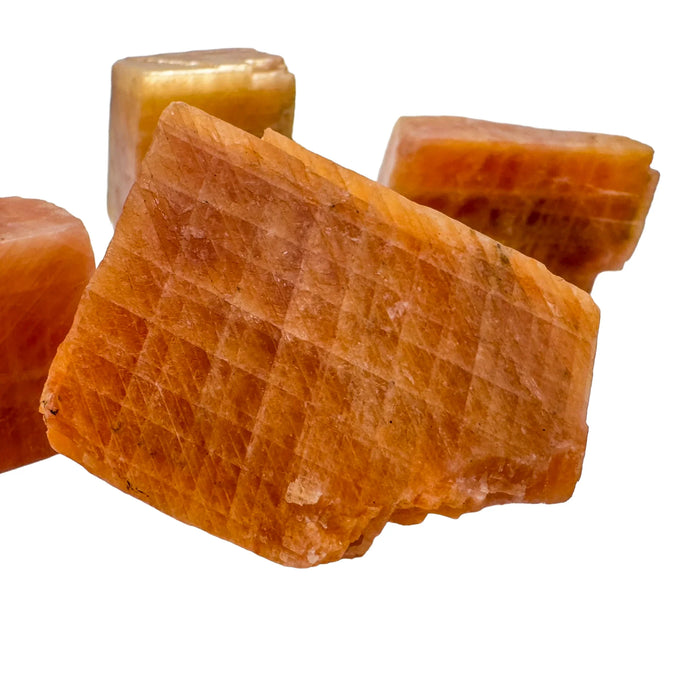
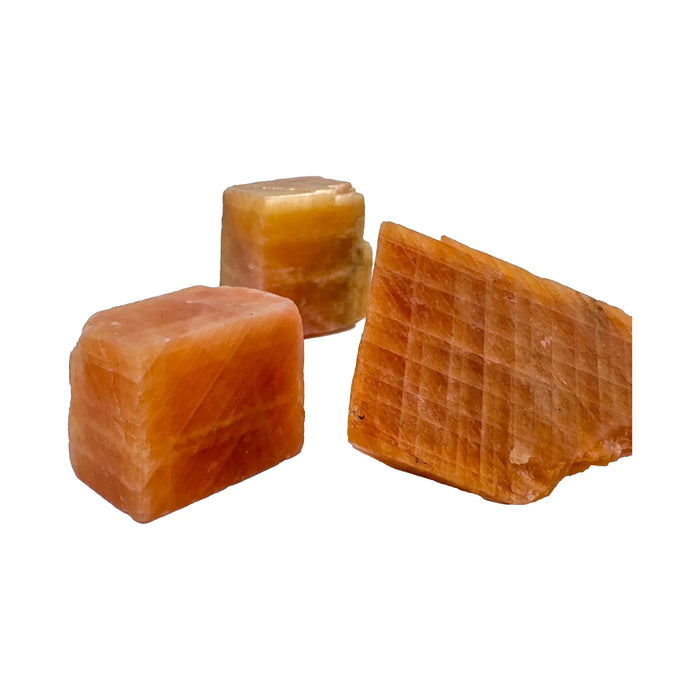
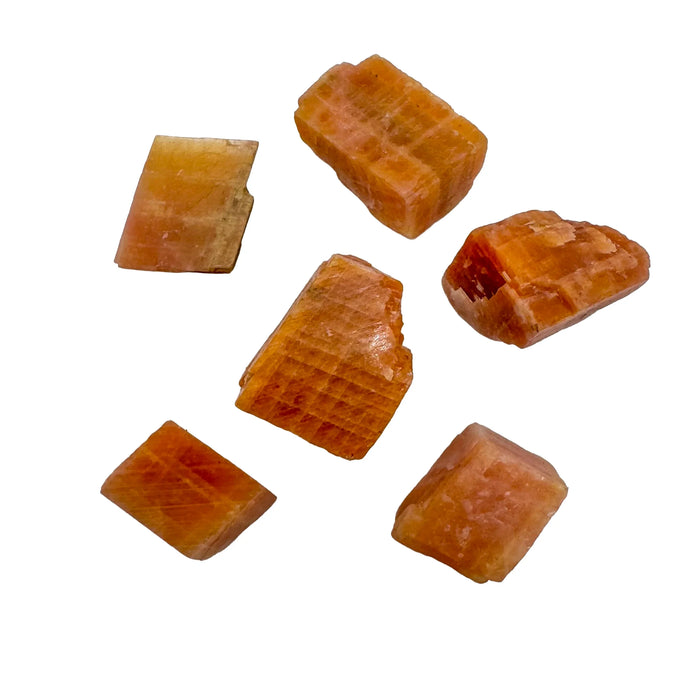
Explore the Crystal GuideThe closest match we carry: Calcite.
Optical Calcite is not something we carry. Calcite is the closest match in our collection, and every piece passes our sourcing standards: origin named, treatments disclosed.
- from 1,000+ reviews
- Ships within 72 hoursMonday to Friday, tracked
- 90 days to return itif you do not love it
- Free US shipping over $99$8.99 flat rate under
The Slow Note
New stones go to the list first.
No forwarding, no selling. Unsubscribe in one click. Privacy