










Crystals for Capricorn: Birthstones and the Real Geology

Capricorn runs from December 22 to January 19, and the stones tied to it tend to be grounding and dark: deep red, matte black, a cool clear green. That reads as steady and earthbound, which fits the sign, but the color and hardness always trace back to what the stone is made of. Here's what those stones actually are, where they come from, and what the birthstone facts really say.
Capricorn's birthstones, the calendar version
Because Capricorn straddles two months, it carries more than one traditional birthstone. December leans on turquoise, a copper aluminum phosphate, along with tanzanite, a blue form of the mineral zoisite, and zircon. January's stone is garnet, a deep red silicate that has been worn as a birthstone for centuries. None of this is a rule you have to follow. It's simply the lineage, and it shifts with which side of New Year you were born on.
The stones most often linked to Capricorn
Set the birthstones aside and a clear group remains, chosen across many crystal traditions for their grounding color and their tie to the sign's earth element.
Garnet
Garnet is Capricorn's own January birthstone, so it earns the first spot. The deep red kind most people know is almandine, an iron aluminum silicate, and garnet as a whole is a family of related minerals rather than one stone. It's genuinely hard, around 6.5 to 7.5 on the Mohs scale, which is part of why it has been set in jewelry for so long. Ours is tumbled from Brazil. The full mineral story is in our garnet guide.
Black Tourmaline
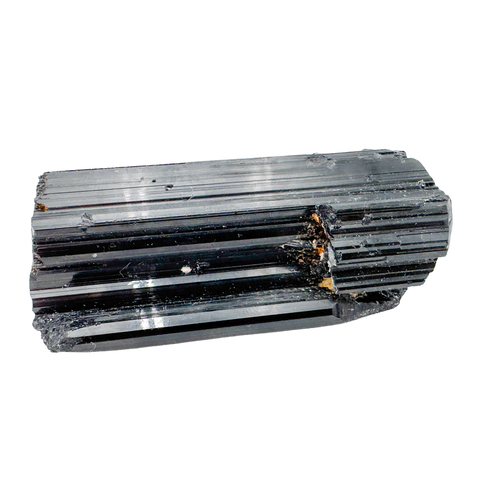
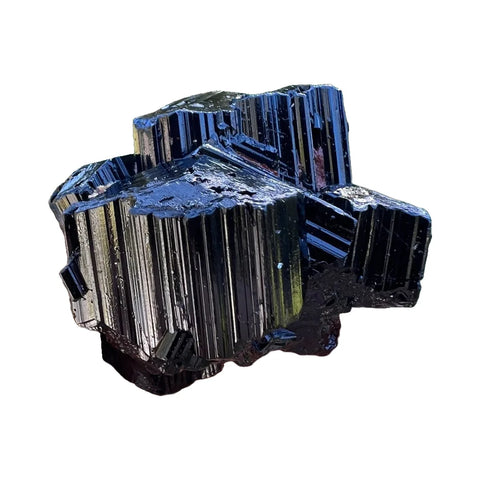
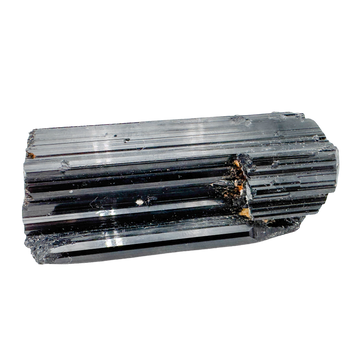
Black tourmaline, known to geologists as schorl, is the matte black stone with fine lengthwise grooves running down it. Those striations are natural, a feature of how the crystal grows, not tool marks. It's a complex boron silicate and a solid 7 on the Mohs scale. Ours comes from Madagascar and Brazil. More on how it forms is in the black tourmaline guide.
Fluorite
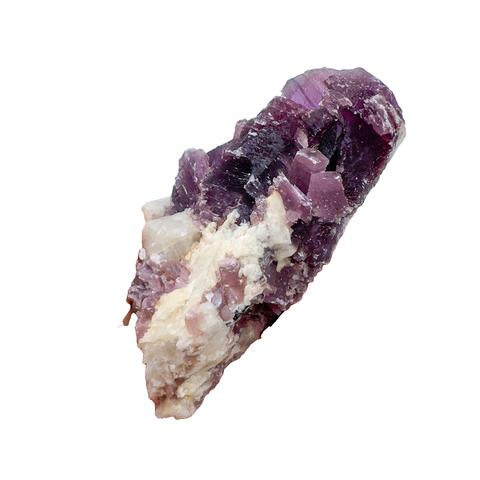
Fluorite is the cool, glassy stone that ranges from green to purple, often banded in both. It's calcium fluoride, and it's soft, only a 4 on the Mohs scale, so it wants gentler handling than the others here. It's also where the word fluorescence comes from, since many fluorites glow under ultraviolet light. Ours is raw from Namibia. The fluorite guide covers the care it needs.
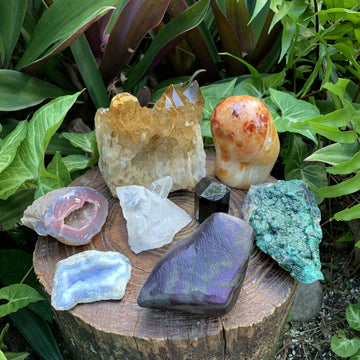
If one of these calls to you, a tumbled garnet shows the January birthstone in the hand, a raw black tourmaline shows the natural striations, and a raw fluorite brings the cooler green and purple range. You can see every stone tied to the sign in the Capricorn collection.
What the association actually means
None of this is science. A stone doesn't know your birthday, and no gem changes a personality. What the zodiac tradition offers is a way in, a starting point for people drawn to the idea of a stone that echoes their sign's steadiness. The garnet often called Capricorn's lucky stone is lucky the way a keepsake is: by story, not by physics. We'd rather tell you that plainly and let the stone be what it is. What a piece comes to mean is yours to find. If you want the fuller origin of these birthstone lists, our birthstones by month page traces where they came from.