






Hardness tells you what scratches. It says nothing about what breaks. Stichtite, rhodochrosite and dioptase show how the second property decides what format a stone is sold in and what it costs.
Crystals for Emotional Healing: Hardness Is Not Toughness

Hardness tells you whether a stone will scratch. It tells you nothing about whether it will break. Those are two different properties, and on the emotional healing shelf they come apart in a way that decides what format a stone is sold in and what it costs. Three pieces here make the point neatly, and the hardest of the three is the one you have to be most careful with.
Stichtite, sold as Atlantisite
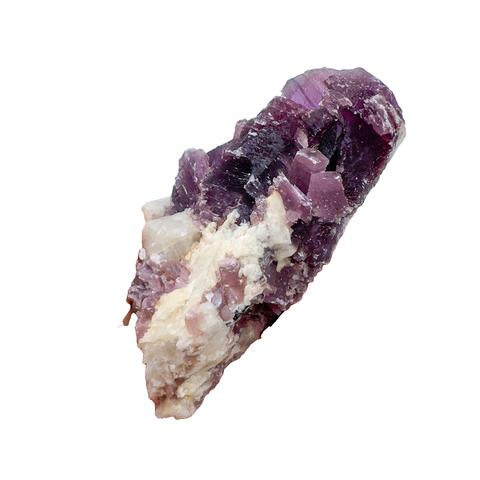
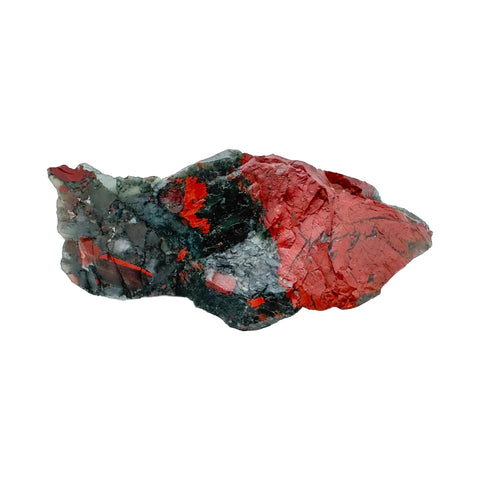
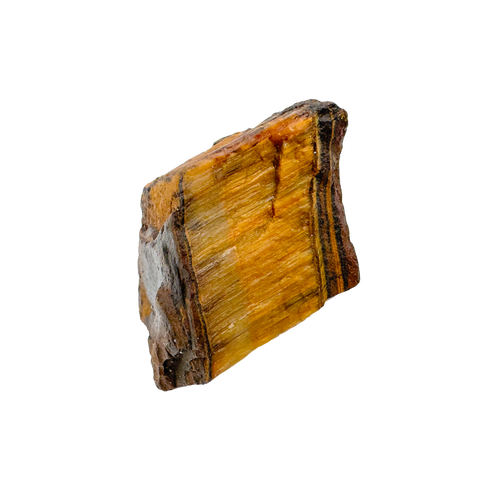
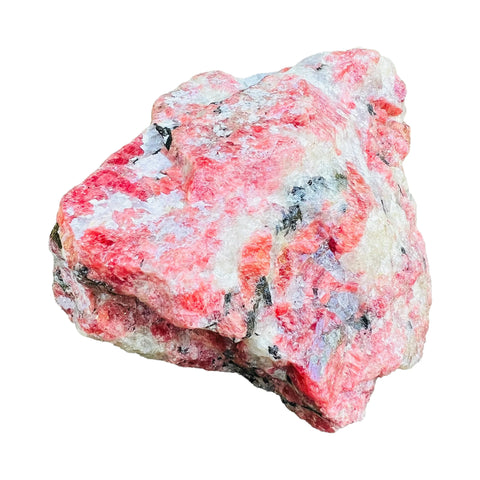
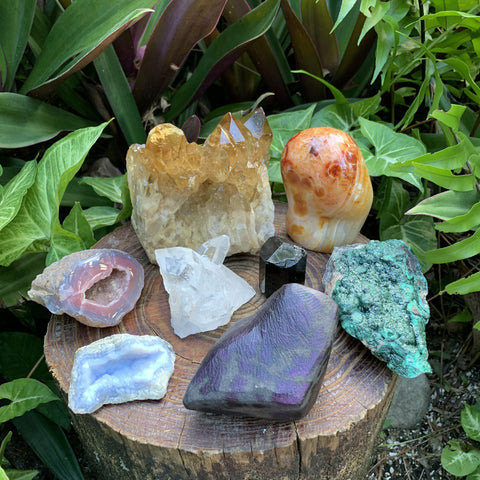
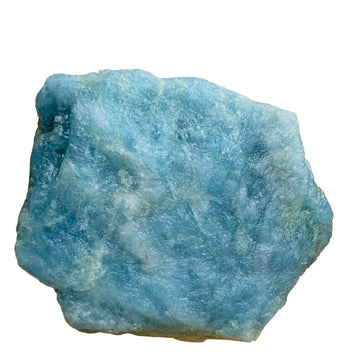
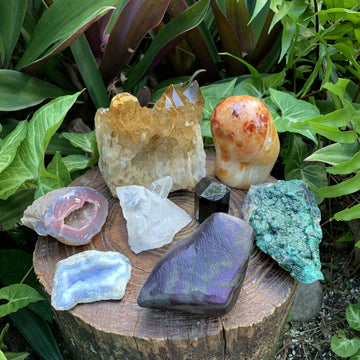
Stichtite is a chromium bearing carbonate that runs 1.5 to 2.5 on the Mohs scale, which makes it the softest thing on our shelves and softer than your fingernail. It almost never occurs alone. It forms where chromium rich serpentinite alters, so it arrives threaded through green serpentine host rock, and that pink on olive combination is what the trade sells under the name atlantisite. Atlantisite is a rock made of two minerals, not a mineral of its own, which is worth knowing before you go looking for a species by that name. At this hardness a tumbler would simply destroy it, which is why you will only ever see stichtite offered raw. Ours is raw, AA grade, from Mpumalanga, South Africa. The stichtite guide has more.
Rhodochrosite
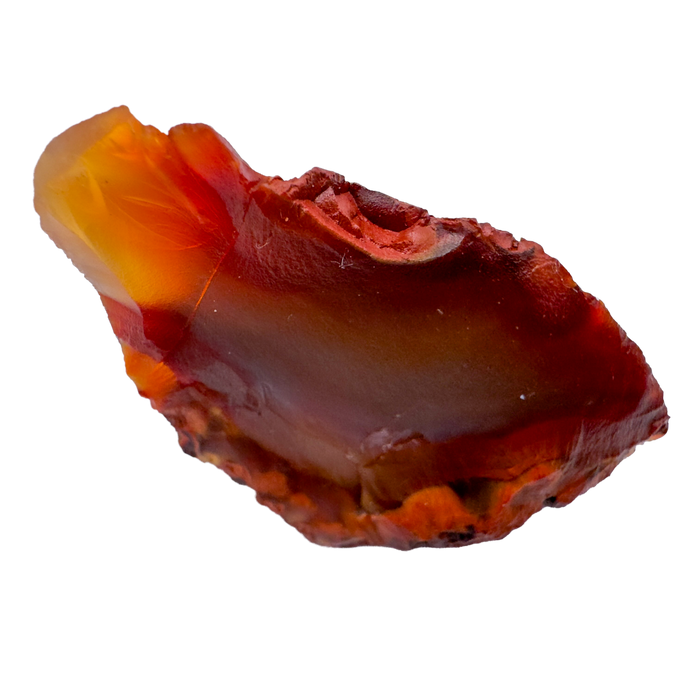
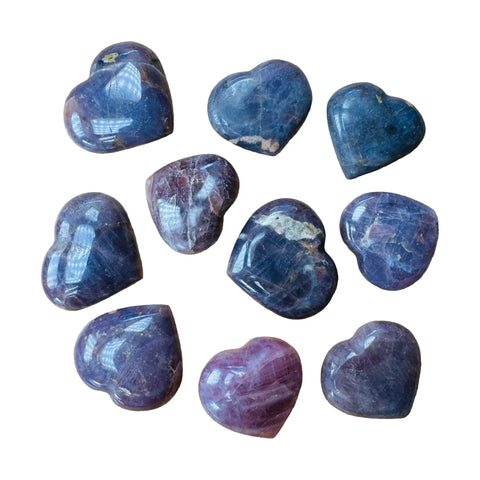
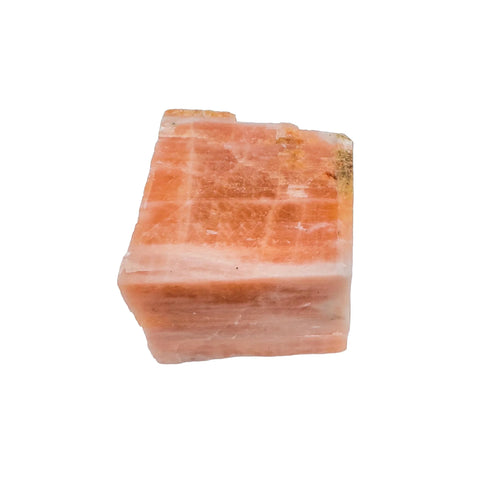
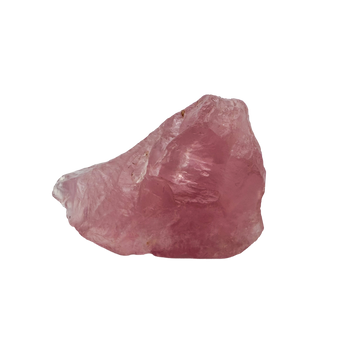
Rhodochrosite is a manganese carbonate at 3.5 on the Mohs scale, and the manganese is the pink. Deeper color means more of it. The banding people buy it for comes from the way it grows, in layers laid down over time in cavities, so a cut face reads like rings rather than a single flat color. It also has perfect cleavage in three directions, meaning it does not chip randomly, it parts along flat planes when it decides to. That combination of soft and cleavable is why so much rough is lost getting to a finished piece, and why a one inch tumbled rhodochrosite costs several times what a one inch tumbled quartz costs. Argentina is the classic source and ours is hand polished, natural and untreated, from Catamarca Province. More in the rhodochrosite guide.
Dioptase
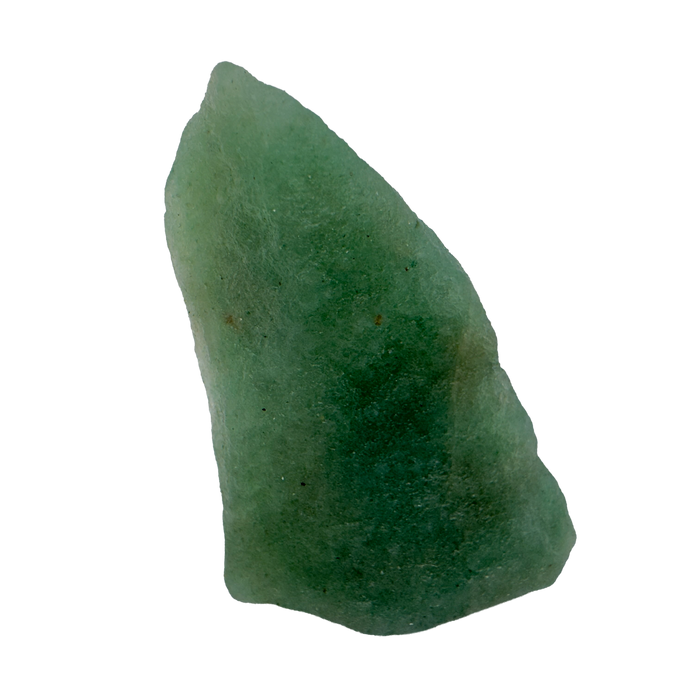
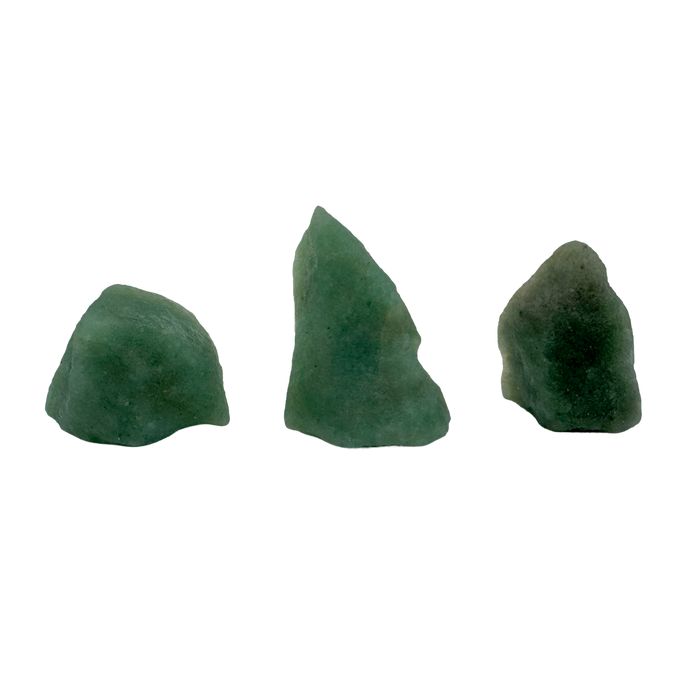
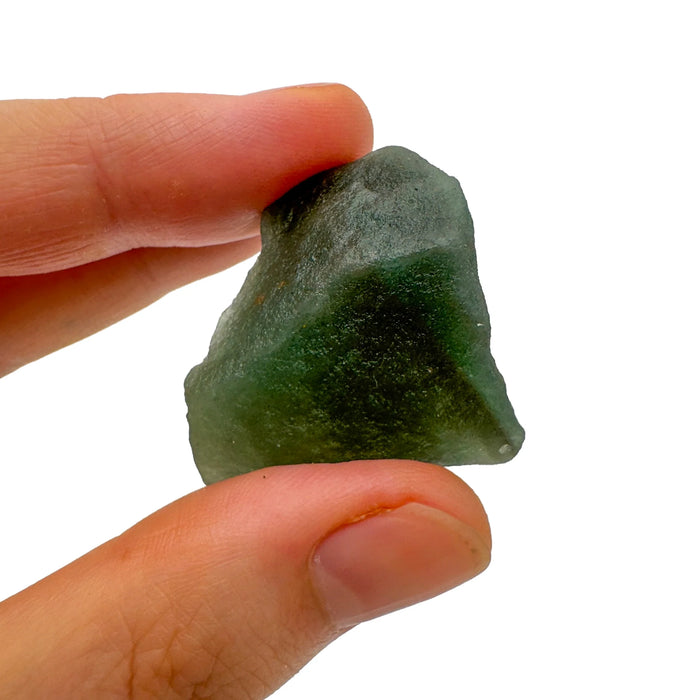
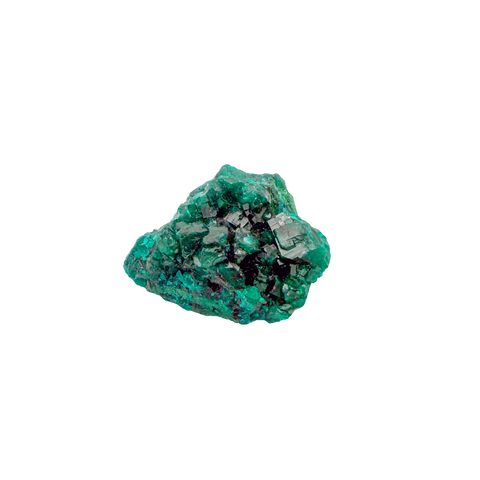
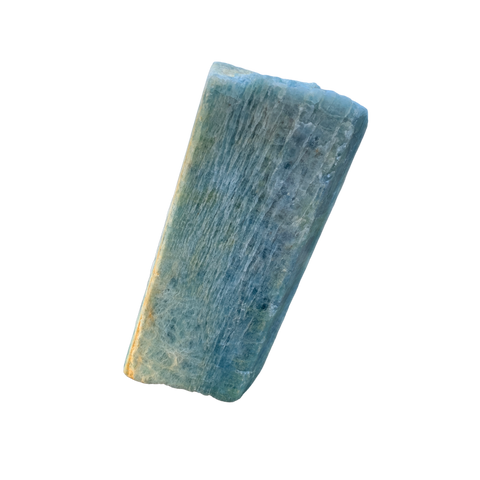
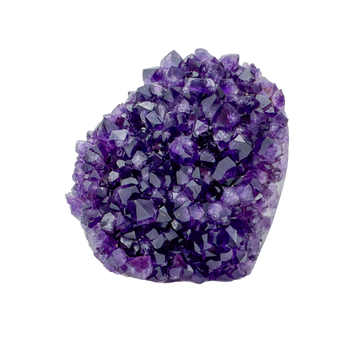
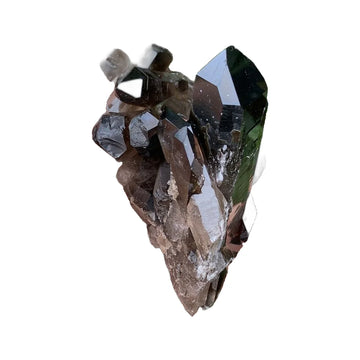
Dioptase is the hardest of the three at 5 on the Mohs scale, and it is the one that will not survive a pocket. It is a copper cyclosilicate, deep emerald green, and it has perfect cleavage that runs so cleanly you can see the planes from outside the crystal. That is where the name came from: the Greek for seeing through, given because those internal partings are visible before you ever break one. When European collectors first saw it they took it for emerald, and the mistake stood until the chemistry was run. Because it parts that easily, dioptase is sold as specimens sitting on their matrix rather than as tumbled stones, and it is not cut for jewelry. Ours comes from Renéville in the Republic of the Congo, natural and untreated. The dioptase guide covers the rest.
A note on rose quartz and rhodonite
These two carry most of this shelf and both are hard enough to live in a pocket, which is exactly why they are not in this piece. The comparison is in rose quartz vs rhodonite, and if the pink and black veining is the part that puzzles you, why rhodonite is pink and black explains where the manganese goes.
Stichtite
Rhodochrosite
Dioptase
Held next to each other the point lands quickly. A raw stichtite marks under a fingernail, a hand polished rhodochrosite shows the banding and the price that comes with it, and a raw dioptase is the hard one you still keep on a shelf. The rest is in the emotional healing collection.
What emotional healing means here
We do not claim a stone treats anything, and nothing on this page is a substitute for care from a person qualified to give it. What people describe, when they describe this honestly, is an object they keep somewhere visible during a hard stretch, and that is a use with a long and ordinary history. What we can be precise about is the mineral, the hardness, the way it breaks, where it was mined, and whether anyone treated it. That is on our sourcing page, and the wider list is on crystals for emotional healing. Care by hardness is covered in how to cleanse crystals.